

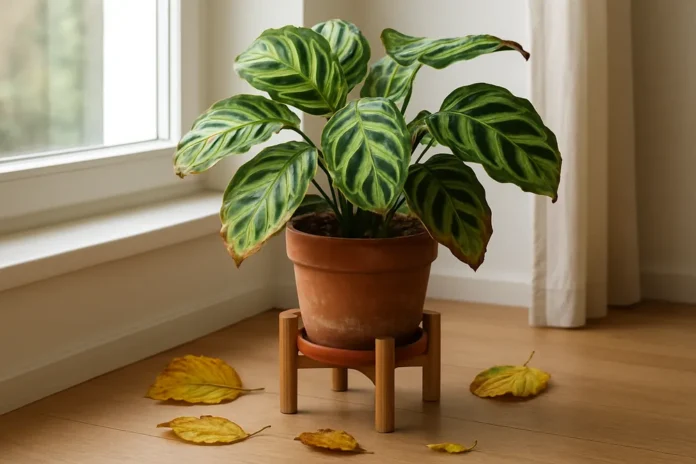
A calathea usually loses leaves because it is stressed by inconsistent watering, low humidity, temperature shock, pests, or root damage. Older leaves also drop naturally, but heavy or sudden leaf loss usually means conditions are off.
A calathea can go from lush and full to sparse and frustrating surprisingly fast. When a few leaves yellow, crisp up, droop, or detach, it is usually the plant's way of telling you that something in its environment is out of balance rather than the plant simply being fussy for no reason.
In my experience, calathea leaf loss is most often tied to a short list of issues: watering that swings between too dry and too wet, air that is too dry, sudden drafts, root stress, or pests hiding under the leaves. The good news is that once you match the pattern of leaf drop to the cause, calathea recovery is often very possible.
When Leaf Loss Is Normal and when It Is Not
Not every falling leaf means your plant is in crisis. Calatheas naturally shed some older leaves, especially the lowest outer ones, as they redirect energy into newer growth. If you lose an occasional leaf every now and then while the plant is still producing healthy new foliage, that is usually normal aging.
What is not normal is a sudden wave of leaf drop, multiple leaves yellowing at once, bare stems developing quickly, or leaves falling after curling, browning, or collapsing. Those patterns usually point to stress. The bigger clue is not just that leaves are dropping, but how they look before they fall.
- A single lower leaf yellowing slowly is often normal aging.
- Leaves turning crispy and dropping often suggest dryness, low humidity, or heat stress.
- Soft yellow leaves that detach easily often point to overwatering or root trouble.
- Leaves with stippling, webbing, or distorted growth may be dropping because of pests.
- Leaf loss after moving the plant often comes from environmental shock.
Watering Problems Are the Most Common Cause
Underwatering and Prolonged Dryness
Calatheas like evenly moist soil, not bone-dry cycles. If the potting mix dries too far down, roots can become stressed and the plant may sacrifice leaves to conserve moisture. Before leaves fall, you will often see curling, drooping, brown edges, or a papery feel.
This can happen even if you water on a schedule. A plant near a vent, in brighter light, or in a small pot can dry much faster than expected. If the soil repeatedly pulls away from the sides of the pot or water rushes straight through without soaking in, the root ball may be drying unevenly.
Overwatering and Soggy Roots
Too much water is just as damaging, and often worse. Calatheas do not like sitting in waterlogged soil where oxygen is limited around the roots. When roots stay too wet, they struggle to function and can begin to rot. Leaf drop from overwatering is often paired with yellowing, limp leaves, mushy stems near the base, or a potting mix that stays wet for many days.
When I am diagnosing a calathea, I do not ask only, "Did I water too much or too little?" I ask whether the plant is cycling between both. A root ball that swings from soggy to dry is especially stressful and often explains mixed symptoms like brown edges on some leaves and yellow drop on others.
How to Judge Moisture More Accurately
Instead of watering by the calendar, check the potting mix with your finger or a wooden skewer. The top inch can dry slightly, but deeper soil should still feel lightly moist for most calatheas. Water thoroughly until excess drains out, then empty any saucer so the pot is not left standing in runoff.
- Water when the top inch feels slightly dry, not dust-dry all the way through.
- Use a pot with drainage holes.
- Do not let the pot sit in a full saucer or cachepot of water.
- If soil has become hard and hydrophobic, rewet it slowly in stages.
- If soil stays wet for a week or more, the mix may be too dense or roots may be damaged.
Low Humidity Can Trigger Leaf Drop After Browning and Curling
Calatheas are famous for reacting to dry indoor air. While low humidity alone does not always cause leaves to fall immediately, it often sets off a chain reaction. Edges crisp, leaves curl to reduce moisture loss, and stressed foliage eventually yellows or drops. This is especially common in winter when heating systems dry out the air.
A plant that looked fine in summer may suddenly decline when indoor humidity drops. If your calathea is near a heater, forced-air vent, or drafty window, dry air stress becomes much more likely. Leaves may also seem thinner, duller, or unable to unfurl properly before they decline.
- Aim for moderate to high humidity, often around 50 percent or more.
- Group plants together to create a slightly more humid microclimate.
- Use a room humidifier if your home runs dry for long periods.
- Keep the plant away from hot air vents, radiators, and fireplace heat.
- Do not rely on light misting as a full solution. It is usually too brief to change the environment much.
Temperature Swings and Drafts Can Shock a Calathea
Calatheas prefer stable warmth. Sudden drops in temperature, cold windows, blasting air conditioning, and winter drafts can all lead to stress that shows up as drooping, curling, or leaf loss. A calathea may look fine for a few days after a cold event, then start shedding leaves once damaged tissue begins to fail.
These plants generally do best in temperatures that feel comfortable for people, roughly the mid-60s to upper-70s Fahrenheit. Trouble starts when nights get chilly, the foliage touches a cold pane, or the plant lives in the path of moving air. Draft stress often overlaps with dry air stress, which makes the damage look worse.
If your calathea is declining and you recently moved it, changed seasons, or turned on heating or cooling, I would correct location issues before changing fertilizer or repotting. Environmental shock is a more common cause of sudden leaf drop than nutrient deficiency.
Light Problems Can Weaken the Plant Over Time
Too Much Direct Sun
Calatheas prefer bright, indirect light. Strong direct sun can scorch leaves, bleach patterns, dry the plant out faster, and push stressed leaves toward early drop. If the plant sits in a hot west or south window without a sheer curtain, leaf damage can happen quickly.
Too Little Light
While calatheas tolerate lower light better than some houseplants, very dim conditions can slowly weaken them. Growth becomes sparse, the soil stays wet too long, and the plant cannot support as much foliage. In that situation, older leaves may yellow and fall because the plant is running low on energy.
The best balance is bright filtered light where the leaves are well lit but not exposed to harsh rays. If you need to squint from glare at the plant's spot for part of the day, it may be too intense.
Pests Often Hide Until Leaf Drop Starts
Spider mites, thrips, mealybugs, and scale can all contribute to calathea leaf loss. Spider mites are especially common because calatheas dislike dry air, and dry air also favors mite outbreaks. These pests feed by damaging plant tissue, which leads to stippling, discoloration, curling, and eventual leaf drop.
Turn the leaves over and inspect the undersides, stems, and where the leaf meets the petiole. Look for fine webbing, tiny moving specks, sticky residue, cottony clusters, or silvery scarring. Pest damage is often uneven, with some leaves looking much worse than others.
- Spider mites cause tiny pale speckles, general dullness, and sometimes fine webbing.
- Thrips can leave silvery streaks, distorted new growth, and black specks of waste.
- Mealybugs appear as white cottony clusters around stems and leaf joints.
- Scale looks like small bumps attached to stems or leaf undersides.
If pests are the reason for leaf drop, treatment has to be persistent. Isolate the plant, rinse foliage gently, and use an appropriate houseplant-safe treatment such as insecticidal soap or horticultural oil according to label directions. One spray is rarely enough because eggs and hidden pests can survive the first round.
Root Issues and Compacted Soil Can Make Leaves Fall
Sometimes the problem is below the soil line. A calathea that is rootbound, planted in exhausted mix, or sitting in a dense, compacted medium can struggle to take up water properly even if your watering habits are reasonable. The result can look confusing because the plant may act thirsty one week and overwatered the next.
If the plant dries out unusually fast, roots circle heavily around the inside of the pot, or water runs through while the root mass stays stubbornly dry, repotting may be necessary. On the other hand, if the mix is heavy and soggy, roots may be suffocating.
Signs the Roots Need Attention
- Leaf drop continues even after you correct light and humidity.
- The plant wilts quickly after watering or dries out again within a day or two.
- The soil smells sour or swampy.
- Roots are brown and mushy instead of firm and pale.
- The plant is packed tightly with roots and has very little soil left in the pot.
I have seen many calatheas blamed on "bad luck" when the real issue was old potting mix that had broken down into a dense sponge. If water behavior has become strange, I pay as much attention to the texture of the mix as to the amount of water going in.
When repotting, use a loose, moisture-retentive but airy mix. A blend designed for tropical houseplants often works well, especially if it contains ingredients that hold some moisture without turning muddy. Choose a pot only slightly larger than the current root ball so excess soil does not stay wet too long.
Poor Water Quality and Fertilizer Buildup Can Add Stress
Calatheas can be sensitive to mineral-heavy tap water, chlorine, fluoride, and excess fertilizer salts. This usually shows up first as browning edges or tip burn, but over time the stress can contribute to yellowing and dropped leaves, especially if other conditions are already less than ideal.
If you fertilize often, never flush the soil, or have very hard water, salt buildup may be part of the problem. A white crust on the soil surface or pot rim is a common clue. The roots can become irritated, which reduces the plant's ability to stay hydrated and support all its foliage.
- Use filtered, distilled, or rainwater if your tap water is very hard or heavily treated.
- Fertilize lightly during active growth rather than feeding heavily year-round.
- Flush the potting mix occasionally by watering thoroughly and letting excess drain out.
- Pause fertilizer if the plant is stressed, newly repotted, or dropping leaves heavily.
Stress After Repotting or Moving Is Common
Calatheas are sensitive to change. If your plant started losing leaves after repotting, bringing it home, relocating it to a different room, or switching it outdoors and back inside, stress from the transition may be the trigger. Even a beneficial change can temporarily upset the plant while it adjusts.
Repotting stress is more likely if roots were disturbed heavily, damaged, or moved into a much larger pot. Relocation stress is more likely if light, humidity, or temperature changed sharply. In many cases, the best response is to stabilize care rather than keep making more adjustments.
How to Figure Out the Real Cause in Your Plant
Because calathea leaf loss often has more than one cause, it helps to diagnose by pattern instead of guessing. Look at the leaves, the soil, the room conditions, and the timing. The details usually narrow the issue down much faster than a broad internet checklist.
- Look at which leaves are dropping. Older bottom leaves suggest aging or general stress, while random widespread loss suggests an active problem.
- Check the texture of affected leaves. Crispy points to dryness or scorch, while soft yellow leaves point more toward excess moisture.
- Feel the potting mix several inches down, not just on the surface.
- Inspect undersides of leaves for pests with good light.
- Think about recent changes such as a move, weather shift, repotting, or a missed watering cycle.
- Check whether the pot drains freely and whether roots seem crowded or damaged.
The goal is to find the strongest pattern, not to fix everything at once. If you change watering, move the plant, fertilize, repot, and spray all in one weekend, it becomes much harder to tell what actually helped or what added more stress.
What to Do to Stop Further Leaf Loss
Once you identify the most likely cause, focus on stabilizing the plant. Remove fully dead leaves, but keep any leaf that still has a good amount of green because it can still support recovery. Then correct the main stressor and give the plant time to respond through new growth.
- Move the plant to bright, indirect light.
- Keep temperatures steady and away from vents, heaters, and cold drafts.
- Water when the top inch of soil is slightly dry, then drain thoroughly.
- Raise humidity if your home is dry.
- Inspect for pests and treat consistently if found.
- Repot only if the soil is compacted, roots are rotting, or the plant is severely rootbound.
- Avoid heavy feeding until active, healthy growth resumes.
Do not expect damaged leaves to become perfect again. What you are watching for is whether new leaves emerge healthy and whether leaf drop slows down. Recovery is measured by improvement in the next round of growth, not by old damage disappearing.
How Long Recovery Usually Takes
A mildly stressed calathea may stop dropping leaves within a couple of weeks once conditions improve, but fuller recovery usually takes longer. New leaves may appear over several weeks to a few months depending on season, light, root health, and how severe the setback was.
If leaf loss continues steadily after you have corrected the obvious issues, revisit the roots and inspect carefully for pests. Persistent decline almost always means the main cause is still present or there are multiple overlapping problems.
FAQ
Will a Calathea Grow Back After Losing Leaves?
Usually, yes. If the roots and crown are still healthy, a calathea can push new leaves after stress is corrected. Bare stems may not refill instantly, so judge recovery by new growth rather than the appearance of old damaged leaves.
Should I Cut Off Yellow Calathea Leaves?
Yes, once a leaf is mostly yellow or brown, you can trim it off with clean scissors. If a leaf still has a good amount of green, I usually leave it until the plant has more healthy growth to support itself.
Can Low Humidity Alone Make a Calathea Lose Leaves?
It can, especially over time. More often, low humidity weakens the plant, causes crisping and curling, and makes it more vulnerable to leaf drop from watering stress or pests.
Why Is My Calathea Losing Only Bottom Leaves?
If only the oldest bottom leaves are dropping slowly, normal aging may be the reason. If several lower leaves yellow at once or the plant also looks limp, pale, or stressed, watering issues or low light are more likely.
Does Tap Water Make Calathea Leaves Fall Off?
Tap water usually causes browning and stress before it causes actual leaf drop, but sensitive calatheas can react poorly to hard water or chemical residues. If other care seems right, switching to filtered or distilled water can help reduce ongoing stress.
How Often Should I Water a Calathea That Is Dropping Leaves?
There is no fixed schedule that works in every home. Water when the top inch of soil feels slightly dry and the root zone beneath still has some moisture, then let excess drain away.
Can Overwatering and Underwatering Look Similar on a Calathea?
Yes. Both can cause drooping, browning, and leaf loss because both disrupt root function. The difference is often in the soil and leaf texture, with dry conditions causing crispness and soggy conditions causing softer yellow decline.
Need help choosing the right fix for a struggling prayer plant? Read our guide to the best calathea soil mixes, humidifiers, and pest treatments so you can stabilize your plant faster.
