

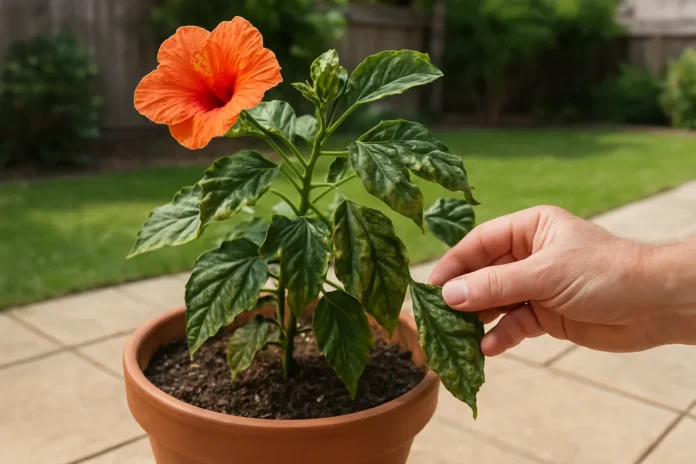
Hibiscus leaves usually shrivel because the plant is under stress from watering problems, pests, root damage, or sudden weather changes. Heat, cold, poor drainage, and sap-sucking insects are the most common triggers.
When I see hibiscus leaves shriveling, I treat it as a stress signal rather than a diagnosis by itself. Hibiscus reacts quickly when something is off, and the leaves often curl, pucker, wrinkle, or dry down before the plant shows more obvious decline.
In home gardens, the most common causes are inconsistent watering, roots staying too wet, hot drying weather, insect feeding, and abrupt temperature shifts. Tropical hibiscus can be especially dramatic about stress, while hardy hibiscus tends to show fewer day-to-day mood swings but can still shrivel when roots or foliage are under pressure.
The good news is that a shriveled leaf pattern usually gives you clues. If you look at where the damage starts, how fast it spread, and whether the leaves feel dry, limp, sticky, or brittle, you can usually narrow the cause down pretty quickly.
What Shriveling Leaves Usually Mean on Hibiscus
Shriveling is the leaf's way of losing normal internal pressure. Healthy hibiscus leaves stay smooth and expanded because water is moving steadily from the roots up through the plant. When that water flow gets interrupted, or when the leaf tissue is damaged, the leaf surface starts to pucker, curl inward, wrinkle, or collapse.
That interruption can happen for opposite reasons. A hibiscus that is too dry cannot keep leaves hydrated. A hibiscus that is too wet may have suffocating roots that also cannot move water properly. Pests such as aphids, spider mites, and whiteflies can deform or shrivel tender growth by sucking sap from the leaves. Heat, wind, cold snaps, transplant shock, and chemical exposure can all produce similar symptoms.
- Dry and crispy shriveling often points to drought, heat, wind, or salt buildup
- Soft, limp shriveling can point to root stress from overwatering or rot
- Shriveled new growth often suggests pests, herbicide drift, or micronutrient issues
- Shriveling with sticky leaves commonly points to sap-sucking insects
- Shriveling after a sudden move or weather swing often indicates environmental shock
I always compare old leaves and new leaves before guessing the cause. If the freshest growth is the most distorted, I start by suspecting pests or chemical injury. If the oldest leaves are collapsing first, I look harder at watering and root conditions.
Watering Problems Are the Most Common Cause
Underwatering and Drought Stress
Hibiscus likes evenly moist soil, especially during active growth and bloom season. If the root ball dries too far, the leaves can shrivel, droop, and curl to reduce water loss. In containers, this can happen fast in midsummer. Potting mix can go from adequately moist to bone dry in a day or two during hot, windy weather.
Leaves affected by drought usually feel thin, dry, or papery. The plant may also drop buds, wilt in the afternoon, or develop brown leaf edges. If the soil has pulled away from the inside edge of the pot, the root ball may have become so dry that water runs around it instead of soaking in.
Overwatering and Saturated Roots
Too much water can create the same shriveled look for a different reason. When roots sit in waterlogged soil, they lose oxygen and stop functioning well. The leaves may look limp, puckered, or weak even though the soil is wet. Gardeners often respond by watering more, which makes the problem worse.
Overwatered hibiscus may also show yellowing leaves, leaf drop, slow growth, and a sour or swampy smell from the soil. In pots, heavy mix, poor drainage holes, or oversized containers can keep the root zone wet for too long. In the ground, clay soil and low spots are common culprits.
If you are unsure whether the plant is too dry or too wet, press a finger a couple of inches into the soil and check deeper than the surface. Hibiscus problems often come from a root zone that stays soggy underneath while the top looks dry.
Heat, Cold, and Weather Swings Can Wrinkle Leaves Fast
Hibiscus responds strongly to environmental stress, especially tropical hibiscus grown in containers or moved between indoor and outdoor conditions. Intense afternoon sun, reflected heat from patios or walls, hot drying wind, or a sudden cold night can all cause leaves to shrivel.
Heat stress usually shows up as wilting or wrinkling during the hottest part of the day. If the plant recovers by evening, that does not mean everything is fine. Repeated daily stress can lead to lasting leaf damage, dropped flowers, and general decline. Containers are especially vulnerable because roots heat up far faster than roots in the ground.
Cold stress can also deform leaves. Temperatures that are not quite freezing but are still too low for tropical hibiscus may cause puckered, darkened, or shriveled foliage a day or two later. A plant moved abruptly from a sheltered indoor spot to bright sun and wind outdoors may react as if it has been scorched.
- Shriveling after a heat wave often points to moisture loss and root stress
- Shriveling after a cool night often points to temperature shock
- Damage on the sunniest side can suggest heat or sun scorch
- Damage soon after moving the plant can suggest acclimation stress
Pests That Distort and Shrivel Hibiscus Leaves
Several common pests feed on hibiscus by piercing leaf tissue and sucking out sap. This causes leaves to curl, wrinkle, twist, pucker, or stay undersized. New growth often looks the worst because it is tender and easy for pests to feed on.
Aphids, Whiteflies, and Spider Mites
Aphids cluster on tender stems, buds, and the undersides of leaves. Their feeding can deform new growth, and they leave behind sticky honeydew. Whiteflies also feed on sap and often flutter up when the plant is disturbed. Spider mites are tiny and easy to miss, but they are notorious for causing stippling, bronzing, fine webbing, and dry shriveled leaves, especially in hot dry conditions.
Thrips and Other Small Sucking Insects
Thrips can scar leaves and flowers, causing a silvery, puckered, or twisted look. Because they are slender and fast-moving, gardeners often miss them at first. Scale insects are less common on active hibiscus foliage than aphids or mites, but they can weaken a plant and contribute to shriveling over time.
- Check leaf undersides with good light
- Look for sticky residue, black sooty mold, or fine webbing
- Inspect buds and fresh tips where damage often starts
- Tap a branch over white paper to reveal tiny moving pests
Spider mites are one of the easiest hibiscus problems to underestimate because the plant can look merely tired at first. When I see shriveling plus a dull, dusty-looking leaf surface in hot weather, mites move high on my suspect list even before I spot webbing.
Root Problems and Poor Drainage Often Hide Below the Surface
If watering seems reasonable but the leaves keep shriveling, look below the soil line. Root-bound plants, rotting roots, compacted soil, and poor drainage can all reduce water uptake. A hibiscus can sit in a pot that looks fine from above while the root mass inside is circling tightly or staying waterlogged.
Root-bound hibiscus often dries out too quickly because dense roots leave little room for potting mix to hold moisture. Water may run straight through the pot, and the plant may shrivel again shortly after watering. On the other hand, root rot develops when roots stay too wet and start dying off. In that case the plant cannot hydrate leaves even if there is plenty of water around the roots.
Signs of root trouble include repeated wilting, stunted growth, yellowing, leaf drop, foul-smelling soil, and roots that are dark, mushy, or sparse when examined. Healthy roots should be light colored and firm. A severely root-bound plant may have thick rings of roots circling the pot with very little mix left.
Nutrient Imbalance and Salt Buildup Can Wrinkle Foliage
Hibiscus is a hungry blooming plant, but too much fertilizer can be as stressful as too little. Excess salts from synthetic fertilizers or hard water can build up in containers and damage roots. When that happens, leaves may shrivel at the edges, curl, or dry out even when watering seems adequate.
Deficiencies are less likely to cause dramatic shriveling by themselves, but they can contribute to weak, distorted growth. Potassium deficiency may show up with marginal burn and weak flowering. Iron deficiency causes yellowing between veins on new leaves rather than classic shriveling, but stressed plants often show mixed symptoms.
If you have been fertilizing heavily, especially in a pot, salt stress moves higher on the list. White crust on the soil surface or around the rim of the pot is a common clue. Fertilizer burn may arrive quickly after a strong feeding or after applying product to dry soil.
Chemical Injury and Transplant Shock Can Mimic Disease
Herbicide drift, insecticidal soap used in strong sun, overly concentrated foliar sprays, and recent transplanting can all leave hibiscus leaves distorted or shriveled. This kind of damage often appears suddenly and may affect one side of the plant more than the other.
Broadleaf weed killer drifting from a nearby lawn treatment can cause twisted, cupped, or puckered new growth. Strong spray products can burn leaves if applied during high heat or on drought-stressed plants. Transplant shock may bring temporary shriveling while the plant re-establishes roots, especially if roots were disturbed or the plant was moved during hot weather.
- Damage appeared right after spraying or nearby weed treatment
- Only the exposed side of the plant is affected
- Newest leaves look twisted or oddly narrow
- Symptoms began soon after repotting or planting out
How to Tell Which Cause Is Most Likely
The fastest way to diagnose shriveling hibiscus leaves is to combine leaf texture, soil condition, and timing. Start with the soil, then inspect the undersides of leaves, and finally think about any recent weather or care changes. Most cases become much clearer once those three clues line up.
- Soil dry and leaves crisp: underwatering, heat, or root-bound stress are likely
- Soil wet and leaves limp: overwatering, drainage problems, or root rot are likely
- Sticky leaves or moving insects: aphids, whiteflies, or scale are likely
- Fine speckling, bronzing, and webbing: spider mites are likely
- New growth twisted after spraying: chemical injury is likely
- Symptoms after a temperature swing or move: environmental shock is likely
Do not judge recovery by damaged leaves returning to perfect shape. A shriveled hibiscus leaf often stays marked. What you want to watch is whether new growth emerges normally once the stress is corrected.
I try not to change five things at once with hibiscus. If you repot, move the plant, fertilize, and spray on the same weekend, you lose the trail. Correct the most likely cause first and judge progress by the next flush of leaves.
How to Fix Shriveling Hibiscus Leaves
Correct Watering First
If the soil is dry, water thoroughly until the root zone is evenly moist. In containers, water slowly enough that the mix actually absorbs it. If the potting mix has become hydrophobic, you may need to water in stages. If the soil is staying wet for too long, reduce watering frequency and make sure drainage holes are clear.
Improve Drainage and Root Conditions
Repot a root-bound hibiscus into a container just one size larger using a well-draining potting mix. If roots are rotting, trim obviously dead roots and replant in fresh mix, then water carefully while the plant recovers. In the garden, improve drainage with raised planting, soil amendment, or relocating the plant if the site stays soggy.
Treat Pests Based on What You Find
Wash off aphids and whiteflies with a firm stream of water, then follow up with insecticidal soap or horticultural oil if needed. For spider mites, increase humidity around the plant when appropriate and use repeated treatments since one spray rarely solves the problem. Always apply products during cooler parts of the day and follow label directions.
Reduce Environmental Stress
Protect container hibiscus from intense reflected heat and hot wind. If a plant has been indoors, harden it off gradually before placing it in full outdoor sun. During cold snaps, move tropical hibiscus to shelter or cover it as needed.
Ease Up on Fertilizer if Needed
If fertilizer salts may be contributing, flush container soil thoroughly with plain water and pause feeding for a bit. Resume with a balanced fertilizer at a moderate rate once the plant shows active, healthy new growth.
How to Prevent the Problem From Returning
Healthy hibiscus is less likely to shrivel repeatedly when its routine is steady. Most recurring cases come from swings, not from one isolated mistake. The goal is to keep moisture, light, and root conditions consistent enough that the plant does not have to keep reacting.
- Water deeply but based on soil moisture, not on a rigid calendar
- Use containers with strong drainage and quality potting mix
- Check regularly for aphids, mites, and whiteflies on new growth
- Feed moderately during the growing season instead of in heavy bursts
- Shield tropical hibiscus from sudden cold and extreme afternoon stress
- Repot before the plant becomes severely root-bound
If your hibiscus has had a rough stretch, patience matters. Remove badly damaged leaves only if they are mostly dead or diseased. Otherwise, let the plant keep as much functioning foliage as it can while it pushes out better growth.
FAQ
Will Shriveled Hibiscus Leaves Recover?
Usually the damaged leaves will not fully smooth back out. The better sign is healthy new leaves appearing after you fix the underlying stress.
Can Too Much Sun Cause Hibiscus Leaves to Shrivel?
Yes, especially on tropical hibiscus in containers. Intense afternoon sun, reflected heat, and hot wind can dry leaves faster than the roots can keep up.
Why Are Only the New Hibiscus Leaves Shriveling?
Shriveled new growth often points to aphids, mites, thrips, herbicide drift, or spray damage. Tender leaves show distortion faster than older leaves.
How Often Should I Water a Hibiscus with Shriveled Leaves?
Water based on soil moisture rather than by schedule. Hibiscus likes evenly moist soil, but roots should not stay soggy for long periods.
Can Root Rot Make Hibiscus Look Dry?
Yes. Rotting roots cannot move water properly, so the plant may wilt or shrivel even when the soil feels wet.
Do Spider Mites Cause Hibiscus Leaves to Curl and Shrivel?
They often do. Look for stippling, bronzing, a dull leaf surface, and fine webbing, especially in hot dry weather.
Should I Cut Off All Shriveled Leaves?
Not necessarily. Remove leaves that are mostly dead, badly damaged, or diseased, but keep usable foliage so the plant can keep photosynthesizing while it recovers.
Need the right fix fast? Read our hibiscus care and treatment guides to choose the best watering tools, pest controls, and fertilizers for stronger growth and better blooms.
