

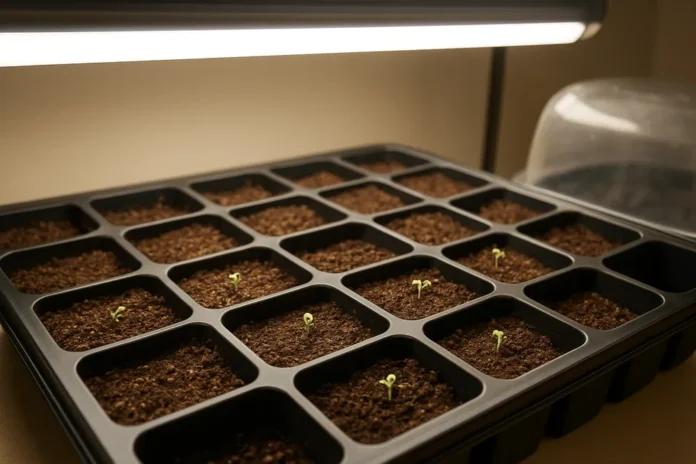
Strawberry seeds usually fail to germinate because they are too old, too dry, too wet, too deeply covered, or missing the cool conditions some varieties need. They also sprout slowly, so what looks like failure is often a mix of timing and setup.
Starting strawberries from seed sounds simple, but it can test anyone's patience. These tiny seeds are slow, fussy, and much less forgiving than bean, cucumber, or marigold seed. If your tray has been sitting there with no action, the problem is usually not one dramatic mistake. It is more often a combination of light, moisture, temperature, seed age, and timing.
When I sow strawberry seeds indoors, I expect a slower and less even process than most gardeners do the first time. Some seeds pop in a couple of weeks, some wait longer, and some never move at all. If you are dealing with poor germination, the good news is that strawberry seed problems are usually diagnosable once you look at the setup piece by piece.
Below are the most common reasons strawberry seeds stall, along with practical fixes that make the next sowing much more successful.
How Strawberry Seeds Are Different From Faster Garden Seeds
Strawberry seeds are tiny, slow, and naturally variable. Unlike large vegetable seeds that push up with stored energy, strawberry seeds have limited reserves and need more precise conditions to start well. They also germinate at different speeds, even in the same tray, so empty cells do not always mean total failure.
Many strawberry varieties also have a natural dormancy mechanism. In nature, seeds are exposed to cool, moist conditions before spring warmth arrives. That means some seed lots germinate better after cold stratification, while others will still sprout without it but more slowly or less evenly.
- They usually germinate more slowly than common annual flowers or vegetables.
- They need steady surface moisture without becoming waterlogged.
- They often germinate best with light, so burying them can reduce sprouting.
- Some varieties respond much better after a cold treatment.
The Most Common Reasons Strawberry Seeds Do Not Sprout
The Seed Is Old or Low Quality
Strawberry seed does not stay highly viable forever, especially if it has been stored somewhere warm or humid. Cheap seed packets, open packets from past seasons, or seed saved from grocery berries can all have lower germination rates. Even when a packet looks fine, uneven maturity and poor storage can leave you with a tray that barely moves.
The Seeds Were Covered Too Deeply
This is one of the biggest causes of failure. Strawberry seeds are usually surface sown or only pressed lightly into the mix because they benefit from light exposure. If they are buried under a thick layer of soil, many never manage to break dormancy or push through.
The Growing Mix Dries Out at the Surface
Because the seeds sit on or near the surface, they are vulnerable to drying. A tray can still feel damp lower down while the top millimeter turns dry enough to stop germination. This is especially common under heat mats, near sunny windows, or when fans are running nearby.
The Tray Stays Too Wet
The opposite problem is just as common. Constantly soggy seed-starting mix limits oxygen around the seed and encourages rot, algae, and fungus. Strawberry seeds need consistent moisture, not swampy conditions. If the mix glistens all day or smells sour, it is likely too wet.
Temperature Is Outside the Ideal Range
Strawberry seeds generally germinate best in moderate indoor temperatures, often around 65 to 75 degrees Fahrenheit. If the tray is in a chilly room, germination can drag badly. If it is too warm, especially with stale, wet soil under a humidity dome, the seeds may weaken or rot instead of sprouting.
The Seeds Needed Cold Stratification
Not every packet absolutely requires stratification, but many strawberry seeds germinate more reliably after a period of cool, moist storage. If you skipped that step and nothing happened, dormancy may be the missing piece. Alpine strawberries are often easier, while some hybrid or heirloom types can be more stubborn.
When I troubleshoot a stubborn tray, I look first at the surface itself. If the top crusts over, greens with algae, or beads with water, I know the problem is usually moisture balance before anything else.
Cold Stratification Can Make a Big Difference
Cold stratification mimics winter conditions and helps wake up dormant seed. For strawberries, this usually means placing the seed in a cool, moist environment for a couple of weeks before sowing. Some gardeners sow first, then refrigerate the entire covered tray. Others chill the seeds in a barely damp paper towel or mix them with moistened vermiculite in a sealed bag.
A typical stratification period is 2 to 4 weeks in the refrigerator, not the freezer. The goal is cool and moist, not frozen solid and not soaking wet. Once the chilling period ends, move the seed or tray into bright light and moderate warmth.
- Use a labeled bag or container so you do not lose track of the date.
- Keep the medium barely damp, not dripping.
- Do not store the seeds near ripening fruit in the refrigerator if possible.
- Move stratified seeds promptly into sowing conditions once the chilling period is done.
If your first attempt failed and you did not stratify, the next sowing is worth trying with this step added. It does not guarantee perfection, but it often improves both speed and uniformity.
Light, Temperature, and Moisture Need to Work Together
Gardeners sometimes focus on only one variable, like warmth, and miss the bigger picture. Strawberry seeds germinate best when light, temperature, and moisture are balanced. Bright light helps signal the seeds to sprout, moderate warmth speeds metabolism, and even moisture keeps the seed coat from drying out.
Light Matters More than Many Beginners Expect
Do not tuck strawberry seed under a thick layer of mix. Press the seeds onto the surface so they make contact, then leave them exposed or dust them with only the finest layer of vermiculite if needed. Place the tray under grow lights or in a very bright location. Weak window light alone often leads to slow, uneven results.
Warm Is Good, Hot Is Not
A heat mat can help in a cool house, but it should not cook the tray. If the surface dries fast or condensation constantly builds under a dome, the setup may be too warm. Room temperatures in the upper 60s to low 70s are usually safer than intense bottom heat.
Moisture Should Be Even, Not Dramatic
Use a fine mist carefully or bottom water just enough to keep the mix evenly damp. The surface should not swing from wet to bone dry in a single day. Humidity domes can help early on, but once algae, heavy condensation, or fungal growth shows up, they need venting or removal.
If you use a humidity dome, I like to crack it open for a short period daily once the tray is set up. That small bit of airflow often prevents the stale, overly wet conditions that strawberry seeds dislike.
Seed-starting Mix and Containers Can Quietly Sabotage Germination
The medium matters more than many people realize. Heavy garden soil, old potting mix, or mixes with chunky bark are poor choices for strawberry seeds. Tiny seeds need close contact with a fine-textured, sterile seed-starting mix that holds moisture evenly while still allowing air around the seed.
Containers matter too. Deep, oversized pots stay wet longer than needed, while shallow trays dry out quickly if they are exposed to heat or direct sun. Clean seed trays, small cell packs, or shallow flats usually work better than improvised containers with poor drainage.
- Choose a fine seed-starting mix rather than standard potting soil.
- Pre-moisten the mix before sowing so it is evenly damp from the start.
- Use containers with drainage holes.
- Avoid reusing dirty trays that may carry mold, algae, or damping-off organisms.
If water pools on the surface instead of soaking in, the mix may have dried too far and become hydrophobic, or it may simply be too dense. In either case, germination can stall because the seed is not getting consistent moisture and oxygen at the same time.
Timing and Patience Are Part of the Equation
One reason gardeners think their strawberry seeds failed is that they gave up too early. Depending on variety and conditions, germination can take anywhere from about 1 to 6 weeks. Faster sprouting often happens under ideal conditions with fresh seed, while older or less vigorous seed takes longer.
If you sowed only a week ago, you may simply be in the waiting stage. On the other hand, if the tray has sat for a month in dim light with a dry crust or soggy surface, waiting longer will not fix the underlying problem. Patience matters, but so does reading the tray honestly.
I do not judge a strawberry sowing by the first seedling that appears. I wait to see the pattern. A few random sprouts usually tell me the seed lot is alive, while completely blank cells across the whole tray point to a setup issue.
How to Tell What Went Wrong From the Signs You See
The tray itself often gives clues. Strawberry seeds are so small that you may not see the seeds changing much, but the surface condition and the timing can tell you plenty.
- If the surface looks pale, dusty, or shrunk away from the tray edges, the mix has likely dried too much.
- If you see green film, fuzzy mold, or a sour smell, the tray is probably too wet or poorly ventilated.
- If nothing germinates and the seeds were buried, depth is a likely factor.
- If only a few cells sprout and the rest stay blank, seed quality or uneven moisture may be the issue.
- If germination starts only after several weeks, cool temperatures or skipped stratification may have delayed things.
Saved seed can add another layer of uncertainty. Seed scraped from fresh strawberries is often uneven in maturity, and grocery-store fruit may come from hybrids that do not grow true or germinate consistently. That does not mean saved seed is impossible, but it does lower predictability.
What to Do Differently on Your Next Attempt
If your current tray looks hopeless, the best move is usually to start over with a tighter process rather than keep trying to rescue poor conditions. Strawberry seeds respond well when each step is simplified and made more consistent.
- Start with fresh seed from a reputable source.
- Cold stratify for 2 to 4 weeks if the variety is known to benefit from it or if your first attempt failed.
- Fill clean trays with pre-moistened fine seed-starting mix.
- Surface sow the seeds and press them in gently without burying them deeply.
- Place the tray under bright grow lights or in the brightest practical location.
- Keep temperatures in a moderate range, roughly 65 to 75 degrees Fahrenheit.
- Maintain even surface moisture with careful misting or light bottom watering.
- Vent humidity domes regularly and remove them if heavy condensation builds.
Once seedlings emerge, continue bright light and good airflow. Tiny strawberry seedlings can be easy to overwater after germination too, so the same moisture discipline still matters.
When Buying Plants Makes More Sense than Starting From Seed
There is no shame in deciding that seed starting is not the best route for strawberries. If your goal is a reliable harvest, bare-root plants or nursery starts are faster and much more predictable. Seeds are most appealing when you want alpine strawberries, unusual varieties, or the satisfaction of starting from scratch.
For many home gardeners, I suggest treating strawberry seed as a fun project rather than the only way to grow the crop. If you want fruit this season, plants are usually the better investment. If you want to experiment and learn, seeds are worth another try with a better setup.
FAQ
How Long Do Strawberry Seeds Usually Take to Germinate?
Most strawberry seeds germinate in about 1 to 3 weeks under good conditions, but some can take 4 to 6 weeks. Slow germination is common, especially with older seed or varieties that respond strongly to cold stratification.
Do Strawberry Seeds Need Light to Germinate?
Yes, many strawberry seeds germinate better when exposed to light or only barely covered. Press them onto the surface of the mix instead of burying them deeply.
Should I Refrigerate Strawberry Seeds Before Planting?
Often, yes. A 2 to 4 week cold stratification period can improve germination for many strawberry varieties by helping break dormancy and making sprouting more even.
Can Strawberry Seeds Be Too Wet to Sprout?
Absolutely. Constantly soggy soil reduces oxygen around the seed and can lead to rot, mold, and algae. The mix should stay evenly damp, not waterlogged.
Why Did Only a Few of My Strawberry Seeds Germinate?
Partial germination usually points to uneven moisture, variable seed quality, or inconsistent light and temperature across the tray. It can also happen with older seed lots that naturally have lower viability.
Can I Use Seeds From Store-bought Strawberries?
You can try, but results are unpredictable. Grocery strawberries are often hybrid varieties, and the seed may have uneven maturity or lower viability compared with commercially packaged seed.
Is a Heat Mat Necessary for Strawberry Seeds?
Not always. Strawberry seeds usually do well in moderate indoor temperatures, and too much bottom heat can dry the surface too quickly or create soggy, stale conditions under a dome.
Want a more reliable way to grow strawberries this year? Check out our guide to the best strawberry varieties, starter plants, and seed-starting supplies so you can skip the guesswork and get stronger results.
