

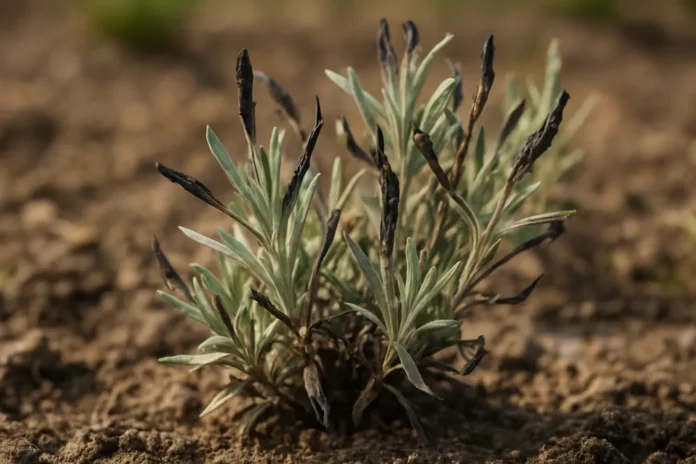
Lavender leaves usually turn black because the plant is staying too wet, developing root or crown rot, or suffering cold damage. Fungal disease and poor airflow can also darken foliage, especially in humid conditions.
When lavender leaves turn black, it usually means the plant is under more stress than it can handle. Lavender is one of those herbs that looks tough because it loves heat and lean soil, but in the wrong conditions it declines fast, especially when moisture lingers around the roots or crown.
I have found that black foliage on lavender is rarely a random cosmetic issue. It is often the plant's way of telling you that water, temperature, airflow, or drainage is off balance. The good news is that you can often narrow down the cause by looking closely at where the blackening starts, how fast it spreads, and whether the plant still has healthy new growth.
In most home gardens, the biggest culprit is too much moisture. But black leaves can also come from winter burn, fungal problems, stem dieback, or simple aging on parts of the plant that were already weak. Once you know which pattern you are seeing, the next step becomes much clearer.
What Black Leaves on Lavender Usually Mean
Blackening on lavender can show up as dark leaf tips, whole leaves going brown-black, stems collapsing from the base, or soft black tissue near the crown. Those patterns matter. A few dry blackened leaves on the outer plant can point to cold or wind damage, while mushy dark growth near the center often points to rot.
Lavender is adapted to dry, sunny, fast-draining conditions. When it sits in damp soil, shaded spots, heavy mulch, or humid still air, it becomes much more vulnerable to decline. Black leaves are often a late-stage symptom, so it helps to also look for yellowing, wilting, stem softness, leaf drop, or a sour smell in the soil.
- Black leaves that feel soft or mushy often suggest rot or infection.
- Black leaves that feel dry and crisp are more often linked to cold, scorch, or old tissue dying back.
- Damage starting at the base or crown is more serious than damage limited to a few outer tips.
- If only one side of the plant is affected, weather exposure or physical injury may be more likely than a root problem.
When I diagnose lavender, I look at the crown before I look at the leaves. If the base where the stems meet the soil is dark, soft, or splitting, I assume a moisture problem first because lavender can outgrow a little leaf damage but rarely recovers well from crown rot.
Overwatering and Poor Drainage Are the Most Common Causes
If I had to bet on one reason lavender leaves are turning black, I would start with wet roots. Lavender hates soil that stays saturated. In clay ground, low spots, decorative pots without enough drainage, or beds watered on the same schedule as thirstier plants, roots can begin to fail quickly.
When roots cannot breathe, the plant struggles to move water and nutrients properly. Leaves may first dull, then yellow or gray, and eventually turn brown-black as tissues die. In more advanced cases, stems near the soil line darken and collapse, and the plant may wilt even though the soil is wet.
Signs That Moisture Is the Real Problem
- Soil stays wet for days after watering or rain
- Blackening begins near the lower leaves or base of stems
- Leaves drop easily when touched
- The plant looks limp even though the root zone is moist
- There is little or no fresh silvery-green growth at the tips
Container lavender can run into the same problem even faster than in-ground plants. A pot that is too large, filled with dense moisture-retentive mix, or placed where rain repeatedly soaks it can keep roots wet far too long. Terracotta usually dries more safely than glazed containers for lavender.
If you suspect overwatering, resist the urge to keep “helping” with more water because the plant looks stressed. With lavender, wilt plus wet soil usually means damaged roots, not thirst.
Root Rot and Crown Rot Can Turn Foliage Black Fast
Once overwatering or poor drainage has been going on for a while, root rot and crown rot often follow. These problems are commonly caused by soilborne pathogens that thrive in saturated conditions. The roots become brown, weak, and unable to support the plant, while the crown at the soil line may darken and soften.
This is one of the more serious reasons lavender turns black because the damage starts in the part of the plant that matters most. You may notice black leaves, blackened stems, dieback from the center outward, or a plant that suddenly crashes after a rainy stretch.
How to Tell Rot From Temporary Stress
- Rot usually causes soft, dark tissue rather than just dry discoloration.
- The crown may look shrunken, blackened, or wet where stems emerge.
- Roots pulled from the soil may appear brown instead of firm and pale.
- The plant often declines quickly, not gradually over many months.
If the center of the plant is rotting, recovery depends on how much healthy tissue remains. A lavender with a partly damaged root system can sometimes bounce back after conditions improve, but one with a mushy crown all the way around is often beyond saving.
Cold Damage and Winter Burn Can Blacken Leaves and Stems
Not all black leaves come from water issues. In colder parts of the U.S., lavender can develop blackened or dark bronze foliage after hard freezes, freeze-thaw cycles, or drying winter winds. This is especially common on newer growth, exposed tips, or plants that went into winter soft and overly lush.
Cold-damaged leaves are usually dry rather than mushy. They may look black, dark purple, or burnt around the edges. Sometimes entire stems die back while the base survives and sends out new shoots later in spring.
When Cold Injury Is More Likely
- Blackening appears after a cold snap
- The damage is worse on the windward side of the plant
- Stems remain firm even though leaves are dark
- The soil is not especially wet and the crown still feels solid
Lavender often looks rough at the end of winter even when it is still alive. I usually wait until new growth begins before pruning out blackened tips because stems that look questionable in late winter can still recover above the crown.
Fungal and Bacterial Leaf Problems Can Also Be Involved
Lavender is less disease-prone than many garden plants, but it is not immune. In humid weather or crowded plantings, fungal leaf spots, stem blights, and other infections can darken leaves and stems. These problems are more likely when foliage stays wet from overhead watering or when plants are packed too closely together.
Disease-related blackening may begin as spots or patches rather than whole-plant collapse. You might see irregular black or dark brown lesions, leaves shriveling on one branch, or stem sections that die back while other branches remain healthy.
Clues That Point Toward a Foliage Disease
- Black spots or blotches appear before the whole leaf darkens
- Damage is concentrated where foliage is dense and airflow is poor
- The plant is watered from above or exposed to long periods of humidity
- Only certain stems are affected at first instead of the entire plant wilting
If you see disease on just a few stems, prompt pruning can sometimes stop it from spreading. Always cut back into healthy tissue with clean pruners, and avoid composting obviously diseased stems if you suspect an active fungal problem.
Other Causes That Are Less Common but Still Possible
A few other issues can make lavender leaves darken or blacken, though they are not usually the first suspects. Fertilizer burn, severe drought followed by scorch, herbicide drift, and natural dieback in older woody stems can all play a role.
- Too much fertilizer can create weak, fast growth that later darkens and collapses, especially if roots are already stressed.
- Herbicide drift may distort leaves and blacken tender tips on one side of the plant.
- Severe drought can crisp leaves until they look black-brown, especially in containers or newly planted lavender.
- Old woody centers sometimes lose interior leaves naturally, though this is usually brown and sparse rather than wet black rot.
These causes are easier to sort out when you think back through recent conditions. A sudden problem after feeding, spraying, transplanting, or extreme weather is often tied to that event rather than a hidden long-term disease.
How to Figure Out Which Cause Fits Your Plant
The fastest way to diagnose black lavender leaves is to combine three clues: where the damage started, what the tissue feels like, and what the weather and watering have been like. You do not need a lab test for most home garden cases.
Use This Simple Pattern Check
- Check the crown at the soil line. If it is dark and soft, think rot first.
- Feel the leaves and stems. Mushy points to excess moisture or disease, while crisp points more toward cold or drought damage.
- Look at the spread. Whole-plant decline suggests root trouble, while isolated branches suggest localized injury or disease.
- Review recent conditions. Heavy rain, poor drainage, or frequent watering are major clues, while a recent freeze points toward weather damage.
I trust new growth more than old damage. If the base is firm and fresh silver-green shoots are appearing, the plant often has a future even if last season’s leaves look terrible.
What to Do when Lavender Leaves Are Turning Black
The right fix depends on the cause, but the general goal is to make the plant drier, airier, and less stressed. Lavender improves when the root zone drains quickly and the foliage gets plenty of sun and airflow.
If the Plant Is Too Wet
- Stop watering until the soil dries noticeably.
- Remove any thick mulch piled around the crown.
- Improve drainage by replanting into a raised mound or grittier soil if needed.
- For containers, switch to a potting mix that drains faster and make sure drainage holes are clear.
If Rot Has Started
- Trim away black, mushy stems back to healthy tissue.
- Discard badly rotted material instead of leaving it around the plant.
- Avoid fertilizing a stressed lavender until it shows healthy recovery.
- Replace the plant if the entire crown is soft and collapsing.
If Cold Damage Is the Issue
- Wait for spring growth before heavy pruning.
- Remove only clearly dead tips once new growth shows what survived.
- Avoid late-season fertilizer that encourages tender growth before winter.
- Site future plants where they get winter sun and good drainage.
If Disease Is Suspected
- Prune for airflow and remove infected stems.
- Water at the base rather than wetting the foliage.
- Space nearby plants so leaves dry faster after rain.
- Sanitize pruners between cuts if you are removing obviously infected growth.
Do not expect black leaves to turn green again. Judge progress by whether the plant stops declining and begins producing healthy new growth. With lavender, recovery is always about what happens next, not about the damaged leaves repairing themselves.
How to Prevent Black Leaves on Lavender in the Future
Prevention with lavender is mostly about matching the plant to the conditions it actually wants. This herb performs best in full sun, lean soil, and a watering routine that lets the root zone dry between drinks.
- Plant lavender in full sun with fast drainage.
- Avoid rich, heavy soil that stays wet after rain.
- Keep mulch and compost pulled back from the crown.
- Water deeply but infrequently once plants are established.
- Give plants enough room for airflow so foliage dries quickly.
- Prune lightly each year to keep the plant dense without cutting into old bare wood too hard.
If your garden has clay soil or long humid summers, container growing or raised beds may be the easiest way to keep lavender healthy. I have seen many struggling lavenders improve simply by moving them out of a soggy bed and into a sharper-draining spot.
FAQ
Can Black Lavender Leaves Turn Green Again?
No. Blackened leaves will not recover their color. Focus on whether the plant is producing healthy new growth and whether the blackening has stopped spreading.
Should I Cut Off Black Leaves on Lavender?
Yes, if the leaves are clearly dead or attached to diseased or mushy stems. If the damage may be from winter cold, wait until new growth appears so you do not remove living tissue by mistake.
How Often Should I Water Lavender if It Has Black Leaves?
Do not water on a fixed schedule while it is struggling. Let the soil dry out more than you would for thirstier herbs, because frequent watering is a common reason lavender declines.
Is My Lavender Dead if the Leaves Are Black?
Not always. If the crown is still firm and the plant pushes fresh shoots, it can recover. A fully soft, blackened crown is a much worse sign.
Can Too Much Rain Make Lavender Leaves Turn Black?
Yes. Extended rainy periods can keep the roots and crown too wet, especially in heavy soil or poor drainage, and that can lead to black leaves and rot.
Why Are Only the Tips of My Lavender Turning Black?
Black tips are often linked to cold injury, wind burn, drought stress, or a mild disease issue on tender growth. If the base of the plant looks healthy, the problem may be limited rather than systemic.
Does Lavender Get Fungal Diseases?
Yes, especially in humid conditions or where airflow is poor. Fungal problems are more likely when leaves stay wet and plants are crowded.
Need help choosing the best soil mix, pots, or treatments for stressed lavender? Read our practical lavender care and rescue guides to fix problems faster and keep plants blooming longer.
