

Note: This article contains affiliate links. If you click on these links and make a purchase, I may earn a small commission at no extra cost to you. This helps support my research and content. Read my full affiliate disclosure here.
Good loppers turn routine pruning from a chore into straightforward garden care. The right pair gives you clean cuts on woody stems, reduces hand and shoulder fatigue, and helps maintain plant health by avoiding crushed or ragged wounds. This guide looks at seven top loppers for gardening suited to small trees, shrubs, and general landscape maintenance. We shortlisted tools that balance blade design, leverage, and durability, then evaluated them for cutting power, weight, and ease of use. Read on to see which features make sense for your garden and what tradeoffs to expect before choosing a pair.
Top Picks at a Glance
| Best Overall The best all-around choice for most situations | Fiskars PowerGear2 25" Bypass Loppers |  |
| Best Quality Built to a higher standard if you want something more solid | FELCO F211-60 24" Lightweight Swiss-Made Loppers with Curved Bypass Blade |  |
| Best Value The sweet spot between price and what you get | Corona SL 3264 ComfortGEL 30-inch Bypass Loppers |  |
| Best Budget The cheapest option that still gets the job done reliably | AIRAJ PRO 18" Bypass Loppers with SK5 High-Carbon Steel Blade |  |
| Highest Rated A top-rated pick with lots of positive feedback | Fiskars 28" Garden Bypass Loppers — 1.5" Cut Capacity |  |
| Most Popular A crowd favorite that many people choose with confidence | Fiskars PowerGear2 32" Bypass Lopper — 2" Cut Capacity |  |
| Best Seller A high-volume bestseller chosen again and again | Fiskars 32" PowerGear Bypass Lopper |  |
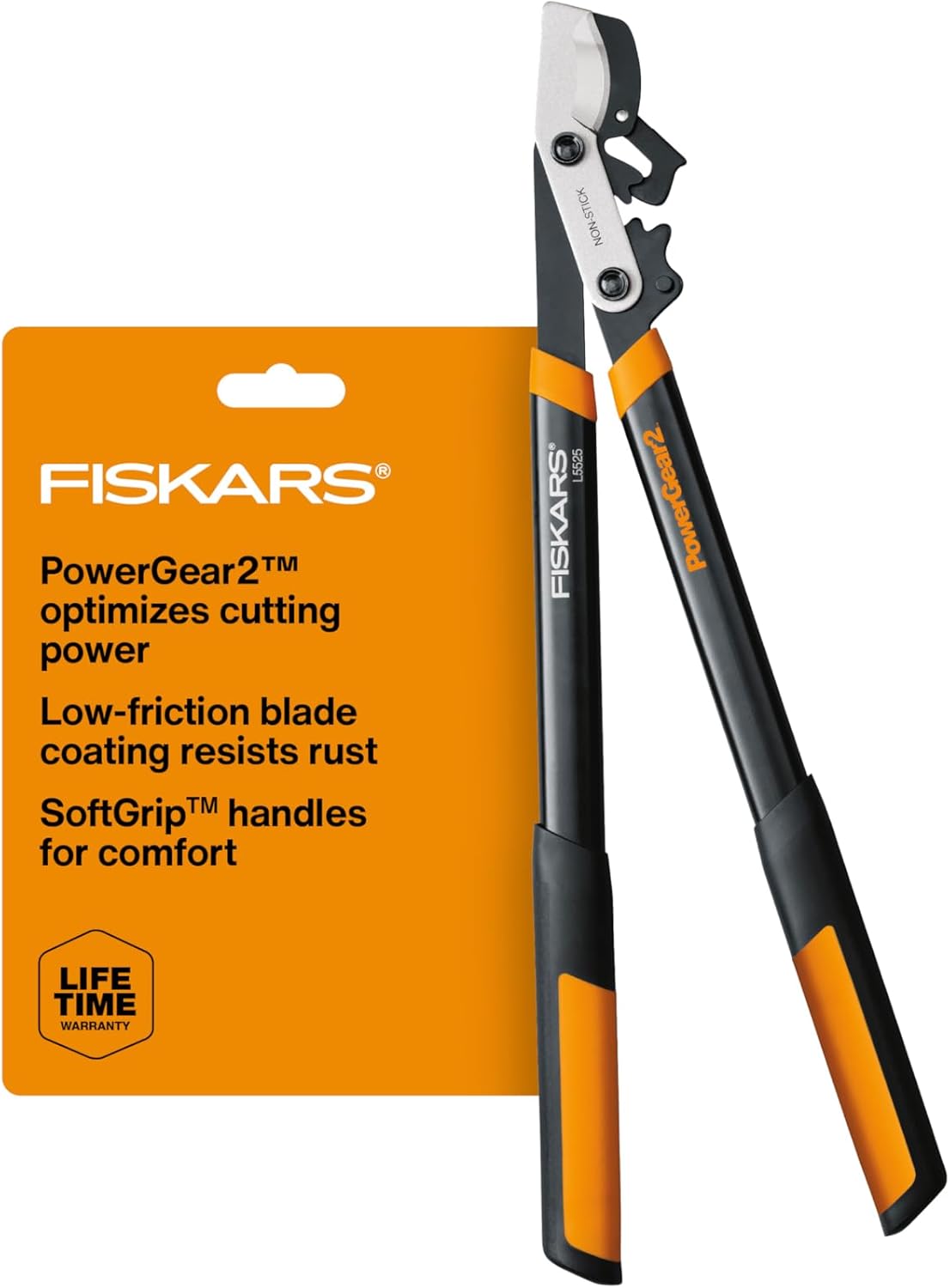
Fiskars PowerGear2 25" Bypass Loppers
| Cutting width | 1.75 inches |
|---|---|
| Blade Type | Bypass |
| Blade Edge | Serrated |
| Hand Orientation | Ambidextrous |
| Blade Material | Alloy Steel |
The Fiskars PowerGear2 25-inch bypass lopper is built for routine garden and yard pruning where you need more leverage than hand pruners provide. Its patented PowerGear2 gearing multiplies cutting force so the tool slices through branches up to about 1.75 inches in diameter with less hand strength. The fully hardened alloy-steel blades have a low-friction coating to resist sap and help cuts glide cleanly, and the serrated edge helps hold wood steady while cutting. Steel handles and cushioned SoftGrip areas deliver a sturdy feel and better control during longer sessions. Because it is a bypass design it makes cleaner cuts on living wood, which helps plant health. The main compromises are that the tool is a fixed-length, non-telescoping lopper so reach is limited to its 25-inch length, and the steel handles add weight compared with lighter aluminum models. For general gardening use this is a durable, low-maintenance choice that reduces effort on medium-diameter branches.
Best for: Gardeners who want a robust, easy-to-use lopper for routine pruning and medium branch removal and who prefer a durable tool that emphasizes cutting power and clean cuts.
Less Ideal for: People who need extra reach for high branches or who prioritize the lightest possible tool for long-duration use should consider extendable or lighter-material options.
- PowerGear2 gearing multiplies leverage to make cutting thicker branches easier
- Hardened alloy-steel bypass blades with low-friction coating for cleaner, less gummy cuts
- Serrated blade edge helps grip branches for controlled cuts
- Cushioned SoftGrip handles improve comfort and control during extended use
- Fixed 25-inch length limits reach compared with extendable loppers
- Steel handles make the tool heavier than aluminum alternatives
Verdict: Choose these PowerGear2 loppers if you want a durable, high-leverage bypass tool that makes clean cuts on medium-diameter branches with less effort.
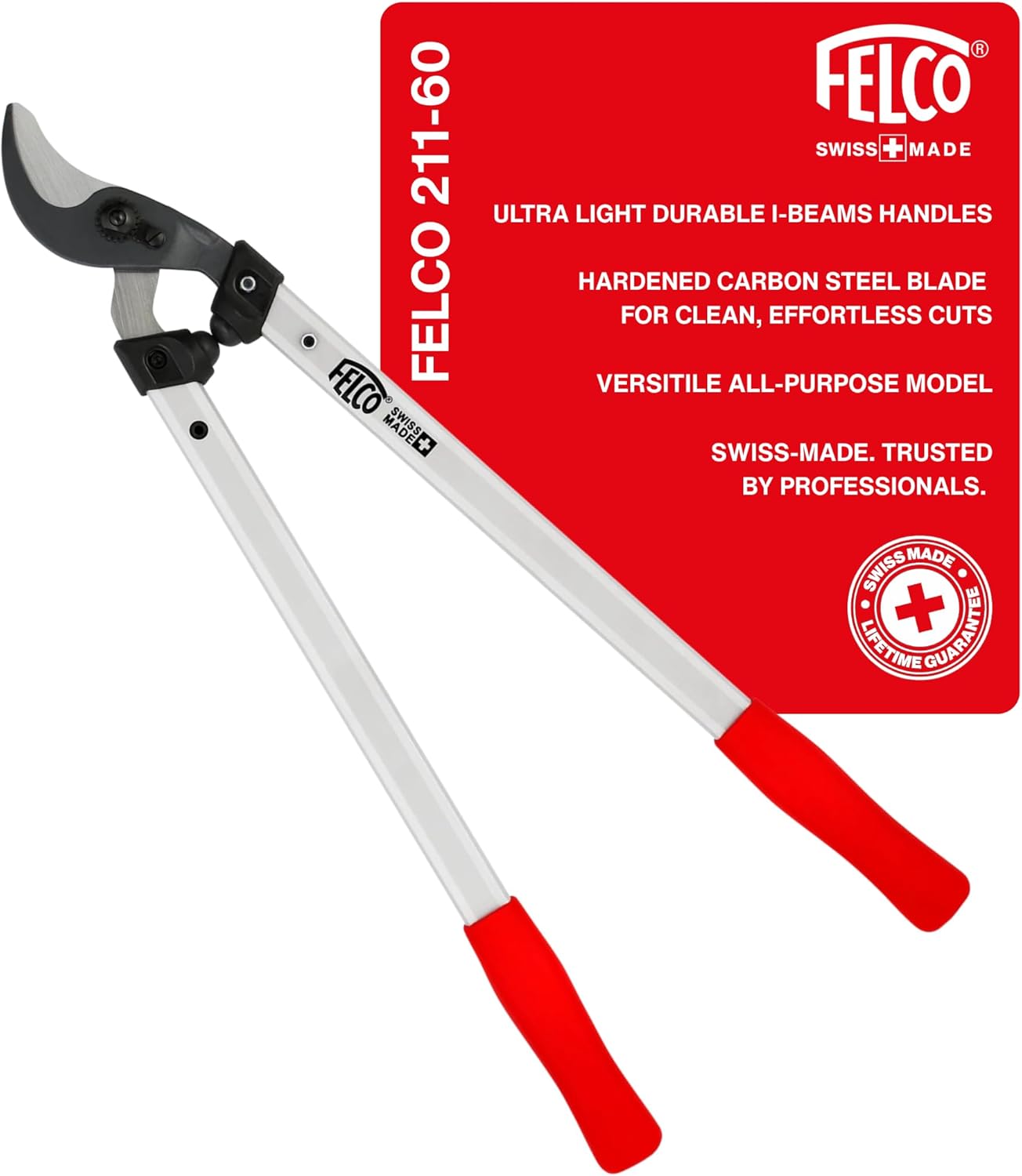
FELCO F211-60 24" Lightweight Swiss-Made Loppers with Curved Bypass Blade
| Blade Material | Carbon Steel |
|---|---|
| Handle Material | Aluminum |
| Blade Type | Parrot Beak |
| Hand Orientation | Ambidextrous |
| Cutting width | 1.2 inches |
The FELCO F211-60 is a performance-focused two-handed lopper built for clean cuts on branches up to about 1.2 inches. Designed with I-beam aluminum handles and a parrot-beak curved bypass blade of carbon steel, it balances low weight with cutting power so you can prune longer without tiring. Micrometric adjustment makes blade alignment and replacement straightforward, and replaceable parts and durable grips extend the tool's service life. In practice it shines on pruning fruit trees, shaping shrubs, and routine branch maintenance where precision and edge retention matter. Because it is a bypass-style cutter it produces cleaner wounds than an anvil cutter, which helps promote faster plant recovery. The tool is not oversized so it is best for light-to-medium branches rather than heavy-duty limbing, and the 24-inch length limits leverage compared with long-handled professional models. If you value a well-made, maintainable lopper that favors clean, accurate cuts, this is a strong option; if you consistently tackle very large-diameter wood you will want a longer or more heavy-duty cutter.
Best for: Gardeners and home orchard keepers who prioritize clean, precise cuts and a durable, serviceable tool for regular pruning and shaping tasks.
Less Ideal for: Landscapers or users who need maximum leverage for frequent heavy pruning of large-diameter branches should consider longer, heavier-duty loppers or a pruning saw instead.
- Lightweight I-beam aluminum handles reduce fatigue during extended use
- Carbon steel curved bypass blade offers good edge retention and clean cuts
- Micrometric adjustment and replaceable parts make maintenance and blade replacement simple
- Ambidextrous design and phthalate-free grips improve comfort and usability
- Cutting capacity around 1.2 inches limits use on larger limbs
- 24-inch length provides less leverage than longer professional loppers
Verdict: Buy this lopper if you want a lightweight, Swiss-made pruning tool that delivers precise, maintainable cuts for routine tree and shrub maintenance.
Corona SL 3264 ComfortGEL 30-inch Bypass Loppers

| Cutting width | 1.5 inches |
|---|---|
| Blade Type | Bypass |
| Blade Material | Alloy Steel |
| Handle Material | Alloy Steel |
The Corona SL 3264 ComfortGEL bypass lopper is a straightforward pruning tool aimed at routine yard work. It uses alloy steel bypass blades with a serrated edge and a Dual Arc-inspired geometry to slice through branches up to 1.5 inches in diameter. The 30-inch handles provide reach and leverage while the molded ComfortGEL grips and integrated Shock-Guard bumpers reduce hand strain during repeated cuts. A nonstick blade coating helps the blade stay sharp and resist sap buildup for easier maintenance. Practical benefits include comfortable grip for longer sessions, enough cutting capacity for most small-to-medium branches, and lightweight steel handles that keep the tool manageable. Limitations are the 1.5-inch cutting limit and fixed-length handles, which mean this lopper is not intended for larger limbs or for users who need an extendable reach. The alloy-steel construction is durable for general garden use but lacks the heavier-duty materials or advanced mechanics found on premium professional models.
Best for: Budget-minded gardeners who need a comfortable, reliable lopper for routine pruning of small to medium branches and want good ergonomics without a premium price.
Less Ideal for: Those who regularly cut large-diameter limbs, professional arborists, or gardeners who require extendable handles for high or distant branches.
- ComfortGEL grips and Shock-Guard bumpers reduce hand fatigue during prolonged use
- Serrated bypass blades with nonstick coating help clean cuts and resist sap buildup
- 30-inch handles give good leverage for cutting branches up to 1.5 inches
- Lightweight steel construction keeps the tool easy to maneuver
- 1.5-inch cutting capacity limits use on larger limbs
- Fixed-length handles cannot extend for extra reach
Verdict: A comfortable, no-frills lopper that gives budget-conscious buyers reliable cutting for routine small-branch pruning.
AIRAJ PRO 18" Bypass Loppers with SK5 High-Carbon Steel Blade

| Cutting width | 2 inches |
|---|---|
| Size | 18'' Bypass |
| Blade Type | Parrot Beak |
| Blade Material | High Carbon Steel |
| Hand Orientation | Ambidextrous |
These 18" bypass loppers are a straightforward, no-frills tool for routine garden pruning. The SK5 high-carbon steel blade is heat-treated and coated to resist rust and hold an edge, and the parrot-beak shape helps grab and slice through green stems. A solid iron-handle construction gives the tool a durable feel while a TPR soft coating on the grips improves control and reduces slipping during extended use. The built-in metal cushioning reduces recoil and wrist strain when cutting thicker branches. The manufacturer states a cutting capacity up to 1.5 inches for green wood and about 1 inch for dry wood, which makes these loppers suited to shrubs, hedges, and small-tree maintenance rather than heavy arborist work. At 18 inches and described as lightweight, they are easy to carry and use for longer sessions, but they lack extendable handles or gearing found on higher-end models that make very thick cuts easier. For gardeners who need reliable everyday pruning without specialty features, these loppers cover the essentials cleanly.
Best for: Budget-minded home gardeners who need a dependable, lightweight tool for regular pruning of shrubs, hedges, and small trees and who prioritize straightforward reliability over specialty features.
Less Ideal for: People who frequently cut very large or dead hardwood limbs or who want extendable handles or compound gearing for maximum leverage should look for a heavy-duty or ratcheting lopper instead.
- SK5 high-carbon steel blade with heat treatment for lasting sharpness and rust resistance
- Solid iron-handle construction that feels durable for regular garden use
- TPR soft-coated grips improve comfort and reduce slipping during extended use
- Metal cushioning reduces recoil and wrist strain when cutting thicker branches
- Fixed 18-inch length and no gearing or telescoping handles limits leverage on very thick branches
- Cutting capacity (up to 1.5" green, 1" dry) is modest compared with heavy-duty loppers
Verdict: A practical, affordable 18-inch bypass lopper that delivers sharp, reliable cuts for everyday pruning around the garden.
Fiskars 28" Garden Bypass Loppers — 1.5" Cut Capacity

| Cutting width | 1.5 inches |
|---|---|
| Blade Material | Stainless Steel |
| Blade Edge | Serrated |
| Hand Orientation | Ambidextrous |
The Fiskars 28" bypass loppers are built for regular pruning of small to medium tree branches and heavier yard cleanup. Its fully hardened stainless-steel blades with a low-friction nonstick coating slice through live wood up to 1.5 inches across, which helps reduce sap build-up and keeps cuts clean. The long steel handles and softgrip cushions with a shock-absorbing bumper make repetitive cutting less tiring and give more control when working higher or deeper into the canopy. The blades are replaceable, and the ambidextrous bypass design favors clean cuts on living stems rather than crushing. Practical limitations: the 1.5" cut capacity limits work on larger limbs and the all-steel handle design, while durable, is heavier than some aluminum models, so prolonged overhead work may be more tiring. For gardeners who value dependable, long-lasting gear, these loppers offer predictable cutting performance and a lifetime warranty for peace of mind.
Best for: Experienced home gardeners and property owners who prioritize durability and consistent cutting performance for routine pruning and tree maintenance.
Less Ideal for: People who need to cut large limbs regularly or who require a very lightweight lopper for extended overhead work should consider larger-capacity or lighter models.
- Hardened stainless-steel blades with non-stick coating for smoother, cleaner cuts and reduced sap buildup
- Replaceable blade design extends tool life and simplifies maintenance
- Softgrip handles and shock-absorbing bumper reduce hand fatigue during extended use
- Ambidextrous bypass blades produce precise cuts on living branches
- 1.5 inch maximum cut capacity prevents use on larger limbs
- All-steel handle construction is heavier than some lightweight alloy or composite alternatives
Verdict: A rugged, reliable bypass lopper that delivers clean cuts and long-term durability for routine pruning tasks.
Fiskars PowerGear2 32" Bypass Lopper — 2" Cut Capacity

| Cutting width | 32 inches |
|---|---|
| Cut capacity | 2 inches |
| Blade Type | Bypass |
| Blade Material | Alloy Steel |
| Handle Material | Aluminum |
The Fiskars PowerGear2 32" bypass lopper is built for pruning medium-thick branches with less wrist and hand strain. Its patented PowerGear2 leverage multiplies cutting force so a single-handed pull slices through up to 2" green wood that would otherwise need much more effort. The hardened alloy-steel blades have a low-friction coating to resist gumming and rust and the serrated edge helps hold the branch while you cut. Long aluminum handles with SoftGrip touchpoints give comfortable control and reach for higher or deeper cuts. Practical benefits include cleaner cuts on live growth, better mechanical advantage compared with basic loppers, and durable construction backed by a lifetime warranty. Limitations are that it is a fixed-length, non-telescoping tool so reach is limited to 32" and it is intended for live branches up to 2" in diameter rather than heavy deadwood or very large limbs. Users should still use pruning judgment for branch size and safety when working above shoulder height.
Best for: Buyers who want a proven, lower-effort lopper for routine pruning and shaping of trees and shrubs where social proof and reliability matter.
Less Ideal for: If you need extended reach for tall limbs or a tool for cutting very large or dead hardwood branches, choose an extendable or higher-capacity cutter instead.
- PowerGear2 gearing multiplies leverage for easier cutting of up to 2" branches
- Hardened alloy-steel blades with low-friction coating reduce gumming and resist rust
- Serrated bypass blade provides cleaner cuts on live growth
- Long aluminum handles with SoftGrip points improve comfort and control
- Fixed 32" length limits reach compared with extendable loppers
- Not designed for very large or heavily dead wood beyond the 2" cut capacity
Verdict: A reliable, easy-to-use lopper that delivers significantly more cutting power for everyday tree and shrub pruning.
Fiskars 32" PowerGear Bypass Lopper

| Cutting width | 2 inches |
|---|---|
| Blade Type | Bypass |
| Blade Material | Alloy Steel |
| Hand Orientation | Ambidextrous |
The Fiskars 32" PowerGear Bypass Lopper is built to make pruning larger live branches easier by multiplying your cutting force with a patented gearing mechanism. You use it like a traditional bypass lopper but the PowerGear system concentrates leverage near the middle of the cut, so pairs of long handles and a smooth action let you slice through up to 2-inch branches with noticeably less effort. The precision-ground alloy steel blades are bypass style and feature a low-friction coating to reduce gumming and resist corrosion, while SoftGrip handles and an ambidextrous design lower hand and wrist strain during longer jobs. The tool is relatively lightweight for its length thanks to reinforced composite handles, which helps prevent fatigue when trimming trees or large shrubs. Limitations are its 2-inch cutting capacity, which will not handle very thick limbs, and the fixed long handle length that may be awkward in tight spaces or for users who prefer telescoping reach. For routine yard maintenance and pruning of medium branches this lopper balances power, comfort, and durability.
Best for: A cautious buyer who wants a reliable, easy-to-use lopper for routine pruning of trees and medium shrubs and values ergonomic design and long-term durability.
Less Ideal for: Not the best choice for users who need to cut very large hardwood limbs or who primarily work in cramped spaces where a shorter or extendable tool is required.
- PowerGear mechanism multiplies leverage for easier cuts on medium branches
- Sharp, hardened alloy-steel bypass blades with low-friction coating for smoother, less gumming cuts
- SoftGrip, ambidextrous handles and lightweight composite construction reduce hand and arm fatigue
- Long 32" handles provide reach and mechanical advantage for tree and shrub pruning
- 2-inch maximum cutting capacity limits use on very thick limbs
- Fixed long handles can be cumbersome in tight or confined pruning spots
Verdict: Choose this lopper if you want a dependable, low-effort tool that reliably cuts up to 2-inch live branches while minimizing hand and arm strain.
Choosing the Right Loppers for Gardening: Key Factors to Consider
Blade Type and Edge Geometry
Blade type affects how a lopper slices through wood and how much damage a cut causes to a plant. Bypass blades are like scissors and make clean cuts on live wood when sharp. Anvil-style blades compress material against a flat plate and are often better for dead or thicker, dry branches.
Edge geometry and steel quality influence how long an edge holds and whether the blade needs frequent resharpening. A thin, hard ground edge will slice smoothly but can be more brittle; a tougher, slightly thicker edge resists chipping when you hit gritty or knotty wood. Consider the common wood types you prune and choose blades built to handle that material without crushing or tearing.
Cutting Capacity and Reach
Cutting capacity determines the maximum branch diameter you can handle without switching tools. Loppers come in a range of rated capacities; pick a tool rated slightly above the largest branches you expect to prune so you are not fighting the tool on hard cuts.
Reach is controlled by handle length and any telescoping feature. Longer handles increase leverage and let you reach higher or deeper into hedges, but they add weight and can be harder to control in tight spaces. Balance cutting capacity with the typical pruning tasks in your garden to avoid carrying unnecessary length or underpowering your loppers.
Handle Material and Ergonomics
Handle construction affects comfort, durability, and control. Aluminum shafts are lightweight and resist rust, while steel handles are heavier but can be more robust for heavy-duty work. Fiberglass offers shock dampening and resists weathering.
Grip shape and padding matter for repeated use. Contoured grips reduce slippage and spread pressure over the hand. If you have reduced grip strength or joint sensitivity, look for handles with thicker, cushioned grips and good hand spacing to reduce pinch points. Ergonomics also influence how accurately you can place cuts in tight branches.
Pivot Design and Fasteners
The pivot is the mechanical heart of a lopper. A solid pivot with a strong bolt, lock nut, or rivet keeps blades aligned and transmits leverage efficiently. Some designs incorporate sealed bearings or washers to reduce wear and keep action smooth.
Loose pivots, cheap rivets, or plastic fittings can lead to wobble and misaligned cuts over time. Look for durable hardware that can be adjusted if the tool loosens, and for designs where replacement parts are available to extend the tool's life rather than forcing replacement.
Weight, Balance, and Fatigue
How heavy a lopper feels depends on both mass and balance. A long, well-balanced tool can feel lighter in use than a short, poorly balanced one of the same weight. Heavier loppers often deliver more cutting force but also increase shoulder fatigue, especially when working overhead.
Assess your physical ability and typical work session length. If your pruning tasks are frequent or extended, prioritize lighter materials and good balance. For occasional heavy cuts, a heavier, sturdier tool may be acceptable if you can handle the extra strain for short bursts.
Sharpening and Serviceability
Blades that can be easily sharpened and maintained will perform better over years of use. Look for simple bevels and accessible edges that accept a file or sharpening stone. Some loppers allow blade removal for service; that simplifies deep sharpening or part replacement.
Serviceability also includes access to replacement parts such as springs, bolts, and blades. A lopper that can be maintained at home reduces long-term waste and keeps cutting performance consistent without forcing a full replacement.
When to Use Loppers Versus Other Tools
Loppers sit between hand pruners and a pruning saw in capability. Use them for branches that are too large for hand pruners but too small or awkward for a saw. They are ideal for repetitive pruning of stems roughly between a thumb and a forearm in diameter.
If you need to remove dead wood or make precision cuts near the main stem of shrubs and small trees, loppers offer more control and cleaner cuts than a saw in those size ranges. For very large branches, a saw is still the safer, more efficient choice.
- Best for stems roughly 3/8 inch to 1.5 inches depending on capacity
- Good for hedging, shaping shrubs, and clearing small saplings
- Not intended for major limb removal or cutting roots
Using Loppers Safely and Effectively
Position yourself so you cut at a comfortable height and have stable footing. Keep the branch supported as you close the blades to avoid sudden snaps that can cause loss of balance. If cutting overhead, use a pole saw or extendable loppers designed for that use to reduce strain and improve control.
Clean blades after use to remove sap and debris, and oil the pivot occasionally to keep action smooth. When cutting live wood, make clean, decisive cuts; partial bites and twisting increase the chance of torn tissue and slower healing.
- Wear eye protection and gloves to guard against flying debris and pinch points
- Cut at a slight angle when appropriate to direct water runoff from the wound
- Inspect blades and hardware before each season to catch wear early
Telescoping Handles and When They Help
Telescoping handles add reach and storage convenience but introduce moving parts that must lock securely. They are useful when you need occasional extra reach without carrying a permanently long tool.
Choose telescoping designs with positive, easy-to-use locks and durable tubing. If you will be using extended reach frequently, a fixed long-handled lopper may offer better rigidity and longer life.
- Use telescoping handles for mixed tasks where reach needs vary
- Avoid cheap locking mechanisms that slip under load
- Remember extended length increases felt weight and can reduce precision
Maintaining Blades and Pivot Points
Regular maintenance keeps cuts clean and extends tool life. Wipe blades after each use, remove sap with a suitable solvent if needed, and apply a thin oil film to the pivot to prevent rust. Sharpen regularly following the blade bevel to maintain a keen edge.
If blades become gouged or chip from hitting dirt or hard knots, remove and regrind the damaged area or replace the blade if service parts are available. Tighten pivot hardware to maintain alignment but avoid over-torquing which can bind moving parts.
- File or stone edges along the original bevel angle
- Replace or service worn bushings or washers to keep action smooth
- Store in a dry place to prevent corrosion
Matching Lopper Choice to Plant Types
Hard, knotty trees such as older hardwoods require robust blades and strong pivots. For ornamental shrubs with softer stems, a lighter lopper with a sharper blade gives cleaner cuts with less effort. Consider the proportion of dead versus live wood you handle: anvils can be forgiving on dead branches, while bypass blades are preferable on living green growth.
If you manage a mixed landscape, aim for a versatile tool with a mid-range cutting capacity and good leverage rather than a specialist design that only excels in one niche.
- Hardwood pruning benefits from durable pivots and tougher edges
- Soft-stem shrubs benefit from sharp, narrow blades for precision
- Mixed gardens favor versatile, serviceable loppers
How We Chose the Best Loppers for Gardening
We focused on attributes that actually affect pruning results and how the tool feels during repeated garden use. Primary evaluation criteria were blade geometry and steel quality for cut cleanliness, handle length and leverage for reachable capacity and mechanical advantage, overall weight and balance for user fatigue, and durability of pivots and fasteners for long-term reliability. We also considered maintenance needs: how easy the blades are to sharpen and the accessibility of replacement parts. Excluded from consideration were designs intended only for professional arborists, overly specialized bypass styles for bonsai, and tools meant solely for cutting metal or non-woody materials. We filtered out loppers with unclear specifications on cutting capacity or materials since those details matter when pruning different woody species. Final selections favored options that offered clear cutting diameter ratings, sturdy pivot construction, and practical ergonomics for typical home garden tasks.
FAQ
What size branch can typical loppers handle?
Most loppers handle branches between about 3/8 inch and 1.5 inches in diameter depending on design. Check the rated cutting capacity and choose a tool rated slightly above the largest branches you expect to prune.
Are bypass or anvil loppers better for live plants?
Bypass loppers generally make cleaner cuts on live woody stems and are preferred for healthy plants. Anvil loppers can be useful for dead wood because they crush as they cut, but that crushing can damage live tissue.
How often should I sharpen lopper blades?
Frequency depends on use and wood type. Light home use may need sharpening once per season, while heavy or gritty work may require more frequent touch-ups. Keep a file or whetstone handy and follow the blade's original bevel.
Can I repair a lopper if the pivot becomes loose or worn?
Often yes. Many loppers have replaceable bolts, nuts, bushings, or washers that can be tightened or swapped out. If the pivot housing is badly worn, professional repair or part replacement may be needed to restore proper alignment.
Is a telescoping handle worth it for a small garden?
Telescoping handles offer convenience and variable reach but add moving parts and potential weight. For a small garden where reach needs are minimal, a fixed shorter handle is often lighter and more rigid.
Final Verdict
Choose loppers that match the largest regular cutting task in your garden while keeping weight and ergonomics in mind. Prioritize blade type appropriate to live or dead wood, a sturdy pivot that will stay aligned, and handles that feel comfortable during extended use. Tradeoffs are normal: longer, heavier tools give more reach and leverage but increase fatigue, while lighter models sacrifice some cutting capacity for ease of use. Focus on maintenance and serviceability to extend tool life. With the right balance of cutting capacity, comfort, and durability, you can pick a pair of loppers that makes pruning faster and healthier for your plants.
