

Note: This article contains affiliate links. If you click on these links and make a purchase, I may earn a small commission at no extra cost to you. This helps support my research and content. Read my full affiliate disclosure here.
If you plan to keep ducks or attract wild waterfowl, a purpose-built pond liner makes a big difference in durability and bird safety. The right pond liner for ducks resists punctures from claws and beaks, handles constant wet-dry cycles, and keeps water quality stable for swimming and dabbling. This guide covers seven shortlisted pond liners chosen for the realities of a duck pond: tear resistance, non-toxicity, and ease of shaping and installing in variable terrain. Below you will find practical notes on installation and maintenance plus the criteria we used to evaluate each liner and why these factors matter to backyard poultry keepers and habitat builders.
Top Picks at a Glance
| Best Overall The best all-around choice for most situations | yeezoo 30 x 40 ft Reinforced PE Pond Liner (Five-Layer) |  |
| Best Quality Built to a higher standard if you want something more solid | Firestone 45mil EPDM Rubber Pond Liner, 15 ft x 20 ft |  |
| Best Value The sweet spot between price and what you get | Adroiteet 14 x 14 ft HDPE Pond Liner, 20 mil |  |
| Best Budget The cheapest option that still gets the job done reliably | Froidesente 7 x 10 ft HDPE Pond Liner (20 mil) with Gloves |  |
| Highest Rated A top-rated pick with lots of positive feedback | Firestone PondGard EPDM Pond Liner 45 mil, 10 x 10 ft |  |
| Most Popular A crowd favorite that many people choose with confidence | UWIOFF 20 Mil HDPE Pond Liner, 7 x 10 ft |  |
| Best Seller A high-volume bestseller chosen again and again | ToLanbbt HDPE Pond Liner, 7 x 10 ft, 20 mil UV-Resistant |  |
yeezoo 30 x 40 ft Reinforced PE Pond Liner (Five-Layer)

| Size | 30 x 40 ft |
|---|---|
| Construction | Five-layer reinforced PE |
| Manufacturer | Yeezoo |
This 30 x 40 ft reinforced PE pond liner is built for large outdoor ponds and farm uses such as koi, fish, or duck ponds. Its five-layer construction combines a thermalized HDPE core, net-reinforcement and waterproof coatings on both sides to increase puncture, wear, and leak resistance while keeping the sheet softer and easier to shape than very thick single-layer liners. In practice it is laid over a leveled base with underlayment, trimmed to fit and secured with overlapping edges and edging materials. The liner's improved flexibility makes installation and forming around irregular shapes simpler, and the reinforced layers should extend service life compared with many 3-layer liners. Important limitations are that it is not indestructible so you still need underlayment and careful site preparation, and handling a large 30×40 ft sheet requires two people and space to unfold and position. For a balanced buyer wanting durability without excessive stiffness, this liner is a practical choice for outdoor ponds used by ducks or fish.
Best for: Buyers who want a durable, easier-to-work-with liner for medium to large outdoor duck or fish ponds and who value longevity without the stiffness of very thick single-layer liners.
Less Ideal for: People building very small decorative ponds where a full 30 x 40 ft sheet is excessive or installers who cannot manage and position a large sheet during installation.
- Five-layer structure with reinforced core and waterproof coatings improves puncture and leak resistance
- Softer and more flexible than very thick HDPE liners, making it easier to shape and trim for irregular ponds
- Suitable for outdoor temperature variations and described as durable for multiple years of use
- Large 30 x 40 ft sheet covers big ponds or can be trimmed for multiple smaller installations
- Large sheet size requires at least two people and clear space to handle and position
- Still requires proper underlayment and careful site prep because it is not immune to punctures from sharp objects
Verdict: A roomy, five-layer reinforced PE liner that balances durability and flexibility for long-lasting outdoor duck or fish ponds.
Firestone 45mil EPDM Rubber Pond Liner, 15 ft x 20 ft

| Material | EPDM rubber |
|---|---|
| Thickness | 45 mil (0.045 inch) |
| Shape | Pre-cut sheet |
| Intended use | Pond liner for water gardens |
This Firestone 45 mil EPDM pond liner is a performance-focused, pre-cut rubber liner intended for medium to large backyard ponds and water features. Its 0.045-inch (45 mil) thickness gives noticeable puncture and weather resistance compared with thinner liners, and the flexible EPDM material makes it easy to form around irregular shapes and rockwork during installation. The liner arrives boxed and ready to unroll, which speeds setup for DIY installers or professionals. Because EPDM is fish-safe and chemically stable, it suits planted ponds and ornamental fish. The main practical limitations are that a pre-cut sheet requires careful measuring and overlap planning for very large or unusually shaped excavations, and heavier liners need two people to position without stretching. If you plan to anchor edges with rocks or a preformed underlayment, the liner performs well, but expect to add protective underlayment where the substrate is sharp. Overall it is a durable, low-maintenance choice when longevity and resilience are priorities.
Best for: Buyers who prioritize a long-lasting, resilient liner for planted or fish ponds and want a performance-oriented material that handles rockwork and irregular designs.
Less Ideal for: People planning very large commercial ponds or those who need a fully custom-shaped preformed liner should consider alternatives tailored to larger scales or exact shapes.
- 45 mil EPDM thickness for strong puncture and weather resistance
- Flexible material conforms to irregular pond shapes for easier installation
- Fish- and plant-safe EPDM chemistry suitable for biological ponds
- Pre-cut, boxed sheet simplifies purchasing and speeds setup
- Pre-cut dimensions limit use for ponds larger than the sheet without seams
- Heavier roll can require two people to position and smooth during install
Verdict: Choose this 45 mil EPDM liner when you want a durable, fish-safe pond liner that resists punctures and conforms to irregular backyard pond designs.
Adroiteet 14 x 14 ft HDPE Pond Liner, 20 mil

| Material | HDPE |
|---|---|
| Thickness | 20 mil |
| Use | Outdoor ponds |
This Adroiteet 14 x 14 ft pond liner is a heavy-duty HDPE sheet intended to create a long-lasting waterproof basin for outdoor ponds. With a 20 mil thickness and UV protection, it resists punctures, tears, and sun degradation better than thin LDPE liners, which makes it suitable for installations where durability matters. Typical use is straightforward: place underlayment, fit the liner into the excavated pond shape, trim excess and anchor the edges, then fill with water. The material is described as smooth and easier to clean, helping keep soil and contaminants out of the water and simplifying maintenance. The liner’s robust construction is well suited to ponds that see activity from waterfowl or occasional abrasion from rocks and landscaping. Limitations are that the product is a single sheet requiring careful handling during installation and seams or custom shapes may need welding or professional joining for larger or complex ponds; it also requires a proper underlayment and careful site prep to avoid sharp objects that could compromise it.
Best for: Practical owners building a durable backyard pond who prioritize a tough, low-maintenance liner that stands up to sun exposure and regular use by ducks or other waterfowl.
Less Ideal for: People looking for a ready-made molded pond or a liner for very small decorative containers should consider alternatives that are preformed or sized for tiny installations.
- 20 mil HDPE construction offers superior puncture and tear resistance compared with thinner liners
- UV-protected material reduces degradation from sunlight for longer outdoor life
- Smooth surface that limits soil infiltration and makes pond cleaning easier
- Sized for medium backyard ponds and suitable for common pond features like waterfalls and fountains
- Single-sheet liner may require welding or professional joining for custom or very large ponds
- Requires careful site preparation and an underlayment to prevent damage from sharp objects
Verdict: Choose this 20 mil HDPE liner when you need a durable, UV-resistant base that will hold up to ducks and heavy backyard pond use.
Froidesente 7 x 10 ft HDPE Pond Liner (20 mil) with Gloves
| Material | HDPE |
|---|---|
| Thickness | 20 mil |
| Applicable objects | Garden ponds, waterfalls, cisterns |
| Features | Tear & penetration resistance |
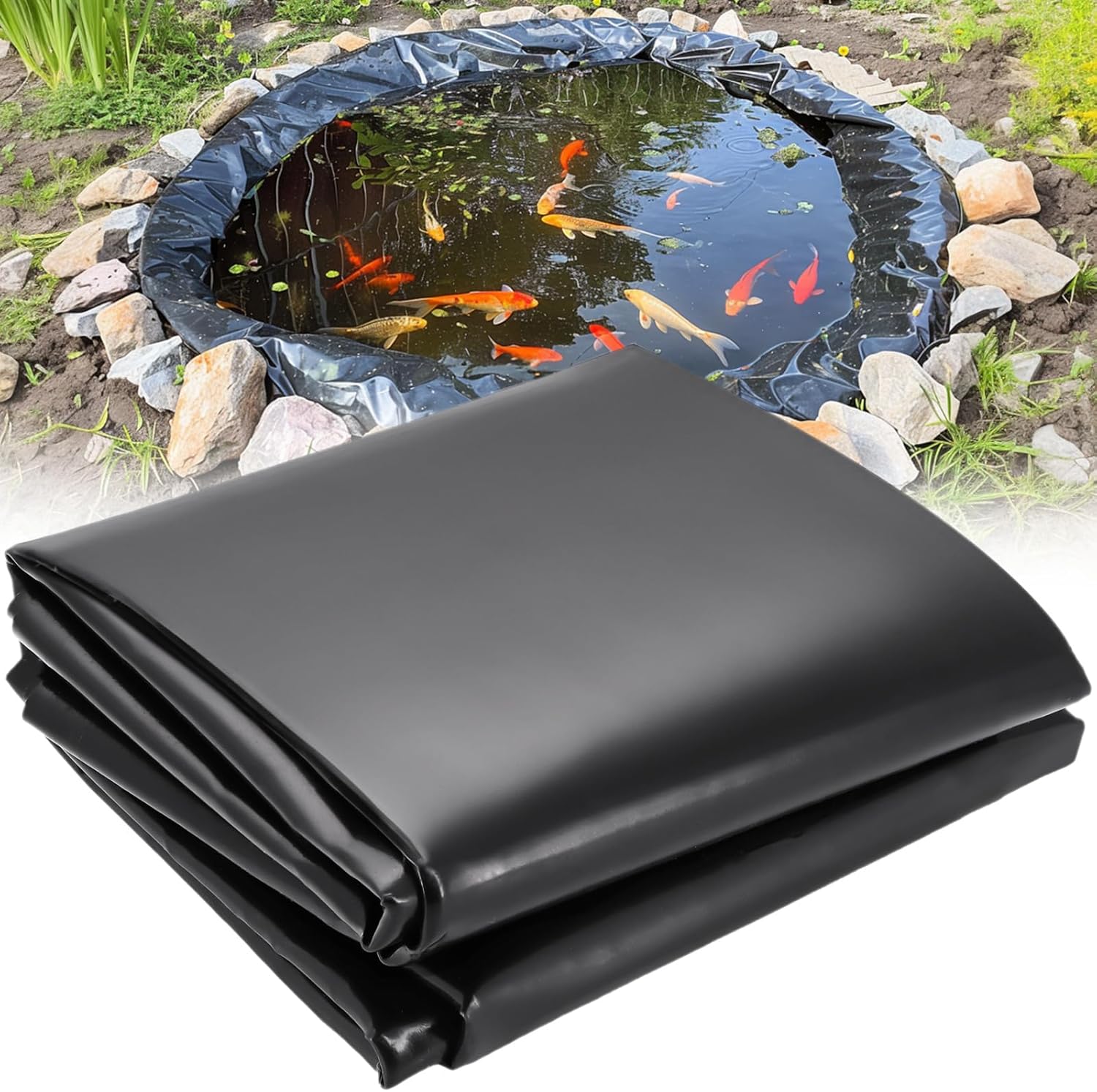
This Froidesente 7 x 10 ft pond liner is a straightforward HDPE sheet meant for backyard ponds, waterfalls, cisterns and small water features. Made from 20 mil high-density polyethylene, the liner is flexible enough to be cut to shape on site and resistant to punctures and UV exposure, which helps it hold water and protect pond plants and fish. Typical use is simple: dig the hole, trim the liner to fit, position it and weigh or anchor the edges with stone or plants; the listing also includes gloves for handling. For repairs or joining pieces you can use butyl seam tape sold separately. Practical benefits are durability in seasonal temperature swings and reduced soil ingress for easier pond maintenance. Limitations are that the pre-cut 7 x 10 ft size restricts you to smaller installations or requires seams for larger ponds, and HDPE is less stretchy than some EPDM options so careful fitting around complex shapes is needed. This is a no-frills liner aimed at basic pond builds rather than architectural or very large installations.
Best for: Buyers who need a durable, budget-friendly liner for small backyard ponds or water features and prefer a simple, easy-to-install sheet they can trim themselves.
Less Ideal for: Those planning large koi ponds, highly irregular or landscaped ponds that need a very elastic membrane, or installers who want a pre-measured custom liner without seams.
- 20 mil HDPE construction offers good puncture and UV resistance for outdoor use
- Flexible sheet can be cut on site to match custom pond shapes
- Suitable for four-season exposure and temperature swings
- Includes gloves for handling during installation
- Small pre-cut size may require seams for larger ponds
- Not as elastic as EPDM liners, so careful fitting on irregular shapes is needed
Verdict: A practical, inexpensive 20 mil HDPE sheet that delivers durable, no-frills protection for small backyard ponds.
Firestone PondGard EPDM Pond Liner 45 mil, 10 x 10 ft
| Material | EPDM |
|---|---|
| Thickness | 45 mil |
| Fish safe | Yes |
| Sheet size | 10' x 10' |
The Firestone PondGard 45 mil EPDM liner is a heavy-duty, fish-safe liner intended as the waterproof foundation for small backyard ponds. It is typically used to line excavated ponds or preformed shells up to roughly 6 x 6 ft, providing a flexible, puncture-resistant barrier that tolerates normal pond installation and landscaping. Notable features include the 45 mil thickness favored by contractors for durability and the EPDM rubber formulation that stays pliable in a range of temperatures. Practical benefits are straightforward: long-lasting performance that resists tearing, a smooth material that is easy to shape around edges and features, and suitability for fish and plants without harmful additives. Limitations are its fixed flat sheet size and the need for careful underlayment and seam overlap when installing larger or irregular ponds, so professional installation or careful DIY preparation is advisable. For reliability-focused buyers this liner delivers a proven, contractor-grade membrane that reduces the risk of leaks over cheaper thin liners.
Best for: Buyers who prioritize long-term reliability and want a contractor-grade EPDM liner for a small to medium backyard pond or water garden and are prepared to install or hire proper installation.
Less Ideal for: Casual gardeners who want a plug-and-play preformed pond or those who need an exact custom-cut liner for large or unusually shaped ponds without seams.
- 45 mil EPDM offers high puncture and tear resistance compared with thin liners
- Formulation is fish safe, suitable for ponds with fish and aquatic plants
- Flexible and pliable for shaping around features and edges during installation
- Well-regarded contractor-grade material trusted for long-term waterproofing
- Supplied as a flat 10 x 10 ft sheet so larger or complex ponds require seams or multiple pieces
- Requires proper underlayment and careful installation to avoid damage during placement
Verdict: Choose this EPDM PondGard liner when you want a dependable, contractor-grade membrane that minimizes leak risk for a small backyard pond.
UWIOFF 20 Mil HDPE Pond Liner, 7 x 10 ft

| Material Type | High Density Polyethylene (HDPE) |
|---|---|
| Thickness | 20 mil |
| Additional Features | Tear Resistant, UV Resistant |
| Installation Type | simple |
This UWIOFF 20 mil HDPE pond liner is a straightforward, heavy-duty option for small backyard ponds and water features. Sized at 7 x 10 feet, the black HDPE sheet is UV resistant and described as puncture and tear resistant, which helps protect water and pond inhabitants like ducks from leaks and ground contaminants. Installation is simple: lay underlayment, shape the liner to the hole or container, then trim and secure the edges with stones or edging. Its thickness makes it stiffer than thin liners so it resists accidental punctures and holds shape around shallow banks. The material is safe for plants and fish and provides a flat surface that reduces soil intrusion and simplifies cleaning. Limitations are practical: seams may be needed for larger ponds and HDPE can be less forgiving to mold tightly around complex contours compared with very flexible EPDM liners. Also the listed size is best for modest duck ponds only; bigger flocks will require larger sheets or joined liners. Overall it is a durable, no-frills liner for small duck ponds where puncture resistance and UV stability matter.
Best for: Buyers who want a durable, low-maintenance liner for a small backyard duck pond or water feature and who prioritize material toughness and UV stability backed by many user reviews.
Less Ideal for: People planning large ponds, ponds with many irregular contours, or those who want a highly elastic liner that conforms tightly without seaming.
- 20 mil HDPE construction offers strong puncture and tear resistance
- UV resistant material for longer outdoor lifespan
- Safe for fish and plants and reduces soil contamination in the pond
- Relatively simple installation that does not require special tools
- Size may be too small for larger duck ponds without seaming multiple liners
- HDPE is stiffer than some alternatives and can be harder to shape around complex contours
Verdict: A tough, UV-stable 20 mil HDPE liner that is a solid, practical choice for small backyard duck ponds where puncture resistance matters.
ToLanbbt HDPE Pond Liner, 7 x 10 ft, 20 mil UV-Resistant

| Size | 7 x 10 Feet |
|---|---|
| Material | HDPE |
| Thickness | 20 Mil |
| Manufacturer | ToLanbbt |
This ToLanbbt pond liner is a straightforward HDPE sheet sized for small ponds and water features. It is 20 mil thick, flexible enough to shape around corners and shelves, and the material is described as UV resistant and puncture tolerant so it can be used outdoors without added plasticizers. Typical use is to clean and flatten the excavation, lay the liner, trim to fit, and cover exposed edges with pebble or edging material; the manufacturer also recommends removing sharp stones or debris before installation. The liner’s thin, lightweight construction makes it easy to handle and cut to irregular shapes, and its waterproof, impermeable surface helps keep soil and contaminants out of the pond. Limitations are that 20 mil HDPE is not as durable as heavier EPDM or reinforced PVC liners for areas with heavy foot traffic or large koi and it offers less protection against sharp objects unless an underlayment is used. For a budget build or a small decorative pond, this liner provides a simple, usable solution but expect to add protections if you need longer-term durability.
Best for: Buyers who need an economical, easy-to-handle liner for a small decorative pond, fountain, or water garden and prioritize low cost and simple installation.
Less Ideal for: Gardeners planning large koi ponds, heavy foot traffic around the pond, or long-term, high-durability installations should consider thicker or reinforced liners instead.
- 20 mil HDPE material offers good flexibility for shaping around corners and shelves
- UV resistant and advertised as puncture tolerant for outdoor use
- Lightweight and easy to cut to fit irregular pond shapes
- Waterproof surface prevents soil and contaminants from seeping into the pond
- 20 mil thickness is thinner than heavy-duty EPDM liners and may wear faster in high-abrasion situations
- Requires careful site preparation or an underlayment to avoid punctures from sharp stones
Verdict: A budget-friendly, easy-to-cut 20 mil HDPE liner that works well for small decorative ponds and simple DIY water features.
Choosing the Right Pond Liner for Ducks: Key Factors to Consider
Puncture and Tear Resistance
Ducks scratch, preen, and sometimes stand or scratch on pond edges, so a liner that resists punctures prevents frequent leaks. Thicker liners usually provide better protection, but thickness is not the only measure; the base material and reinforcement weave determine tear strength.
Consider how the liner will contact the ground. Rocks, roots, and debris under the liner are common puncture sources. A liner with a textured or reinforced backing and a reasonable tear-strength rating will give you longer service life with less maintenance.
Material Safety and Chemical Composition
Any liner used for ducks must be made from materials that will not leach harmful chemicals into the water. Look for liners formulated without heavy metals, phthalates, or other softeners known to break down in aquatic environments.
Stable polymer formulations and clear manufacturer statements about wildlife safety are strong signals. Even with safe materials, new liners should be rinsed and cycled before introducing birds to reduce any initial off-gassing or residue.
Flexibility for Shaping Banks and Shelves
Backyard ponds often have irregular shapes, shallow shelves for ducklings, and sloped banks. A liner that is flexible at typical installation temperatures is easier to form into ledges and shallow areas used for feeding and resting.
Rigid or very heavy liners may crease or fold, creating stress points that can lead to premature failure. Evaluate how the material performs cold and warm, especially if you live in a region with seasonal temperature swings.
UV Resistance and Weather Durability
Exposure to sun and freezing cycles degrades many polymers. Ducks often use ponds year-round, and liners that resist UV breakdown and remain stable through freeze-thaw cycles reduce the need for off-season repairs.
Look for materials treated for UV stability or thicker products with proven weather ratings. Proper burial of the edges and a protective cover layer, such as underlayment or sand, will extend liner life regardless of base UV resilience.
Installation Complexity and Repairability
Some liners are easy to place and trim with basic tools while others need heating equipment or professional welding for seams. For most backyard duck ponds, choose a liner that a handy homeowner can cut, fit, and join with mechanical fasteners, patches, or simple adhesives.
Also consider how straightforward repairs are if the liner is punctured. Patch kits, compatible adhesives, and the ability to access seams make long-term upkeep less painful and less expensive.
Weight, Handling, and Sizing Options
A liner that is too heavy or supplied only in very large rolls can make installation difficult for a small crew. Options available in manageable widths or pre-cut pond-shaped sheets simplify placement and reduce the risk of stretching or folding during installation.
Balance the convenience of a lighter material against the need for durability. If you plan to work alone or with one helper, look for sizes and weights you can handle without risking damage while moving the liner into place.
Preparing a Duck-Friendly Pond Bed
Start by removing sharp rocks, branches, and roots from the excavation. A smooth, compacted subgrade reduces pressure points against the liner and cuts the chance of punctures. Use a layer of sand or a geotextile underlayment specifically designed for pond liners to add cushioning between the soil and liner.
If you plan shelves for shallow water or duckling access, form those contours in the subgrade rather than trying to fold the liner to create vertical steps. Building the shape in the ground first makes fitting the liner easier and reduces creasing.
- Remove debris and sharp objects from the hole
- Add a geotextile underlayment or sand layer for protection
- Form shelves and banks in the soil before placing the liner
Edge Treatment and Anchoring Methods
Secure edges by burying them in a shallow trench and backfilling with rounded stones or soil. Avoid sharp rocks directly against the exposed edge. For permanent installations, cover the buried lip with vegetation or paving stones to provide a natural look and additional protection.
Mechanical anchors and gradual sloping reduce stress at seam junctions. If the liner will be exposed to foot traffic from ducks or people, consider adding an edge buffer such as larger rocks or a turf strip to prevent grazing wear.
- Bury liner edges in a trench and backfill with rounded material
- Use vegetation or stone to protect exposed edges
- Add buffers where foot traffic is expected
Routine Maintenance for Water Quality and Longevity
Regularly remove debris like leaves and plant matter that can abrade the liner or accelerate biological buildup. Check for signs of algae growth and maintain appropriate water circulation and filtration to keep water healthy for ducks.
Inspect the liner seasonally, especially after freezing or heavy storms. Patch small punctures promptly with compatible patch kits and keep spare material on hand for emergency repairs.
- Skim debris and maintain circulation
- Inspect seams and visible areas seasonally
- Carry a compatible patch kit for quick repairs
Designing for Duck Behavior and Safety
Ducks need shallow entry and exit points rather than steep edges. Gentle slopes and wide shelves reduce the chance of birds slipping and reduce wear on the liner at contact points. Provide nearby perches or dry roosting areas so birds do not constantly stand on the same bank spots.
Avoid steep drop-offs that concentrate duck traffic. Placing aquatic plants in shallow areas helps improve water quality and provides natural cover, but anchor planting baskets to prevent roots or weights from creating sharp pressure points on the liner.
- Create gentle slopes and wide entry shelves
- Include perches and dry roosting areas
- Use anchored planting baskets to protect liner from root pressure
How We Chose the Best Pond Liner for Ducks
We focused on characteristics that matter for duck ponds rather than general ornamental water features. Primary evaluation criteria included material durability under abrasion and puncture stress, chemical safety for birds, flexibility and ease of shaping for irregular banks, long-term UV and freeze-thaw resistance, and how straightforward it is to install and maintain the liner in a duck-friendly setup. We prioritized liners with documented tear strength and thickness ranges that balance puncture resistance with manageable weight. Products were excluded if they contained questionable additives, required complex professional welding for basic installations, or were sized only for very large commercial projects that make backyard installation impractical. We also filtered out liners that lack any manufacturer guidance on wildlife safety or that rely on adhesives or coatings known to break down in pond water. The listed liners passed these filters and were then compared across the concrete criteria below to reflect what backyard keepers will actually experience during installation and seasonal use.
FAQ
What liner thickness is best for a duck pond?
Thicker liners are generally better because they resist punctures and tearing, but there is a balance between thickness and manageability. Many backyard ponds use medium-weight liners that provide good puncture resistance while still being flexible enough to shape and install without heavy equipment.
Can I install a liner myself or should I hire a pro?
Many liners are designed for homeowner installation and can be handled by two or three people. Very large or heavy liners and installations requiring welded seams are best handled by professionals. Your decision depends on liner weight, pond size, and whether the liner needs heat-welded seams for permanence.
How do I protect the liner from duck claws and nesting activity?
Protective underlayment, buried edges, and rounded stones at high-traffic spots reduce localized wear from claws and nesting. Also create shallow shelves and distribute access points so birds do not concentrate wear on a single area.
Is a geotextile underlayment necessary?
An underlayment is highly recommended because it cushions the liner from sharp stones and roots and spreads loads across a wider area. It also simplifies future repairs by preventing direct contact between liner and soil.
Final Verdict
Choose a pond liner that balances puncture resistance with workable flexibility and clear material safety for wildlife. Prioritize liners that offer UV and weather resistance, straightforward installation, and easy repair options so you can maintain a healthy duck habitat without frequent replacements. Focus on prepping the site correctly, protecting edges, and creating gentle access points; those steps often matter more for long-term success than marginal differences in liner specs.
