

Note: This article contains affiliate links. If you click on these links and make a purchase, I may earn a small commission at no extra cost to you. This helps support my research and content. Read my full affiliate disclosure here.
Growing cantaloupe on a trellis changes how you manage vines, fruit weight, and garden space. A well-chosen trellis keeps fruit off the soil, improves airflow around leaves, and makes pruning and harvesting less awkward. This guide covers six shortlisted trellises suited for cantaloupe growing situations, explaining how each option performs for support, ease of use, and plant health. Read on to see which features matter most for sturdy vines and cleaner, better-shaped melons before the product list.
Top Picks at a Glance
| Best Overall The best all-around choice for most situations | Alxcellion Adjustable A‑Frame Steel Trellis (17–50") |  |
| Best Quality Built to a higher standard if you want something more solid | HIHADUUM 2-Pack 50" A-Frame Metal Trellis for Climbing Plants |  |
| Best Value The sweet spot between price and what you get | Growia 48 x 48 in U‑Shaped Vegetable Trellis for Raised Beds |  |
| Best Budget The cheapest option that still gets the job done reliably | JK-GMTE A‑Frame Metal Garden Trellis Set with Netting and Clips |  |
| Highest Rated A top-rated pick with lots of positive feedback | YOBAZAN 50" A‑Frame Metal Cucumber Trellis with Accessories |  |
| Best Seller A high-volume bestseller chosen again and again | MQHUAYU U‑Shape Garden Trellis for Climbing Plants (Medium) |  |
Alxcellion Adjustable A‑Frame Steel Trellis (17–50")

| Material Type | Steel |
|---|---|
| Finish Type | Powder Coated |
| Shape | A-Shape |
| Size | 1 Pcs |
This Alxcellion adjustable A‑frame trellis is built to give strong, long‑term support to cucumbers and other heavy vines. The kit ships as two pre‑assembled panels that lock together with a forged steel hinge and six bolts so you can set it up in minutes and expand the height from 17" to 50" as plants climb. The dense 3.15" × 3.94" steel grid and reinforced 1cm outer frame reduce sag and spread load across the whole panel, which helps with heavy fruit and dense foliage. Powder coating improves weather resistance for multi‑season use and the frame collapses flat for compact storage. Important limitations are that it is a fixed A‑frame shape, so it provides vertical support but is not a trellis you would easily reshape into arches or custom curves, and it is moderately heavy which affects portability and repositioning once planted. For gardeners prioritizing sturdy, low‑maintenance support for productive cucumber plants, it offers a performance‑focused solution.
Best for: Gardeners who want a performance‑oriented, durable support for productive cucumber vines and heavy fruit in raised beds or containers and value quick setup and season‑to‑season reliability.
Less Ideal for: People seeking lightweight, highly portable trellises or decorative, flexible shapes for training plants into arches or custom forms.
- Adjustable height from seedling to full vine for staged training
- Dense welded steel grid distributes weight and minimizes sag
- Pre‑assembled panels with forged hinge speed installation
- Powder‑coated steel resists rust and stores flat between seasons
- A‑frame is a fixed shape and not suitable for nonvertical or decorative trellis shapes
- Heavier steel construction makes it less convenient to move once installed
Verdict: Choose this trellis when you need a heavy‑duty, adjustable support that keeps cucumbers upright and handles heavy fruit without sagging.
HIHADUUM 2-Pack 50" A-Frame Metal Trellis for Climbing Plants

| Number of Packs | 2 |
|---|---|
| Material Type | Iron, Metal |
| Finish Type | Powder Coated |
| Shape | A-Shape |
| Size | 50" X 17" |
This two-pack of A-frame trellises gives home gardeners a heavy-duty, space-saving way to train cucumbers, beans, tomatoes and other vining crops. The frames are powder-coated iron with a reinforced 1 cm outer frame and solid steel support bars, so they stay upright under load and resist bending in wind. The 5.3 x 6.1-inch grid balances airflow with plenty of places for tendrils to grab, while the modular adjustable design lets you change height and stack or pair frames across raised beds. Setup is straightforward because the frames unfold and lock without extra hardware, and the kit includes 20 plant clips, twist wire and garden tape so you can secure vines immediately. Practical limitations are that the A-frame footprint is fairly narrow, so it is best for rows or raised beds rather than wide sprawling plants, and the metal construction will still need occasional inspection for surface wear over many seasons. Packed flat for offseason storage, these trellises are a durable, low-effort support solution for backyard vegetable plots.
Best for: Gardeners who want a reliable, low-maintenance trellis for raised beds or row planting and value durability and easy setup over decorative features.
Less Ideal for: People growing very wide-spreading squash, pumpkins, or large melons that need broader horizontal support should consider larger or ground-level supports instead.
- Reinforced powder-coated steel frame for good stability and rust resistance
- Adjustable, modular A-frame design that folds flat for storage
- Grid spacing that promotes airflow while providing multiple attachment points
- Includes accessory kit with plant clips, twist ties and tape for immediate use
- Sturdy enough to support heavy vine loads like cucumbers and tomatoes
- Narrow 17" footprint limits use with very wide or sprawling plants
- Metal finish may require occasional inspection for surface wear over many seasons
Verdict: A sturdy, ready-to-use two-pack trellis that delivers durable vertical support and easy setup for backyard vegetable growers.
Growia 48 x 48 in U‑Shaped Vegetable Trellis for Raised Beds

| Material Type | Metal, Plastic |
|---|---|
| Finish Type | Powder Coated |
| Shape | Semicircular |
| Item Highlight | U-Shaped trellis for climbing plants outdoor |
This Growia U-shaped trellis is a simple, no-tools kit designed to give vining crops reliable vertical support in raised beds and large containers. It assembles from powder-coated metal rods with snap-fit joints and comes with heavy-duty netting plus plant ties and cable ties, so you can install it and start training plants the same day. The semicircular U frame keeps fruiting vines off soil, improving air circulation and reducing rot for cantaloupe-style melons and similar crops. The 48 x 48 inch footprint fits most raised beds and is low enough to harvest without a ladder but tall enough to support moderate-weight fruit. Because the rods are relatively thin, extremely heavy or oversized melons may need additional anchoring or closer spacing of ties, and the trellis is best used where plants can be trained gradually onto the netting. If you want a quick, space-saving support that includes netting and ties, this kit streamlines setup and seasonal use in small to medium vegetable plots.
Best for: Gardeners who want an efficient, no-fuss support for climbing vegetables in raised beds or large containers and who prioritize quick assembly and included accessories.
Less Ideal for: Growers who plan to support very large or extremely heavy melons without additional bracing or who need a very tall trellis for long-season vertical training.
- All-in-one kit includes netting, plant twist ties and cable ties for immediate setup
- Powder-coated steel rods resist rust for season-to-season use
- U-shaped design fits raised beds and containers and keeps fruit off the soil
- Quick snap-fit assembly with no tools required
- Frame uses relatively thin rods that may need extra anchoring under very heavy fruit loads
Verdict: A compact, ready-to-use U‑shaped trellis kit that quickly converts a raised bed into vertical growing space for cantaloupe and other vining vegetables.
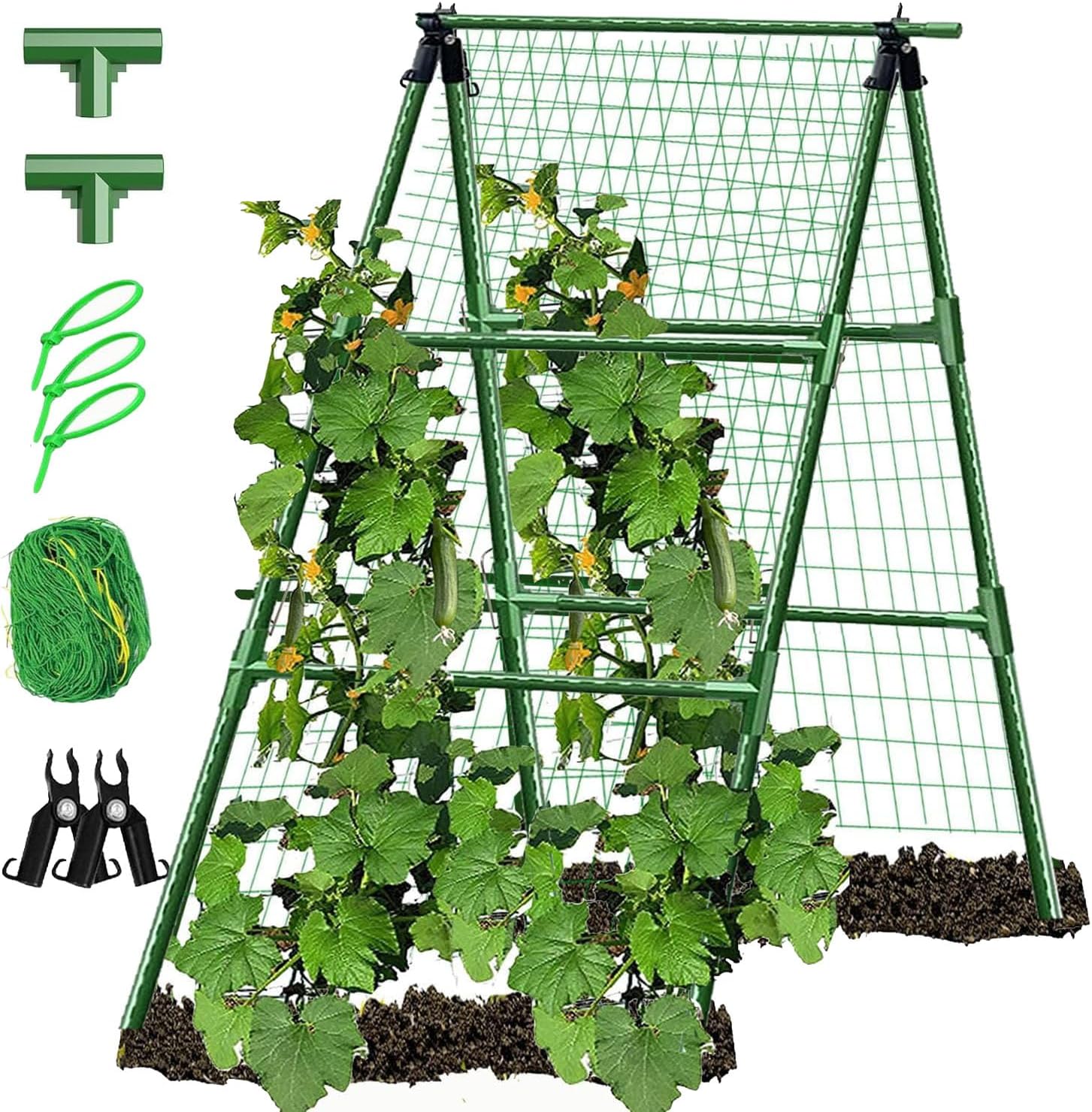
JK-GMTE A‑Frame Metal Garden Trellis Set with Netting and Clips
| Material Type | Steel |
|---|---|
| Metal Finish | Plastic Coated |
| Shape | A-Shape |
| Size | 47 inches tall, 16 inches wide |
This A-frame trellis kit provides a simple, low-cost way to support cucumbers and other vining vegetables in a raised bed. It ships as multiple steel core stakes, connectors, clips, garden ties and a roll of netting that assemble into two A-shaped supports with spiked leg ends for pushing into soil. The plastic-coated steel gives reasonable strength and rust resistance for seasonal use, and the modular pieces disassemble for compact storage. In practice it keeps vines off the soil to improve air circulation and fruit access while letting you position the netting where you need it. Expect straightforward, one-person assembly but plan to add extra ties or heavier supports if you grow very heavy-fruited varieties or want permanent structures. The lightweight parts are excellent for a short-term, affordable solution but are not as rigid as welded or thicker-frame trellises.
Best for: Gardeners outfitting raised beds on a tight budget who want an easy, seasonal trellis to keep vining vegetables off the soil and simplify harvests.
Less Ideal for: Growers seeking a permanent, heavy-duty structure for large, heavy fruit should consider welded-steel or thicker-frame trellises instead.
- Includes netting, connectors, clips and ties for a complete ready-to-assemble kit
- Plastic-coated steel cores resist rust better than bare metal for seasonal outdoor use
- Spiked leg ends make planting into raised-bed soil quick without extra hardware
- Disassembles for compact storage between seasons
- Affordable option for outfitting multiple beds or replacing worn trellises
- Lightweight tubing can flex under heavy loads and may require supplemental tying or bracing
- Assembly uses multiple small pieces which can be fiddly to align and secure
Verdict: A low-cost, complete A-frame kit that lets raised-bed growers quickly add seasonal support for cucumbers and other vining vegetables.
YOBAZAN 50" A‑Frame Metal Cucumber Trellis with Accessories

| Brand Name | YOBAZAN |
|---|---|
| Shape | A-Shape |
| Finish Type | Powder Coated |
| Size | 50"x17" |
This YOBAZAN A-frame trellis is a freestanding metal support meant to guide and hold climbing vegetables upright in a raised bed or small garden. The kit assembles tool-free with matching connectors and folds flat for storage, so you can stand it up at planting time and stow it away in the off-season. The powder-coated steel grid and reinforced A-shape provide sturdy vertical support for heavy vines and fruiting crops, helping keep cantaloupes, cucumbers or tomatoes off the soil to reduce rot and pests. Included plant clips, self-cutting wire and pruning shears make initial training and midseason adjustments easier without buying extra accessories. Because it is freestanding and designed for raised beds and patios, it is best used where you can set both legs firmly in soil; very loose or rocky ground may need additional anchoring. The trellis is compact enough for small spaces but may not suit large numbers of heavy vines without pairing multiple units for extra span and support.
Best for: Gardeners who prioritize a dependable, season-to-season support for a few heavy vines in raised beds or small plots and want a ready-to-use kit that is easy to set up and store.
Less Ideal for: Those growing many large vines across a wide row or gardeners who need a permanently anchored, landscape-scale support system.
- Powder-coated steel grid offers robust, weather-resistant support for fruiting vines
- A-frame design stands freely in raised beds and keeps fruit off the ground
- Tool-free assembly and fold-flat storage for easy seasonal use
- Includes plant clips, wire and pruning shears so you can start training plants immediately
- Freestanding legs rely on firm soil and may need extra anchoring in loose ground or exposed sites
- Single unit covers a modest width so larger crops may require multiple trellises
Verdict: Pick this sturdy, ready-to-use A-frame trellis when you need reliable, weather-resistant vertical support for cantaloupe and other heavy vines in raised beds.
MQHUAYU U‑Shape Garden Trellis for Climbing Plants (Medium)

| Material Type | Plastic, Stainless Steel |
|---|---|
| Finish Type | Plastic Coated |
| Shape | Semicircular |
| Indoor Outdoor Usage | Indoor&Outdoor |
This MQHUAYU U‑shape trellis is a straightforward support system for cucumbers, peas, beans, tomatoes and other vining plants in a raised bed or border. The powder‑coated metal frame with a stainless steel core gives a weather‑resistant structure that slips into the soil and creates an arch you can plant on both sides, which saves horizontal bed space and improves airflow around vines. Assembly is simple thanks to cross connectors and included netting, clips and ties, so you can adjust height and length to match plant growth. Practical details like packaged clips, many leaf ties and an installation manual make it usable for gardeners who want a no‑frills setup. The plastic coating reduces surface rust and protects stems from abrasion, but very heavy crops or high winds will benefit from extra anchoring. This is a good value option when you want a compact, reusable trellis that keeps harvests cleaner and makes vertical training easier, provided you secure it well in loose or windy soil.
Best for: Gardeners looking to optimize raised beds and small plots by training vegetables and flowering vines vertically with a compact, easy‑to‑assemble support.
Less Ideal for: People who need a heavy professional support for very large melons, mature grapevines, or permanent landscape arches should choose a heavier gauge or anchored structure.
- U‑shape arch lets you plant and train vines on both sides to maximize bed space
- Plastic‑coated stainless steel core resists rust and protects plant stems
- Comes with netting, clips and many ties so it is ready to install and use
- Cross‑connector design simplifies assembly and allows height/length adjustments
- May need additional anchoring or heavier supports for very large fruiting vines or high‑wind sites
- Plastic coating can hide underlying metal so inspect for damage over time to avoid corrosion
Verdict: Choose this trellis when you want an affordable, rust‑resistant arch that saves raised bed space and makes vertical training easy.
Choosing the Right Trellis for Cantaloupe: Key Factors to Consider
Structural Strength and Load Capacity
Cantaloupe vines produce heavy fruit that can quickly stress a trellis. A trellis must have enough rigidity and secure anchoring to resist bending or tipping as melons ripen. Consider the expected maximum number of fruits per vine and how the load will concentrate on individual sections of the trellis.
Materials, cross-bracing, and how the trellis is fixed to the ground or a wall all affect load capacity. If a trellis will be used in a windy site, increased anchoring and stronger framing are essential to avoid collapse.
Fruit Support Methods
Beyond the main frame, look for ways the trellis helps carry each melon. Options include wide-mesh panels that let stems drape, integrated sling points for supporting individual fruits, or supplementary netting. These solutions reduce stem strain and prevent fruit from pulling away from the vine or developing deformities.
Plan how many supports you will need for each vine and whether you can add slings or netting later in the season. The ability to adjust or add support is valuable as fruit size increases.
Material Durability and Weather Resistance
Trellises are exposed to sun, rain, and possibly fertilizer or irrigation spray. Metal frames should be rust-resistant or powder-coated, while wood should be rot-treated or naturally durable species. Plastic and composite materials resist corrosion but can degrade under prolonged UV exposure.
Choose materials that match how long you expect to use the trellis and the maintenance effort you want to commit to. Durable materials reduce the risk of sudden failure during peak harvest.
Installation and Adjustability
How easy a trellis is to set up determines how feasible it is to repurpose or move between seasons. Simple stakes and panels may be quickest to install, while anchored frames or wall-mounted systems require more work but offer greater stability. Adjustability in height and tension helps accommodate vigorous early-season growth and supports later heavy fruit loads.
Consider tools required, ground conditions, and whether you might need temporary reinforcement during storms. A trellis that can be modified without disassembly is more versatile for changing garden layouts.
Accessibility for Pruning and Harvest
Good trellis design balances containment with access. Wide enough spacing and reachable vine paths let you prune excess foliage, inspect fruit for pests, and harvest melons without tugging on vines. If fruit are supported by slings or netting, they should remain easy to reach without dismantling the structure.
Think about the mature vine height relative to your ability to work safely. If you rely on frequent checks, choose a trellis that keeps fruit within comfortable reach.
Compatibility With Garden Layouts
Trellises need to fit the physical constraints of your growing area. Freestanding frames work well in center beds, while lean-to or wall-mounted systems save space along fences or shed sides. Container gardeners should pick lighter, compact trellises with secure anchoring to prevent tipping.
Measure available width and height and match the trellis footprint to planting density. Consider how pathways, irrigation lines, and companion plants interact with the trellis placement.
Vine Training and Pruning Tips
Training cantaloupe onto a trellis begins when vines are still flexible and the first set of true leaves appears. Guide main leaders upward gently and remove lateral shoots that compete for energy or tangle on the frame. Regular pruning of excess foliage improves airflow and light penetration, which reduces disease pressure and encourages even fruit ripening.
When fruit start to set, pick a few primary fruits per vine to support and prune away crowded clusters. Use soft ties or garden twine with a twist to secure stems without cutting off circulation. Check ties regularly and loosen them as vines thicken.
- Start training early while stems are pliable
- Limit fruits per vine to manageable numbers
- Use soft, breathable ties to avoid stem damage
- Prune to improve airflow and reduce mildew risk
Adding Slings and Netting for Heavy Melons
Individual slings or cradle nets are simple, low-cost ways to protect ripening melons. A cloth or mesh sling supports the fruit and transfers weight to the frame instead of to the vine. Slings also keep fruit from rubbing against rough mesh or splintering wood.
Attach slings as fruits reach golf-ball size so growth does not overstress the stem. Use breathable materials that allow moisture to evaporate and that will not abrade the rind.
- Choose soft, UV-resistant fabrics for slings
- Position slings before fruit becomes heavy
- Secure slings to multiple points to distribute weight
Placement and Spacing for Best Results
Place trellises to maximize sun exposure and airflow. East-west orientation often gives balanced morning and afternoon sun while reducing afternoon heat on vulnerable fruit. Leave enough spacing between trellises to allow access for harvesting and to prevent leaves shading neighboring plants.
For multiple rows, space trellis supports so vines can be thinned or shifted without overcrowding. In raised beds, ensure posts reach deep enough to anchor securely in soil that drains well to avoid base rot.
- Orient trellises for consistent sun on leaves
- Allow maintenance access between trellises
- Ensure solid anchors in raised or container beds
Maintaining Trellises Season to Season
Inspect frames at the end of each season. Tighten fasteners, recoat exposed wood, and replace any frayed netting or weakened ties. Proper off-season care prolongs the life of a trellis and prevents midseason failures when fruit are developing.
Store removable components in a dry place to reduce UV and moisture damage. For permanent installations, consider a light wash to remove soil and plant residue that can accelerate corrosion or rot.
- Check anchors and joints before planting season
- Replace worn slings and ties annually
- Store detachable parts out of direct sun
Trellising Options for Small Spaces
If space is tight, vertical trellising makes efficient use of sun and soil. Narrow A-frames, wall-mounted panels, and compact mesh grids let you grow cantaloupe without sprawling vines. Choose lighter structures that still provide enough support for fruit, and increase the use of slings to avoid overloading slim frames.
Container gardeners should combine deep pots with anchored short trellises and limit vine numbers to reduce weight. Keep irrigation consistent because trellised plants in containers dry faster than in-ground plantings.
- Use vertical grids or wall panels for narrow beds
- Pair containers with secure, low-profile frames
- Limit vine count and monitor moisture closely
How We Chose the Best Trellis for Cantaloupe
We prioritized trellis options that address the unique needs of cantaloupe vines and heavy fruit. Key evaluation criteria included structural strength and weight capacity to handle multiple maturing melons, material durability for outdoor exposure, and attachment options that let you train vines without damaging stems or fruit. We also assessed ease of installation and adjustability so gardeners can adapt trellis height and anchor points through the season, plus accessibility for pruning and harvesting. Plant-friendly features such as mesh size, support slings, or adjustable ties were important to prevent rubbing and distribute fruit weight. We excluded lightweight decorative trellises intended only for annual flowers or plants with minimal fruit load. Final selections favor practical, garden-tested design elements that perform in beds, against fences, or in containers when space is limited.
FAQ
When should I start training cantaloupe onto a trellis?
Begin training when vines show several true leaves and stems are still flexible. Early guiding reduces breakage and helps vines climb cleanly without excessive tangling.
How many melons should I support per vine on a trellis?
It often depends on vine vigor, but most gardeners limit to two to four fruits per strong vine. Supporting fewer fruits improves size and reduces stress on stems and the trellis.
What is the best way to support a single heavy melon?
Use a soft sling or cradle tied to multiple points on the trellis so weight is distributed. Attach slings before the fruit becomes heavy and check fastenings regularly.
Can I use a trellis in a raised bed or container?
Yes, but ensure the trellis is securely anchored. Containers require deeper, heavier pots or external anchors to prevent tipping as fruit develop.
How close to the ground should fruit be allowed to rest if not fully supported?
Avoid letting fruit sit on wet soil. If a melon must be near the ground, place a clean flat surface like a board or straw beneath it to reduce rot and pest access.
Will trellising reduce disease problems for cantaloupe?
Trellising improves airflow and reduces soil contact, which lowers some foliar and fruit rots. However, good sanitation and monitoring remain important because diseases can still spread via leaves and insects.
Final Verdict
Choosing the right trellis for cantaloupe is a balance between strength and accessibility. Prioritize a sturdy frame and clear fruit-support options if you expect multiple heavy melons, and pick materials and anchors that match your site and maintenance habits. For limited space, select compact, well-anchored systems and use slings liberally. Focus on the tradeoffs between ease of installation, long-term durability, and how easy the trellis makes pruning and harvest. With those priorities in mind you can select a trellis that protects fruit, reduces disease risk, and makes seasonal care simpler.
