

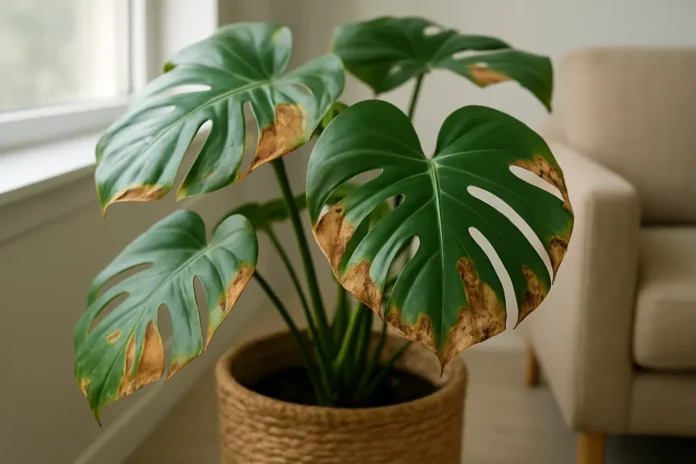
Monstera leaves usually develop brown spots from watering stress, low humidity, direct sun, pests, fungal or bacterial disease, or salt buildup in the soil. The pattern and texture of the spots often point to the exact cause.
Monstera plants are usually forgiving houseplants, but leaves with brown spots are a clear sign that something in their environment is off. In many homes, the most common causes are inconsistent watering, dry air, too much direct sun, fertilizer salts, or a pest or disease problem.
The tricky part is that brown spotting can look similar at first glance. A few crispy tan patches near the edges often mean moisture stress, while dark, soft, spreading spots can suggest rot or leaf disease. Looking at where the spots appear, how fast they spread, and whether the tissue feels dry or mushy can help you narrow it down quickly.
The good news is that most brown spot problems are fixable once you identify the cause. With a few adjustments to light, watering, humidity, and plant care, your Monstera can usually push out healthy new growth again.
What Brown Spots Are Telling You
Brown spots are not one single problem. They are a symptom of stress or damage to leaf tissue. On Monsteras, the most useful clues are the color, texture, location, and speed of the spotting.
- Dry, crispy brown patches usually point to underwatering, dry air, or sunburn.
- Dark brown or blackish soft spots often suggest overwatering, root problems, or bacterial or fungal disease.
- Tiny brown specks with yellow halos can be linked to leaf spot disease or pest feeding.
- Brown edges or tips are common with low humidity, inconsistent watering, or salt buildup.
- Random scattered spots on exposed leaves often happen after too much direct sunlight or a sudden change in light.
Old damage will not turn green again, so your goal is to stop new spotting from appearing. A healthy recovery looks like clean new leaves, steady growth, and no spread of the damaged areas.
Watering Problems Are the Most Common Cause
Overwatering and Soggy Soil
Overwatering does not just mean watering too often. It also includes soil that stays wet too long because of poor drainage, a pot without enough holes, or a dense potting mix. When roots sit in wet soil, they cannot take in oxygen properly. Stressed roots begin to rot, and leaves may develop dark brown spots that feel soft or water-soaked.
- Spots are dark, soft, or spreading.
- Leaves may also yellow before turning brown.
- The pot feels heavy for days after watering.
- Soil smells sour, swampy, or musty.
- Stems near the base may feel soft if rot is advanced.
Underwatering and Drought Stress
If your Monstera dries out too far between waterings, the leaf tissue can die back in patches or along the edges. This damage is usually tan to medium brown and crisp rather than mushy. Dry stress is especially common in warm rooms, near vents, or when a rootbound plant dries out faster than expected.
- Spots feel papery or crispy.
- Leaf edges and tips brown first.
- The soil pulls away from the sides of the pot.
- Leaves may droop, curl slightly, or feel thinner than normal.
- Water runs straight through the pot because the mix has become very dry.
For most indoor Monsteras, the best approach is to water thoroughly when the top 2 inches of soil feel dry, then let excess water drain away. Avoid both constant dampness and severe dry-downs.
Low Humidity Can Create Crispy Brown Spotting
Monsteras tolerate average household humidity better than some tropical houseplants, but very dry indoor air can still mark the leaves. When humidity is too low, the broad leaf surface loses moisture faster than the plant can replace it, especially in winter when heating systems run often.
Humidity damage usually appears as dry brown edges, tips, or irregular crispy patches. It is more likely on newer or thinner leaves and in plants placed close to heating vents, radiators, or drafty windows.
- Brown areas are dry, not soft.
- The worst damage is on leaf margins or tips.
- The plant sits near forced-air heat or air conditioning.
- Other tropical plants in the room also show browning.
- The problem gets worse during winter or in arid climates.
A room humidity level around 40 to 60 percent is usually enough for good Monstera growth. Grouping plants, using a humidifier, and keeping the plant away from heating or cooling blasts can help prevent fresh damage.
Too Much Direct Sun Can Scorch Monstera Leaves
Monstera plants like bright, indirect light. Harsh direct sun, especially afternoon sun through glass, can burn the leaves. Sunscald often appears as pale tan, light brown, or bleached patches that later crisp up.
This kind of spotting is most common after moving a plant from lower light into a sunnier room without a transition period. A leaf that was shaded for months can burn quickly when exposed to intense summer light.
- Spots are on the side facing the window.
- Patches may look faded, bleached, or papery at first.
- Damage appears suddenly after moving the plant.
- The rest of the plant may look healthy.
- The pattern matches where direct sunlight hits the leaf.
Move the plant a little farther from the window or filter strong light with a sheer curtain. Bright indirect light supports healthy growth without leaf scorch.
Pests Can Leave Brown Specks and Damaged Patches
Spider Mites
Spider mites are a common houseplant pest, especially in dry air. They pierce leaf tissue and suck out contents, leaving tiny pale or brown speckles that can merge into larger dull patches. Fine webbing may appear on the undersides of leaves or where leaf stems meet the main stem.
Thrips
Thrips can cause silvery scarring, tiny brown spots, and distorted new growth. They are small and easy to miss, but their feeding often leaves irregular marks that do not follow the edges of the leaf.
Scale and Mealybugs
Scale insects and mealybugs weaken the plant by feeding on sap. While they do not always create classic brown spots right away, long-term feeding can cause browning, yellowing, and decline. Mealybugs look cottony, while scale appear as small bumps attached to stems or leaves.
- Check leaf undersides with a flashlight.
- Look for sticky residue, webbing, cottony clusters, or tiny moving insects.
- Inspect new leaves and tight crevices where pests hide.
- Isolate the plant if you suspect an infestation.
- Repeat treatment because many pests return after the first spray.
For light infestations, wiping leaves and using insecticidal soap or neem-based products can help. For persistent pests like thrips or spider mites, repeated weekly treatments are usually necessary.
Fungal and Bacterial Leaf Spot Can Spread Quickly
If your Monstera has dark spots that enlarge over time, especially with yellow halos or water-soaked edges, a leaf spot disease may be involved. These issues are more likely when leaves stay wet for long periods, air circulation is poor, or the plant has been kept too damp.
Bacterial spots often look darker and wetter, while fungal spots may be tan or brown with defined margins. In either case, the lesions can expand and merge if conditions stay favorable for the pathogen.
- Spots enlarge over several days or weeks.
- Some spots have a yellow ring around them.
- Leaves were misted often or stayed wet overnight.
- The plant is crowded with little air movement.
- New spots continue appearing even when watering seems normal.
Remove badly affected leaves with clean scissors, avoid wetting the foliage, and improve airflow around the plant. If the issue keeps spreading, a houseplant-safe copper fungicide or bactericide may help, but cultural fixes matter most.
Fertilizer Salts and Poor Water Quality Can Burn Leaves
Monsteras are not heavy feeders, and too much fertilizer can damage the roots and show up as brown spotting or browning leaf edges. The same kind of stress can happen if salts and minerals build up from hard tap water over time.
This type of damage is often gradual rather than sudden. You may notice crusty white residue on the soil surface or around the rim of the pot, along with brown tips and margins on otherwise green leaves.
- You fertilize more often than once or twice a month during active growth.
- You use full-strength fertilizer every time you water.
- A white crust forms on the soil or pot.
- Browning is worst at the tips and edges.
- The plant improved for a while, then declined after feeding.
Use a balanced houseplant fertilizer at reduced strength during spring and summer only, and flush the pot with plain water occasionally to rinse excess salts from the mix. If your tap water is very hard, filtered or rainwater may reduce future leaf burn.
Temperature Shock and Physical Damage Also Matter
Not every brown spot comes from watering or disease. Cold drafts, hot air blasts, rough handling, and bruising can all damage Monstera leaves. Tissue that is bent, pressed, or chilled may later turn brown.
Cold injury is especially common when leaves touch a freezing windowpane in winter or when a plant is left in a cold car during transport. Heat stress can happen near radiators, fireplace heat, or sunny glass that becomes hot in the afternoon.
- Spots appeared after moving, shipping, or repotting.
- Damage matches a crease, tear, or pressure point on the leaf.
- The plant sits near a drafty window or door.
- Leaves touch cold glass at night.
- A vent blows directly on the plant.
Keep Monsteras in stable indoor temperatures, ideally above 60 degrees Fahrenheit, and protect them from sudden drafts and contact with cold or hot surfaces.
How to Diagnose the Cause on Your Monstera
A quick diagnosis is easier when you look at the whole plant instead of just one spot. Start with the leaf texture, then consider the soil, light, humidity, and whether pests are present.
- Touch the brown area. Crispy usually points to dryness or sun. Soft often points to excess moisture or disease.
- Check the soil 2 inches down. Very wet soil suggests overwatering or poor drainage. Bone-dry soil suggests underwatering.
- Look at where the spots appear. Window-facing damage suggests sun scorch. Edge browning suggests humidity, watering inconsistency, or salt stress.
- Inspect both sides of leaves for pests, webbing, sticky residue, or tiny insects.
- Think about recent changes, like moving the plant, repotting, fertilizing more heavily, or changing seasons.
If more than one factor is present, treat the most likely root cause first. For example, a dry-air problem can happen at the same time as underwatering, and pest damage is often worse on already stressed plants.
How to Fix Brown Spots and Prevent New Ones
Adjust Watering
Water when the top part of the mix has dried slightly, not on a rigid calendar. Always let extra water drain from the pot, and never leave the plant sitting in a saucer full of water.
Improve the Potting Mix
Monsteras prefer an airy, chunky mix that drains well but still holds some moisture. A blend with potting soil, bark, perlite, and coco coir works better than dense soil that stays soggy.
Refine Light Conditions
Give your plant bright indirect light. If it needs to move into stronger light, acclimate it gradually over a couple of weeks rather than placing it in full sun all at once.
Raise Humidity if Needed
Use a humidifier, group plants together, or place the Monstera in a naturally more humid room with good light. Pebble trays help a little, but a humidifier is more reliable in dry homes.
Treat Pests Early
Wipe leaves clean, isolate infested plants, and repeat treatment as directed until no new signs appear. Pest pressure drops faster when you clean the undersides of leaves and nearby surfaces too.
Trim Damaged Foliage Selectively
You can trim off heavily damaged leaves for appearance, but do not remove too much healthy green tissue at once. If a leaf is mostly green with just a small dead patch, it can still support the plant.
Repot Only when Necessary
Repot if the plant is rootbound, the soil stays soggy, or root rot is present. Choose a pot just one size larger with drainage holes, and replace any sour, compacted mix.
When Brown Spots Are Not a Major Concern
A few isolated brown spots on older leaves are not always a crisis. Leaves age, get bumped, or react to brief stress. If the plant is still producing healthy new growth and the spotting is not spreading, the issue may be minor and already resolved.
Monitor the plant over the next few weeks. If no new spots appear and overall growth looks normal, focus on steady care rather than making multiple major changes at once.
When to Worry and Act Fast
Some brown spot patterns need immediate attention because they can progress quickly. Fast-spreading dark lesions, mushy stems, foul-smelling soil, or a plant that is yellowing and collapsing suggest root rot or a serious disease issue.
- Spots expand every few days.
- Leaves are browning and yellowing at the same time across the plant.
- The stem base feels soft.
- Roots are black, mushy, or smell rotten.
- Pests are visible on multiple leaves and new growth is distorted.
In these cases, quick corrective care gives the plant the best chance of recovery. Waiting too long usually means more leaf loss and a harder comeback.
FAQ
Should I Cut Off Monstera Leaves with Brown Spots?
If a leaf is badly damaged or the spots are spreading from disease, removing it can improve appearance and reduce stress on the plant. If the leaf is mostly healthy, you can leave it in place because green tissue still helps the plant grow.
Can Brown Spots on Monstera Leaves Turn Green Again?
No. Brown tissue is dead and will not recover. The goal is to stop the cause so new leaves emerge healthy.
Do Brown Spots Mean My Monstera Has Root Rot?
Not always. Root rot is one possible cause, especially when spots are dark and soft and the soil stays wet, but brown spots can also come from dryness, sunburn, pests, disease, or fertilizer buildup.
Can Misting Prevent Brown Spots on Monstera Leaves?
Misting is not a reliable fix for low humidity and can sometimes encourage leaf spot disease if leaves stay wet. A humidifier and consistent watering are better long-term solutions.
Why Does My Monstera Have Brown Spots After Repotting?
Repotting can cause temporary stress, especially if roots were disturbed, the new mix holds too much water, or the plant was moved into stronger light. Small spots after repotting are often stress-related, but spreading soft spots suggest a watering or root issue.
Can Tap Water Cause Brown Spots on Monstera?
Yes, over time hard tap water or chemically treated water can contribute to brown tips and marginal burn, especially when salts accumulate in the potting mix. Flushing the soil and using filtered water can help in sensitive plants.
What Does Fungal Leaf Spot Look Like on Monstera?
Fungal leaf spot often shows up as tan to dark brown lesions with defined edges, sometimes with a yellow halo. The spots may slowly enlarge and appear more often when leaves stay wet or airflow is poor.
Need the right fix fast? Read our guide to the best Monstera potting mixes, humidifiers, and pest treatments so you can stop leaf damage and get healthier new growth.
