

Note: This article contains affiliate links. If you click on these links and make a purchase, I may earn a small commission at no extra cost to you. This helps support my research and content. Read my full affiliate disclosure here.
If you grow tomatoes, calcium is one of the single most important nutrients for producing firm, blemish-free fruit. Insufficient calcium often shows up as blossom end rot or soft, misshapen tomatoes even when plants look otherwise healthy. Choosing the right calcium fertilizer for tomatoes matters because different formulations release calcium at different rates, interact with soil pH and moisture, and fit different application routines. This guide shortlists seven practical calcium fertilizer options for tomatoes and explains how each type behaves in the garden. We evaluated products by how well they deliver usable calcium to the root zone or foliage, how easy they are to apply, and how they fit common backyard and container growing situations. Read on to find the approach that matches your soil, watering habits, and growing goals.
Top Picks at a Glance
| Best Overall The best all-around choice for most situations | Espoma Organic Tomato-Tone 3-4-6 Granular Fertilizer with 8% Calcium, 18 lb |  |
| Best Quality Built to a higher standard if you want something more solid | Cz Garden Supply Calcium Nitrate 15.5-0-0, 5 lb Resealable Bag |  |
| Best Value The sweet spot between price and what you get | Espoma Organic Tomato-tone 3-4-6 Organic Tomato Fertilizer (4 lb) |  |
| Best Budget The cheapest option that still gets the job done reliably | Bonide Rot-Stop Tomato Blossom End Rot Ready-to-Use Spray, 32 oz |  |
| Highest Rated A top-rated pick with lots of positive feedback | General Hydroponics CALiMAGic Calcium + Magnesium, 1 Gallon |  |
| Most Popular A crowd favorite that many people choose with confidence | Miracle-Gro Shake 'N Feed Tomato, Fruit & Vegetable Plant Food, 4.5 lb |  |
| Best Seller A high-volume bestseller chosen again and again | TPS Nutrients Cal-Mag Liquid Supplement, 8 oz |  |
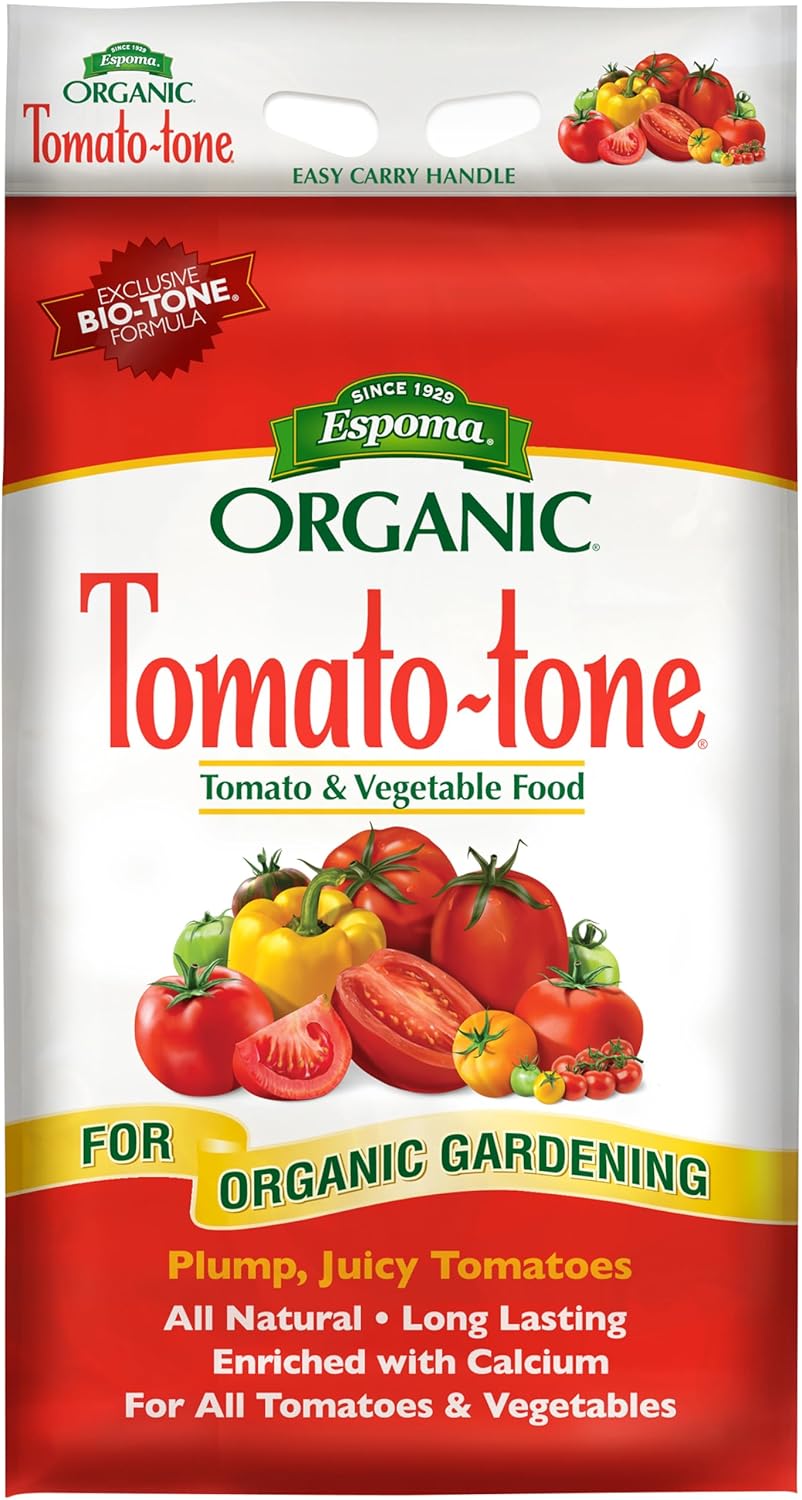
Espoma Organic Tomato-Tone 3-4-6 Granular Fertilizer with 8% Calcium, 18 lb
| Item Form | Granules |
|---|---|
| Specific Uses For Product | Plant Growth |
| Coverage | Medium |
| Target Species | tomatoes |
| Mixing Ratio | No Mixing Required |
Espoma Tomato-Tone is a ready-to-use granular organic fertilizer designed specifically for tomatoes but suitable for other vegetables. Gardeners apply it around the plant drip line and water it in; the manufacturer recommends reapplication every two weeks during the growing season. Its 3-4-6 formulation delivers moderate nitrogen and higher potassium to support flowering and fruit set while the added 8 percent calcium helps address blossom end rot risk. As a granular product that requires no mixing, it is simple to use for beds and containers and provides even, medium coverage. Because it is an organic, bio-tone enhanced blend, nutrient release is gentler and supports soil biology rather than producing a sudden foliage surge. The main compromises are that results appear more gradual than with synthetic feeds and you must follow a regular application schedule to maintain calcium levels early in fruit development. For gardeners seeking an organic, tomato-focused fertilizer that emphasizes fruit quality, Tomato-Tone is a practical, low-fuss choice.
Best for: Gardeners who want an organic, tomato-focused fertilizer that improves fruit set and reduces blossom end rot without complex mixing routines and who prefer steady, soil-friendly nutrient release.
Less Ideal for: Growers who need fast, high-solubility nutrient boosts for rapid recovery or those who prefer a single concentrated feed for irregular application schedules.
- Formulated specifically for tomatoes with a 3-4-6 NPK to support flowering and fruit production
- Contains 8% calcium to help prevent blossom end rot
- Organic granular formula requires no mixing and is easy to apply around the drip line
- Gentle, bio-tone enhanced nutrients that support soil biology and steady release
- Slower, gentler nutrient release than synthetic fertilizers so effects take longer to appear
- Requires regular biweekly applications to maintain optimal calcium and nutrients
Verdict: If you want an organic, tomato-specific fertilizer that supplies steady nutrients plus extra calcium to reduce blossom end rot, Espoma Tomato-Tone is a reliable choice.
Cz Garden Supply Calcium Nitrate 15.5-0-0, 5 lb Resealable Bag

| Nutrient analysis | 15.5-0-0 (N-Ca) |
|---|---|
| Form | Granules, water soluble |
| Package | 5 lb resealable pouch |
| Application | Drip irrigation, hydroponics, soil |
This 15.5-0-0 calcium nitrate is a performance-focused fertilizer that supplies quick-acting nitrogen plus calcium to correct deficiencies like blossom end rot and support vigorous tomato growth. It dissolves completely for hydroponics, drip irrigation, and soil feeds and is sold in a resealable 5 lb pouch for convenient dosing and storage. Notable features include greenhouse-grade purity, 100% water solubility, and a formulation that fits the 321 feeding schedule commonly used by experienced growers. In practice it promotes deeper green foliage, stronger cell walls in fruiting crops, and faster recovery from calcium-related disorders when applied according to recommended rates. Important limitations are that it provides no phosphorus or potassium so it must be used as part of a balanced feeding program, and calcium nitrate is not suitable for mixes containing high-phosphate or sulfate-sensitive elements without checking compatibility. For tomato growers chasing yield and fruit quality it is a straight-forward component to correct calcium needs, but you will still need a complementary complete fertilizer to supply other macronutrients.
Best for: Tomato growers who prioritize faster, measurable improvements in fruit firmness and reduced blossom end rot and who run hydroponic or precision irrigation systems.
Less Ideal for: Beginners wanting an all-in-one NPK product or gardeners looking for a single-bag complete fertilizer for seasonal feeding.
- High purity, greenhouse-grade formula for reliable performance
- 100% water soluble for hydroponics, drip irrigation and quick uptake
- Supplies both calcium and nitrogen to correct blossom end rot and support fruit development
- Resealable 5 lb pouch simplifies measuring and long-term storage
- Contains only calcium and nitrogen so you must pair it with a complete NPK feed
- Not compatible with some phosphorus-rich concentrates without checking mixing compatibility
Verdict: Use this high-purity, water-soluble calcium nitrate when you need fast, dependable calcium plus nitrogen to prevent blossom end rot and boost tomato fruit quality.
Espoma Organic Tomato-tone 3-4-6 Organic Tomato Fertilizer (4 lb)

| Mixing Ratio | 3:4:6 |
|---|---|
| Item Form | Granules or Pellets |
| Target Species | tomatoes and vegetables |
| Unit Count | 64 Ounce |
Espoma Organic Tomato-tone is a ready-to-use granular fertilizer formulated specifically for tomatoes and other vegetables. Applied to the soil around the plant drip line every two weeks during the growing season, it delivers a 3-4-6 NPK balance with an added 8% calcium that supports fruit set and can reduce blossom end rot. The granule form is easy to spread by hand and requires watering in rather than mixing, making it convenient for in-ground beds and large containers. Because it is an OMRI-approved organic input and made from natural ingredients, it is a good fit for organic gardeners who want continuous feeding without synthetic products. Limitations include the need for regular reapplication every two weeks and that granular feeding gives slower nutrient release than some liquid or water-soluble options, so results develop over time rather than immediately. It is not a complete soil amendment if your garden has other nutrient deficiencies, so occasional soil testing and supplementing may still be necessary.
Best for: Gardeners focused on producing consistent, flavorful tomato harvests who prefer organic inputs and an easy granular application routine.
Less Ideal for: Growers who need fast, immediate correction of nutrient deficiencies or those who prefer precise, frequent dosing via liquid fertilizers for hydroponics or rapid-response feeding.
- Formulated specifically for tomatoes and vegetables to promote flowering and fruiting.
- Contains 8% calcium to help prevent blossom end rot.
- OMRI-approved organic input suitable for certified organic production.
- Granular, ready-to-use form is easy to apply around the plant drip line without mixing.
- Requires reapplication every two weeks during the growing season for best results.
- Slower nutrient availability compared with water-soluble or liquid fertilizers.
Verdict: A convenient organic granular fertilizer designed to boost tomato fruiting and reduce blossom end rot with built-in calcium.
Bonide Rot-Stop Tomato Blossom End Rot Ready-to-Use Spray, 32 oz

| Item Form | Liquid |
|---|---|
| Specific Uses For Product | Plant Food |
| Application Method | Spray |
| Target Species | Vegetables |
| Mixing Ratio | 2 oz: 1 gallon |
Bonide Rot-Stop is a liquid foliar fertilizer designed to correct calcium deficiency and prevent blossom end rot on tomatoes, peppers, cucumbers and melons. It is supplied as a 32 oz ready-to-use bottle that mixes easily with water at the recommended ratio for application with a hose-end or tank sprayer. In practice it provides quick, targeted calcium to foliage so plants can better set fruit and avoid the soft, sunken spots associated with end rot. The product uses calcium chloride as the active nutrient and is intended as a supplement to regular fertilizing rather than a complete feed. Its ready-to-use format makes it convenient for home gardeners who want a simple spray option without measuring concentrates, and the coverage is appropriate for small to medium vegetable plots. Limitations are that it does not replace a balanced soil fertility program and repeated foliar applications may be needed during a season if deficiency pressure persists.
Best for: Home gardeners on a budget who need a simple, no-mix foliar calcium treatment to prevent blossom end rot on tomatoes and other garden vegetables.
Less Ideal for: Large-scale growers seeking a complete soil fertility program or users who want an all-in-one fertilizer that replaces routine soil amendments.
- Formulated specifically to correct calcium deficiency and prevent blossom end rot
- Ready-to-use liquid that mixes easily for hose-end or tank sprayer application
- Targets vegetables commonly affected by end rot such as tomatoes, peppers, cucumbers and melons
- Provides fast-acting foliar calcium using calcium chloride as the active ingredient
- Meant as a supplemental foliar treatment and does not supply a full spectrum of nutrients
- May require repeated applications under persistent deficiency or high stress conditions
Verdict: A convenient, ready-to-use foliar calcium spray ideal for budget-minded gardeners who want a straightforward way to prevent blossom end rot on tomatoes.
General Hydroponics CALiMAGic Calcium + Magnesium, 1 Gallon

| Item Form | Liquid |
|---|---|
| Specific Uses For Product | Tomatoes, Lettuce |
| Target Species | Plants |
| Mixing Ratio | 1:0 |
CALiMAGic is a concentrated liquid calcium and magnesium supplement designed to be added to feeding programs or reservoirs for tomatoes and other calcium-hungry crops. In practice you mix small amounts into your regular nutrient solution or feed schedule to correct or prevent secondary deficiencies that cause blossom end rot and tip burn. Its soluble formula is formulated not to clog spray lines or drip emitters, so it works equally well in hydroponic systems, containers, or soil-based feeds. The product is straightforward to use as a routine preventative or corrective treatment and integrates with most fertilizer programs. Important limitations are that it is a supplement rather than a complete fertilizer so you still need a balanced NPK program, and safe handling is required because it is a concentrated chemical. For growers who prioritize consistent, reliable calcium delivery to fruiting crops, CALiMAGic is a practical, low-maintenance way to reduce common calcium-related disorders.
Best for: Growers who want a dependable, easy-to-integrate calcium source to prevent blossom end rot in tomato crops and other calcium-intensive plants, especially when consistency matters across feeding cycles.
Less Ideal for: Gardeners looking for an all-in-one fertilizer or those who prefer dry granular amendments for occasional use should consider other products.
- Concentrated, readily available calcium and magnesium for quick correction of deficiencies
- Soluble formula designed not to clog spray lines or drip emitters
- Can be used in reservoirs and combined with many other fertilizers
- Specifically marketed to prevent blossom end rot and tip burn in tomatoes and lettuce
- Not a complete NPK fertilizer so must be used alongside a balanced feeding program
- Requires careful measuring and handling because it is highly concentrated
Verdict: Choose CALiMAGic when you need a reliable, soluble calcium and magnesium supplement to prevent blossom end rot in tomatoes.
Miracle-Gro Shake 'N Feed Tomato, Fruit & Vegetable Plant Food, 4.5 lb

| Item Form | Granules |
|---|---|
| Specific Uses For Product | Growing tomatoes, fruits, and vegetables |
| Application Method | Dry application |
| Mixing Ratio | 10:5:15 |
Miracle‑Gro Shake 'N Feed Tomato, Fruit & Vegetable is a granular, dry‑apply fertilizer designed for in‑ground beds and container vegetables. You sprinkle or shake the granules onto the soil and either work them into the top inch or three of soil or mix them into potting mix when planting, then water to activate feeding. The 10-5-15 NPK formula supplies balanced nitrogen for leafy growth and higher potassium for fruit development while added calcium helps reduce common blossom and fruit disorders. Because it feeds for up to three months, it cuts down on frequent applications and is convenient for busy gardeners. It is targeted specifically at tomatoes, peppers, berries and similar crops and is suitable for both established plants and new transplants. Limitations are that it must be applied to soil rather than foliar‑sprayed, and gardeners who prefer slow micronutrient tailoring or organic certified inputs may prefer other options. Follow label rates closely to avoid overapplication in small container setups.
Best for: A gardener who wants a low‑maintenance, reliable fertilizer for tomato and vegetable beds and containers and values fewer applications and straightforward instructions.
Less Ideal for: Growers seeking certified organic fertilizers, those who rely on foliar or liquid feeding programs, or gardeners wanting to precisely blend micro‑nutrients should consider other products.
- Long residual feeding up to three months reduces reapplication frequency
- Includes calcium to help prevent blossom and fruit disorders and improve fruit quality
- Ready‑to‑use granular form is simple to apply to in‑ground beds or mixed into potting soil
- NPK 10-5-15 balances vegetative growth with fruit development for vegetables and tomatoes
- Not suitable for foliar feeding or direct mixing into irrigation systems
- Contains conventional ingredients so it is not an organic‑certified product
Verdict: Choose this if you want an easy, long‑lasting granular fertilizer that reliably feeds vegetable and tomato plants for an entire season with minimal upkeep.
TPS Nutrients Cal-Mag Liquid Supplement, 8 oz

| Item Form | Liquid |
|---|---|
| Specific Uses For Product | Plant Growth |
| Target Species | plants |
| Mixing Ratio | 1/2 to 1 tsp per gallon of feedwater |
This liquid Cal-Mag concentrate is designed to correct and prevent calcium and magnesium deficiencies in tomatoes and other garden plants. It mixes at 1/2 to 1 teaspoon per gallon of feedwater and can be applied to soil or foliage, making it easy to add into a regular feeding routine for potted plants, raised beds, or hydroponic setups. The formula includes iron and other micronutrients, which helps reduce yellowing leaves and supports stronger plant structure during fruit set. Practical benefits include straightforward dilution, compatibility with both soil and coco or hydro systems, and a small bottle size that is convenient for hobby gardeners who need occasional corrective dosing. Important limitations are the small 8 ounce volume, which means frequent repurchase for larger gardens, and the safety advisory to dilute and avoid use on food crops intended for human consumption without following label directions. For risk-averse growers, this product provides a simple, targeted way to address blossom end rot or interveinal chlorosis when used as directed.
Best for: Home tomato growers who prioritize straightforward, corrective feeding and want an easy-to-mix Cal-Mag option for occasional use on containers, raised beds, or hydroponic setups.
Less Ideal for: Large-scale growers or those with many tomato plants who need bulk supplies or ongoing daily feeding solutions should consider larger-capacity products.
- Concentrated liquid formula that mixes easily at 1/2 to 1 teaspoon per gallon
- Provides calcium, magnesium, iron, and micronutrients to address common deficiencies
- Works in soil, containers, coco, and hydroponic systems for flexible use
- Small bottle is convenient for hobby gardeners and spot-treating individual plants
- Only 8 fluid ounces, so it may run out quickly for larger tomato gardens
- Contains safety warnings and must be diluted and handled carefully
Verdict: A simple, easy-to-mix Cal-Mag concentrate that is well suited for home tomato growers needing a targeted corrective supplement.
Choosing the Right Calcium Fertilizer for Tomatoes: Key Factors to Consider
Calcium Form and Solubility
The chemical form of calcium determines how quickly plants can access it. Soluble calcium salts or chelated calcium are available to roots or leaves more rapidly than some mineral sources. For emergency correction of blossom end rot, highly soluble formulations or foliar sprays give faster results.
Conversely, slow-release mineral sources can supply calcium over a season but may not correct acute deficiencies quickly. Consider whether you need immediate correction during fruit set or steady supplemental calcium throughout the growing season when choosing a formulation.
Application Method and Frequency
Calcium fertilizers come as foliar sprays, water-soluble powders, granular soil amendments, and liquid concentrates. Foliar sprays can deliver calcium directly to developing fruit and foliage, often producing visible improvements within days, but they require more frequent applications and careful mixing. Soil-applied calcium needs adequate soil moisture and root uptake and may take longer to influence fruit quality.
Your selected method should match how often you can realistically apply amendments. Containers often favor soluble or foliar products because root volume is limited, while in-ground beds can benefit from amendments incorporated into the planting area or applied as a drench.
Soil pH and Existing Nutrient Balance
Soil pH affects calcium availability and interacts with other nutrients. In very acidic soils, added calcium will also raise pH, which can be desirable or disruptive depending on existing conditions. High levels of magnesium, potassium, or sodium can compete with calcium uptake, so addressing overall nutrient balance is important rather than adding calcium in isolation.
Testing soil pH and basic nutrient levels before applying calcium helps avoid unintended shifts. For many home gardens, a modest calcium amendment combined with appropriate pH adjustments yields better results than repeated heavy calcium applications.
Watering Practices And Moisture Consistency
Tomato plants need consistent moisture for calcium to move into developing fruit. Even soils with adequate calcium can produce blossom end rot when drought stress interrupts calcium transport. If your watering is irregular, choose a calcium strategy that compensates-such as periodic soil drenches timed to fruit set or foliar sprays during dry spells.
Also consider how the product behaves with your irrigation method. Some soluble fertilizers can concentrate in drip lines or leave residues in pots if not thoroughly flushed, while granular amendments may require irrigation to dissolve and reach roots.
Container Versus In-Ground Use
Containers have limited buffering capacity for nutrients and pH, so small, soluble calcium supplements or foliar applications are often more effective for potted tomatoes. In-ground plantings can tolerate larger, more gradual soil amendments because roots can explore a larger volume and soils buffer changes better.
Think about the root zone volume and how often you repot or refresh potting mix when choosing a calcium product. Many gardeners use different strategies for containers versus raised beds to avoid overapplication and salt buildup.
Safety and Crop Residue
Consider whether the calcium product leaves visible residues on fruit or foliage and whether it affects taste or postharvest storage. Foliar sprays can sometimes leave a temporary white film if concentrations are too high. Also note any handling precautions on labels; some concentrated liquids or powders require gloves or careful mixing.
If you plan to harvest soon after application, check recommended preharvest intervals and rinse fruit if necessary. Choosing a product with low residue risk helps minimize additional postharvest handling.
When Calcium Deficiency Appears
Blossom end rot is the most common visual clue that tomatoes lack accessible calcium. It typically begins as a water-soaked spot at the blossom end that enlarges and darkens as the fruit matures. Other signs include misshapen fruit, poor cell wall development, and increased susceptibility to soft rot.
Diagnosing the cause requires looking beyond calcium numbers. Uneven watering, rapid fruit growth, or high salt levels in the root zone can all produce similar symptoms. Use visual cues in combination with a soil test and a review of your watering routine to decide whether a targeted calcium treatment is appropriate.
- Look for small darkened spots at the bottom of developing fruit
- Note if symptoms are localized to new fruit during drought or heat
- Check soil moisture history before assuming a complete nutrient deficiency
How to Apply Foliar Calcium Treatments Safely
Foliar calcium sprays can correct deficiencies quickly when mixed at the correct concentration. Always follow label dilution rates and apply in the cooler part of the day to minimize leaf burn. Apply evenly to foliage and developing fruit, and avoid applying during full sun or when plants are under heat stress.
Do not mix foliar calcium solutions with high-phosphate or alkaline sprays without checking compatibility. Rinse sprayers between different products and avoid excessive frequency that could cause leaf spotting or residue buildup.
- Apply in the morning or evening to reduce evaporation
- Use recommended concentrations and test on a few leaves first
- Avoid combining with other sprays unless labels indicate compatibility
Soil Amendments and Long-Term Calcium Management
If your soil test shows low baseline calcium or a pH that limits availability, amend soil at planting with a moderate, well-distributed calcium source. Limestone also raises pH, so choose materials that match your pH goals. Incorporating calcium-bearing amendments before the growing season helps support steady uptake as fruit develops.
For long-term beds, amend organic matter and avoid overreliance on quick fixes. Building soil structure and consistent fertility reduces the chance of recurring deficiency from uneven moisture or nutrient lockup.
- Incorporate amendments before transplanting for best distribution
- Balance calcium additions with organic matter to improve uptake
- Re-test soil periodically to track changes and avoid overapplication
Practical Tips for Container Tomato Growers
Containers need more attentive calcium management because limited root volume and frequent watering cycles change nutrient availability quickly. Use soluble calcium supplements or a light program of foliar sprays timed to flowering and early fruit set. Avoid large, slow-release mineral lumps that may not be evenly available in small pots.
Flush containers periodically to prevent salt buildup and refresh potting mix between seasons. If you use a blended fertilizer program, monitor for signs of competing nutrients and adjust calcium applications accordingly.
- Choose soluble or foliar-friendly formulas for pots
- Water consistently and avoid letting pots dry completely
- Refresh potting soil annually to maintain balanced nutrients
Timing Applications Around Fruit Development
Calcium matters most during fruit set and early fruit enlargement when cells are actively dividing and expanding. Start targeted calcium treatments as flowers set fruit and continue through the first weeks of fruit growth. Stopping too early can leave late-developing fruit vulnerable.
Schedule follow-up applications based on product directions and local weather. Heavy rain can leach soil-applied calcium, while drought reduces uptake, so adjust timing around irrigation and storm events.
- Begin focused applications at fruit set
- Maintain a schedule rather than single emergency treatments
- Adapt timing to rainfall and irrigation patterns
How We Chose the Best Calcium Fertilizer for Tomatoes
We focused on practical, horticultural criteria that predict whether a calcium fertilizer will actually correct calcium-related disorders in tomato plants. Key evaluation points included the bioavailable calcium content and release profile, because a high total calcium number is useless if the nutrient is not accessible when fruit is developing. We considered application method and convenience, since foliar sprays, root drenches, and granular soil amendments each suit different gardener routines and planting setups. Other important filters were solubility and compatibility with common soil pH ranges, and the potential for adverse interactions with other fertilizer elements. Ease of measuring and applying product in small garden beds or containers was required for inclusion. We excluded products with unclear labeling on calcium content or with formulations that could create salt stress in tomatoes. Our selections prioritize solutions that correct deficiency while fitting realistic home-garden schedules and soil conditions.
FAQ
How quickly will a calcium treatment fix blossom end rot?
Results vary. Foliar sprays often show improvement within days to a week because calcium is delivered directly to tissues, while soil amendments can take several weeks as root uptake catches up. Consistent watering and addressing underlying causes speeds recovery.
Can I use garden lime to add calcium to tomatoes?
Garden lime supplies calcium and raises pH. It is best used as a longer-term soil amendment applied before planting. If soil pH is already adequate, lime may not be necessary and could cause nutrient shifts; a soluble calcium source or foliar spray may be more appropriate for immediate needs.
Will foliar calcium sprays affect fruit taste or storage?
When used at recommended rates, foliar calcium sprays usually do not change flavor. They can improve storage life by strengthening cell walls. Avoid overconcentrated mixes that leave visible residues or risk leaf damage.
How often should I apply calcium if I grow tomatoes in containers?
Containers typically need more frequent, lighter applications because nutrients move quickly in small volumes of potting mix. Follow product directions, but expect to apply soluble calcium or light foliar sprays every one to three weeks during active fruit development, adjusting based on results.
Can too much calcium harm my tomato plants?
Excessive calcium can interfere with uptake of other cations such as magnesium and potassium and may contribute to salt stress in containers. Avoid heavy, repeated applications without soil testing and monitor plant response.
Final Verdict
Prioritize a calcium approach that matches your immediate need and growing setup. For quick correction of blossom end rot, soluble or foliar calcium treatments deliver the fastest results. For long-term soil health and steady supply, choose amendments applied before planting and maintain consistent watering and organic matter. Balance speed of action against residue risk and soil interactions, and use soil testing and careful timing to avoid overapplication. With the right method for your bed or container, you can reduce blossom end rot and produce firmer, longer-lasting tomatoes.
