

Note: This article contains affiliate links. If you click on these links and make a purchase, I may earn a small commission at no extra cost to you. This helps support my research and content. Read my full affiliate disclosure here.
If you want earlier starts and better frost protection without a full-size structure, a cold frame greenhouse can change how you garden. These low-profile frames trap daytime warmth and reduce overnight heat loss so seedlings and tender transplants thrive in shoulder seasons. The right cold frame also manages ventilation, light, and access so you avoid heat spikes and rot. This guide shortlists the top cold frame greenhouses for typical backyard and small-space gardens and explains the practical tradeoffs. We evaluated insulation, ventilation, durability, access, and ease of setup to identify dependable options. Read on for clear criteria and buyer guidance before the product breakdown.
Top Picks at a Glance
| Best Overall The best all-around choice for most situations | GRAFFY Wooden Cold Frame Greenhouse with 3 Adjustable Shelves |  |
| Best Quality Built to a higher standard if you want something more solid | M MACROUT Tall Wooden Cold Frame Greenhouse with Polycarbonate Panels, 3-Tier |  |
| Best Value The sweet spot between price and what you get | Gardzen Mini Greenhouse with Clear Cover and Powder-Coated Steel Frame |  |
| Best Budget The cheapest option that still gets the job done reliably | Bamworld 3-Tier Wooden Portable Greenhouse (Small) |  |
| Highest Rated A top-rated pick with lots of positive feedback | Gardman Wooden Growhouse with UV-Treated Polycarbonate Glazing |  |
| Most Popular A crowd favorite that many people choose with confidence | GIANTEX Wooden Cold Frame Greenhouse with Flip-Top Roof and 2-Tier Shelves |  |
GRAFFY Wooden Cold Frame Greenhouse with 3 Adjustable Shelves

| Cover Material | Polycarbonate (PC) |
|---|---|
| Frame Material | Wood |
| Number of Doors | 4 |
| Weight Capacity | Minimum weight: 33 pounds |
This compact wooden cold frame greenhouse provides a weather‑protected, light‑transmitting environment for seedlings, young plants, and potted herbs. It is built with a natural fir frame and translucent polycarbonate panels that retain heat while letting in plenty of light, and the flip‑top doors plus side ventilation rods let you regulate airflow. The three removable, adjustable shelves make it easy to organize trays and plants of different heights, and each shelf supports moderate loads, so you can use standard seedling flats or small pots. Setup is straightforward and the unit is lightweight enough to reposition on a porch, patio, or in a sheltered garden spot. Expect the wood finish to need occasional sealing or stain if left outdoors full time, and the modest footprint limits how many larger pots you can keep inside. For gardeners who want a neat, low‑maintenance cold frame that extends the season and keeps starts safe, this hits a good balance of durability, light transmission, and usable shelving without being oversized.
Best for: Gardeners who want a compact, year‑round cold frame to start seeds and protect small plants, and who value a sturdy wooden look with flexible shelving over maximum capacity.
Less Ideal for: Growers who need a large production greenhouse or who want a fully weatherproof commercial structure for heavy outdoor exposure should consider larger or all‑metal/polycarbonate models.
- Natural fir wood frame offers sturdy construction and a surface that can be painted or stained
- Polycarbonate panels provide good light transmission and improved heat retention over clear plastic
- Three adjustable, removable shelves create flexible staging for seedlings and small pots
- Flip‑top doors and side ventilation rods allow simple control of airflow and access
- Wood frame will require periodic sealing or maintenance if used outdoors long term
- Compact footprint limits space for larger pots or many plants at once
Verdict: A compact, attractive wooden cold frame that extends the growing season and organizes seedlings with adjustable shelving.
M MACROUT Tall Wooden Cold Frame Greenhouse with Polycarbonate Panels, 3-Tier

| Top Material Type | Polycarbonate |
|---|---|
| Material Type | Fir, Metal |
| Frame Material | Fir Wood, Iron |
| Door Style | Sliding Doors |
| Water Resistance Level | Water Repellent |
This tall wooden cold frame greenhouse is built to give seedlings and potted plants a warmer, sheltered spot while still letting plenty of light through its polycarbonate top panels. It is typically used as a lean-to or freestanding cabinet for starting seeds, hardening off plants, and storing pots or tools on its three fixed shelves and lower storage area. Notable features include acrylic/polycarbonate glazing for better light transmission, a one push-pull drawer on smooth rails for tidy storage, sliding doors for easy access, reinforced metal brackets and anti-fall devices for stability, and an openable roof section for ventilation. In practice it raises temperatures above ambient for faster germination and season extension, keeps light and moisture in without the fragility of glass, and organizes small pots and supplies. Important limitations are its fixed shelf heights that limit very tall plants and the need for two people and some time to assemble and anchor it securely; the wooden frame also benefits from periodic maintenance in damp climates.
Best for: Gardeners who prioritize performance and season extension for seedlings and small potted plants and want a sturdy, light-transmitting cabinet to speed germination and organize work.
Less Ideal for: People needing adjustable shelving for varied plant heights or those who want a fully portable, lightweight cold frame for frequent relocation.
- Polycarbonate/acrylic panels increase light transmission while resisting breakage compared with glass
- Three shelves plus a large lower compartment and a smooth push-pull drawer provide organized storage and staging for seedlings
- Reinforced metal brackets and anti-fall devices improve structural stability when anchored
- Openable roof and sliding doors allow adjustable ventilation to manage temperature and humidity
- Shelf heights are fixed so the interior does not accommodate much taller plants
- Assembly is heavy and requires at least two people and secure anchoring
Verdict: Choose this tall wooden cold frame if you want a durable, light-efficient greenhouse cabinet that speeds seed starting and keeps pots and supplies organized for better growing performance.
Gardzen Mini Greenhouse with Clear Cover and Powder-Coated Steel Frame

| Cover material | Clear vinyl |
|---|---|
| Frame material | Powder-coated steel |
| Door | Full zippered roll-up access |
| Intended use | Seed starting and small plant protection |
This Gardzen mini greenhouse provides a modest, easy-to-place growing space that accelerates germination and protects plants from wind and light frosts. It is built around a powder-coated steel frame with a clear vinyl cover that traps warmth and humidity, making it well suited for starting seeds, hardening off transplants, or sheltering small potted specimens. The full-length zippered door rolls up and ties open for easy access and ventilation, so you can water and tend plants without removing the cover. Assembly is straightforward and the unit’s height gives enough headroom for taller seedlings or small pots. Expect the clear cover to perform best in calm, seasonal conditions; like other lightweight cold-frame style greenhouses it will not replace a heavy-duty glass structure in high winds or for year-round heated overwintering. For the price and footprint this is a practical, space-efficient option for boosting early-season growth and protecting plants from cool nights.
Best for: Gardeners who prioritize efficient seed starting and seasonal plant protection in a small outdoor space and want a straightforward, low-maintenance setup.
Less Ideal for: People needing a permanent, heavy-duty greenhouse for year-round overwintering or for locations exposed to frequent strong winds or heavy snowfall.
- Clear cover creates a greenhouse effect to raise temperature and humidity for faster germination
- Powder-coated steel frame offers reinforced stability and corrosion resistance
- Full zippered roll-up door for easy access and adjustable ventilation
- Compact footprint that fits patios, balconies, and small backyard spaces
- Lightweight cover and frame are not designed for prolonged exposure to high winds or heavy snow
- No rigid shelving included so pot arrangement is limited to the floor and any add-on racks
Verdict: A compact, easy-to-assemble mini greenhouse that reliably boosts early-season germination and protects small plants in limited outdoor spaces.
Bamworld 3-Tier Wooden Portable Greenhouse (Small)

| Cover Material | Polyethylene (PE) |
|---|---|
| Frame Material | Wood |
| Indoor Outdoor Usage | Outdoor |
| Size | Small |
This Bamworld 3-tier wooden greenhouse is a space-saving option for starting seeds, holding small herb pots, and protecting tender plants from light frost. The eucalyptus wood push-fit frame assembles tool-free in roughly 15 minutes and supports three shelves with about 15.8 inches of vertical clearance each, so standard seed trays and small pots fit comfortably. The clear polyethylene cover transmits most daylight while trapping warmth and blocking wind; the roll-up zipper door makes watering and venting simple. It is lightweight and easy to move onto a balcony, porch, or into a sunroom. Important limits are that the cover and lightweight frame are intended for sheltered spots rather than exposed locations, and you will need to anchor it yourself in windy conditions; it is a season extender rather than a heated greenhouse for year-round production. Wood can expand in high humidity so occasional shelf adjustment may be required. For growers who want a compact, attractive shelter to get seedlings going earlier and protect potted herbs, it is a convenient, low-effort choice.
Best for: Buyers who want a compact, attractive greenhouse to start seeds earlier, overwinter small herbs, or display potted plants on a balcony or sheltered patio with minimal assembly time.
Less Ideal for: Those needing a heavy-duty, weatherproof or heated greenhouse for year-round growing or for placement in fully exposed, windy sites should look for sturdier alternatives.
- Compact three-shelf design fits seed trays and small pots without taking much floor space
- Tool-free push-fit wooden frame for fast, no-hammer assembly
- Clear PE cover traps heat and lets in most daylight while providing wind and light-frost protection
- Roll-up zipper door allows easy access and straightforward ventilation
- Not designed for exposed, heavy-rain or high-wind locations and requires anchoring hardware not included
- Cover and wooden frame are lightweight and not a substitute for a heated or heavy-duty greenhouse
Verdict: A quick-to-assemble, space-saving greenhouse that reliably extends the growing season for seedlings and small potted plants in sheltered home spots.
Gardman Wooden Growhouse with UV-Treated Polycarbonate Glazing

| Cover Material | Polycarbonate (PC) |
|---|---|
| Frame Material | Wood |
| Number of Doors | 2 |
| Indoor Outdoor Usage | Indoor, Outdoor |
| Number Of Vents | 1 |
This compact Gardman growhouse is built as a small cold-frame greenhouse for patios, balconies, and tight garden spaces. It uses a solid wood frame with 5 mm UV-treated polycarbonate glazing to protect seedlings and young plants from wind and light frost while letting in diffuse light. Two removable, height-adjustable wooden shelves let you organize different-sized trays and pots, and a roof ventilation system with wingnut adjustment lets you prop the panels open for airflow control. Assembly is straightforward with basic tools and the unit is light enough to be repositioned as needed. The construction balances sturdiness and portability, but being primarily wood means it benefits from a sheltered placement or occasional maintenance to avoid long-term weather exposure. The size is best suited to starting seedlings or housing small pots rather than mature plants. For gardeners focused on reliable early-season protection in small outdoor spaces, this growhouse offers practical features without unnecessary complexity.
Best for: Gardeners who need a dependable, space-saving cold frame to start seeds or protect young plants in small outdoor areas and who value straightforward, serviceable construction.
Less Ideal for: Those who need a large production greenhouse or an all-weather, maintenance-free shelter for mature plants should consider larger or metal/plastic alternatives.
- UV-treated 5 mm polycarbonate glazing resists weather and transmits diffuse light for seedlings
- Solid wood frame that balances sturdiness with relatively low weight for repositioning
- Two removable and height-adjustable shelves for flexible staging of trays and pots
- Roof vent with simple wingnut adjustment provides controllable airflow
- Wood frame requires occasional protection or maintenance if exposed to prolonged wet weather
- Small internal volume limits use to seedlings and small pots rather than larger plants
Verdict: A compact, reliable cold-frame growhouse that gives seedlings solid early-season protection with simple, adjustable ventilation and shelving.
GIANTEX Wooden Cold Frame Greenhouse with Flip-Top Roof and 2-Tier Shelves
| Number of Doors | 2 |
|---|---|
| Indoor Outdoor Usage | Outdoor |
| Closure Type | Roll Up |
| Cover Material | Polycarbonate (PC) |
| Frame Material | Wood |
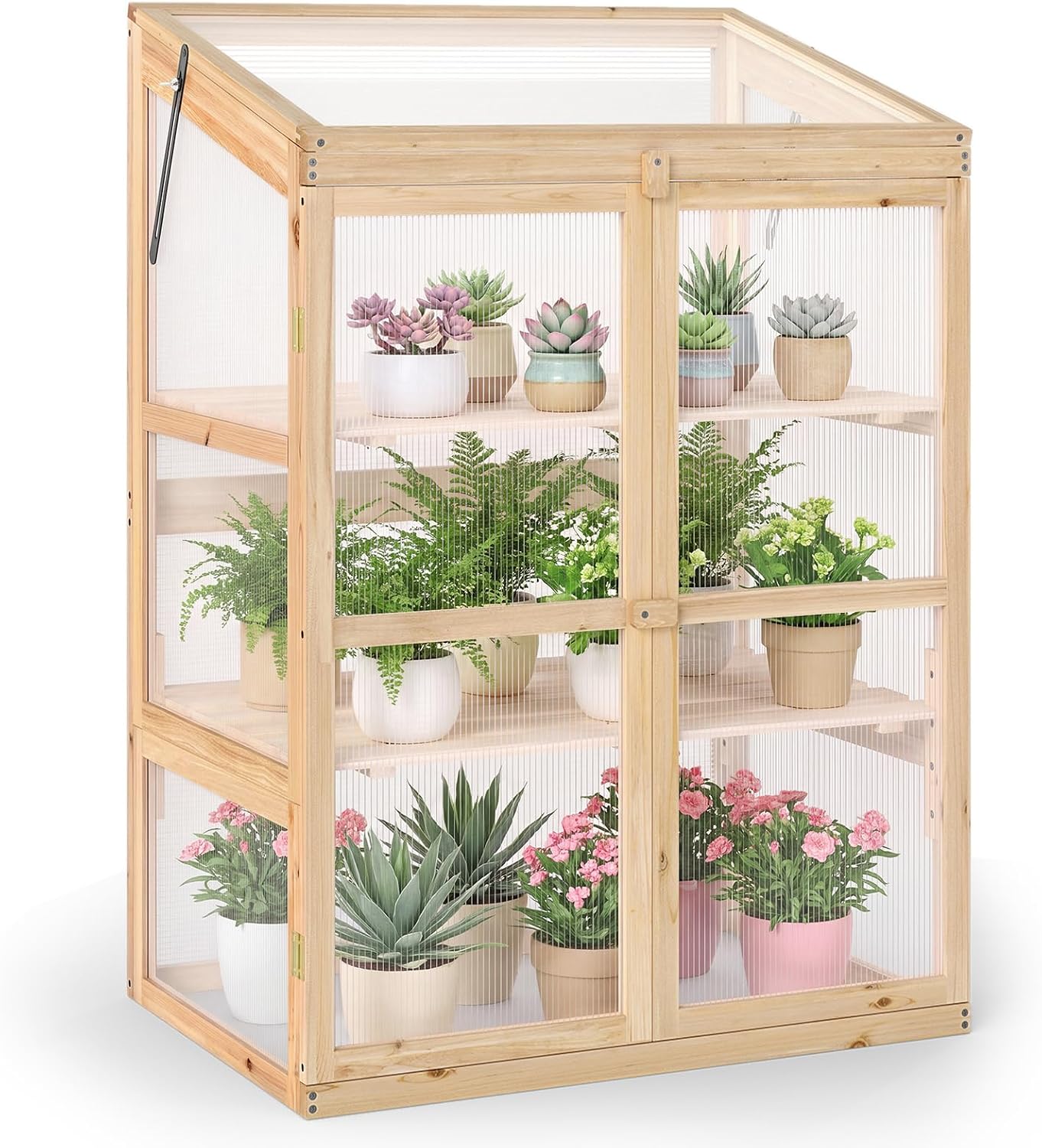
This GIANTEX wooden cold frame is a small outdoor greenhouse designed to extend the growing season for seedlings, herbs, and small potted plants. It combines a fir wood frame with transparent polycarbonate panels and hinged double doors so plants get good light while staying sheltered from wind, rain, and light frost. The flip-top roof with a support rod makes routine ventilation simple without fully exposing plants, and the two-tier slatted shelves let you organize trays or pots for better use of vertical space. Build quality looks thoughtful for the price point thanks to reinforced metal hinges and tightened screw connections, though assembly and anchoring are necessary to keep it steady in windy conditions. The unit is best for patios, balconies, and small garden corners where a compact footprint matters; it is not intended for large-scale propagation or heavy-duty overwintering of large shrubs. If you need a modest, attractive cold frame that balances sun exposure and protection on a budget, this model covers those basics well.
Best for: Gardeners looking to extend the season for seedlings or grow a modest collection of potted plants on a patio, balcony, or small backyard who want a natural-looking, budget-friendly wooden solution.
Less Ideal for: People who need a large greenhouse for bulk propagation, overwintering large plants, or heavy commercial use should consider larger or more heavy-duty structures.
- Fir wood frame blends durability with a natural look suitable for outdoor display
- Polycarbonate panels provide high light transmission while protecting plants from rain and light frost
- Flip-top roof with support rod enables easy ventilation control without disassembly
- Two-tier slatted shelves increase usable growing area in a compact footprint
- Compact size limits the number and size of plants that will fit comfortably
- Requires assembly and proper anchoring to remain stable in windy conditions
Verdict: A budget-friendly wooden cold frame that gives small-space gardeners reliable light, shelter, and easy ventilation to extend the growing season.
Choosing the Right Cold Frame Greenhouse: Key Factors to Consider
Thermal Insulation and Heat Retention
How well a cold frame holds heat through the night and during cloudy spells directly affects seedling survival and growth pace. Insulation comes from glazing material, frame thickness, and how well seams and joints block drafts. Clear rigid panels trap heat better than thin plastic covers, but some glazing reduces light. Consider how much overnight temperature buffer you need and whether you will add extra insulation such as row covers or insulating blankets.
Placement and soil thermal mass also matter. A cold frame set on dark soil or a stone base will store daytime heat and release it at night, improving overall retention. Evaluate whether the construction allows adding insulating inserts for particularly cold periods.
Ventilation and Temperature Control
A cold frame must shed excess heat on sunny days to avoid wilting and disease. Look for adjustable lids, vent panels, or hinges that let you finely tune airflow. Passive venting reduces labor but may be insufficient in strong sun; manually operable lids give more control.
Good ventilation also prevents humidity spikes that cause damping-off in seedlings. Designs that allow partial opening at different angles let you keep some warmth while reducing humidity and preventing overheating during warm spring afternoons.
Light Transmission and UV Stability
Seedlings and tender plants need bright, diffuse light. Glazing choices trade off between heat retention and how much usable light reaches plants. Clear polycarbonate panels transmit a lot of light and retain heat, while twin-wall panels add insulation at the cost of slight light diffusion. Thin polyethylene lets through lots of light but degrades faster under full sun.
UV resistance in glazing lengthens service life. Check whether panels resist yellowing and whether replacement panels are readily available so the frame remains useful for multiple seasons.
Size, Access, and Ergonomics
The cold frame must fit the intended use and make routine tasks easy. Taller designs simplify planting, potting, and harvesting without needing to kneel, while low-profile frames are easier to heat but harder to reach into. Consider how many seed trays or how much transplant space you need and whether the lid opening allows full access.
Think about how the frame will be placed relative to beds and paths. Hinged lids that open fully and stay propped reduce fiddliness. Lightweight lids are easier to operate but must lock or secure in wind-prone sites.
Build Durability and Weather Resistance
A reliable cold frame survives wind, rain, and occasional snow without warping or losing glazing. Material choices for frames and fasteners determine long-term durability. Aluminum and treated wood resist rot and corrosion better than untreated softwood, and stainless or coated fasteners prolong life.
Consider how well the base seals to the ground to block drafts and pests. Removable or replaceable panels simplify repairs after storm damage and extend the useful lifespan of the structure.
Ease of Assembly and Storage
Many gardeners value a frame that assembles quickly and can be disassembled for off-season storage. Complicated hardware or permanently anchored bases are fine if the frame will be a long-term fixture, but portable designs suit rented lots, patios, or seasonal use.
Also check weight and footprint for storage logistics. Collapsible panels and simple hinge systems make winter storage easier and reduce the need for heavy lifting during setup.
Placement and Orientation Tips
Position a cold frame where it receives full sun for most of the day, ideally with the lid facing south to maximize winter solar gain. Avoid deep shade from trees or buildings that reduces warmth and light. Slight elevation or a well-drained base prevents water pooling and keeps soil from staying cold and wet.
Morning sun exposure helps seedlings dry quickly and reduces fungal issues. On windy sites, use low windbreaks or situate the frame near a south-facing wall to cut wind chill without blocking light.
- Face glazing toward true south when possible
- Place on dark soil or stone for thermal mass
- Ensure drainage and avoid low spots
Seasonal Use and Insulation Strategies
In early spring and late fall, layer protection inside the frame to extend its effectiveness. Use lightweight fleece or floating row cover over trays for extra overnight frost protection. On clear, cold nights, adding a removable insulating board across the lid can reduce radiative heat loss.
In midseason, prioritize ventilation to prevent overheating. Remove added insulation when daytime highs consistently exceed a few degrees above desired temperatures to avoid stress on young plants.
- Add fleece on cold nights for added degrees of protection
- Use removable insulating panels for extreme cold snaps
- Remove insulation and increase vents as warmth stabilizes
Managing Ventilation Without Constant Monitoring
Automatic vent openers that expand with heat offer a hands-off way to prevent overheating, especially if you cannot check the frame daily. These devices attach to lids and open them as temperatures rise, then close them when it cools. If you prefer manual control, stay realistic about how often you will be outside tending seedlings and choose a lid mechanism that is simple to prop at partial openings.
Combine automatic venting with shade cloth on very sunny days if overheating still occurs. Even small adjustments in lid angle can dramatically reduce maximum interior temperatures.
- Consider thermal vent openers for low-maintenance control
- Use shade cloth for extreme sun to reduce heat spikes
- Prop lids at partial angles to balance warmth and airflow
Integrating With Raised Beds and Patio Growing
Cold frames adapt well to raised beds and patios but require slightly different planning. For raised beds, match the frame footprint to the bed so the structure sits flush and captures soil warmth. For patios, provide a stable, level base that allows drainage and prevents lid warping from standing water.
On patios, reflective pots or dark paving nearby can add thermal mass. Ensure the frame is secure against wind, especially if it sits on a raised surface without surrounding earth to anchor it.
- Fit cold frame footprint to raised bed dimensions
- Ensure a level, well-drained base on patios
- Anchor frames on exposed sites to resist wind
How We Chose the Best Cold Frame Greenhouse
We focused on features that matter to gardeners using compact, low-height structures to start seedlings, harden off transplants, or protect small plantings through light freezes. Evaluation emphasized thermal performance across day-night cycles, ventilation control for hot days, and construction durability to handle wind, snow, or repeated seasonal use. Access and ergonomics were scored so the frame is practical for planting and maintenance, while coverings and glazing materials were assessed for light transmission and UV resistance. We excluded full-size hobby greenhouses, unprotected foam cold boxes, and temporary low-quality covers that do not provide consistent weather protection. The selection favored solutions with clear design tradeoffs between insulation and airflow, straightforward assembly, and reasonable repairability. Final picks represent a range of sizes and materials suitable for patio, raised bed, or in-ground placements. The criteria we used align with the scoring labels below and reflect what gardeners need to manage season extension reliably.
FAQ
Will a cold frame greenhouse keep plants alive during a hard freeze?
A cold frame warms the microclimate and can protect plants from light to moderate frost, but it may not be enough for prolonged hard freezes without extra insulation. For severe cold, combine the frame with insulating blankets or supplemental heat to maintain safe temperatures.
Can I leave seedlings in a cold frame overnight without opening it each day?
Often you can, but it depends on daytime temperatures and sunlight. In cool, overcast stretches you may need to open lids to prevent humidity buildup on warm afternoons. Automatic venting helps reduce daily tinkering.
What glazing material is best for seed-starting in a cold frame?
Rigid polycarbonate panels provide a good balance of light transmission and insulation for seedlings, while twin-wall panels improve insulation at the cost of slight light diffusion. Thin plastic sheeting is inexpensive but will degrade faster under sun exposure.
How big should a cold frame be for a typical backyard gardener?
Size depends on how many trays or transplants you want to protect. A frame that accommodates several standard seed trays plus workspace for potting is convenient. Smaller frames are easier to heat and move, while larger ones hold more plants but demand more careful ventilation management.
Do cold frames need a foundation or can they sit directly on soil?
Cold frames can sit directly on soil, which improves thermal contact, but a simple raised edge or stone base improves drainage and prevents rot on wood frames. For patios, use a level base with slight drainage to avoid standing water under panels.
Final Verdict
Prioritize insulation and ventilation when choosing a cold frame greenhouse because those two factors determine how well the structure extends your growing season. Balance light transmission with thermal needs and choose a size that fits your workflow and available space. Decide whether portability or a permanent installation matters more, since that affects materials and assembly complexity. Focus on practical tradeoffs: better-insulated frames give more overnight protection but need more ventilation on sunny days, while low-profile portable frames are easy to handle but offer less working height. With the right combination of glazing, venting, and placement, a cold frame will reliably bring earlier starts and smoother hardening-off for your garden.
