

Note: This article contains affiliate links. If you click on these links and make a purchase, I may earn a small commission at no extra cost to you. This helps support my research and content. Read my full affiliate disclosure here.
Installing the right durable pond liner determines how well your backyard pond holds water, resists punctures, and ages in sunlight and garden conditions. Whether you are building a small wildlife feature, a decorative patio pond, or a larger backyard water garden, the liner you choose affects longevity, maintenance effort, and how often you need to intervene. This guide covers seven shortlisted Durable Pond Liners that suit a range of pond sizes and installation methods. We evaluated each option for material strength, ease of installation, and how well it performs in real outdoor conditions. Read on to see which features matter most and which liners best fit different pond styles and skill levels.
Top Picks at a Glance
| Best Overall The best all-around choice for most situations | Aquascape PRO Grade EPDM Pond Liner, 45 mil, 10 x 12 ft |  |
| Best Quality Built to a higher standard if you want something more solid | Firestone 45mil EPDM Rubber Pond Liner, 15 ft x 20 ft |  |
| Best Value The sweet spot between price and what you get | Firestone PondGard 45 Mil EPDM Pond Liner, 15 x 5 ft |  |
| Best Budget The cheapest option that still gets the job done reliably | Froidesente 7 x 10 ft HDPE Pond Liner (20 mil) with Gloves |  |
| Highest Rated A top-rated pick with lots of positive feedback | Firestone PondGard EPDM Pond Liner 45 mil, 10 x 10 ft |  |
| Most Popular A crowd favorite that many people choose with confidence | TotalPond 7 x 10 ft. PVC Pond Liner, 14.5 mil Reinforced |  |
| Best Seller A high-volume bestseller chosen again and again | ToLanbbt HDPE Pond Liner, 7 x 10 ft, 20 mil UV-Resistant |  |
Aquascape PRO Grade EPDM Pond Liner, 45 mil, 10 x 12 ft

| Material Type | EPDM |
|---|---|
| Item Thickness | 45 mils |
| Unit Count | 120 Square Feet |
| Size | 10 x 12 ft |
This Aquascape PRO Grade EPDM liner is a heavy-duty rubber membrane meant for lining backyard ponds, pondless waterfalls, and other water features. At 45 mil thickness it balances durability with enough flexibility to stretch and lay flat during installation, making it suitable for DIYers and pro installers alike. The liner is fish- and plant-safe and built to resist solar UV, ozone, and oxidation, which reduces the chance of premature cracking or degradation in outdoor conditions. It ships as a 10 x 12 foot sheet, so it works well for small to medium installations or as a patch in larger projects. Practical benefits include easier handling compared with thicker, stiffer liners and long-term reliability backed by a stated 20-year guarantee. Limitations are its fixed sheet size and square footage, which means larger ponds will require seams or larger panels and professional seaming for the best long-term results. For complex shaped or very large ponds you will need additional liner or welding to avoid leaks.
Best for: Gardeners and landscapers who want a reliable, long-lived liner for small to medium ponds or pondless waterfall projects and value ease of installation and fish-safe materials.
Less Ideal for: Those planning very large ponds, custom-shaped installations, or installers who need pre-measured oversized panels without doing seams or hiring seaming services.
- 45 mil EPDM thickness for a strong, durable membrane
- Formulation rated safe for fish and aquatic plants
- High resistance to UV, ozone, and oxidation for outdoor longevity
- Flexible enough to stretch and lay flat for easier installation
- Sold as a single 10 x 12 ft sheet which may require seams for larger ponds
- Not suitable alone for very large or unusually shaped installations without professional seaming
Verdict: A durable, fish-safe 45 mil EPDM liner that gives small to medium pond builders a long-lasting, easy-to-handle solution.
Firestone 45mil EPDM Rubber Pond Liner, 15 ft x 20 ft

| Material | EPDM rubber |
|---|---|
| Thickness | 45 mil (0.045 inch) |
| Shape | Pre-cut sheet |
| Intended use | Pond liner for water gardens |
This Firestone 45 mil EPDM pond liner is a performance-focused, pre-cut rubber liner intended for medium to large backyard ponds and water features. Its 0.045-inch (45 mil) thickness gives noticeable puncture and weather resistance compared with thinner liners, and the flexible EPDM material makes it easy to form around irregular shapes and rockwork during installation. The liner arrives boxed and ready to unroll, which speeds setup for DIY installers or professionals. Because EPDM is fish-safe and chemically stable, it suits planted ponds and ornamental fish. The main practical limitations are that a pre-cut sheet requires careful measuring and overlap planning for very large or unusually shaped excavations, and heavier liners need two people to position without stretching. If you plan to anchor edges with rocks or a preformed underlayment, the liner performs well, but expect to add protective underlayment where the substrate is sharp. Overall it is a durable, low-maintenance choice when longevity and resilience are priorities.
Best for: Buyers who prioritize a long-lasting, resilient liner for planted or fish ponds and want a performance-oriented material that handles rockwork and irregular designs.
Less Ideal for: People planning very large commercial ponds or those who need a fully custom-shaped preformed liner should consider alternatives tailored to larger scales or exact shapes.
- 45 mil EPDM thickness for strong puncture and weather resistance
- Flexible material conforms to irregular pond shapes for easier installation
- Fish- and plant-safe EPDM chemistry suitable for biological ponds
- Pre-cut, boxed sheet simplifies purchasing and speeds setup
- Pre-cut dimensions limit use for ponds larger than the sheet without seams
- Heavier roll can require two people to position and smooth during install
Verdict: Choose this 45 mil EPDM liner when you want a durable, fish-safe pond liner that resists punctures and conforms to irregular backyard pond designs.
Firestone PondGard 45 Mil EPDM Pond Liner, 15 x 5 ft

| Material Type | Rubber (EPDM) |
|---|---|
| Thickness | 45 mil (0.045 in) |
| Size | 15' x 5' |
| Installation Type | Placement-based |
The Firestone PondGard 45 mil EPDM liner is a thick, flexible rubber membrane intended to form the waterproof base of a backyard pond or water garden. Installers lay the liner into an excavated or preformed basin and shape it to contours before covering the edges; its 45 mil thickness gives durable puncture and tear resistance while remaining pliable for fitting around curves and shelves. The material is marketed as fish and plant safe and carries long expected life, so it suits ornamental ponds and small to medium water features where longevity matters. Practical benefits include resistance to UV and weathering, straightforward placement-based installation, and easy cleaning with mild detergent as needed. Limitations are typical of rubber liners: seams or overlaps will be required for larger ponds and professional joining may be necessary for permanent installations, and the product is a membrane only so it does not include underlay, edging, or fittings for plumbing.
Best for: Buyers who prioritize a long-lasting, low-maintenance pond foundation and want a proven EPDM membrane they can shape or have a contractor install.
Less Ideal for: People needing a complete kit with fittings, underlayment, or prefabricated liners sized to complex ponds should look elsewhere.
- 45 mil EPDM offers strong puncture and tear resistance for long service life
- Flexible and pliable for shaping around contours and shelves
- Rated fish and plant safe for use in water gardens
- Simple placement-based installation suitable for DIY or contractor use
- No built-in fittings, underlayment, or seam joining materials included
- Large ponds will require seams and professional joining for watertight results
Verdict: Choose this 45 mil EPDM liner when you want a durable, fish-safe membrane that will form the long-lasting foundation of a water garden or pond.
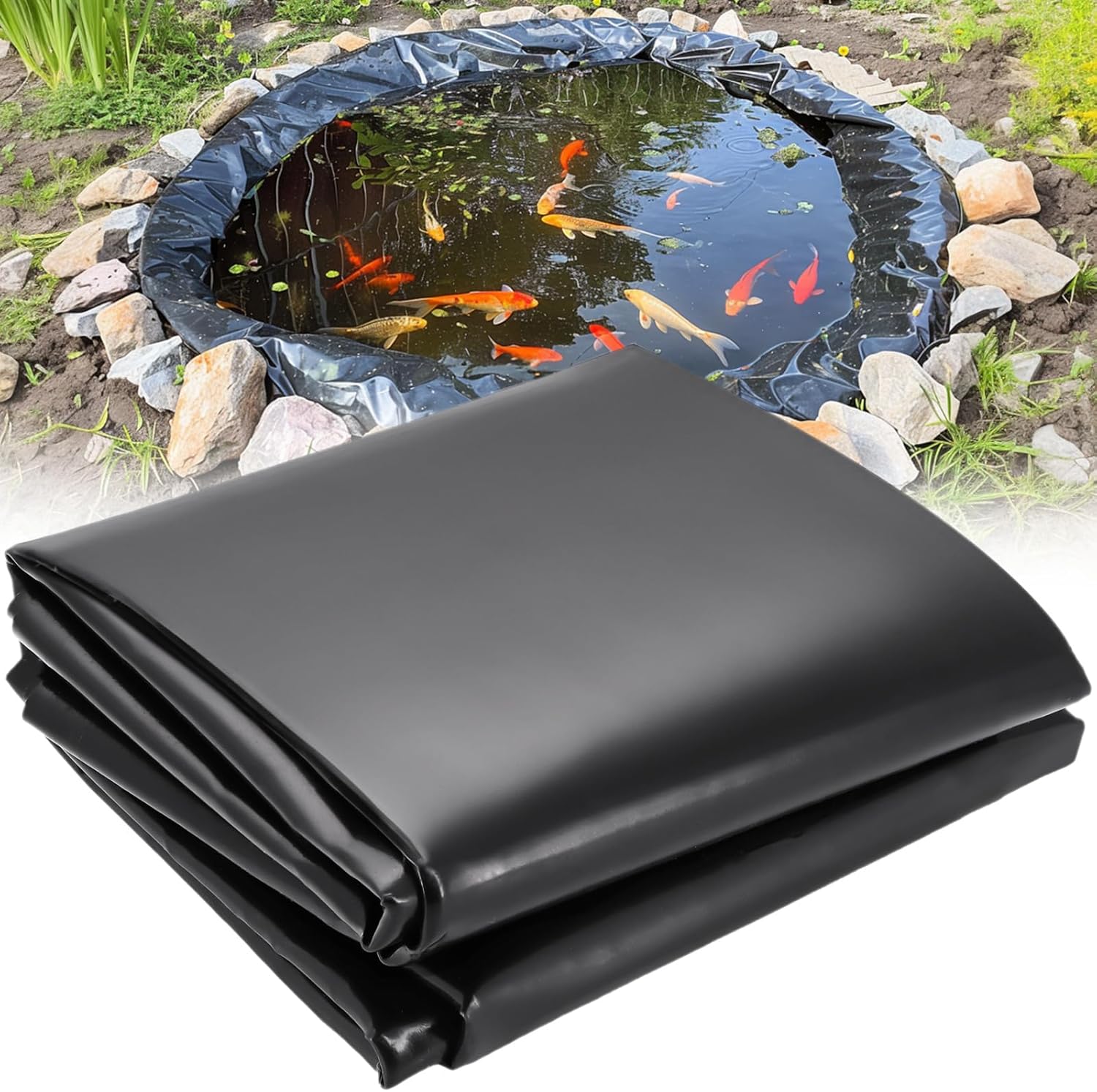
Froidesente 7 x 10 ft HDPE Pond Liner (20 mil) with Gloves
| Material | HDPE |
|---|---|
| Thickness | 20 mil |
| Applicable objects | Garden ponds, waterfalls, cisterns |
| Features | Tear & penetration resistance |
This Froidesente 7 x 10 ft pond liner is a straightforward HDPE sheet meant for backyard ponds, waterfalls, cisterns and small water features. Made from 20 mil high-density polyethylene, the liner is flexible enough to be cut to shape on site and resistant to punctures and UV exposure, which helps it hold water and protect pond plants and fish. Typical use is simple: dig the hole, trim the liner to fit, position it and weigh or anchor the edges with stone or plants; the listing also includes gloves for handling. For repairs or joining pieces you can use butyl seam tape sold separately. Practical benefits are durability in seasonal temperature swings and reduced soil ingress for easier pond maintenance. Limitations are that the pre-cut 7 x 10 ft size restricts you to smaller installations or requires seams for larger ponds, and HDPE is less stretchy than some EPDM options so careful fitting around complex shapes is needed. This is a no-frills liner aimed at basic pond builds rather than architectural or very large installations.
Best for: Buyers who need a durable, budget-friendly liner for small backyard ponds or water features and prefer a simple, easy-to-install sheet they can trim themselves.
Less Ideal for: Those planning large koi ponds, highly irregular or landscaped ponds that need a very elastic membrane, or installers who want a pre-measured custom liner without seams.
- 20 mil HDPE construction offers good puncture and UV resistance for outdoor use
- Flexible sheet can be cut on site to match custom pond shapes
- Suitable for four-season exposure and temperature swings
- Includes gloves for handling during installation
- Small pre-cut size may require seams for larger ponds
- Not as elastic as EPDM liners, so careful fitting on irregular shapes is needed
Verdict: A practical, inexpensive 20 mil HDPE sheet that delivers durable, no-frills protection for small backyard ponds.
Firestone PondGard EPDM Pond Liner 45 mil, 10 x 10 ft
| Material | EPDM |
|---|---|
| Thickness | 45 mil |
| Fish safe | Yes |
| Sheet size | 10' x 10' |
The Firestone PondGard 45 mil EPDM liner is a heavy-duty, fish-safe liner intended as the waterproof foundation for small backyard ponds. It is typically used to line excavated ponds or preformed shells up to roughly 6 x 6 ft, providing a flexible, puncture-resistant barrier that tolerates normal pond installation and landscaping. Notable features include the 45 mil thickness favored by contractors for durability and the EPDM rubber formulation that stays pliable in a range of temperatures. Practical benefits are straightforward: long-lasting performance that resists tearing, a smooth material that is easy to shape around edges and features, and suitability for fish and plants without harmful additives. Limitations are its fixed flat sheet size and the need for careful underlayment and seam overlap when installing larger or irregular ponds, so professional installation or careful DIY preparation is advisable. For reliability-focused buyers this liner delivers a proven, contractor-grade membrane that reduces the risk of leaks over cheaper thin liners.
Best for: Buyers who prioritize long-term reliability and want a contractor-grade EPDM liner for a small to medium backyard pond or water garden and are prepared to install or hire proper installation.
Less Ideal for: Casual gardeners who want a plug-and-play preformed pond or those who need an exact custom-cut liner for large or unusually shaped ponds without seams.
- 45 mil EPDM offers high puncture and tear resistance compared with thin liners
- Formulation is fish safe, suitable for ponds with fish and aquatic plants
- Flexible and pliable for shaping around features and edges during installation
- Well-regarded contractor-grade material trusted for long-term waterproofing
- Supplied as a flat 10 x 10 ft sheet so larger or complex ponds require seams or multiple pieces
- Requires proper underlayment and careful installation to avoid damage during placement
Verdict: Choose this EPDM PondGard liner when you want a dependable, contractor-grade membrane that minimizes leak risk for a small backyard pond.
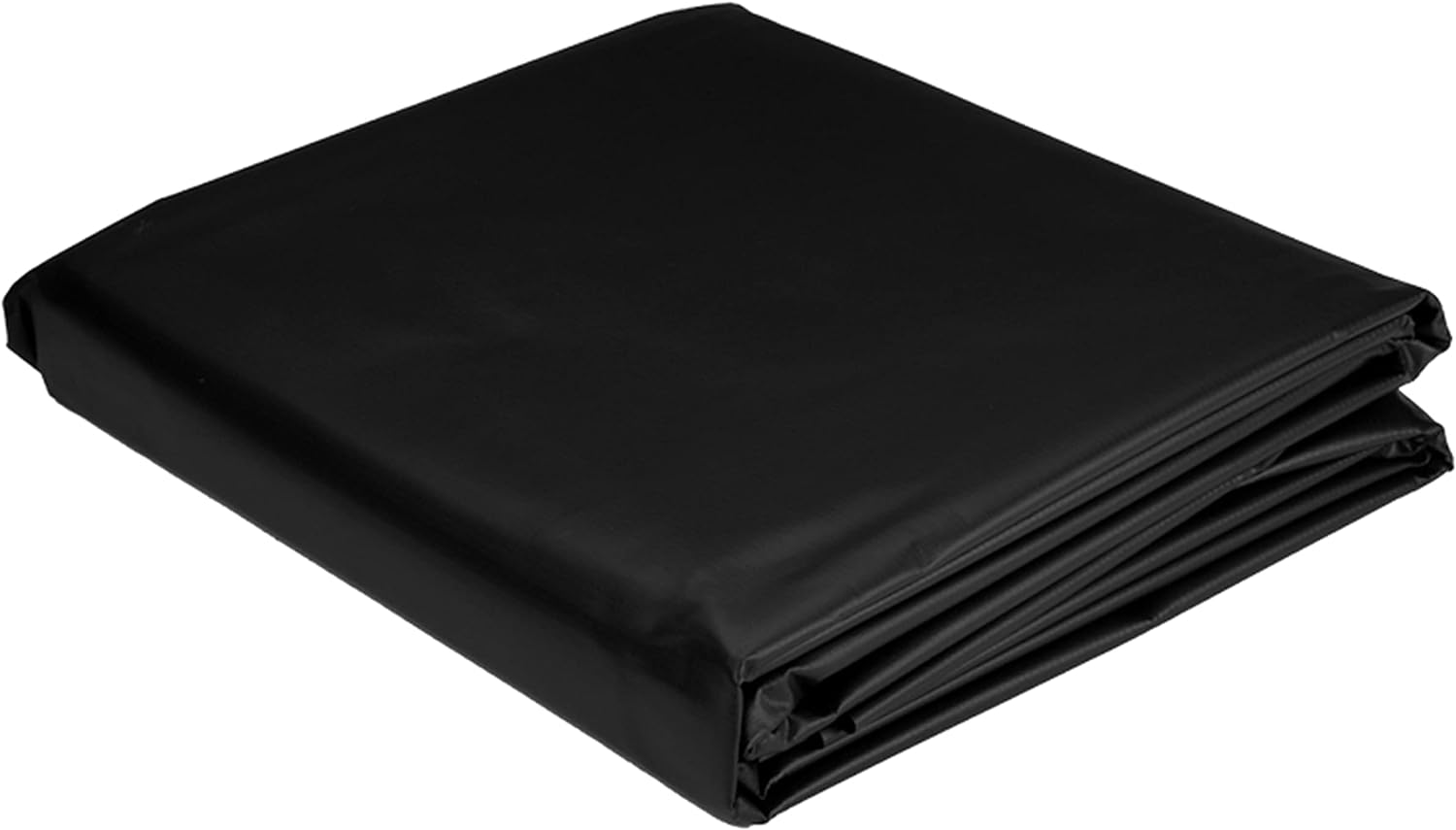
TotalPond 7 x 10 ft. PVC Pond Liner, 14.5 mil Reinforced
| Unit Count | 70 Square Feet |
|---|---|
| Material Type | PVC |
| Thickness | 14.5 mil |
| Suitable For | Ponds up to 200 Gallons |
This TotalPond 7 x 10 ft. PVC pond liner is a lightweight, reinforced liner meant for small in-ground or above-ground paver ponds up to roughly 200 gallons. It is made from 14.5 mil PVC with a polyester mesh weave sandwiched between layers for added puncture resistance and tear strength. The material is flexible and notably lighter than thicker EPDM alternatives, which makes shaping and installing custom contours easier for one or two people. The black textured surface helps the liner blend into the landscape and gives a place for beneficial bacteria to colonize, supporting a balanced pond ecosystem. It is UV resistant so it should hold color and properties outdoors, but being PVC it is thinner than heavier commercial liners so users should take care to remove sharp stones and add underlayment where needed. The liner works well for ponds, small waterfalls, waterproof planters, and similar projects, but its lighter construction means it is best for modest installations rather than heavy-duty commercial use.
Best for: Buyers who want a proven, easy-to-handle liner for a backyard pond or small water feature and who prioritize products with broad positive user feedback and durable reinforcement.
Less Ideal for: Contractors or buyers planning large, high-traffic, or industrial ponds should choose a heavier commercial-grade liner and professional installation instead.
- Reinforced polyester mesh between PVC layers for improved puncture and tear resistance
- 14.5 mil thickness offers good durability for small residential ponds
- Lighter and more flexible than standard heavier liners, easier to handle during installation
- Textured black surface promotes natural appearance and bacterial colonization
- UV-resistant material designed to resist fading outdoors
- Thinner PVC construction than heavy commercial liners makes it less suitable for sites with rough ground without underlayment
- No size or weight specs for underlayment or installation accessories included
Verdict: A lightweight but reinforced PVC liner that makes building a durable small backyard pond simpler and more reliable.
ToLanbbt HDPE Pond Liner, 7 x 10 ft, 20 mil UV-Resistant

| Size | 7 x 10 Feet |
|---|---|
| Material | HDPE |
| Thickness | 20 Mil |
| Manufacturer | ToLanbbt |
This ToLanbbt pond liner is a straightforward HDPE sheet sized for small ponds and water features. It is 20 mil thick, flexible enough to shape around corners and shelves, and the material is described as UV resistant and puncture tolerant so it can be used outdoors without added plasticizers. Typical use is to clean and flatten the excavation, lay the liner, trim to fit, and cover exposed edges with pebble or edging material; the manufacturer also recommends removing sharp stones or debris before installation. The liner’s thin, lightweight construction makes it easy to handle and cut to irregular shapes, and its waterproof, impermeable surface helps keep soil and contaminants out of the pond. Limitations are that 20 mil HDPE is not as durable as heavier EPDM or reinforced PVC liners for areas with heavy foot traffic or large koi and it offers less protection against sharp objects unless an underlayment is used. For a budget build or a small decorative pond, this liner provides a simple, usable solution but expect to add protections if you need longer-term durability.
Best for: Buyers who need an economical, easy-to-handle liner for a small decorative pond, fountain, or water garden and prioritize low cost and simple installation.
Less Ideal for: Gardeners planning large koi ponds, heavy foot traffic around the pond, or long-term, high-durability installations should consider thicker or reinforced liners instead.
- 20 mil HDPE material offers good flexibility for shaping around corners and shelves
- UV resistant and advertised as puncture tolerant for outdoor use
- Lightweight and easy to cut to fit irregular pond shapes
- Waterproof surface prevents soil and contaminants from seeping into the pond
- 20 mil thickness is thinner than heavy-duty EPDM liners and may wear faster in high-abrasion situations
- Requires careful site preparation or an underlayment to avoid punctures from sharp stones
Verdict: A budget-friendly, easy-to-cut 20 mil HDPE liner that works well for small decorative ponds and simple DIY water features.
Choosing the Right Durable Pond Liner: Key Factors to Consider
Material Type and Thickness
The base material and thickness determine a liner's innate durability in a garden setting. Heavier, thicker materials generally resist punctures from rocks, roots, and tools better than thin films. Common materials include flexible synthetic rubbers and reinforced geomembranes; each behaves differently when stretched around ledges or placed in tight corners.
Thickness is measured in mils or millimeters and is not the only indicator of durability, but it gives a useful baseline. Thicker liners are harder to tear during installation and are more forgiving of minor ground imperfections, reducing the need for extensive underlayment.
UV Resistance and Weathering
Exposure to sunlight and seasonal temperature swings causes many liners to degrade over time. UV-stable materials and formulations slow embrittlement and cracking, extending service life. Consider how much sun your pond will receive daily and whether the liner will be shaded by plants or structures.
Cold climates also matter because repeated freeze-thaw cycles can make some materials brittle. A liner rated for outdoor use under local climate conditions will maintain flexibility and water-tightness longer, lowering the chance of late-season leaks.
Seams and Edge Details
For prefabricated liners or joined installations, seams are common failure points. Look for liner systems with strong, well-engineered seam methods, such as factory-welded joins or proven field-welding compatibility. Edge reinforcement where the liner is exposed over waterfalls, ledges, or under coping stones reduces abrasion and splits.
How a liner attaches to surrounding edging, whether via clips, undercut edges, or overlap with underlayment, affects long-term security. Reinforced edges make it easier to conceal the liner under rockwork without compromising the seal.
Compatibility With Underlayment
Underlayment protects the liner from sharp stones and roots and helps distribute loads from decorative rock. The right underlayment prevents point loads from puncturing the liner and reduces friction that can abrade surfaces during seasonal movement. Some liners are intended to be used without additional underlayment for small decorative ponds, but for most outdoor installations a compatible underlay is a sensible safety measure.
Choose underlayment that matches liner flexibility so the two layers move together during settling. Also consider breathable or drainage-friendly underlays in installations where trapped moisture under the liner could be an issue.
Ease of Installation and Handling
A liner that is easier to handle reduces installation errors that lead to failures. Factors include weight, fold memory, and how well the material conforms to curves and shelves. Lightweight membranes can be manageable but may require additional care to avoid tears. More flexible rubbers can be stretched and smoothed into place with fewer wrinkles, simplifying sealing and rock placement.
Accessibility of repair kits, straightforward seaming instructions, and whether the liner can be field-welded or patched with simple adhesives also influences how DIY-friendly the product is. For larger ponds, think about the number of people needed to move and position the liner safely.
Environmental Safety and Chemical Stability
Since pond liners sit in direct contact with water that may host fish and plants, chemical stability and the absence of harmful additives are important. Materials should not leach toxins or impart odors that stress aquatic life. Look for liners formulated for potable water contact or explicitly labeled as safe for fish and plants.
Also consider how the liner reacts to pond treatments, fertilizers, and runoff. A chemically stable surface resists degradation from common pond maintenance practices, reducing the risk of unexpected failures.
Sizing and Leftover Material Planning
Accurate sizing saves time and prevents gaps during installation. Measure the pond footprint and depth, accounting for slope and ledges, then add generous overlap for anchoring around the perimeter. It is smart to plan for extra material to accommodate settling and to allow working room when smoothing and trimming.
Leftover material often proves valuable for patching after initial settlement or for creating a protective apron under rock edging. Store any excess clean, dry, and unfolded to avoid creases that can weaken the liner if left in a folded state for years.
- Allow extra overlap for burying the liner under soil or rock.
- Keep spare pieces for future repairs.
- Mark the top edge during install to keep orientation correct.
Preparing the Base and Using Underlayments
A well-prepared base prevents many common liner failures. Remove sharp stones, sticks, and roots from the excavation and level out sharp changes in grade. A thin layer of sand or specially designed pond underlayment reduces point loads from larger decorative rocks.
Underlayment types range from basic geotextiles to foam mats. Thicker underlays give added protection in rocky or root-prone soils but can affect how the liner sits against the pond contours. Balance protection with the desired finished appearance.
- Clear all debris and compact soft spots before laying underlayment.
- Overlap underlayment seams to avoid gaps beneath the liner.
- Test the contour fit with a loose-lay of the liner before final trimming.
Anchoring, Edging, and Concealment Techniques
How you anchor and hide the liner edge affects both aesthetics and longevity. Common methods include burying the liner under soil, securing it with rock edging, or using dedicated edging strips. Avoid sharp rocks directly on top of the liner edge and use protective layers where movement or abrasion is likely.
Concealment also affects maintenance access. Leave small removable sections under rocks or edging to access seams or to install aeration and filtration lines without disturbing the entire edge detail.
- Use flat stones or pavers above the liner edge to prevent slippage.
- Consider a gravel apron where water overflows to reduce erosion.
- Keep access points for filtration and plumbing deliberately unobstructed.
Repair and Patch Strategies
Even the most durable liners can develop leaks from rare punctures or seam deterioration. Knowing the right patch technique extends service life and minimizes downtime. Clean and dry the area before applying an adhesive patch or heat weld. For underwater repairs, temporary draining or using low-profile patch methods may be needed depending on the liner material.
Match patch material to the liner type for best adhesion and mechanical compatibility. Keep a small repair kit on hand with compatible adhesive, patch rectangles, and instructions so minor issues are addressed quickly.
- Test patch adhesion on a scrap piece whenever possible.
- Reinforce high-stress edges with additional material under the coping.
- Document patch locations for future inspection.
Designing for Wildlife and Plants
If you plan to host plants or fish, adjust liner installation to include shelves and shallow margins for marginal plants, which provide habitat and help water quality. Choose shelf widths and depths that support the species you want to grow while keeping liner stress minimal at transitions between shallow and deep zones.
Plants with aggressive roots should be placed in pots or separated by barriers to prevent root intrusion under the liner. Also plan plumbing and aeration placements to avoid creating concentrated wear points in the liner.
- Create gradual transitions from shallow to deep areas to reduce liner strain.
- Use pots or root barriers for vigorous marginal plants.
- Place inlet and outlet plumbing where it can be supported and inspected.
How We Chose the Best Durable Pond Liner
We focused on attributes that directly affect how a pond liner performs over years in a real garden environment. Core evaluation criteria included material tensile strength and puncture resistance, UV and weather durability, seam and edge reliability for prefabricated or welded liners, and flexibility for shaping around curves and ledges. We also considered installation practicality, such as weight, manageability for DIY installers, and compatibility with common underlayment products. Maintenance factors like ease of repair and resistance to algae attachment informed selection as well. Environmental compatibility and non-toxicity for plants and fish were required for all shortlisted liners. Products that relied on unproven or proprietary coatings without independent durability data were excluded. Extremely thin films or liners intended only for temporary pond use were not considered. The remaining selections balance robust materials, realistic installability for gardeners, and long-term outdoor performance.
FAQ
How thick should a durable pond liner be for a backyard garden pond?
Thickness depends on material type and site conditions. In general, heavier materials are advisable for larger, exposed ponds or rocky sites. For small, sheltered ponds a lighter but UV-stable liner can work. Consider local soil sharpness and whether you will use underlayment when choosing thickness.
Can I install a pond liner myself or do I need a pro?
Many gardeners can install liners themselves with proper planning and at least one helper for larger sheets. Complexity increases with pond size, slope, and planned edging. Hiring a pro is useful when welding seams, working at scale, or when complex plumbing and waterfalls are involved.
How do I prevent punctures from rocks and roots?
Remove sharp debris during excavation and use a protective underlayment beneath the liner. Place larger decorative rocks on a layer of sand or stone slabs rather than directly on the liner edge. Regular inspection and avoiding planting aggressive-rooted species directly at the liner edge also helps.
What is the best way to repair a small tear?
For small tears, clean and dry the area, then apply a patch made from the same or compatible material with a recommended adhesive or welding technique. For underwater repairs, temporary local drainage or specialized underwater patch materials may be necessary depending on the liner chemistry.
Will a liner affect water quality for fish and plants?
Most pond liners intended for gardening are formulated to be chemically stable and safe for aquatic plants and fish. Look for liners labeled as suitable for ponds and avoid products with unknown additives. Allow the pond to cycle and establish plant life before stocking fish to ensure a stable environment.
Final Verdict
When choosing a durable pond liner, prioritize material strength, UV resistance, and how well the liner integrates with your planned edging and underlayment. Tradeoffs include heavier, more robust materials that are harder to handle versus lighter membranes that may need extra protection but are easier to shape. Decide on the liner that matches your pond scale, site conditions, and willingness to manage installation complexity. With careful base preparation and appropriate repair kits on hand, a properly chosen durable liner will minimize maintenance and keep your pond sealed for many seasons.
