

Note: This article contains affiliate links. If you click on these links and make a purchase, I may earn a small commission at no extra cost to you. This helps support my research and content. Read my full affiliate disclosure here.
Choosing the right grow light for citrus matters because these trees need enough light to set fruit and maintain dense, healthy foliage when outdoor sun is limited. In winter or in indoor setups on patios and in greenhouses, light intensity, spectrum, and coverage determine growth rate, leaf color, and whether flowers form and persist. This guide shortlists seven top grow lights for citrus and explains the practical performance traits that matter most to gardeners. We evaluate each option for spectrum, usable coverage, heat management, and control features so you can match a light to your tree size and location. Read on for concise, gardener-focused guidance that leads into our top picks.
Top Picks at a Glance
| Best Overall The best all-around choice for most situations | GLOWRIUM G2 Floor Grow Light with Adjustable Stand | 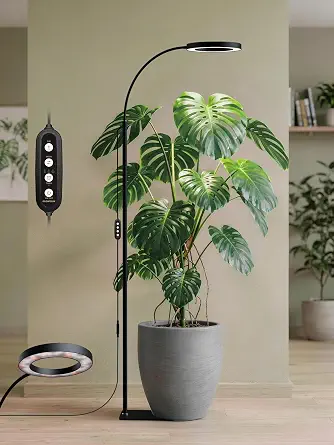 |
| Best Quality Built to a higher standard if you want something more solid | Spider Farmer SF1000D 100W Dimmable Full-Spectrum LED Grow Light |  |
| Best Value The sweet spot between price and what you get | Aokrean Halo Full-Spectrum LED Grow Light with Base (3-Pack) |  |
| Best Budget The cheapest option that still gets the job done reliably | Briignite A19 Full Spectrum LED Grow Light Bulb (2-Pack) |  |
| Highest Rated A top-rated pick with lots of positive feedback | SDOVUERC Full-Spectrum Adjustable Floor Grow Light (2-Pack) |  |
| Most Popular A crowd favorite that many people choose with confidence | GooingTop HY-021 6000K Full-Spectrum Clip Grow Light |  |
| Best Seller A high-volume bestseller chosen again and again | Barrina T5 1 ft LED Grow Light, 5000K Full Spectrum (4-pack) |  |
GLOWRIUM G2 Floor Grow Light with Adjustable Stand

| Light Source Type | LED |
|---|---|
| Additional Features | Adjustable Height, Dimmable, Flexible, Full Spectrum, Timer |
| Wattage | 20 watts |
| Number of Light Sources | 66 |
| Controller Type | Remote Control |
The GLOWRIUM G2 is a floor-style grow lamp designed to give large indoor plants reliable supplemental light without complicated installation. It uses 66 full-spectrum LEDs in a 20W fixture mounted on a three-section aluminum stand so you can raise the lamp to match a Monstera's canopy as it grows. Controls include stepless 10 to 100% dimming across six levels, a 3/9/12-hour auto timer, and a remote plus in-line push-button operation for quick adjustments. Practical features such as a wide base, anti-slip design, 13-foot power cord, and good heat dissipation make it easy to position near living-room plants and keep running safely for long periods. The lamp offers three light modes that combine warm, cool, and red spectrums to support rooting, vegetative growth, and flowering stages. Limitations are that it is meant for indoor use only and has a freestanding footprint, so it takes floor space and is less suitable for very small apartments or for growers who need wall- or ceiling-mounted fixtures.
Best for: Houseplant owners who want a straightforward, durable lamp to give a growing Monstera reliable, adjustable supplemental light without fussing with mounts or complex setups.
Less Ideal for: People with very limited floor space, those who need ceiling- or wall-mounted lighting, or growers who require IP-rated fixtures for humid rooms.
- Adjustable three-section stand lets you raise the light to match Monstera height and changing canopy needs
- Full-spectrum LED array with warm, cool, and red modes supports all growth stages
- Stepless 10–100% dimming and 3/9/12-hour timer add automation and precise intensity control
- Aluminum construction improves heat dissipation for longer runtime and durability
- Long 13-foot power cord and stable anti-slip base make placement flexible and secure
- Freestanding design requires floor space and may not fit very tight or high-shelf setups
- Specified as indoor use only so it is not suitable for humid outdoor or unprotected patio placements
Verdict: A practical, easy-to-use floor grow light that gives Monsteras adjustable full-spectrum illumination as they grow.
Spider Farmer SF1000D 100W Dimmable Full-Spectrum LED Grow Light

| Light Source Wattage | 100 watts |
|---|---|
| Light Source Type | Light Emitting Diode |
| Light Source Special Features | Samsung LM301B diodes, full spectrum, no-fan design |
| Number of Light Sources | 600 |
| Input Voltage | AC110-130V |
The Spider Farmer SF1000D is a compact, 100W full-spectrum LED built for small grow spaces such as 2×2 tents. It uses high-density Samsung/Bridgelux-type diodes arranged across a waterproof board and an aluminum heat sink to deliver even canopy coverage with low noise because it has a no-fan design. Typical use is ceiling- or hook-mounted over a 2×2 to 3×3 area for seed starting, vegetative growth, and flowering; the manufacturer lists a veg footprint around 3×3 and a flowering footprint of 2×2. The dimmable driver makes it easy to dial light intensity for different growth stages, and the low 100W draw offers better energy efficiency than comparable HID fixtures, with less heat to manage. Practical benefits include quiet operation, solid build materials, and protective cable covers for safer tent installations. Limitations are the modest output for larger or commercial setups and the fixed coverage pattern that may require raising or adding fixtures for denser canopies.
Best for: Growers who want a quiet, energy-efficient light for a single 2×2 tent and who value straightforward, adjustable performance across all plant stages.
Less Ideal for: Commercial growers or hobbyists running multiple tents or large canopies who need higher total output or advanced control features.
- Full spectrum with blue, 3000K, 5000K, deep red (660-665nm) and IR suitable for all growth stages
- Dimmable 100W driver for adjustable intensity across veg and flower phases
- No-fan design with large aluminum heat sink provides quiet operation and passive cooling
- Waterproof LED board and protective cable covers improve safety inside tents
- 100W total output is ideal for 2×2 tents but may be insufficient for larger or heavily canopied grows
- No integrated controller or app features for scheduling or advanced automation
Verdict: A quiet, energy-efficient 100W full-spectrum LED that gives balanced, adjustable light for a single 2×2 tent setup.
Aokrean Halo Full-Spectrum LED Grow Light with Base (3-Pack)

| Light Source Type | LED |
|---|---|
| Number of Light Sources | 48 |
| Wattage | 10 watts |
| Control Method | Touch |
| Power Source | Corded Electric |
This Aokrean Halo grow light is a small, versatile LED solution for indoor plants that offers a lot of convenience in a compact package. Each lamp uses 48 LEDs with a full-spectrum output and three lighting modes plus ten brightness levels, so it can be tuned for seedlings, vegetative growth, or supplemental light for potted houseplants. The lamp can be inserted into soil or mounted on the included base, and the telescoping pole adjusts up to about 26 inches to suit taller pots or change light intensity. Controls are touch-based and include a timer with preset cycles for automated daily on/off. Practical benefits include a neat decorative look, low power draw at 10 watts, and USB/Bluetooth connectivity for modern setups. Limitations are that the base requires the pot to help stabilize the stand and the unit is not water resistant, so it must stay dry and indoors. For balanced buyers looking for adaptable, easy-to-use grow lights for multiple indoor plants, this hits the mark.
Best for: Buyers who want a compact, adjustable grow light that works for seedlings and small to medium houseplants and who value easy controls and automated timers.
Less Ideal for: Growers needing heavy-duty, waterproof fixtures for greenhouse or outdoor use or those who require high-output lighting for large-scale indoor gardens.
- Full-spectrum LED array (48 LEDs) with three lighting modes and 10 brightness levels for flexible plant lighting
- Height-adjustable pole and dual mounting (insert in soil or use the base) to fit a range of pot sizes
- Touch controls with built-in timer options for automatic daily cycles
- Low power consumption (10 watts) and high efficiency for continuous use
- Base stability depends on placing a pot on it so it can be less secure with lighter containers
- Not water resistant so unsuitable for humid or outdoor environments
Verdict: Aokrean's Halo is a space-saving, full-spectrum grow light with adjustable height and timers that makes it easy to give small indoor plants the right light without complex setup.
Briignite A19 Full Spectrum LED Grow Light Bulb (2-Pack)

| Light Type | LED |
|---|---|
| Additional Features | Full Spectrum |
| Bulb Base | E26 |
| Light Output Maximum | 1000 lumens |
| Light Source Operating Life | 30000 hours |
These Briignite A19 grow bulbs are full-spectrum LED replacements that screw into any standard E26 fixture to give indoor plants consistent, natural-looking light. Each bulb outputs about 1000 lumens at roughly 11 to 12 watts, so they act like a 60 to 100 watt incandescent while using far less energy, which is handy for running multiple bulbs on a budget. The 3500–4000K warm daylight color and high CRI make foliage colors appear normal rather than the purple hue of some grow lights, so they work well in living spaces and plant shelves. Built-in features include app control and push-button options and an advertised 25,000 to 30,000 hour operating life. Limitations to note are modest reported PPF compared with purpose-built high‑output grow fixtures and the 180 degree beam, which is better for general room lighting than targeted canopy penetration for dense or tall plants. For small collections, seed starting, or supplementing light in low-light rooms these bulbs are an economical, easy-to-install choice.
Best for: Houseplant owners who need an affordable, plug-and-play light to supplement natural light for a few pots, seedlings, or a small indoor garden while keeping energy costs low.
Less Ideal for: Growers aiming to flower large or dense canopy crops or outfitting multi-tiered grow racks will want higher‑PPF, purpose-built fixtures instead.
- Full spectrum output that looks like natural white light and preserves true foliage color
- Low power draw (around 11–12W) with 1000 lumens brightness for energy-efficient continuous use
- Standard E26 base fits common fixtures for tool-free installation
- High CRI of 90 helps accurate color rendering in living spaces
- Beam angle and lumen-focused design give less concentrated PAR/PPF than dedicated high‑output grow fixtures
- App and push-button controls are basic compared with advanced programmable controllers
Verdict: A low-cost, easy-to-install full-spectrum LED bulb that gives natural-looking light and energy savings for small indoor plant collections.
SDOVUERC Full-Spectrum Adjustable Floor Grow Light (2-Pack)

| Number of Light Sources | 160 |
|---|---|
| Wattage | 15 watts |
| Additional Features | 10 Feet Cable, 6/12/18Hrs Smart Timer, Height Adjustable from 10 to 65 in |
| Power Source | Corded Electric |
| Light Source Type | Light Emitting Diode5.3 |
This SDOVUERC grow light kit provides full-spectrum LED output with warm, cool, and deep-red elements to support plants from seedling through flowering. Each kit includes two floor-standing lamps with telescopic poles that extend from low to high positions, letting you place light close to young citrus seedlings or raised for mature trees. The built-in 6/12/18-hour smart timer with memory makes daily scheduling hands-off, and three lighting modes plus adjustable brightness let you tailor spectrum and intensity for different growth stages. The faux woodgrain finish helps the units blend into living spaces, and the metal base with aluminum shades feels sturdy for indoor use. Limitations to note are the modest 15-watt rating per lamp, which may require keeping fixtures closer to larger citrus or using multiple units for even canopy coverage, and the kit is corded so placement depends on outlet access. Overall the lamps work well as reliable supplemental light for citrus grown indoors when positioned to give even, consistent coverage.
Best for: Plant owners who prioritize consistent, low-maintenance lighting and want a discreet, decorative fixture to supplement indoor citrus growth.
Less Ideal for: Growers needing high-intensity lighting for multiple large citrus trees or commercial-scale production should consider higher-wattage fixtures and broader canopy coverage options.
- Full-spectrum LEDs including deep red to support vegetative and flowering stages
- Height-adjustable stand (10 to 65 in) fits seedlings through taller plants
- Smart 6/12/18-hour timer with memory for consistent daily light cycles
- Three lighting modes and adjustable brightness for stage-specific control
- Faux woodgrain design that integrates with home decor
- Relatively low 15-watt output per lamp may be insufficient alone for large citrus canopies
Verdict: Choose this kit if you want reliable, timer-driven full-spectrum supplemental light in a decorative, height-adjustable floor lamp suited to indoor citrus kept in small numbers.
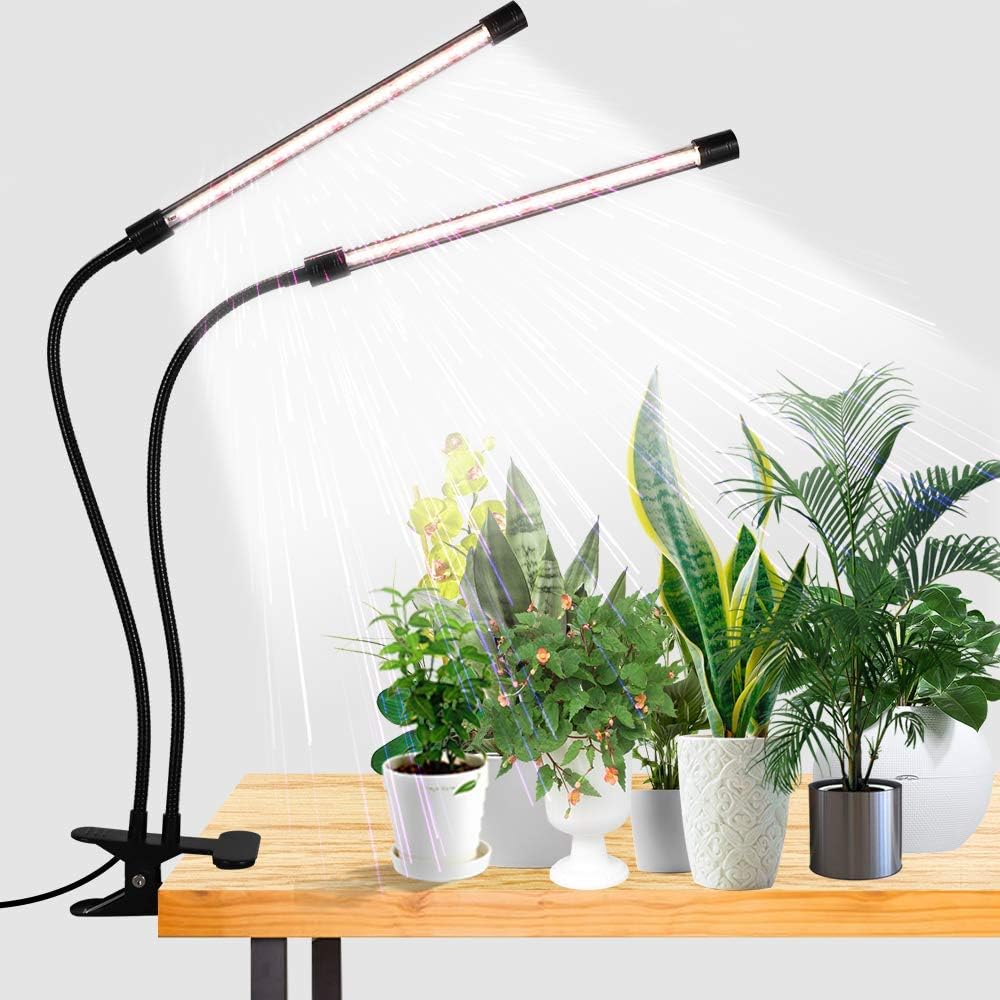
GooingTop HY-021 6000K Full-Spectrum Clip Grow Light
| Power Source | Corded Electric |
|---|---|
| Color Temperature | 6000 Kelvin |
| Light Output Maximum | 2500 lumens |
| Light Source Special Features | Dimmable |
| Number of Light Sources | 84 |
This GooingTop HY-021 is a compact clip-on grow light built for small houseplants, seedlings and shelf gardens. It uses 84 LEDs (white plus deep red) to deliver a 6000K full-spectrum output intended to mimic midday sun, with a high color-rendering output that also makes it pleasant as a reading lamp. Two flexible gooseneck heads and a strong clamp let you aim light precisely over pots and seed trays, while the attached remote provides 50%/100% dim levels and repeating timers at 4, 8 or 12 hours for hands-off scheduling. Practical benefits include low power draw (listed as roughly 10 W LED draw), a claimed 1 to 2 square meter coverage for seedlings, and an included timer that simplifies day/night cycles. Limitations are its design for small setups rather than large grow racks and the clip mounting limits placement compared with freestanding fixtures. The unit also relies on the corded remote instead of a smartphone app and the lifespan claim is typical of LEDs but not independently verifiable from the listing.
Best for: Buyers who want a simple, low-power, plug-and-play grow light to boost seedlings and a few houseplants on a desk or shelf and who value an easy-to-use timer and adjustable brightness.
Less Ideal for: Growers planning multi-shelf installations, larger vegetable grows, or who need networked or app-based control should consider larger bar lights or fixtures designed for commercial racks.
- Full-spectrum 6000K output with added 660 nm red LEDs to support vegetative growth and flowering
- Attached remote with dimming (50%/100%) and repeat timer settings (4/8/12 hours) for easy scheduling
- Flexible dual goosenecks and strong clamp enable precise positioning over small pots and seed trays
- High reported color rendering for comfortable viewing and accurate plant color assessment
- Low electrical draw around 10 W while covering small growing areas
- Clip-mount design and stated 1–2 m² coverage make it better suited to individual plants or small trays rather than large multi-shelf setups
- No smart app or wireless control option; remote is cord-attached which limits placement flexibility
Verdict: A compact, easy-to-use clip grow light that delivers full-spectrum light and convenient timer/dim controls for small indoor plant setups.
Barrina T5 1 ft LED Grow Light, 5000K Full Spectrum (4-pack)

| Wattage | 5W per fixture |
|---|---|
| Color temperature | 5000K Full Spectrum |
| Linkable | Link up to 16 lights |
| Control | Separate on/off switch per fixture |
| Included accessories | Power cords, connecting cords, clips, double-sided tape |
The Barrina T5 1 ft LED grow light kit supplies full-spectrum 5000K light in a compact, linkable T5 form that is useful for starting and growing tomato seedlings under artificial light. Each 1 ft fixture draws 5W and has its own on/off switch so you can run a single tube or multiple fixtures to match light needs. The set includes power cords, connecting cords, clips, double-sided tape and cable ties for quick plug-and-play installation and you can chain up to 16 lights in series to light multiple trays or shelf levels. Practical benefits for seedlings are even, high-PPFD output from an efficient LED array and the ability to tailor coverage by switching fixtures on or off. Limitations are that the small 1 ft form gives narrow coverage per tube so larger seed flats or full-width racks will need many fixtures, and the product is non-magnetic so mounting options depend on the included clips or your own hardware. Overall this kit is a straightforward, budget-friendly choice for growers who want controllable, linkable light for early-stage tomato plants.
Best for: Growers who want a compact, energy-efficient, controllable lighting solution for starting and growing tomato seedlings on shelves or seed trays.
Less Ideal for: People needing single wide-coverage fixtures for large benches or commercial-scale propagation should consider longer tubes or high-output panels instead.
- Full-spectrum 5000K output suitable for seedlings and vegetative growth
- Separately controllable fixtures let you run only the number of tubes needed
- Linkable design supports chaining up to 16 lights for multi-shelf setups
- Includes mounting clips, power and connecting cords for quick plug-and-play setup
- Small 1 ft length provides limited coverage per fixture so more units are needed for larger trays
Verdict: A compact, linkable full-spectrum T5 kit that gives efficient, controllable light ideal for raising healthy tomato seedlings on shelves and seed trays.
Choosing the Right Grow Light for Citrus: Key Factors to Consider
Light Spectrum and PAR Output
Citrus trees need a balanced light spectrum that supports both leafy growth and flowering. PAR measures the photons plants use for photosynthesis and is more useful than lumens for garden planning. A light with strong output across blue and red bands helps maintain compact branching and encourages bloom.
When comparing fixtures, look for PAR charts or measurements at practical hanging heights that match your canopy. Higher PAR lets you hang lights farther from leaves or use fewer fixtures for a given canopy size, but excessively intense light too close can cause leaf burn, so balance intensity with canopy distance.
Coverage Area and Mounting Flexibility
Coverage determines how many square feet a single fixture will effectively serve. Citrus grown in containers or indoors often has a canopy several feet across, so a fixture with a narrow, high-intensity spot may leave border leaves shaded. Wide-angle optics or multiple diodes arranged for even spread reduce shade and uneven growth.
Mounting options matter because citrus heights and branch structure vary. Look for adjustable hangers, telescoping poles, or fixtures that accept standard hooks so you can change the light height as the tree grows. Fixtures that include reflectors or lenses with published coverage patterns help you plan fixture spacing for multiple trees or benches.
Heat Management and Fixture Placement
LEDs are efficient but still produce heat that can raise canopy temperature if fixtures are too close. Proper heat sinks, active cooling, or well-ventilated housings let you position lights nearer the canopy without stressing leaves. Overheating can lead to scorched leaf edges or accelerated water loss, which is especially problematic for citrus in containers.
Consider how the fixture will operate in the actual garden environment. In small greenhouses or enclosed porches, heat buildup from several fixtures can raise ambient temperature, so choose lights with low surface temperatures or plan for supplemental ventilation.
Control Features and Light Schedules
Flowering and fruit set in citrus respond to daylength and light intensity. Fixtures with dimming, timers, or programmable schedules let you simulate longer summer days or shorten photoperiods to encourage rest. Smooth dimming reduces stress when transitioning light levels and can save electricity during non-peak growth phases.
If multiple fixtures will run together, synchronized scheduling simplifies management. For hobbyists, simple built-in timers may be sufficient; for more advanced setups, compatibility with external controllers or smart plugs can add useful flexibility.
Durability, IP Rating, and Build Quality
Grow lights used around citrus will encounter humidity from irrigation, occasional splashes, and outdoor-adjacent conditions if placed on patios or in greenhouses. Fixtures with appropriate IP ratings resist moisture and dust, which extends service life. Robust housings and corrosion-resistant mounting hardware prevent sagging or electrical issues over seasons.
Check that cords, connectors, and driver housings are rated for the installation environment. Replaceable drivers or modular components simplify maintenance and can extend the functional life of a fixture.
Energy Use and Long-Term Operating Cost
Because citrus often needs daily lighting for many hours during lower-light months, the energy draw of a fixture is an ongoing cost. Compare actual wattage under typical settings and consider dimming schedules that shift energy use to match growth stages. Higher upfront efficiency usually pays off over seasons through lower electricity consumption and longer LED life.
Also factor in fixture lifespan in hours and warranty coverage. LEDs that maintain output longer reduce the need for early replacement and keep light quality steady across multiple fruiting cycles.
Sizing Lights by Tree Age and Pot Size
Young citrus seedlings and small potted trees require less light than mature container specimens. For newly rooted transplants, a lower PAR at closer range promotes steady leaf expansion without overwhelming tender tissue. As trees develop thicker canopies, increase coverage and overall output so inner leaves receive usable light and flower buds form throughout the crown.
- Seedlings and small patio citrus: prioritize spectrum and gentle, even light rather than raw power.
- Semi-mature trees in 10-20 inch pots: moderate PAR over a 2-4 foot spread helps keep interior buds viable.
- Large container trees: plan for multiple fixtures or a light with broad coverage to avoid shaded areas.
Positioning and Light Distance Best Practices
Start with manufacturer guidance but verify with plant response. Place fixtures at a distance that gives even light across the canopy; too close creates hot spots and leaf cupping, too far reduces flowering. If possible, measure PAR at canopy height to match target levels for citrus growth stage. Rotate pots or adjust fixture placement periodically to prevent one-sided growth. For multi-tree layouts, stagger fixtures so branches at the edges of one canopy get light from a neighbor as well.
- Aim for even distribution over the entire crown, not just the top.
- Raise lights as plants grow to maintain intensity without risking heat stress.
- Use reflectors or light movers for irregularly shaped trees.
Integrating Grow Lights with Natural Sunlight
In bright winter climates or southern exposures, supplemental light may only be needed during overcast periods or to extend evening photoperiods. In low-light interiors, standalone grow lights must supply most or all daily PAR. Assess the natural light your location provides across seasons and plan fixture runtime accordingly to avoid wasted energy. Using timers to lengthen days gradually can help trigger flowering cycles without shocking the tree. Combining natural and artificial light can reduce fixture count, but confirm that combined light levels meet citrus needs throughout the day.
- Map daily sunlight hours in the planting spot across months.
- Use supplemental light primarily during the dimmest part of the day or season.
- Adjust run time as daylight lengthens in spring.
Managing Humidity and Watering Under Artificial Light
Grow lights can change evaporation rates and microclimates around citrus. Increased light intensity usually raises transpiration, so monitor soil moisture more frequently and adjust irrigation schedules to avoid stress. Warmer fixtures may speed pot-drying near the drain hole, creating an uneven moisture profile in the container. Maintain good air circulation to prevent fungal issues under high humidity and to help move heat away from the canopy. Use saucers or trays that do not trap water against the pot base in warm, bright setups.
- Check soil moisture daily after increasing light intensity.
- Improve air movement with fans when multiple fixtures are used in enclosed spaces.
- Reduce overhead irrigation while monitoring leaf turgor for signs of dryness.
How We Chose the Best Grow Light for Citrus
We prioritized criteria that directly affect citrus health and indoor fruiting. First, light spectrum and intensity were essential because citrus benefits from a broad PAR output with both blue and red wavebands for vegetative growth and flowering. Second, usable coverage and mounting flexibility were assessed to ensure a light actually covers the canopy of typical container citrus and small indoor trees. Third, thermal management and fixture durability were evaluated so lights can run for long photoperiods without stressing foliage or shortening component life. Fourth, dimming and scheduling controls were considered because many growers need to tune photoperiods through seasons and during bloom. Finally, efficiency and long-term operating costs were factored through measured power draw and expected LED lifespan. We excluded units that only list vague lumen figures or do not publish PAR or coverage maps, as those make real garden planning impossible. Fixtures intended strictly for microgreens or seed starting with very dense close-range footprints were not considered unless they provided clear canopy-area guidance for small trees. The resulting list emphasizes lights that deliver the usable spectrum, steady coverage, and control gardeners need for consistent citrus production.
FAQ
How many hours of grow light do citrus trees need in winter?
Citrus typically benefits from 10 to 14 hours of light daily in winter, depending on natural sunlight available. Short days can be extended with timers to maintain flowering and growth, but avoid abrupt changes that may stress the tree.
Can I use a single light for multiple citrus trees?
You can if the fixture provides adequate canopy coverage and even distribution. For multiple trees, plan fixture spacing so each crown receives similar PAR; otherwise, add fixtures or reposition to prevent shaded growth on outer trees.
What PAR level should I aim for at canopy height?
Aim for moderate PAR for young trees and higher PAR for fruiting mature specimens. Exact numbers vary, but verifying manufacturer PAR maps or measuring with a PAR meter is the most reliable approach for matching light to plant stage.
Will grow lights cause leaf burn on citrus?
Leaf burn usually results from heat or excessive intensity too close to foliage. Choose fixtures with good heat dissipation and maintain recommended hanging distances. If leaf edges brown after raising intensity, move the light slightly farther away.
Are full-spectrum lights necessary for citrus?
Full-spectrum fixtures that cover blue and red bands are helpful because they support both vegetative growth and flowering. However, what matters most is usable PAR across the spectrum rather than marketing claims about 'full spectrum.'
How do I prevent uneven growth under artificial lighting?
Rotate pots, adjust fixture height, and use fixtures with wide coverage or multiple lights to eliminate hotspots. Checking canopy density and moving lights as the tree grows keeps branches developing evenly.
Final Verdict
Matching light spectrum, usable coverage, and control features to your citrus tree is the best way to encourage steady growth and repeat fruiting. Smaller trees need gentle, evenly distributed light while mature container specimens require higher PAR and broader coverage to keep inner buds productive. Prioritize fixtures with clear PAR data, reliable heat management, and flexible controls so you can tune photoperiods across seasons. That approach minimizes stress and gives you the best chance of consistent flowering and fruit set under artificial light.
