

Note: This article contains affiliate links. If you click on these links and make a purchase, I may earn a small commission at no extra cost to you. This helps support my research and content. Read my full affiliate disclosure here.
If you manage a vegetable patch, perennial border, lawn edge, or paved patio, choosing the right herbicide for weed control changes how much time you spend weeding and how your desirable plants respond. You want a solution that actually reduces troublesome weeds without harming flowers, vegetables, or turf. This guide covers seven shortlisted herbicides that fit common home-garden situations and explains the tradeoffs between contact knockdown, residual action, and selectivity. Below you will find practical evaluation points used to compare the top picks, plus guidance on application, safety, and timing to help you pick the best option for your yard. The next sections outline what we tested and why these criteria matter for gardeners.
Top Picks at a Glance
| Best Overall The best all-around choice for most situations | RM43 Concentrated Extended Control Weed Killer (1 gallon) |  |
| Best Quality Built to a higher standard if you want something more solid | Roundup Pro Concentrate Herbicide (2.5 gal) |  |
| Best Value The sweet spot between price and what you get | Spectracide Weed & Grass Killer Concentrate, 40 oz |  |
| Best Budget The cheapest option that still gets the job done reliably | Spectracide Weed Stop for Lawns Concentrate, 32 oz Ready-to-Spray | 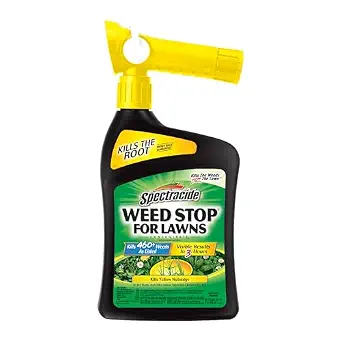 |
| Highest Rated A top-rated pick with lots of positive feedback | LebanonTurf Prodiamine 0.58% Granular Pre-Emergent (covers 20,000 sq ft) |  |
| Most Popular A crowd favorite that many people choose with confidence | Scotts Liquid Turf Builder Plus 2 Weed Control, Ready‑to‑Spray, 32 fl. oz. |  |
| Best Seller A high-volume bestseller chosen again and again | Roundup Weed & Grass Killer4 with Pump 'N Go 2 Sprayer, 1.33 gal |  |
RM43 Concentrated Extended Control Weed Killer (1 gallon)

| Unit Count | 128 Fluid Ounces |
|---|---|
| Item Form | Spray |
| Coverage | 17297 square feet |
| Active Ingredients | glyphosate |
RM43 is a concentrated glyphosate‑based weed killer blended for broad, long‑lasting vegetation control on noncrop areas. You mix it with water and apply through a sprayer to drive down perennial weeds, fence lines, gravel areas, and other places where you want no plant growth. The formula pairs glyphosate with a second herbicide and a surfactant so it kills to the root and claims prevention of new growth for up to a year while becoming rainfast in about two hours. A single gallon treats a large area, making it suitable for larger properties or professional use. Important practical limits are safety and site restrictions: it must not be used near desirable plants or crops and requires cautious handling to avoid drift and contact with skin and eyes. For routine spot treatments it is concentrated enough that careful measuring is needed, and it is intended only for areas where total vegetation removal is acceptable.
Best for: Buyers who need a powerful, long‑lasting solution for clearing and keeping large nonplant areas free of vegetation, including property managers and professional landscapers focused on durable results.
Less Ideal for: Gardeners who need selective weed control around ornamentals or vegetable beds or those who want an organic or low‑toxicity option should choose a different product.
- Concentrated one‑gallon formula treats large areas, reducing trips to refill
- Combination of glyphosate and a second herbicide for deeper, longer control
- Rainfast in about two hours so results are less affected by light rainfall
- Designed for total vegetation control and claims up to 12 months of prevention
- Not selective so will kill desirable plants and must be applied only to noncrop areas
- Requires careful mixing and handling because of strong active ingredients
Verdict: Choose RM43 when you need a concentrated, professional‑strength herbicide that kills to the root and provides long‑term vegetation control on noncrop areas.
Roundup Pro Concentrate Herbicide (2.5 gal)

| Unit Count | 300 Fluid Ounces |
|---|---|
| Liquid Volume | 2.5 gallons |
| Coverage | Up to 435,600 sq. ft |
| Item Form | Liquid |
Roundup Pro Concentrate is a liquid herbicide intended for mixing in sprayers to treat large lawns, fields, and commercial areas. The 2.5 gallon jug is a concentrate that dilutes at rates from about 1 to 10.5 ounces per gallon of water, letting you cover up to the manufacturer-stated area without frequent refills. It is formulated to be rainfast in roughly an hour and is best applied when weeds are actively growing and temperatures are above 60°F. Practical benefits include high coverage per container and compatibility with stainless steel or plastic sprayers for standard application workflows. Important limitations are the need for careful dilution and protective handling, strict restrictions around water and runoff, and regulatory or local sale limitations in some states. Users should follow label directions for safety, keep people and pets away until spray dries, and expect that effective use requires proper equipment and basic pesticide handling practices.
Best for: Buyers who need a high‑coverage, performance-oriented herbicide for treating large yards, fields, or commercial properties and who are comfortable following pesticide mixing and safety instructions.
Less Ideal for: Casual gardeners with small beds or people unwilling to handle concentrated pesticides should choose ready-to-use alternatives or nonchemical methods.
- Concentrated formula covers very large areas from a single container
- Rainfast within about one hour which reduces loss from light rain
- Compatible with standard stainless steel or plastic sprayers for easy mixing and application
- Requires precise dilution and proper protective equipment during mixing and application
- Not for use near water or where runoff may occur and restricted in some jurisdictions
Verdict: Choose this concentrate when you need a professional-strength herbicide that treats very large areas with fewer refills.
Spectracide Weed & Grass Killer Concentrate, 40 oz

| Unit Count | 40 Fluid Ounces |
|---|---|
| Item Form | Spray |
| Coverage | 1200 square feet |
| Liquid Volume | 40 fluid ounces |
Spectracide Weed & Grass Killer Concentrate is a liquid herbicide you mix with water and apply with a tank sprayer to kill broadleaf weeds and grasses down to the root. It is intended for spot treatments on driveways, walkways, patios and around fences or foundations where you want to remove unwanted vegetation without tilling. The formula is rainproof in about 15 minutes and can show visible browning in as fast as three hours, allowing replanting of nonedible ornamentals after roughly one day. Key practical features include a concentrate format for multiple treatments from a single bottle and directions calibrated for coverage so you can treat up to the stated area when mixed correctly. Important limitations are that it is nonselective so it will damage desirable plants if it contacts them, it requires careful mixing and protected application to avoid drift, and label directions restrict use around edible food crops and limit applications per year. Proper PPE, shielding nearby plants, and applying in warm, calm conditions will get the best results.
Best for: For gardeners and homeowners who want an efficient, no-nonsense spot weed killer to clear unwanted vegetation from hardscapes and edges, and who prioritize fast, predictable results with controlled application.
Less Ideal for: Not a good choice for people who need selective weed control inside lawns or around edible gardens or for those who prefer ready-to-use sprayers instead of mixing concentrate.
- Concentrated formula lets you mix for multiple spot treatments.
- Fast-acting results with visible effects in about three hours.
- Rainproof within 15 minutes so light rain soon after application is less likely to reduce effectiveness.
- Suitable for hardscape and perimeter spot treatments where nonselective control is acceptable.
- Nonselective herbicide that will harm or kill desirable plants on contact.
- Requires mixing and a separate tank sprayer rather than an all-in-one applicator.
- Label restricts use near edible crops and limits annual applications to any area.
Verdict: A concentrated, fast-acting spot herbicide for homeowners who need reliable, no-frills removal of weeds and grasses from driveways, patios and other hardscape areas.
Spectracide Weed Stop for Lawns Concentrate, 32 oz Ready-to-Spray

| Coverage | 8,000 square feet |
|---|---|
| Liquid Volume | 32 fluid ounces |
| Item Form | Liquid |
| Active Ingredients | 2,4-D, Mecoprop-P, Dicamba, Sulfentrazone |
Spectracide Weed Stop for Lawns is a hose-attach ready-to-spray concentrate designed to control broadleaf weeds across common turf types. It kills by contact and down to the root, listing over 460 weeds such as clover, dandelion and chickweed, and promises visible browning in around three hours. The QuickFlip sprayer makes treatment fast for larger yards and the formula is labeled for use on bluegrass, fescue, Bermuda and perennial rye, though you should avoid zoysiagrass coming out of dormancy and not spray above 90°F. Practical benefits include quick application without mixing and one-hour rainproofing so treatments are less weather-dependent. Important limitations are temperature restrictions for safe use, the need to keep people and pets off the lawn until dry, and the usual reseeding wait time of three to four weeks. For homeowners focused on routine clover control, this product offers a straightforward, time-saving option, but follow label directions closely to protect desirable turf and nearby plants.
Best for: Homeowners who want an inexpensive, no-mix solution to knock back clover and other broadleaf weeds quickly across a typical lawn and value fast application.
Less Ideal for: Gardens that need constant reseeding, very young lawns or yards with delicate ornamentals close to treatment areas should consider more targeted options.
- Ready-to-spray QuickFlip hose attachment speeds up application for medium to large lawns
- Kills broadleaf weeds including clover, dandelion and chickweed with visible results in about three hours
- Rainproof in one hour which reduces the chance of losing treatment to light rain
- Works on a variety of common turf types when used as directed
- Should not be applied when daytime temperatures exceed 90°F which limits use in hot weather
- Requires waiting 3–4 weeks before reseeding treated areas
Verdict: A convenient ready-to-spray concentrate that quickly controls clover and other broadleaf weeds for budget-minded homeowners who want fast, low-effort treatments.
LebanonTurf Prodiamine 0.58% Granular Pre-Emergent (covers 20,000 sq ft)

| Item Form | Granule |
|---|---|
| Coverage | 20,000 sq. ft. |
| Active Ingredients | Prodiamine |
This granular pre-emergent uses 0.58% prodiamine on a BIODAC carrier to stop crabgrass and many grassy weeds from germinating across lawns and landscaped areas. It is applied with a broadcast spreader in early spring, with a recommended follow-up in late May or early June; the manufacturer warns not to overseed for three to four months after application. The product covers a large area per unit, making it suitable for whole-yard preventive programs and for professional maintenance of turf, trees, shrubs, and flowers. Its granular form simplifies handling compared with liquids and reduces immediate runoff risk, while the prodiamine chemistry provides season-long residual control when applied correctly. Limitations include the planting restriction after application and that it prevents seed germination so it cannot be used where you plan to establish new lawn from seed shortly after treatment. Also availability is restricted in several states, so check local regulations before planning use.
Best for: Buyers who prioritize a dependable, season-long preventive approach to crabgrass control and want a product that fits routine lawn maintenance schedules used by homeowners or pros.
Less Ideal for: Gardeners planning to establish new lawns from seed shortly after treatment or those needing an option legal in excluded states should consider alternatives.
- Granular formula on BIODAC carrier for easy broadcast spreading
- Contains 0.58% prodiamine, a proven pre-emergent for crabgrass and grassy weeds
- Large coverage of 20,000 sq. ft. per unit reduces application frequency
- Suitable for use across lawns and landscaped beds to protect turf and plantings
- Prevents seed germination so you cannot overseed or plant grass seed for 3–4 months after application
- Not labeled for sale or use in a number of states, limiting availability and compliance
Verdict: Choose this granular 0.58% prodiamine product when you need a reliable, large‑area pre-emergent to prevent crabgrass and other grassy weeds.
Scotts Liquid Turf Builder Plus 2 Weed Control, Ready‑to‑Spray, 32 fl. oz.

| Liquid Volume | 32 fluid ounces |
|---|---|
| Coverage | 6000 square_feet (warm-season); 4000 square_feet (cool-season) |
| Item Form | Spray |
| Active Ingredients | Nitrogen |
This ready-to-spray bottle combines a quick nitrogen boost with broadleaf weed control for an easy lawn maintenance step. You attach the hose, spray evenly across the lawn when weeds are actively growing, then avoid watering for 48 hours so the product can work. The formula lists a 25-0-2 NPK balance and targets common weeds such as dandelions, clover, chickweed, and ground ivy, making it useful for both warm- and cool-season grasses. Coverage is generous for a single 32 fl. oz. bottle: up to 6,000 sq ft on warm-season lawns and 4,000 sq ft on cool-season lawns. Practical benefits include fast visible weed curl within days and no need for separate fertilizer and weed-killer steps, which simplifies care for homeowners who want predictable results. Limitations to note are the restricted list of safe grass types and the need to avoid application above 85°F or watering for two days, plus some stubborn weeds may require a repeat treatment in 3 to 4 weeks.
Best for: Homeowners who want a simple, low‑effort way to feed their lawn and control common broadleaf weeds without separate products and who prefer predictable, do‑it‑yourself lawn care steps.
Less Ideal for: Gardens with mixed planting beds or users who need a product safe around vegetables and ornamentals should choose a different targeted solution.
- Hose-end ready-to-spray design requires no measuring or mixing
- Combines fertilizer and weed control in one application
- Covers large areas per bottle for typical home lawns
- Works on a wide range of warm- and cool-season turf grasses
- Visible weed decline within a few days for many common broadleaf weeds
- Not safe for use on garden beds or non-listed plants
- May cause temporary injury on some bermudagrass varieties and is restricted to listed grasses
- Stubborn weeds may require a second application within a month
Verdict: A single ready-to-spray bottle that simplifies feeding and broadleaf weed control for risk-averse homeowners who want dependable, low-effort lawn results.
Roundup Weed & Grass Killer4 with Pump 'N Go 2 Sprayer, 1.33 gal

| Unit Count | 170 Fluid Ounces |
|---|---|
| Item Form | Spray |
| Coverage | 300 Square_Feet |
| Active Ingredients | Triclopyr, Triethylamine Salt, Fluazifop-P-Butyl, Diquat Dibromide |
This Roundup Weed & Grass Killer4 comes in a 1.33 gallon container with an integrated Pump 'N Go 2 sprayer that lets you apply a continuous stream for up to 10 minutes without mixing. It is formulated to kill a wide range of broadleaf weeds and grasses down to the root and advertises visible browning in hours and rainproof protection in about 30 minutes, so treated areas can be replanted in 1 to 30 days depending on instructions. The extendable wand improves accuracy for edging around flower beds, foundations, and hard surfaces so you can target unwanted plants without bending over. Practical benefits include straightforward one-hand spraying, coverage suitable for small- to medium-scale cleanup, and a clear safety section that emphasizes protective clothing and keeping people and pets away until the spray dries. Important limitations are that it is a chemical herbicide with active ingredients buyers should review for toxicity and environmental impact, and it requires careful application to avoid drift onto desirable plants. The sprayer is convenient but adds weight as you carry and handle the full container.
Best for: Gardeners who want a ready-to-use, targeted herbicide to quickly clear weeds around beds and hardscapes and who prioritize easy application and fast visible results guided by other buyers' experience.
Less Ideal for: Organic gardeners or those who prefer nonchemical methods should look for mechanical or organic alternatives, and users who need very large-area broadcast control may prefer concentrate products or professional services.
- Built-in Pump 'N Go 2 sprayer with extendable wand for up to 10 minutes of continuous spray
- Produces visible results in hours and becomes rainproof in about 30 minutes
- Designed for use around flower beds, hardscapes, mulch and foundations for targeted spot treatment
- Covers a useful area from a single bottle suitable for small to medium beds
- Contains synthetic active ingredients that require careful handling and distancing of people and pets until dry
- Risk of harming nearby desirable plants if not applied precisely
Verdict: If you want a convenient, ready-to-use sprayer that gives fast, targeted weed control around garden beds and hardscapes, this package is a practical pick.
Choosing the Right Herbicide for Weed Control: Key Factors to Consider
Target Spectrum and Selectivity
Knowing which weeds you need to control is the first practical step. Some herbicides work primarily on broadleaf weeds, others primarily on grasses, and a few are nonselective and will damage most green plants. If you need to protect ornamentals or a vegetable bed, selectivity matters because a nonselective product can kill desirable plants on contact.
Consider whether you need a product that provides post-emergent control of actively growing weeds or a pre-emergent that blocks germination. Post-emergent contact herbicides produce visible wilting quickly but often do not stop seeds from sprouting later. Residual pre-emergents prevent seedlings from establishing but require careful timing and may restrict planting for a season.
Mode of Action and Timing
Herbicides work by different physiological mechanisms: some disrupt growth pathways slowly over weeks while others desiccate leaf tissue within days. Contact herbicides are best for quick cleanup of annual weeds; systemic herbicides travel inside the plant and are required for deep-rooted perennials or woody resprouts.
Timing of application relative to weed growth stage and weather is critical. Many systemic products perform best on actively growing weeds in mild, dry weather, while some pre-emergent granules need to be watered in to activate. Readiness to apply at the correct growth stage influences real-world effectiveness.
Application Method and Equipment
How you apply a herbicide affects coverage, waste, and drift risk. Gardeners commonly use handheld pump sprayers, trigger bottles, hose-end sprayers, or granular spreaders. Liquid concentrates require measuring and mixing; hose-end units trade precision for speed. Granular products can be easier for spot treatment of lawns but are harder to calibrate for small beds.
Think about tank size, nozzle control, and whether you need spot treatment or broadcast coverage. Equipment that produces a fine mist increases drift potential near desirable plants, so nozzle selection and spray angle matter for garden safety.
Persistence and Replanting Restrictions
Soil persistence describes how long a herbicide or its active residues remain biologically active. Some products break down in days to weeks, while others persist for months and can inhibit germination or damage sensitive seedlings. This affects when you can replant vegetables, flowers, or turf after application.
Consider site conditions that influence breakdown, such as soil texture, organic matter, and rainfall. If you plan to sow seeds or transplant soon after treatment, choose a product with low soil persistence or follow label intervals carefully to avoid crop injury.
Safety, Personal Protective Equipment, and Label Guidance
Herbicide safety depends on following label directions for protective gear, mixing, and disposal. Labels specify required gloves, eye protection, and sometimes respirators for certain applications. They also outline buffer zones for non-target areas and restrictions around water or pollinator-attractive crops.
Evaluate how clearly the label communicates restrictions for edible gardens, flowering ornamentals, and nearby water features. Choose products with straightforward application rates and understandable cleanup instructions to reduce misuse risks.
Environmental Considerations and Non-Target Effects
Some herbicides have higher risk profiles for runoff, groundwater leaching, or harm to beneficial plants and insects. Granular products applied near storm drains or slopes can move off-site during heavy rain. Drift from fine sprays can land on flowering plants and harm pollinators or damage neighboring lawns and shrubs.
Balance the need for effective control with stewardship: select low-drift application methods, observe buffer zones, and avoid treating flowering weeds when pollinators are active. For sensitive areas, consider spot treatments and mechanical removal as complementary tactics.
When to Use Contact Versus Systemic Herbicides
Contact herbicides scorch exposed foliage quickly and are useful when you need immediate visual control of annual weeds or freshly germinated volunteers. They are less effective on established perennials because they do not reliably reach deep root systems.
Systemic herbicides move inside the plant and are necessary for killing persistent perennials, root sprouts, and biennials. Expect slower symptom development with systemic products, often requiring a window of calm weather and active plant growth to be most effective.
- Contact: Fast visual results, best for annuals and annual broadleaves
- Systemic: Slower action, required for perennials and roots
- Combine methods for different life stages: contact for top growth, systemic for roots
Best Application Practices to Reduce Drift and Damage
Minimize drift by choosing coarse spray nozzles, applying on low-wind days, and keeping spray booms or wand nozzles close to the target. Avoid spraying during temperature inversions when droplets can remain airborne longer.
Shield sensitive plants with boards or wet towels during spot treatments. For narrow borders, consider using a shielded wand or targeted swabs to place product only on weed foliage and avoid overspray.
- Use coarse droplets and low pressure for reduced drift
- Apply during calm, dry conditions and avoid hot mid-afternoon periods
- Rinse equipment away from desirable plants and follow label disposal instructions
Integrating Herbicides Into an Overall Weed Management Plan
Herbicides are a tool within an integrated approach that includes mulching, hand weeding, improved cultural practices, and timed planting. Relying solely on chemicals often leads to repeated applications and resistant weed populations.
Use pre-emergent products in high-weed seedbeds and reserve post-emergent treatments for escapes. Improve soil health and cover bare ground to reduce future weed pressure and make herbicide applications less frequent.
- Combine mechanical and chemical methods for durable control
- Monitor treated areas and spot-treat escapes early
- Rotate modes of action where possible to slow resistance
Safe Use in Vegetable Beds and Around Ornamentals
Many herbicides carry specific restrictions for edible gardens and flowering ornamentals. When treating near vegetables, choose products labeled for use in produce areas or use physical barriers and spot applications to avoid drift.
For ornamentals, test on a small, inconspicuous area or follow label instructions for species-specific sensitivity. Consider post-plant spot treatment rather than broadcasting broad-spectrum products across mixed beds.
- Follow re-entry and harvest intervals for edible crops
- Use barriers to protect desirable plants during application
- Prefer targeted treatments for mixed plantings to avoid collateral damage
Handling Spills, Storage, and Disposal
Store herbicides in original containers in a cool, dry place out of reach of children and pets. Keep product labels intact and store separate from food or animal feed.
If a spill occurs, contain it immediately with absorbent material and follow label guidance for cleanup. Do not wash concentrated residues into storm drains or water bodies. Proper disposal typically means following municipal hazardous waste guidelines or label disposal instructions.
- Keep a spill kit and PPE accessible during mixing
- Label and secure leftover containers for future safe use
- Dispose of rinse water and unused product according to local regulations
How We Chose the Best Herbicide for Weed Control
We prioritized products that address common home and garden weed problems while minimizing unintended damage to desirable plants. Our selection filters focused on application purpose, efficacy across target weeds, and user safety. We included both contact and residual modes of action to cover quick knockdown and longer-term suppression. We looked for formulations suitable for typical garden equipment such as handheld sprayers, hose-end applicators, and granular spreaders. Evaluation criteria emphasized target spectrum accuracy, ease of mixing and application, residual persistence in soil, and safety precautions or label clarity for ornamentals and edibles. We excluded industrial or agricultural-only formulations and products requiring specialized licensing or commercial equipment. Also omitted were formulations with unclear label restrictions for home gardens. The result is a set of options that represent practical choices for backyard gardeners dealing with annual weeds, perennial broadleaves, and grassy volunteers.
FAQ
Can I use a nonselective herbicide in a mixed flower bed?
Usually not unless you plan to clear the bed and replant. Nonselective herbicides kill most green plants on contact, so they are best for paved areas, driveways, or preparing a bed for renovation. For mixed beds, targeted spot treatments or selective options reduce the risk to desirable species.
How long after applying a pre-emergent can I plant seeds?
It depends on the product and label guidance. Some pre-emergents restrict sowing for several weeks to months, while others allow certain vegetables or small-seeded crops after a shorter interval. Always follow the label for replanting timelines to avoid seedling injury.
Will a systemic herbicide control deep-rooted perennials like bindweed or thistles?
Systemic herbicides are generally more effective on deep-rooted perennials because they translocate to roots. Success depends on timing, plant growth stage, and using a formulation labeled for those species. Multiple applications over a season are often needed for persistent infestations.
Is it safe to apply herbicide on a windy day if I use a shielded wand?
Wind increases the risk of off-target movement even with shields, especially with fine droplets. It is safer to wait for calm conditions. If you must treat, use coarse droplets, low pressure, and keep the shield as close as possible to the target plant.
Can I mix different herbicide products in the same sprayer tank?
Mixing products can alter performance and increase phytotoxicity risks. Some combinations are compatible, but many are not. Follow label compatibility guidance and perform a jar test if compatibility instructions are unclear. When in doubt, use separate tanks and rinse equipment between products.
How do I minimize harm to bees and other pollinators when using herbicides?
Avoid applying herbicides to flowering weeds or plants when pollinators are active. Use spot treatments and low-drift application methods, and apply during early morning or late evening when pollinator activity is lower. Choose products with lower toxicity to non-target insects when practical.
What should I do if a desirable plant shows symptoms after application?
Rinse foliage with clear water if the exposure was recent and accidental. Review the label for first-aid and recommended steps, and keep records of the product and application conditions. For persistent symptoms, consult an extension service or horticulture professional for remedial steps.
Final Verdict
Choosing the right herbicide for weed control means balancing your immediate need for knockdown with longer-term goals like replanting and protecting desirable plants. Prioritize target spectrum, mode of action, and application method for the type of weeds you face, and factor in soil persistence and label safety instructions. Adopt an integrated approach that uses herbicides selectively alongside cultural controls and targeted mechanical removal. That way you get reliable weed reduction while minimizing risks to beneficial plants and the broader garden ecosystem.
