

Note: This article contains affiliate links. If you click on these links and make a purchase, I may earn a small commission at no extra cost to you. This helps support my research and content. Read my full affiliate disclosure here.
If you are tackling invasive brush, volunteer saplings, or stubborn woody weeds, the right herbicide makes the job manageable and reduces repeat treatments. A product chosen for woody plants needs to penetrate thicker bark or stems, provide reliable translocation to roots, and fit your site and safety preferences. This guide shortlists six top-rated herbicide options for woody plants and explains how they perform in real garden and landscape conditions. You will see the evaluation criteria we used and practical advice on application timing, safety, and follow-up care.
Top Picks at a Glance
| Best Overall The best all-around choice for most situations | Crossbow Herbicide, 2.5 Gallon |  |
| Best Quality Built to a higher standard if you want something more solid | ALLIGARE Triclopyr 4 EC Selective Herbicide (1 Quart) |  |
| Best Value The sweet spot between price and what you get | BioAdvanced Brush Killer Plus Concentrate (32 fl oz) |  |
| Best Budget The cheapest option that still gets the job done reliably | Bonide Poison Ivy & Brush Killer BK-32 Concentrate, 16 oz |  |
| Highest Rated A top-rated pick with lots of positive feedback | ALLIGARE Tebuthiuron 80 WG Granular Brush and Weed Killer, 25 lb |  |
| Most Popular A crowd favorite that many people choose with confidence | Bonide Stump-Out Stump & Vine Killer, 8 oz with Applicator | 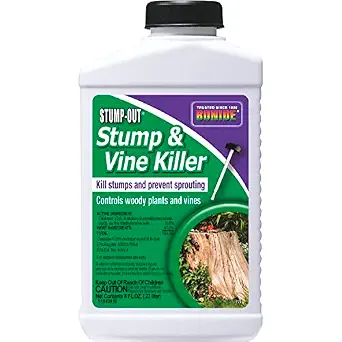 |
Crossbow Herbicide, 2.5 Gallon

| Unit Count | 320 Fluid Ounces |
|---|---|
| Liquid Volume | 2.5 gallons |
| Coverage | 2.5 acres |
| Active Ingredients | triclopyr |
| Item Form | Spray |
Crossbow is designed to kill woody plants and tough broadleaf weeds without harming grasses, making it useful for rangeland, pastures, fence rows, roadsides, and other noncrop areas. It contains triclopyr and is applied as a spray from hand-held or tractor-mounted equipment; it can be used as a foliar or dormant treatment depending on target species. The product advertises coverage suitable for multiple acres from the 2.5 gallon container and becomes rainfast within about two hours, which helps reduce waste from light rain after application. Important practical considerations are safety and application needs: avoid skin and eye contact, keep animals and people away during use, and do not apply where lactating dairy animals will graze. There are no grazing restrictions for other livestock after application, but the concentrated volume means the product is best for larger properties rather than spot treatments in small yards. If you need a reliable option for woody brush control across larger, noncrop areas, this formulation is straightforward to apply and effective when used according to directions.
Best for: Landowners, ranchers, or groundskeepers who need a robust herbicide for controlling brush and woody plants across pastures, fence lines, roadsides, or other noncrop areas and who are comfortable using spray equipment and following safety directions.
Less Ideal for: Home gardeners with small lawns, container plantings, or indoor plants should choose smaller, lower-volume products or spot-treatment solutions instead.
- Effective on woody plants, brush, and broadleaf weeds while sparing grasses
- Suitable for application with hand-held or tractor-mounted sprayers
- Rainfast in about two hours, reducing loss from light rain
- Large 2.5 gallon volume provides coverage for multiple acres
- Concentrated 2.5 gallon size is more than needed for small yards or single-tree spot treatments
- Contains a potent active ingredient that requires careful handling and protective equipment
Verdict: Choose Crossbow when you need a proven, large-volume herbicide to remove woody brush and broadleaf weeds across pastures or other noncrop acres.
ALLIGARE Triclopyr 4 EC Selective Herbicide (1 Quart)

| Unit Count | 32 Fluid Ounces |
|---|---|
| Item Form | Liquid |
| Coverage | Pastures, rangelands, rights-of-way, lawns, golf courses, sod farms, industrial properties, ditches |
| Active Ingredients | Triclopyr |
ALLIGARE Triclopyr 4 EC is a concentrated liquid herbicide used to target woody plants, broadleaf weeds, and brush in large outdoor areas. It is typically mixed into a spray tank at recommended rates (about 3.2 to 6.4 oz per gallon) with a penetrant and applied to foliage or cut stems to achieve systemic control. Notable features include an ester formulation that improves leaf and bark absorption and compatibility with many tank-mix partners, which lets you customize treatments for stubborn species. In practice it is effective for restoring pastures, clearing rights-of-way, and reducing invasive broadleaf growth while leaving grasses largely unharmed when used as directed. Important limitations are that it is a professional-strength chemical requiring careful PPE and adherence to safety and application instructions, it can harm non-target broadleaf plants if drift or overspray occurs, and restrictions apply in some states and situations. For spot treatments or large-area brush control it is a dependable option when handled responsibly.
Best for: Gardeners or land managers who need a reliable, selective herbicide to control woody and broadleaf invasives across pastures, rangelands, or larger outdoor areas and who follow safety procedures for concentrated chemicals.
Less Ideal for: Casual home gardeners with small ornamental beds or indoor herb gardens seeking a gentle, non-chemical solution should consider mechanical removal or lower-strength spot treatments instead.
- Targets woody plants, broadleaf weeds, and brush for effective control of invasive species
- Ester formulation promotes absorption through leaves and bark for systemic action
- Tank-mix compatible so you can combine with other herbicides or adjuvants
- Suitable for a wide range of large outdoor sites including pastures, rangelands, and rights-of-way
- Professional-strength concentrate that requires protective clothing and careful mixing
- Can damage non-target broadleaf plants if it contacts desirable species
- Not suitable for use where restrictions or local regulations prohibit triclopyr products
Verdict: Choose ALLIGARE Triclopyr 4 EC when you need a professional-strength, tank-mix compatible herbicide to reliably remove woody and broadleaf invasives across large outdoor areas.
BioAdvanced Brush Killer Plus Concentrate (32 fl oz)

| Unit Count | 32 Fluid Ounces |
|---|---|
| Coverage | 4000 square_feet |
| Item Form | Spray |
| Active Ingredients | triclopyr |
BioAdvanced Brush Killer Plus is a concentrated spray-on herbicide designed to control tough vines and woody brush such as poison ivy, poison oak, kudzu, blackberry and many listed weeds. You mix the concentrate with water using the bottle’s measuring marks, apply it to actively growing, leafed-out plants, and the triclopyr-based formula moves systemically through foliage and roots so treated plants die back over 1 to 6 weeks. It becomes rainproof in about four hours, which helps avoid reapplication after light rain. The product covers up to 4,000 square feet per bottle when diluted to the recommended rate, so it is suited to larger patches rather than single small weeds. Because results take time to appear and the herbicide is selective for brush and broadleaf plants, you may need follow-up treatments for re-sprouts or for species not on the label. Handle with care and follow label directions to avoid contact with desirable plants and to meet local safety and disposal rules.
Best for: Buyers who want an efficient, science-based solution to remove patches of vines and woody brush without repeated spot-spraying and who plan treatments when plants are actively growing.
Less Ideal for: Gardeners who need instant knockdown, require a non-chemical mechanical approach, or who only need to remove small single weeds by hand should consider alternatives.
- Systemic triclopyr formula kills brush down to the root for longer control
- Concentrate mixes for economical coverage up to 4,000 sq ft per bottle
- Rainproof in about 4 hours so light rain is less likely to wash it away
- Label lists many targeted tough species including poison ivy, poison oak, kudzu and blackberry
- Works slowly with visible decline over 1–6 weeks so immediate removal is not achieved
- Selective to brush and broadleaf weeds so not effective on all plant types
Verdict: Choose this concentrated systemic brush killer when you need a practical, economical product to eliminate established vines and woody brush down to the roots.
Bonide Poison Ivy & Brush Killer BK-32 Concentrate, 16 oz

| Unit Count | 16 Fluid Ounces |
|---|---|
| Item Form | Concentrate |
| Coverage | over 240 weed species |
| Item Type Name | WEED_MOSS_CONTROL_AGENT |
Bonide Poison Ivy & Brush Killer BK-32 is a concentrated non-selective brush and broadleaf weed herbicide designed for spot and area treatments. You mix the concentrate with water for application through a tank or hose-end sprayer to treat vines, woody brush, and many common lawn weeds; the label also permits undiluted application to freshly cut stumps with a brush. Its primary strengths are broad species coverage and the ability to target tough weeds that standard lawn products miss, plus a formulation claimed to be harmless to grass when used properly. Practical use requires careful measuring, proper protective gear, and strict adherence to label directions to avoid contact with skin, eyes, and desirable plants. Expect visible results after a single treatment on many weeds, though repeated applications may be needed for large infestations or deep-rooted perennials. The product is best for targeted control rather than routine blanket spraying across mixed planting beds where non-target damage is a concern.
Best for: Buyers who prioritize efficient, targeted control of persistent weeds and brush and who are comfortable following label directions and safety precautions when mixing and applying concentrates.
Less Ideal for: People who need an all-purpose selective weed control for mixed flower beds or who prefer ready-to-use products that do not require measuring and mixing.
- Concentrated formula covers many applications from a 16 fl oz bottle
- Effective on a wide range of species including poison ivy, poison oak, and woody brush
- Can be applied undiluted to freshly cut stumps for stump-killing
- Mixes for use with common tank or hose-end sprayers for flexible application methods
- Requires careful handling and protective equipment due to safety risks on contact
- Not selective to all desirable broadleaf plants if overspray occurs
- Label directions must be followed closely to avoid turf or landscape damage
Verdict: A compact, concentrated solution for homeowners who want a practical, targeted herbicide to rid lawns and edges of poison ivy, brush, and many stubborn weeds.
ALLIGARE Tebuthiuron 80 WG Granular Brush and Weed Killer, 25 lb

| Unit Count | 400 Ounce |
|---|---|
| Item Form | Granule |
| Coverage | non-selective broad spectrum coverage |
This granular tebuthiuron formulation is made for large-area, long-term control of woody brush and broad-spectrum weeds on non-crop sites like rangeland, pastures, rights-of-way, and wildlife clearings. Applied pre- or post-emergence, the granules are mixed into ground equipment and activate in the soil where the chemical is taken up by roots to disrupt photosynthesis and kill plants down to the root. The 25 pound bag and water-soluble granule form make handling and measuring straightforward for planned, infrequent treatments that aim to suppress regrowth for up to a year. Important features include soil-activated systemic action for deep control and label guidance for protective clothing while mixing and applying. Limitations are its non-selective nature, which prevents use around desirable crops or ornamental plantings, and the need for careful adherence to application rules and safety gear because of its persistent, long-duration activity in the soil.
Best for: Managers of large non-crop properties who prioritize reliable, long-lasting suppression of brush and woody weeds and plan treatments with appropriate safety measures.
Less Ideal for: Home gardeners or anyone needing selective control near ornamentals or food crops should choose a targeted or selective herbicide instead.
- Long residual control of woody plants and weeds for up to one year
- Soil-activated systemic action targets roots for deep, persistent control
- Granular, water-soluble form is easy to handle and fits common ground equipment
- Label includes clear safety directions for protective clothing during handling
- Non-selective action makes it unsuitable near desirable crops or plantings
- Requires strict safety precautions and careful application to avoid off-target effects
Verdict: Choose this granular tebuthiuron product when you need dependable, year-long control of woody brush and broad-spectrum weeds on non-crop sites.
Bonide Stump-Out Stump & Vine Killer, 8 oz with Applicator

| Unit Count | 8 Ounce |
|---|---|
| Item Form | Spray |
| Coverage | Stumps, woody plants, vines, broadleaf weeds |
| Liquid Volume | 8 fluid ounces |
| Active Ingredients | 3,5,6-Tricloro-2-Pyridinyloxyacetic Acid |
Bonide Stump-Out is a concentrated herbicide designed for targeted stump and vine control around homes and walkways. It is typically used undiluted on freshly cut stumps or as a foliar spray on woody vines and broadleaf weeds; the included brush applicator helps apply the product directly to the cut surface to prevent resprouting. The active ingredient listed is a pyridinyloxyacetic acid derivative, and the formula is intended to work within one to six weeks depending on the plant. Practical benefits include focused application that reduces drift onto turf, a small 8 ounce size that is easy to store, and compatibility with hose-end or tank sprayers for foliar work. Important limitations are that it must be applied according to label directions for safety and effectiveness, it is a specialized product for woody plants rather than a general lawn weed killer, and multiple applications or physical stump removal may still be necessary for large or well-established stumps.
Best for: Buyers who want a focused, proven solution to stop stump sprouting and eliminate woody vines around yards and structures and who prioritize products with established user feedback and clear instructions.
Less Ideal for: Homeowners seeking a general yard or turf weed control product or those who need large-volume treatments for extensive properties should consider broader-coverage herbicides or professional services.
- Targeted brush applicator for direct application to stumps and cut surfaces
- Effective on woody plants, vines and broadleaf weeds when used as directed
- Works relatively quickly with visible results in 1–6 weeks
- Can be applied undiluted for stump treatment or via hose/tank sprayer for foliar use
- Small 8 oz volume may require multiple purchases for many or large stumps
- Specialized formulation not intended as a broad-spectrum lawn herbicide
Verdict: Choose this product when you need a targeted, easy-to-apply stump and vine killer that prevents resprouting with minimal off-target spray.
Choosing the Right Herbicide for Woody Plants: Key Factors to Consider
Active Ingredient and Mode of Action
Different active ingredients work by different physiological mechanisms. For woody plants you generally want an ingredient that translocates from leaves, bark, or cut stems into the root system so the whole plant dies rather than resprouting. Knowing the mode of action helps you pick a product matched to the target species and reduces the chance of resistance from repeated use.
Some active ingredients are contact killers that scorch foliage but do not move into roots, which can leave large woody species able to resprout. Others are systemic and provide root kill when applied properly. Check whether the label recommends foliar, basal bark, cut-stump, or soil application for the species you are treating.
Recommended Application Method
Herbicides for woody plants are often applied in specific ways: foliar spray for small saplings, cut‑stump treatment for larger stems, basal bark application for multi-stemmed shrubs, or soil treatment for seedlings. The method affects dilution rates, required surfactants, and equipment.
Choose a product whose labeled application methods match the site. For example, cut‑stump treatments allow precise, low-volume control on individual stems with minimal off-target risk, while foliar sprays may be practical for dense patches but require drift management.
Target Species and Size Limits
Labels usually list species and maximum stem diameter or plant height for which a given application is effective. Some products are suitable only for small saplings and woody weeds, while others are labeled for mature brush and trees when used with the proper technique.
Matching product label guidance to the size and species in your area prevents wasted effort and ensures compliance. Treating beyond size limits often yields poor control or requires repeated applications.
Environmental Persistence and Soil Effects
Some herbicides leave residues in the soil that can affect neighboring desirable plants or delay replanting. Persistence varies by active ingredient, formulation, soil type, and climate. If you plan to replant or have sensitive species nearby, look for lower-residual options or choose application methods that limit soil contact.
Also consider runoff risk on slopes or near water. Products vary in mobility; select labels and application timing that reduce environmental exposure and adhere to buffer recommendations.
User Safety, PPE, and Legal Requirements
Woody-plant herbicides can require specific personal protective equipment and legal compliance steps, especially for concentrated or systemic chemistries. The label is the law and includes required PPE, reentry intervals, and any local notification rules.
Factor in how comfortable you are with the recommended PPE, mixing and loading procedures, and disposal instructions. If you are working in an area with public access, choose approaches that minimize exposure to bystanders.
When to Treat Woody Plants
Timing affects uptake and ultimate control. Treat actively growing woody saplings during their foliar growth window when translocation to roots is strongest. For many temperate species that means late spring through mid-summer, but timing varies by species and local climate.
Dormant-season treatments can be effective for certain cut-stump or basal bark techniques because bark moisture and composition change. Evaluate the targeted species and the application method before scheduling a treatment.
- Foliar sprays work best on actively growing foliage.
- Cut-stump treatments can be done year-round but are easiest when sapwood contains active translocation.
- Avoid spraying when rain is expected within 24 hours to prevent wash-off and runoff.
Application Techniques That Reduce Off‑Target Damage
Select precise methods when desirable plants are nearby. Cut-stump and directed basal bark treatments concentrate herbicide on the target and greatly reduce drift compared with broadcast foliar sprays. Use low-pressure nozzles and coarse droplets to minimize drift for foliar work.
Use physical barriers, spot-spraying tools, or wicking applicators for single-stem control. Always follow label mixing rates and avoid applying on windy days.
- Use shielded and low-drift equipment for foliar applications.
- Apply cut-stump treatments immediately after cutting for best translocation.
- Employ dye markers to track treated plants during large jobs.
Protecting Beneficial Plants and Soil Life
Consider root overlap and root grafting when treating near desirable trees and shrubs. Systemic herbicides can move through interconnected root systems and harm non-target plants. Keep a safe buffer and use mechanical controls or targeted cut-stump methods near valuable specimens.
Microbial soil health can be affected by repeated heavy applications of residual herbicides. When long-term soil vitality matters, rotate methods and allow recovery time before replanting sensitive species.
- Leave physical buffer zones from ornamentals and crops.
- Consider non-chemical removal for specimen plants when feasible.
- Monitor soil and vegetation recovery after treatment before replanting.
Common Mistakes That Reduce Effectiveness
Under-dosing, spraying in the wrong season, and poor coverage are frequent causes of treatment failure. Woody plants have thicker bark and woody tissues that require either a systemic chemistry or a method that accesses the cambium, such as cut-stump or basal bark applications.
Ignoring label instructions for surfactants, adjuvants, and mixing order can prevent proper uptake. Read and follow label directions for dilution rates and any surfactant recommendations.
- Do not substitute rates between application methods.
- Avoid treating stressed plants late in drought without proper wetting; uptake may be reduced.
- Reassess regrowth at the appropriate interval rather than assuming one treatment is always enough.
Tools and Safety Gear for Woody-Plant Work
Practical gear speeds work and reduces risks. Essential tools include shears or saws for cut-stump work, a low-pressure sprayer with coarse nozzles for foliar or basal bark applications, and a pump sprayer with a wand for targeted work. Durable gloves, chemical-resistant clothing, and eye protection are standard PPE items.
Have a spill kit, clean water for decontamination, and a plan for rinsate disposal that follows the product label. Proper cleaning of equipment after use prevents cross-contamination and accidental harm to other plants.
- Use chemical-resistant gloves and eye protection.
- Rinse sprayers thoroughly and dispose of rinsate per label.
- Keep a sprayer dedicated to herbicide work when possible to avoid contamination.
How We Chose the Best Herbicide for Woody Plants
We focused on products and formulations that work specifically on woody species rather than typical lawn weeds. Our evaluation favored active ingredients and delivery systems proven to translocate through woody stems and roots, consistent results across multiple woody targets, and flexible application methods for different site conditions. Concrete criteria included kill reliability on hardwoods and brush, mode of uptake and translocation, applicability across common use cases (cut‑stump, foliar spray, basal bark), and user safety plus environmental risk mitigation measures. We also considered formulation stability and ease of mixing in field conditions, plus label clarity and recommended withholding periods. Products lacking clear woody-plant labeling, those designed strictly for annual broadleaf weeds, or formulations with impractical application restrictions were excluded. The final picks reflect options that balance effectiveness on woody targets with practical use patterns and safety considerations that matter to gardeners and land managers.
FAQ
Can I use a general garden herbicide on woody weeds?
Often general garden herbicides are formulated for annual broadleaf weeds and grass, and they may not translocate deeply enough to kill woody roots. Use products labeled for woody plants or choose specific application methods like cut-stump or basal bark to get effective control.
Is cut‑stump treatment always safer for nearby desirable plants?
Cut-stump treatment targets the cambium and limits off-target exposure compared with broadcast foliar sprays, making it safer near valued plants. However, careful application and immediate treatment after cutting are still required to prevent accidental contact.
How soon will I see results after treating woody plants?
Visible browning or wilting may appear within days to weeks, but full root kill can take several weeks to months depending on species, season, and application method. Follow-up inspections are important to catch resprouts early.
Can herbicide move through roots to harm nearby trees?
Yes, some systemic herbicides can move through root grafts or overlapping root systems and affect neighboring plants. Use precise methods, maintain buffer zones, and pick application strategies that minimize soil mobility when working near desirable trees.
Do I need a surfactant for treating woody plants?
Many foliar and basal bark treatments recommend a surfactant to improve wetting and uptake, but requirements vary by product and formulation. Check label directions for surfactant type and rate before adding anything.
What is the best season to treat established brush?
Treat during active growth when plants are transporting sugars and water to roots, often late spring through summer for many species. Some cut-stump and basal bark techniques work in dormant seasons, but effectiveness depends on species and climate.
Final Verdict
Choose a herbicide approach that matches the species, plant size, and setting. Prioritize products and methods that translocate into roots when long-term control is the goal, and favor targeted techniques near desirable vegetation to reduce off-target risk. Balance effectiveness against environmental persistence and user safety, and plan follow-up monitoring so you can address any resprouts promptly.
