

Note: This article contains affiliate links. If you click on these links and make a purchase, I may earn a small commission at no extra cost to you. This helps support my research and content. Read my full affiliate disclosure here.
If you want healthier houseplants with less daily watering, an indoor self watering planter is one of the most practical upgrades you can make. These planters store a reserve of water and deliver it to the root zone as the potting mix dries, reducing stress on plants from irregular watering and making care simpler when you travel or have a busy schedule. This guide presents seven carefully shortlisted indoor self watering planters that fit common apartment and small-space situations. We evaluated each option on moisture management, ease of refilling, and how well the planter supports common houseplant types. Read on to see the evaluation criteria and practical notes that will help you pick the right planter for your living space.
Top Picks at a Glance
| Best Overall The best all-around choice for most situations | QRRICA Self-Watering Plastic Planter Set (5-Pack, Various Sizes) |  |
| Best Quality Built to a higher standard if you want something more solid | Vego Garden 15" Self-Watering Indoor Planter with Reservoir and Wheels |  |
| Best Value The sweet spot between price and what you get | YNNICO 6‑Piece Self‑Watering Planter Set (5–8 in), Matte Plastic with Trays |  |
| Best Budget The cheapest option that still gets the job done reliably | WSMKSZ 4-inch Self-Watering Plant Pots, 6-Pack |  |
| Highest Rated A top-rated pick with lots of positive feedback | Garvee Self-Watering Planters, Set of 2, 14.2-Inch Tall |  |
| Most Popular A crowd favorite that many people choose with confidence | Fielda 8/10/12 Inch Self-Watering Planter Set |  |
| Best Seller A high-volume bestseller chosen again and again | Bluepro Clear Self-Watering Nursery Pots, 5-inch, 20-Pack |  |
QRRICA Self-Watering Plastic Planter Set (5-Pack, Various Sizes)

| Material | Plastic |
|---|---|
| Set count | 5 Count |
| Special features | Drainage Hole, Self Watering |
| Included components | Saucer |
| Indoor Outdoor Usage | Indoor |
These QRRICA planters are a practical indoor set that pairs a simple modern look with a wick-fed self-watering reservoir. The five sizes (10, 9, 8, 7.5, 7 inch) cover a range of common houseplants from succulents and herbs to larger foliage like pothos or small monsteras. Each pot includes a removable wick and an isolated water chamber so you can top up the reservoir and let plants draw moisture for roughly one to two weeks, which is convenient for busy owners or short trips. Mesh drainage holes plus included saucers help protect surfaces and reduce the risk of overwatering. Made of matte plastic, the pots are lightweight, UV-resistant, and easy to move or repot. Trade-offs are that plastic lacks the breathability of terracotta and the set is designed primarily for indoor use, so heavy outdoor exposure over many seasons may eventually show wear. The visible benefit is low-maintenance watering and a coherent set of sizes that simplifies staging multiple plants indoors.
Best for: Buyers who want a low-maintenance indoor planter solution that covers multiple plant sizes and reduces daily watering tasks, especially useful for busy households or frequent travelers.
Less Ideal for: Gardeners who prefer porous materials for moisture management or those who need heavy-duty outdoor planters designed for constant outdoor exposure.
- Wick-fed reservoir supplies water automatically for about 1–2 weeks
- Includes saucers and mesh drainage to protect surfaces and prevent flooding
- Five different sizes accommodate a range of plant types and root systems
- Lightweight, UV-resistant recyclable plastic is easy to move and clean
- Plastic construction is less breathable than terracotta and can feel less premium
- Primarily intended for indoor use so long-term outdoor durability may be limited
Verdict: This five-piece self-watering planter set is the practical choice for indoor plant owners who want reliable, low-effort watering and a matching range of pot sizes.
Vego Garden 15" Self-Watering Indoor Planter with Reservoir and Wheels

| Capacity | 1 cubic feet |
|---|---|
| Water Capacity | 2.4 Gallons |
| Planter Form | Plant Pot |
| Other Special Features of the Product | Self Watering |
| Included Components | Wheels |
This Vego Garden 15" self-watering planter is built to keep medium to large indoor plants consistently moist with minimal fuss. It uses a bottom reservoir and a wicking system so soil draws water as needed, while a visible gauge and an adjustable regulating lever let you control stored water volume. The inner elevated pot is removable for easy cleaning and repotting, and included wheels make it simple to move heavier plants to better light or reposition for decor. Practical benefits include reduced watering frequency, clearer feedback on when to refill, and stable support for 4–7 ft tall specimen plants like fiddle leaf figs or monsteras. Limitations to consider are that the design is intended for indoor use only and the reservoir size and single-level configuration mean very large root systems may still need repotting over time. Also the finish is listed as unfinished so you should expect a plain surface rather than a decorative glaze. For growers who want consistent moisture management without daily attention this planter handles the core task well.
Best for: Plant owners who prioritize dependable, low-maintenance watering for medium to large indoor specimen plants and want easy mobility and straightforward water-level control.
Less Ideal for: Gardners seeking a decorative glazed planter or those who need an outdoor-rated pot or much larger root volume capacity should look elsewhere.
- Built-in bottom reservoir with wicking system provides steady moisture and reduces watering frequency
- Water-level gauge and regulating lever make it easy to monitor and adjust reservoir volume
- Removable inner planter simplifies cleaning and repotting
- Wheels included for easy relocation of heavy or tall indoor plants
- Intended for indoor use only so not suitable for outdoor planting
- Unfinished surface finish may not match decorative preferences
Verdict: Choose this planter if you want reliable self-watering and easy mobility for medium to large indoor houseplants with minimal daily upkeep.
YNNICO 6‑Piece Self‑Watering Planter Set (5–8 in), Matte Plastic with Trays

| Unit count | 6 Count |
|---|---|
| Included components | Tray |
| Material type | Plastic |
| Other special features of the product | Drainage Hole, Lightweight, Self Watering |
| Mounting type | Tabletop |
These YNNICO planters are a practical indoor set for people who want low‑maintenance container gardening. The kit includes six sizes (8, 7, 6.5, 6, 5.5 and 5 inches) so you can pot a range of small to medium houseplants, seedlings or herb clumps. Each pot has drainage holes and a separate bottom reservoir plus a wick for bottom watering, which lets roots access moisture without sitting in water. The matte polypropylene feels sturdy but light, making pots easy to move for cleaning or rotating plants toward light. Included trays catch overflow and keep surfaces tidy. Because the pots are plastic they tolerate a wide range of temperatures and are hassle‑free compared with glazed ceramic. Limitations: the finish and material are basic rather than decorative, so they suit minimalist or utilitarian decors more than showy displays, and very large plants will quickly outgrow the largest size in this set. If you want an economical, functional self‑watering solution for indoor pots, this set covers most everyday needs.
Best for: Buyers who prioritize practical, low‑maintenance indoor planting and want a compact, moveable set that supports bottom watering and tidy surfaces.
Less Ideal for: Not a good fit for shoppers seeking decorative, premium materials or anyone who needs planters for large specimen plants or outdoor landscaping.
- Assorted sizes in one set cover a range of small to medium houseplants
- Built‑in bottom reservoir with wick enables low‑maintenance self‑watering
- Multiple drainage holes and large saucers reduce risk of root rot and surface mess
- Lightweight, durable polypropylene is easy to move and withstands temperature swings
- Plain plastic matte finish is utilitarian rather than decorative
- Largest pot size is still small for big or fast‑growing houseplants
Verdict: A functional, economical self‑watering planter set that makes indoor plant care easier for busy, practical gardeners.
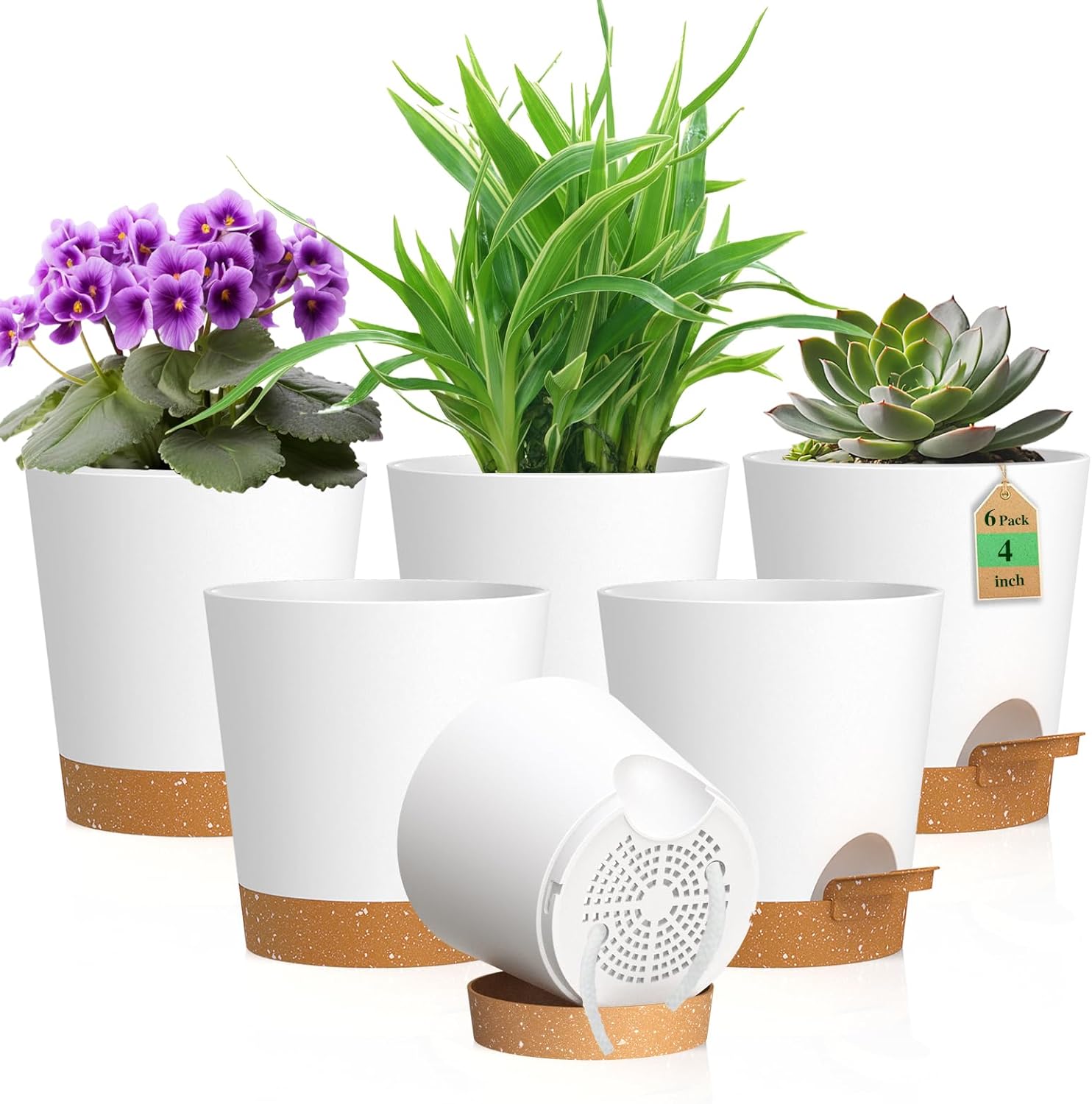
WSMKSZ 4-inch Self-Watering Plant Pots, 6-Pack
| Material Type | Plastic |
|---|---|
| Other Special Features of the Product | Drainage Hole, Lightweight, Self Watering |
| Mounting Type | Tabletop |
| Indoor Outdoor Usage | Indoor, Outdoor |
| Included Components | Cotton Rope, Water Reservoir, Watering Lip |
These WSMKSZ 4-inch self-watering pots are a budget-friendly, no-frills solution for small houseplants and seedlings. Each pot includes a built-in water reservoir and a cotton wick that draws moisture to the root zone, while detachable bottom trays collect excess drainage so you can keep surfaces clean. The set of six lightweight PP plastic pots is durable and UV resistant enough for both indoor and sheltered outdoor use. They are best for succulents, cacti, herbs and other small container plants where consistent but not excessive moisture helps prevent rot and stress. Practical extras include drainage holes and a matte finish that hides wear. Expect the pots to be basic rather than decorative and to require occasional cleaning of the reservoir and wick to avoid salt buildup. Their small 4-inch size limits them to seedlings or compact species, so you will need larger containers as plants grow.
Best for: A frugal houseplant owner or beginner who wants low-maintenance containers for succulents, herbs, or propagation and values buying multiple pots at once.
Less Ideal for: Gardeners who grow larger houseplants, heavy feeders, or plants that need deep root space should choose bigger, more decorative planters or nursery-sized pots.
- Self-watering reservoir with wick reduces how often you need to water
- Includes detachable saucers to catch excess water and protect surfaces
- Durable, lightweight recyclable PP plastic that is easy to move
- Set of six gives value for small collections or propagating seedlings
- Small 4-inch size restricts use to seedlings and very small plants
- Basic appearance without decorative detailing
Verdict: A cost-effective six-pack of small self-watering pots that keeps small indoor plants hydrated with minimal effort.
Garvee Self-Watering Planters, Set of 2, 14.2-Inch Tall

| Unit Count | 2 Count |
|---|---|
| Other Special Features of the Product | Self Watering |
| Mounting Type | Floor Standing |
| Indoor Outdoor Usage | Indoor |
These Garvee planters are a practical choice for indoor growers who want consistent moisture with minimal fuss. Each pot has a hidden water reservoir with a visible level indicator and a dedicated filling inlet, so you can water less often and avoid surface overwatering. The double-layer construction and gap between inner and outer pots promote air circulation around roots, which helps reduce the risk of root rot while insulating against temperature swings. Made from UV-resistant recycled plastic, the pots are built to resist fading and damage from regular indoor use. They are tall and roomy enough for larger houseplants, succulents, or small patio trees and come in a modern ribbed finish that fits most décor. Limitations to keep in mind are that the set is intended for indoor use and requires occasional monitoring of the reservoir and soil to match a plant's specific water needs; very water-sensitive plants may still need custom watering schedules. For someone prioritizing dependable, low-maintenance hydration for houseplants, these planters deliver straightforward, reliable performance.
Best for: Buyers who want a dependable, low-maintenance planter to keep houseplants consistently hydrated while reducing the time spent on routine watering.
Less Ideal for: People who prefer fully manual, hands-on watering or need planters designed specifically for heavy outdoor exposure and extreme weather conditions.
- Built-in hidden water reservoir with visible level indicator for extended periods between waterings
- Dedicated water inlet simplifies refilling and adding liquid fertilizer
- Double-layer design improves root insulation and air circulation to reduce overwatering risks
- Constructed from UV-resistant recycled plastic for durability and outdoor-capable toughness despite indoor focus
- Labeled for indoor use so outdoor longevity claims may be limited in some climates
- Reservoir still needs periodic checking to match different plant water demands
Verdict: A reliable, low-maintenance self-watering planter set that keeps indoor plants consistently hydrated with minimal oversight.
Fielda 8/10/12 Inch Self-Watering Planter Set

| Included Components | Saucer, Water Level Indicator Window |
|---|---|
| Capacity | 2.5 gallons |
| Material Type | Plastic |
| Indoor Outdoor Usage | Indoor, Outdoor |
These Fielda planters are a practical self-watering set for anyone who wants lower-maintenance container gardening. Each pot has a deep reservoir and an absorbent cotton wick that draws water up to the root zone, while a transparent water-level window lets you check reservoir volume without disturbing the plant. Detachable saucers and multiple drainage holes simplify cleaning and prevent overwatering, and the thicker plastic walls make the pots durable for both indoor and outdoor placement. In real use they keep soil evenly moist for roughly a week for typical houseplants, which is convenient for busy schedules or short trips. Limitations to note are the reduced usable planting depth because of the reservoir and the lightweight plastic construction, which can tip with very top-heavy plants in windy outdoor spots. The design is straightforward to set up and maintain, and the visible indicator and removable tray make it easy to avoid waterlogging while reducing daily watering chores.
Best for: Buyers who want a low-maintenance, reliable self-watering solution that visibly shows reservoir status and simplifies weekly care for common houseplants and balcony pots.
Less Ideal for: Growers needing maximum root depth for large specimen plants or those who prefer heavy, terracotta-style pots for stability and aesthetic weight.
- Self-watering reservoir with cotton wick delivers consistent moisture to roots for up to 7–10 days
- Transparent water-level window provides easy visual monitoring without moving the pot
- Removable saucer tray and multiple drainage holes simplify cleaning and prevent waterlogging
- Durable, high-temperature-resistant plastic resists fading and cracking for indoor or outdoor use
- Reservoir reduces usable planting depth compared with a regular pot of the same outer size
- Lightweight plastic can be prone to tipping with large, top-heavy plants in windy conditions
Verdict: A convenient, visible self-watering planter set that cuts down weekly watering while working reliably for typical houseplants and balcony containers.
Bluepro Clear Self-Watering Nursery Pots, 5-inch, 20-Pack

| Material Type | Plastic |
|---|---|
| Features | Breathable, Drainage Hole, Self Watering |
| Indoor Outdoor Usage | Indoor |
| Included Components | Tray, Watering Rope |
| Unit Count | 20 Count |
These Bluepro clear self-watering nursery pots are a practical set for seed starting, propagation, herbs and small houseplants. Each 5-inch pot includes a matching bottom reservoir and a watering wick that draws moisture from the tray into the soil, which can reduce how often you need to water and help keep moisture more consistent for up to about a week under good conditions. The clear plastic body makes it easy to monitor root growth, soil moisture and remaining reservoir water without disturbing the plants. Multiple drainage openings and flexible walls simplify transplanting because you can press the pot to ease the root ball out. The set includes trays and wicks so you can set up a coordinated group of plants, and the reinforced rims mean the pots stand up to reuse and washing when they are not damaged. Limitations to note are that plastic is not insulating for temperature extremes and reservoir duration will vary with plant type, soil mix and home conditions, so you should still check moisture periodically for sensitive seedlings.
Best for: Buyers who want a low-maintenance, predictable seed-starting or indoor herb setup and prefer products that make monitoring roots and moisture simple and safe.
Less Ideal for: People who need heavy-duty outdoor pots, decorative finished planters for display, or buyers who prefer ceramic or biodegradable materials for long-term planting.
- Complete 20-piece set with matching trays and wicks for immediate setup
- Wick-based self-watering reservoir supports more consistent moisture and less frequent watering
- Clear pots allow easy observation of roots, soil moisture and water level
- Multiple drainage openings and flexible walls make transplanting easier
- Reinforced rims and washable plastic enable reuse across planting stages
- Plastic construction offers little insulation against temperature fluctuations and can scratch or discolor over time
- Reservoir runtime varies widely by plant, soil and environment so weekly watering is not guaranteed
Verdict: A ready-to-use 20-pack of clear self-watering nursery pots that simplify seed starting and short-term indoor propagation by letting you monitor roots and maintain steadier moisture with minimal effort.
Choosing the Right Indoor Self Watering Planter: Key Factors to Consider
Reservoir Size and Refill Interval
How much water the built-in reservoir holds directly affects how long the planter can go between refills. Larger reservoirs are helpful if you travel or have many plants, but they add weight and take up space. Consider the size of the plants you expect to pot and their typical water use. Tropical foliage plants with larger leaves usually transpire more and will empty a reservoir faster than small succulents.
Also think about where you will place the planter. A deep, heavy reservoir may be impractical for narrow windowsills or elevated shelving. Match reservoir capacity to the desired refill cadence so you are not constantly topping off small tanks or struggling with an oversized, heavy container.
Water Delivery Method
Self watering planters use different ways to move water from reservoir to root zone, most commonly wicking cords, capillary mats, or a perforated inner pot that allows capillary rise. Wicking systems are simple and work well with free-draining mixes, but they can underperform if the wick dries out or becomes clogged. Capillary mats provide more even moisture but can hold too much water if the potting mix is fine-textured.
Assess how the delivery method matches your potting medium and plant type. Plants that dislike constantly wet roots need a system that limits saturation and encourages air pockets in the soil. Conversely, thirsty plants benefit from continuous capillary feed. The ideal method balances steady moisture with adequate oxygen in the root zone.
Potting Volume and Root Health
The usable soil volume determines how large a plant you can pot and how well roots develop. Shallow reservoirs sometimes reduce soil depth, which constrains root growth and can cause plants to become root-bound sooner. For plants that develop a substantial root ball, choose planters that prioritize potting volume even if that means a smaller reservoir.
Think about repotting frequency and whether you want to pot directly into the self watering unit or use an insert. Some systems use a removable inner pot that makes repotting easier and protects the reservoir from root intrusion.
Ease of Filling and Monitoring
A planter is only useful if you can refill and check it without hassle. Look for accessible fill ports, clear water-level indicators, or optional overflow safeguards that prevent spills. Planters that require lifting heavy pots to reach a hidden reservoir make routine maintenance awkward and may discourage consistent care.
Visibility into reservoir level helps you avoid both under- and overwatering. Simple sight tubes or transparent windows are more user-friendly than guesswork. Also consider whether the fill opening is large enough to accept a watering can or whether you will need a funnel or separate container.
Materials and Indoor Safety
Materials affect longevity, weight, and how the planter looks inside your home. Ceramic and glazed finishes are attractive and stable but heavier, which matters for high shelves or windowsills. Plastics are lightweight and often more forgiving if a planter is accidentally knocked, but check for food-safe or indoor-safe finishes if you use the planter in kitchen or living areas.
Also consider breathability and thermal properties. Some materials retain heat or cold more than others, which can affect moisture evaporation and root temperature near bright windows or drafty spots. Choose a material that suits your placement and lifestyle.
Compatibility With Potting Mixes and Plants
Not all potting mixes work equally well in self watering planters. Mixes that hold too much fine organic matter can become waterlogged when paired with passive reservoirs. Coarser mixes with good drainage and perlite or pumice components usually perform better because they maintain air pockets while still allowing capillary action.
Match the planter system to the plants you want to grow. Succulents and cacti generally need shallow reservoirs and quick-draining mixes, while ferns and tropical houseplants benefit from larger reservoirs and mixes that retain some moisture without becoming saturated.
Best Placement for Indoor Self Watering Planters
Placement affects both moisture use and plant health. Avoid extremely hot, sunny windows where rapid evaporation will force frequent refills. Instead, choose bright, indirect light spots for most foliage plants. For rooms with low light, a smaller reservoir is often adequate because water use is slower.
Think about access and stability. Place heavier planters on low, sturdy surfaces to avoid accidents. If you plan to use a balcony or sunroom, check that the planter material can handle temperature swings without cracking.
- Avoid direct midday sun for most self watering setups
- Use stable shelves or stands for larger reservoirs
- Keep planters away from drafty vents that dry soil unevenly
Adjusting Potting Mix for Passive Reservoirs
Adapting your potting mix improves how reliably a self watering planter performs. Start with a standard indoor potting mix and add coarse elements like perlite or coconut coir to enhance drainage and capillary action. For heavier mixes, increase the proportion of coarse particles so the soil does not lock into a saturated state near the reservoir.
If you are repotting existing plants into a self watering unit, remove compacted old soil and replace it with a well-structured mix. This helps roots access oxygen while still receiving moisture from the reservoir.
- Add perlite or pumice for improved drainage
- Use coir or bark to maintain pore space for roots
- Avoid using garden soil or very fine potting soils in passive systems
Common Maintenance Tasks and Troubleshooting
Routine checks keep a self watering planter functioning. Inspect the water level indicator weekly and top up before the reservoir drops too low. Clean fill ports and wicks every few months to prevent mineral buildup, especially if you use hard water.
If plants show yellowing leaves or root rot symptoms, reduce the reservoir level or switch to a coarser mix. If a wick or delivery system appears clogged, remove and clean it, or replace it if the system allows. Occasional flushing of the reservoir can prevent stagnation.
- Check water level weekly under normal conditions
- Clean wicks and reservoirs to avoid mineral and algae buildup
- Adjust soil mix instead of watering more if roots look waterlogged
Design Options That Work for Different Plant Types
Simple shallow reservoirs work well for succulents and small herbs because they limit the volume of water near roots. For larger foliage plants or those with higher transpiration, choose deeper reservoirs paired with larger potting volumes to balance root space and water reserve.
Consider modular systems with removable inner pots if you repot regularly. These designs make it easier to check roots and change soil without disturbing the reservoir.
- Shallow, wide planters suit succulents and low-water plants
- Deeper models support larger tropical houseplants
- Removable inner pots simplify repotting and inspection
Using Water Quality to Protect Plant Health
Water quality influences mineral buildup and plant response. If your tap water is high in dissolved salts, occasional use of filtered or rainwater for reservoir filling can reduce mineral deposits that clog wicks or stain container interiors. Flushing the reservoir periodically with fresh water helps remove accumulated salts.
Plants sensitive to chlorine or fluoride may react to some tap waters. In such cases, letting water sit overnight to off-gas or using an alternate water source can improve plant appearance and reservoir performance.
- Use filtered or collected rainwater if tap water is very hard
- Flush reservoirs occasionally to clear salts
- Let chlorinated water sit if plants are sensitive to treatment chemicals
How We Chose the Best Indoor Self Watering Planter
We filtered a wide range of indoor self watering planters down to the top contenders by focusing on metrics that matter in everyday home gardening. Key evaluation criteria included water reservoir capacity and delivery design to judge how long a planter can maintain moisture between refills; wicking or capillary systems and how reliably they provide moisture to the root zone without waterlogging; materials and construction for durability and interior-safe finishes; ease of filling and access for routine maintenance; and potting volume and root space to match common houseplant sizes. We also considered fit for specific indoor conditions such as bright windowsills, lower-light rooms, and limited floor space. Exclusions included outdoor-only containers, devices that require complex assembly or plumbing, and planters without a clear reservoir or passive delivery system. We prioritized straightforward designs that perform well across a range of common houseplants and apartment environments. The shortlisted items reflect a balance of moisture control, usability, and compatibility with typical indoor potting mixes.
FAQ
Will a self watering planter overwater my plants?
It depends on the system and soil. Passive reservoirs that rely on capillary action can be set up to avoid constant saturation if paired with a well-draining mix. Monitoring water level and adjusting the soil structure helps prevent overwatering.
How often do I need to refill the reservoir?
Refill frequency usually depends on reservoir size, plant water use, and environmental conditions. In bright, warm rooms you may refill weekly, while in cooler, low-light spaces a refill every few weeks is common.
Can I use regular potting mix in a self watering planter?
Regular potting mix can work, but coarse amendments like perlite or pumice often improve performance. Very fine mixes can retain too much water near the reservoir and increase risk of root problems.
Are self watering planters safe for succulents and cacti?
Some designs are suitable if they provide a shallow reservoir and very fast-draining soil. Many self watering systems are better suited to moisture-loving houseplants, so choose a shallow, low-volume option and amend the mix for succulents.
How do I prevent algae or odors in the reservoir?
Keep the reservoir opaque if possible, clean it periodically, and avoid leaving organic debris in the water. Flushing and refilling with fresh water every few months reduces buildup and odor.
Final Verdict
When choosing an indoor self watering planter, prioritize the combination of reservoir size, water delivery method, and usable potting volume that matches your plant choices and home conditions. Expect tradeoffs between refill interval and potting depth: larger reservoirs mean longer time between fills but may reduce root space. Consider ease of access and maintenance features like clear water indicators or removable inner pots to keep care simple. Select the planter that fits your light, space, and plant types, then adjust potting mix and placement to get the most reliable moisture without compromising root health. With the right match, a self watering planter can make indoor gardening lower effort and more consistent.
