

Note: This article contains affiliate links. If you click on these links and make a purchase, I may earn a small commission at no extra cost to you. This helps support my research and content. Read my full affiliate disclosure here.
If your lawn is choking under a layer of dead grass and organic buildup, a pull behind dethatcher can restore airflow and encourage healthier growth. Choosing the right pull behind lawn dethatcher matters because tine design, depth adjustment, and build quality determine how effectively you remove thatch without harming crowns or bare spots. This guide covers seven shortlisted options that represent a range of sizes and tow-vehicle compatibility for typical home lawns. We evaluated models against practical gardener priorities like tine penetration control, durability of critical components, and ease of setup and cleanup. Read on to understand the features that affect performance and pick the best match for your mower, lawn size, and recovery goals.
Top Picks at a Glance
| Best Overall The best all-around choice for most situations | Brinly 48" Tow-Behind Dethatcher (DT-480BH-A) |  |
| Best Quality Built to a higher standard if you want something more solid | Brinly DT2-40BH Premium Tow-Behind Dethatcher, 40" | 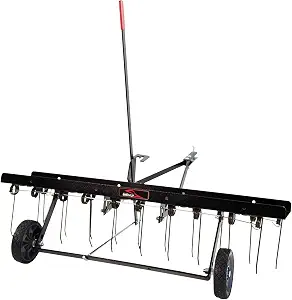 |
| Best Value The sweet spot between price and what you get | Suchtale 40-inch Tow-Behind Lawn Dethatcher with 20 Spring Tines |  |
| Best Budget The cheapest option that still gets the job done reliably | Vlaeng 40" Tow-Behind Dethatcher with 20 Rust-Resistant Spring Tines |  |
| Highest Rated A top-rated pick with lots of positive feedback | FTOPBTB 40-Inch Tow Lawn Dethatcher with 20 Heat-Treated Replaceable Tines |  |
| Most Popular A crowd favorite that many people choose with confidence | Agri-Fab 45-0294 40-inch Tow-Behind Lawn Dethatcher |  |
| Best Seller A high-volume bestseller chosen again and again | Agri-Fab 48-Inch Tow-Behind Lawn Dethatcher with 24 Spring Steel Tines | |
Brinly 48" Tow-Behind Dethatcher (DT-480BH-A)

| Working width | 48 inches |
|---|---|
| Tines | 24 spring steel triple-coil tines |
| Frame | 14 gauge steel |
| Transport wheels | 8 inch never-flat inline wheels |
The Brinly 48" Tow-Behind Dethatcher is a tractor attachment that pulls two rows of 24 triple-coil spring steel tines across the lawn to lift and extract thatch. It is used in spring or fall to open the turf and allow water and nutrients to reach roots, and the wide 48-inch working width covers large lawns quickly. The inline transport wheels and adjustable drawbar make it simple to hitch to most lawn tractors and help the tray follow ground contours without increasing overall width. Construction uses heavy gauge steel for durability and the independent flexing tines reduce scalp marks while depositing pulled thatch on the surface for mowing or collection. Because it is a passive tow-behind tool there is no engine or complicated setup, but effectiveness depends on tractor speed and multiple passes may be needed on heavy thatch. Also it is a specialized attachment for larger properties and will be overkill for small yards or push-mower users.
Best for: Homeowners with medium to large lawns who want a simple, durable tractor-mounted tool to reduce thatch quickly and restore turf health without power equipment complexity.
Less Ideal for: Owners of small yards, those who only use a push mower, or buyers who want a motorized dethatching machine should look elsewhere.
- Wide 48-inch working width covers large areas quickly
- Durable 14-gauge steel frame built for regular tow-behind use
- Twenty-four triple-coil spring steel tines provide flexible, aggressive thatch removal
- Inline transport wheels facilitate leveling and reduce overall footprint when crossing paved areas
- Designed only as a tow-behind attachment so it requires a compatible lawn tractor or hitch
- May require multiple passes on very heavy or compacted thatch to achieve desired results
Verdict: If you have a medium to large lawn and a tractor, this heavy-duty 48" tow-behind dethatcher removes thatch efficiently and covers ground fast.
Brinly DT2-40BH Premium Tow-Behind Dethatcher, 40"

| Working width | 40" |
|---|---|
| Tine construction | Triple-coil 3/16" spring steel (20 tines) |
| Weight tray capacity | Holds up to 70 lbs. |
| Transport wheels | 6" never-flat wheels |
The Brinly DT2-40BH is a performance-focused tow-behind dethatcher designed to remove thatch and scarify turf on small to medium lawns. It uses two rows of 20 triple-coil 3/16" spring-steel tines that flex to comb out built-up organic material and can be set for either gentler dethatching or a more aggressive scarifying action useful before reseeding. The 40" working width covers a lot of ground per pass and the heavy-duty weight tray accepts up to 70 pounds of ballast when you need more tine penetration. Transport wheels engage from the driver seat for crossing driveways and the universal hitch and adjustable drawbar make hookup to most riders, ZTRs, and ATVs straightforward. Tines come preassembled which reduces setup time and a safety rod helps prevent broken tines from contacting mower blades. Expect solid, tractor-style performance, though it is a specialized attachment so maneuvering in very tight beds or around delicate plantings will be limited compared with handheld tools.
Best for: Gardeners and property owners who prioritize fast, effective dethatching and want a tow-behind attachment that delivers deeper penetration and professional-style results across small to medium lawns.
Less Ideal for: Those with very small yards, heavily planted ornamental beds, or users who need a portability-first handheld tool rather than a tractor-mounted implement.
- Wide 40" working width speeds up dethatching on medium lawns
- Dual rows of durable triple-coil spring-steel tines for consistent thatch removal
- Heavy-duty weight tray holds up to 70 lbs. for deeper scarification when needed
- Universal hitch and adjustable drawbar fit most rider tractors, ZTRs, and ATVs
- Transport wheels engage from the driver seat for safe crossings
- Not suited for very tight or intricately landscaped areas where a handheld dethatcher is required
- Requires a tow vehicle which adds storage and compatibility considerations
Verdict: Choose the Brinly DT2-40BH if you want a tow-behind dethatcher that clears thatch quickly and can be weighted for aggressive scarifying and reseeding prep.
Suchtale 40-inch Tow-Behind Lawn Dethatcher with 20 Spring Tines

| Working width | 40 inch |
|---|---|
| Tines | 20 spring steel tines |
| Frame material | All-steel |
| Ballast platform | 70 lb |
| Hitch type | Pin-style tow hitch |
This tow-behind dethatcher is built for routine lawn maintenance on medium to large yards. It attaches to riding mowers or ATVs via a pin-style hitch and rolls on bearing-supported wheels while 20 heat-treated, triple-coil spring steel tines flex to pull up matted grass and surface debris. The steel frame, reinforced side plates and solid axle aim to resist bending during towing, and a 70 lb ballast platform lets you add downward force when the tines need more soil contact. A transport handle raises and lowers the tine tray for easy switching between work and storage. Practical benefits include a wide 40-inch working width that reduces passes, replaceable rust-resistant tines, and a heavier build than many consumer models for better stability under load. Limitations are that it requires a compatible tow vehicle and some assembly and ballast management, and the relatively heavy construction makes it less convenient to lift by hand for storage or mounting in tight spaces.
Best for: Buyers who want a durable, no-frills tow-behind dethatcher to speed up regular dethatching on medium to large lawns and who prioritize reliable construction over ultra-lightweight gear.
Less Ideal for: Small-plot gardeners who only use push tools or homeowners without a tow-capable mower should consider hand rakes or compact dethatchers instead.
- 40-inch working width covers ground quickly to reduce passes
- 20 heat-treated spring steel tines that flex and are replaceable
- Reinforced all-steel frame with solid axle and bearing-supported wheels for stable towing
- 70 lb ballast platform increases tine penetration when needed
- Requires a compatible riding mower or ATV hitch to use
- Heavy construction can be awkward to handle for one person during installation or storage
Verdict: A sturdy, wide tow-behind dethatcher that speeds up regular lawn maintenance with durable spring tines and a reinforced steel frame.
Vlaeng 40" Tow-Behind Dethatcher with 20 Rust-Resistant Spring Tines

| Working width | 40 inches |
|---|---|
| Tines | 20 rust-resistant spring tines |
| Frame material | Alloy steel |
| Add-on weight capacity | 70 lbs |
| Wheels | Heavy-duty wheels |
This tow-behind dethatcher attaches to lawn tractors, ATVs, or UTVs to clear thatch, dead grass, pine needles, and light debris across a 40-inch swath. It is built on a heavy-duty alloy steel frame with two wheels and 20 rust-resistant spring tines that flex for safer contact with the turf. Height adjustment lets you lift the tines for transport or lower them for deeper penetration, and the 70 pound weight platform accepts added ballast to increase tine penetration when needed. Typical use is a single pass over the lawn in spring or fall after mowing; the unit is most useful on larger yards where hand raking would be slow. Practical benefits include quicker coverage than manual dethatching and simple vehicle hookup via the universal connector. Limitations to expect are a relatively light tine count compared with larger commercial units and the need to manually remove debris from steel tines after use to prevent corrosion or damage. Assembly and attachment are straightforward, but this model is best for homeowners who want an affordable, no-frills tow-behind solution rather than a heavy professional machine.
Best for: Practical homeowners with medium to large lawns who prioritize cost-effective tools that save time and reduce manual raking.
Less Ideal for: Landscapers or users needing very aggressive, professional-grade dethatching or those with very small lawns where a tow-behind is unnecessary.
- 40-inch working width covers large lawns faster than hand rakes
- Adjustable tine height for transport or deeper dethatching
- 20 rust-resistant spring tines that flex to reduce turf damage
- 70 lb weight platform lets you add ballast for better penetration
- Only 20 tines, so less aggressive than commercial dethatchers
- Requires periodic cleaning of steel tines to avoid residue buildup
Verdict: A budget-friendly tow-behind dethatcher that delivers quick, adjustable dethatching for homeowners with medium to large lawns.
FTOPBTB 40-Inch Tow Lawn Dethatcher with 20 Heat-Treated Replaceable Tines

| Power Source | Manual |
|---|---|
| Cutting width | 40 inches |
| Number of Positions | 1 |
| Material Type | Alloy Steel |
This 40-inch tow dethatcher is built for routine lawn maintenance with a simple, durable design that hooks to a riding mower or lawn tractor. It uses 20 rust-resistant, heat-treated tines to pull up thatch while a 40-inch tray accepts material and can be weighted to increase tine depth. The frame is alloy steel and the tines are replaceable, so worn parts can be swapped without replacing the whole unit. Assembly is straightforward and operation is manual, so it requires a tractor to move and no power source. Practical benefits include effective thatch removal across medium to large lawns and long-term usability thanks to replaceable tines and robust materials. Limitations are that it is not self-powered and has only a single adjustment position listed, so fine-tuning depth on varying turf types may need manual weighting or multiple passes. Wheels are modest size, so rough terrain could reduce stability compared with heavier-duty commercial attachments.
Best for: Gardeners who prioritize a dependable, repairable dethatcher for seasonal lawn care and who already own a riding mower or lawn tractor to tow it.
Less Ideal for: Homeowners without a tractor or those needing fine, tool-free depth adjustment or heavy-duty commercial-grade attachments should look elsewhere.
- 20 heat-treated, rust-resistant tines for durable thatch removal
- Replaceable tines extend the service life and simplify maintenance
- Alloy steel frame provides sturdy construction for regular use
- Tow-behind design attaches to riding mowers and lawn tractors for easy coverage of larger lawns
- Manual operation with a single listed adjustment position limits precise depth control
- Smaller 7-inch wheels and lighter construction may struggle on very uneven terrain
Verdict: A straightforward, repairable tow-behind dethatcher that gives reliable seasonal thatch removal for owners of riding mowers and lawn tractors.
Agri-Fab 45-0294 40-inch Tow-Behind Lawn Dethatcher

| Included Components | Tine Tow Dethatcher |
|---|---|
| Material Type | Alloy Steel |
| Power Source | Corded Electric |
| Operation Mode | Manual |
The Agri-Fab 45-0294 is a simple tow-behind dethatcher built to clear dead grass and loosen compacted soil across a 40-inch width. It mounts to a lawn or garden tractor and uses twenty heat-treated 3/16-inch spring tines attached to a heavy steel tray to pull up thatch and improve aeration and water penetration. The tines are replaceable and described as rustproof, and height is adjusted from the tractor seat via a long upright lever that raises and lowers the tine assembly. Semi-pneumatic 7-inch wheels help it roll over uneven turf without needing constant attention. Assembly is required but reportedly tool-free, and the unit is intended for periodic use in spring, mid-summer, and fall. This is a mechanically straightforward machine that focuses on durability and ease of use rather than power features. It is best for homeowners who already own a tow-capable tractor and want a low-tech, reliable way to maintain lawn health; it is not a powered dethatching machine and will be limited by the tractor's pulling power and the tine depth selected.
Best for: Homeowners with a lawn or garden tractor who want a rugged, low-maintenance dethatching attachment to improve turf health on medium to large lawns and value proven, well-built equipment.
Less Ideal for: People without a tow vehicle or those who need a powered, high-impact dethatcher for very heavy industrial or commercial turf applications should look elsewhere.
- 40-inch working width covers large swaths quickly when towed
- Twenty heat-treated spring steel tines are replaceable and designed for durability
- Simple lever control allows raising and lowering from the tractor seat
- Semi-pneumatic 7-inch wheels traverse uneven terrain with reduced bouncing
- Requires a tow-capable lawn or garden tractor to operate
- Manual, non-powered design limits performance in very dense thatch or heavy compacted soil
Verdict: If you already own a tow-capable tractor and need a durable, no-frills dethatcher to maintain lawn health across mid-size to large yards, this Agri-Fab unit delivers reliable, easy-to-use performance.
Agri-Fab 48-Inch Tow-Behind Lawn Dethatcher with 24 Spring Steel Tines
| Head Size | 48 inches |
|---|---|
| Included Components | Agri-Fab 45-0295 48-Inch Tine Tow Dethatcher |
| Handle Material | Metal, Rubber |
| Head Material | Alloy Steel |
| Manufacturer Warranty Description | 3 Year Limited Warranty |
The Agri-Fab 48-inch tow-behind dethatcher is built to strip away dead, matted grass and loosen compacted soil on medium to large residential lawns. You tow it behind a lawn or garden tractor using the universal hitch, lower the spring-loaded tines with the cantilever transport handle, and make passes to pull up thatch while the flat-free wheels maintain consistent depth. The unit’s 24 heat-treated, rust-resistant spring tines are replaceable and the integrated 70 lb weight tray lets you increase tine penetration for tougher turf. Its wide 48-inch head covers more area per pass, which saves time on larger properties, and the heavy-gauge deck and steel construction feel sturdy for seasonal use. Expect some setup and occasional tine replacement if you use it frequently, and it requires a compatible tractor to operate so it is not a walk-behind option. For homeowners who want a durable, tractor-mounted tool that simplifies seasonal dethatching, this model balances coverage and durability well.
Best for: Homeowners with a lawn tractor who want a reliable, easy-to-use dethatcher for seasonal maintenance and efficient coverage of medium to large yards.
Less Ideal for: People with small lawns who do not own a tractor or who need a lightweight walk-behind dethatcher should consider other options.
- Wide 48-inch working width covers large areas faster
- 24 heat-treated, rust-proof spring tines that are replaceable
- Universal hitch fits most lawn and garden tractors for easy hookup
- Cantilever transport handle allows simple raising and lowering of tines
- Requires a tow vehicle such as a lawn tractor so not suitable for homeowners without one
- Some assembly and occasional tine replacements are needed with regular use
Verdict: If you have a lawn tractor and need fast, dependable seasonal dethatching across a larger yard, this sturdy 48-inch tow-behind unit gets the job done.
Choosing the Right Pull Behind Lawn Dethatcher: Key Factors to Consider
Tine Design and Depth Adjustability
Tine shape, spacing, and material affect how aggressively the machine removes thatch and how much stress it places on grass crowns. Closer tine spacing and sharper tines can cut deeper into compacted organic layers but can also increase the risk of scalping if depth is not controlled. Adjustable depth settings let you start shallow to evaluate turf response and increase penetration only where the thatch layer requires it.
Look for mechanisms that allow incremental depth changes and secure locking. Quick adjustments matter when moving between lawns with different conditions or when you need to make passes at multiple depths for heavy thatch buildup.
Frame Construction and Corrosion Resistance
The frame must withstand repeated towing, the shock of uneven ground, and occasional stone impacts. Heavier gauge steel frames resist bending and maintain tine alignment longer than thin tubing. Protective coatings, galvanized steel, or powder coating reduce rust where moisture and wet grass accelerate corrosion.
Consider the maintenance demands of the finish and whether replacement parts are available for wear items. A robust frame reduces the chance of misaligned tines that can gouge turf and shortens the need to replace the whole unit.
Tow Vehicle Compatibility and Hitching
Pull behind dethatchers must match your mower or vehicle's hitch type and towing capacity. A too-heavy or overly wide unit can overload a small mower or destabilize an ATV. Check tongue length and turning clearance so the implement follows without jackknifing or causing uneven contact on turns.
Hitch adapters and adjustable tongues expand compatibility, but they add complexity. Choose a unit with a hitch arrangement that fits your equipment or can be adapted with simple hardware rather than extensive modification.
Working Width and Operational Speed
Working width determines how quickly you can cover a yard and how many passes are needed. Wider decks reduce job time but demand more power and may be harder to maneuver in tight yards. Operational speed matters because tine action changes with forward pace; some units are designed to work best at slow mower speeds while others maintain effectiveness across a broader speed range.
Balance width with the size of your lawn and the capability of your tow vehicle. For irregular yards, a narrower, more maneuverable unit can be more efficient than a wider model that requires extra trimming work.
Ease of Setup, Maintenance, and Storage
Tools that are easy to assemble and maintain will actually get used. Look for simple tine replacement, accessible grease points, and foldable or compact storage profiles. If removing tines or adjusting depth requires special tools, that increases wear on the owner and reduces the likelihood of seasonal upkeep.
Also consider how the unit transports on trailers or in storage. Quick-release pins and collapsible handles save time and reduce the risk of losing small parts between uses.
Impact on Turf Recovery and Repair Requirements
Even correctly used dethatchers remove living grass when set too deep. Think about how much follow-up repair your lawn can tolerate. If you have thin turf or high-value grass, choose a gentler approach with multiple shallow passes rather than one aggressive pass.
Consider the timing of dethatching relative to season and watering. Proper timing and aftercare reduce the risk of prolonged bare patches and speed recovery, so pick a tool that supports conservative use when required.
When to Dethatch and Seasonal Timing
Dethatch during the growing season when grass can recover quickly. For cool-season grasses, aim for early fall or spring; for warm-season grasses, late spring to early summer is usually best. Avoid dethatching during summer heat or when the lawn is dormant because recovery will be slow and stress will be higher.
Plan dethatching after a period of active growth and before heavy seeding or fertilizing so the turf can quickly fill any thin spots created by tine action. Light watering before and after a pass helps tines penetrate consistently and supports faster recovery.
- Check moisture: slightly moist soil improves tine contact but avoid working on saturated ground.
- Do a test pass in a low-visibility area to check depth and turf response.
- Follow with core aeration or overseeding if thatch removal leaves thin areas.
Tow Vehicle Tips and Safe Operation
Match the dethatcher to your mower or ATV towing capacity. Make sure weight is evenly distributed and that the hitch connection does not allow excessive lateral play. Drive at the recommended speed for consistent tine engagement and avoid abrupt turns that can rip turf.
Use a spotter on slopes or near obstacles and keep bystanders clear. Inspect wheels, tines, and hitch hardware before each use and tighten fasteners as needed.
- Reduce speed on uneven ground to avoid bouncing and inconsistent depth.
- Engage tines only when moving to prevent digging in place.
- Secure any loose parts and remove stones or debris from the area before work.
Aftercare to Promote Recovery
After dethatching, clear loose debris to allow sunlight and air to reach crowns. Light fertilization and regular watering support regrowth. If the dethatching removed significant turf, overseeding and topdressing with a thin layer of compost or topsoil will speed lawn repair.
Avoid heavy traffic on the lawn until new growth has rooted. Monitor the area for signs of stress and adjust watering to keep soil evenly moist but not waterlogged.
- Apply starter fertilizer when overseeding to encourage seedling establishment.
- Keep mower blades sharp and raise cutting height slightly for several mowings after dethatching.
- Consider a follow-up core aeration in compacted lawns to improve root recovery.
Common Maintenance Tasks for Tow-Behind Dethatchers
Routine maintenance keeps the machine effective year after year. Clean tines and remove caked-on debris after each use to prevent rust and maintain cutting action. Inspect tine bolts and replace bent or broken tines promptly to keep the dethatcher balanced.
Grease moving parts and check wheel bearings and fasteners before storage. Touch up paint chips on the frame to reduce corrosion and store the unit in a dry place to prolong component life.
- Keep spare tines and fasteners on hand for quick field repairs.
- Check tire pressure and wheel alignment for even tracking.
- Lubricate hitch points and pivot joints seasonally.
How We Chose the Best Pull Behind Lawn Dethatcher
We focused on features that directly affect dethatching performance and real-world durability in home and small-acreage lawns. Key evaluation criteria included tine depth adjustability to dial in removal without damaging turf, frame and tine-material durability for repeated use, compatibility with common residential mowers and ATVs, and ease of maintenance and storage. We also considered working width and tow stability because these influence how quickly you can cover a lawn and how evenly tines contact the turf. Excluded items were small, handheld rakes and power rakes intended for commercial heavy-duty use; the list is limited to tow-behind units appropriate for homeowner equipment. We prioritized units that balance aggressive thatch removal with practical control and longevity. Our selection filters favored adjustable systems that let you change depth or engage tines and sturdy construction that resists bending or corrosion. We also looked for simple assembly, accessible replacement parts, and clear instructions since these affect real garden usability.
FAQ
How deep should I set the tines for safe dethatching?
Set tines shallow on the first pass and inspect results. Most lawns respond to a light to moderate depth; only increase penetration if thatch remains. Deep settings can remove live grass and cause bare patches, so advance gradually.
Can I tow a dethatcher with a riding mower?
Often yes, but check the mower's towing capacity and hitch compatibility. Smaller mowers may struggle with wide or heavy units, so choose a dethatcher sized for your equipment and avoid overloading the mower's drivetrain.
How often should I dethatch my lawn?
Frequency depends on species and thatch buildup. Many lawns only need dethatching every few years. Inspect the turf annually by digging a small plug; if the thatch layer is more than about half an inch, consider dethatching.
Will dethatching damage my lawn permanently?
Not usually when done correctly. Controlled dethatching removes organic buildup that inhibits growth and ultimately improves turf health. Excessive depth or poor timing can create stress, so follow conservative settings and plan for aftercare.
Should I overseed immediately after dethatching?
You can overseed right after dethatching if soil contact is good. Removing thatch improves seed-to-soil contact, but avoid seeding during extreme heat or drought. Light topdressing and consistent moisture help seed establishment.
What maintenance extends a dethatcher's life?
Regular cleaning, replacing worn tines, greasing pivot points, and protecting the frame from rust are the most important tasks. Proper storage in a dry place and checking fasteners before each use reduce wear and unexpected failures.
Final Verdict
Choose a pull behind lawn dethatcher that matches your mower towing capacity and the thickness of the thatch you need to remove. Prioritize adjustable tine depth, a sturdy frame, and a working width that suits your lawn size so you can remove buildup efficiently without over-stressing turf. Accept the tradeoff between speed and control: wider, more aggressive units cover ground faster but require more careful setup and a capable tow vehicle. When in doubt, start with shallower passes, monitor turf response, and plan follow-up overseeding and watering to support rapid recovery.
