

Note: This article contains affiliate links. If you click on these links and make a purchase, I may earn a small commission at no extra cost to you. This helps support my research and content. Read my full affiliate disclosure here.
If you want to grow bigger shrubs, small trees, or dense mixed plantings on a patio or in a yard, the right large planter makes the difference. Large planters change how soil holds moisture, how roots spread, and how you move and protect plants through seasons. In this guide we shortlisted six top options suited for outdoor use and evaluated each on drainage, material durability, and practical garden handling. Read on to find the large outdoor planter that fits your location, plants, and maintenance style.
Top Picks at a Glance
| Best Overall The best all-around choice for most situations | Veradek Pure Series Tall Tapered Outdoor Planter with Removable Shelf (2-pack) |  |
| Best Quality Built to a higher standard if you want something more solid | Kante 21.7" Tall Weathered Concrete Round Planter |  |
| Best Value The sweet spot between price and what you get | RooTrimmer 20" Extra-Large Outdoor Planter 3-Pack (Textured Plastic, Drainage) |  |
| Best Budget The cheapest option that still gets the job done reliably | Quarut 15-inch Large Plastic Planter Pots with Drainage and Saucer, 4-Pack |  |
| Highest Rated A top-rated pick with lots of positive feedback | Veradek Demi Large Round Planter (20") |  |
| Most Popular A crowd favorite that many people choose with confidence | GROWSCAPE 15" Jameson Whiskey Barrel Planter with Drainage (Distressed Oak) |  |
Veradek Pure Series Tall Tapered Outdoor Planter with Removable Shelf (2-pack)

| Capacity | 73.6 liters |
|---|---|
| Number of Pieces | 2 |
| Material Type | Polypropylene Plastic |
| Other Special Features | UV Resistant, Weather Resistant |
| Mounting Type | Floor Standing |
The Veradek Pure Series tall taper planters are designed to deliver durable, low-maintenance container planting for patios, entrances, and balconies. Made from molded polypropylene, the pots are lightweight yet impact resistant and treated for UV and weather exposure so they hold up through sun and colder conditions without cracking or heavy fading. Each set includes a removable insert shelf so you can either fill the body with soil for deep-rooted plantings or use the insert for shallower plant mixes and easier repotting; the insert also offers an optional drainage hole. At 30 inches tall these planters create height and presence for elevated displays of perennials, small shrubs, or dramatic succulents. The single-wall construction keeps them easy to move compared with heavy ceramic or metal alternatives but means they do not offer the insulating mass of heavier materials, so soil can warm and cool faster. For gardeners who prioritize robust, weatherproof planters that are simple to manage, these deliver strong real-world performance with a modern profile.
Best for: Gardeners who want durable, low-maintenance planters that create height and impact while remaining easy to move and manage, especially for patio, balcony, or entryway displays.
Less Ideal for: People seeking heavy, decorative materials with built-in insulation or those who prefer natural stone or ceramic aesthetics for formal garden designs.
- UV and weather resistant finish designed to resist fading and cracking
- Lightweight polypropylene construction makes placement and relocation easy
- Removable insert shelf gives flexibility for deep fills or contained inserts
- Tall 30 inch profile provides strong vertical presence for elevated plantings
- Single-wall plastic lacks the thermal mass of ceramic or stone, so root temperatures fluctuate more
- Not insulated; may need protection in extreme freeze-thaw conditions
Verdict: A weatherproof, lightweight pair of tall planters that deliver reliable, low-maintenance performance and strong vertical presence for outdoor container gardens.
Kante 21.7" Tall Weathered Concrete Round Planter

| Capacity | 9.3 gallons |
|---|---|
| Material Type | Concrete |
| Other Special Features | Drainage Hole, Lightweight, UV Resistant, Weather Resistant |
| Indoor Outdoor Usage | Indoor, Outdoor |
This 21.7" tall Kante round planter delivers the concrete look without the usual heft, making it an easy-to-place floor planter for entryways, porches, and patios. It is made from a lightweight concrete blend with a weathered finish and subtle pores that give each piece character while remaining UV and weather resistant for year-round outdoor display. The built-in drainage hole and included rubber plug let you use it outdoors or indoors without worrying about overwatering. At roughly a 9.3-gallon capacity the opening and depth suit small shade trees, large houseplants, or grouped plantings at a front door. Because it is lighter than solid concrete it is simpler to move for seasonal styling but still sturdy enough to resist wind and rain. Limitations are typical for decorative planters: you should confirm the exact dimensions for a specific plant and expect some color/texture variation since the finish is handcrafted.
Best for: Buyers who want a durable, stylish floor planter for a front door or patio that looks like real concrete but is manageable to move and maintain.
Less Ideal for: People seeking an exact color match across multiple planters for tightly coordinated schemes or buyers who need a very heavy, immovable stone planter.
- Lightweight concrete blend offers concrete appearance with easier handling
- Weather-resistant and UV-resistant finish suitable for year-round outdoor use
- Integrated drainage hole with rubber plug for indoor or outdoor flexibility
- Generous planting capacity that fits large houseplants or grouped displays
- Handcrafted finish can vary in color and texture between pieces
Verdict: A front-door-ready planter that combines authentic concrete styling with lighter weight and outdoor durability for easy placement and year-round use.
RooTrimmer 20" Extra-Large Outdoor Planter 3-Pack (Textured Plastic, Drainage)

| Material Type | Plastic |
|---|---|
| Other Special Features of the Product | Drainage Hole, Fade Resistant, Lightweight, Scratch Resistant |
| Indoor Outdoor Usage | Outdoor |
| Number of Pieces | 3 |
| Size | 20 inch |
These RooTrimmer planters are large, deep plastic pots sold as a three-pack intended for outdoor use with trees, shrubs, and other big container plants. Each pot has a 20" top diameter and deep profile to accommodate substantial root systems, and the reinforced base and virgin polypropylene construction make them resistant to compression, cracking, and deformation in normal garden use. Four pre-drilled drainage holes help prevent waterlogging and support healthier root aeration. The textured finish gives a low-key modern look that fits many patios and landscapes, and the lightweight plastic makes them easy to move when empty. Expect practical durability rather than designer materials; they will not have the heft or insulation of ceramic or fiberglass, so pots can warm faster in full sun and are more likely to tip with top-heavy specimens unless anchored or weighted. Also note saucers are not included. For gardeners who need roomy, weatherproof containers that are easy to clean and replace, these planters deliver solid utility at a value.
Best for: Buyers who want an economical, no-fuss solution for planting large shrubs or small trees outdoors and prioritize roomy root space and durable, easy-care containers.
Less Ideal for: Those seeking heavy, premium-feeling decorative pots for very windy sites or who need integrated saucers and high thermal mass should consider heavier materials instead.
- Generous 20" top diameter and deep profile suited for large plants and deep-root development
- Reinforced virgin PP construction resists cracking and deformation under outdoor conditions
- Four pre-drilled drainage holes to reduce waterlogging and improve soil aeration
- Textured finish provides a subtle modern look and is easy to clean
- Lightweight design makes handling and seasonal rearrangement straightforward when pots are empty
- Plastic construction offers less thermal insulation and weight than ceramic or concrete
- Saucers are not included so you must add your own to protect surfaces
Verdict: A practical, durable 3-pack of deep 20" outdoor planters that gives large plants plenty of root room while staying lightweight and easy to maintain.
Quarut 15-inch Large Plastic Planter Pots with Drainage and Saucer, 4-Pack

| Capacity | 6.5 gallons |
|---|---|
| Number of Pieces | 4 |
| Material Type | Plastic |
| Other Special Features of the Product | Aeration, Drainage Hole, Frost Resistant, Lightweight |
| Indoor Outdoor Usage | Outdoor |
These Quarut 15-inch planters are a practical, no-fuss option for outdoor container gardening. Sold as a four-pack, each pot is made from lightweight plastic with built-in drainage holes and matching saucers so you can grow flowers, herbs, or small shrubs on a patio or balcony without worrying about waterlogging. The molded rope-texture gives them a modern look while the frost-resistant, recyclable plastic is intended to resist sun fade and winter cracking for season-to-season use. Because they are light, the pots are easy to move for rearranging or bringing inside in extreme weather, and the saucers capture excess runoff to protect decking or patio surfaces. Limitations are typical of thin plastic planters: they offer less insulation for roots than thicker ceramic or composite pots and can tip if tall, top-heavy plants are used without ballast. For gardeners who want inexpensive, weatherable containers that are simple to maintain, this set covers the basics well.
Best for: Gardeners who want an affordable, low-maintenance set of outdoor planters for patio, balcony, or porch planting and value ease of setup and year-round weather resistance.
Less Ideal for: Plant collectors who need heavy, insulating containers for temperature-sensitive specimens or people seeking premium, decorative ceramic finishes.
- Includes four matching 15-inch pots and saucers for consistent styling across a patio or balcony
- Built-in drainage holes with saucers help prevent waterlogged soil and protect surfaces
- Frost resistant and UV-stable plastic intended for year-round outdoor use
- Lightweight construction makes pots easy to move and reposition
- Lightweight plastic provides less thermal insulation and stiffness than heavier materials, which can affect root temperature and stability
- May require added weight or staking for tall or top-heavy plants to prevent tipping
Verdict: A budget-friendly four-pack of weather-resistant 15-inch plastic planters that delivers easy drainage, portability, and straightforward outdoor performance.
Veradek Demi Large Round Planter (20")

| Material Type | Plastic |
|---|---|
| Other Special Features of the Product | UV Resistant, Weather Resistant |
| Capacity | 112.17 liters |
| Mounting Type | Floor Standing |
| Indoor Outdoor Usage | Outdoor |
The Veradek Demi is a 20-inch round outdoor planter built from a plastic-stone composite that aims to combine the look of concrete with lower weight and improved durability. It is typically used for patio, porch, or balcony plantings where a larger root volume is needed for shrubs, small trees, or groupings of perennials and succulents. Notable features include UV and weather resistance, a protective finish to resist cracking and fading, and pre-drilled drainage holes to prevent waterlogging. In practice the material makes the planter easier to move than true concrete while still giving a substantial, modern appearance. The large 112-liter capacity supports bigger root systems and reduces the need for frequent repotting. Limitations are the plastic construction, which may not have the same premium feel as poured concrete, and the 22 pound item weight which still requires two people to reposition when filled. For buyers prioritizing long-term outdoor performance and low maintenance, this planter offers a reliable balance of durability and style.
Best for: Gardeners who want a low-maintenance, all-weather large planter that looks like stone but is easier to manage than poured concrete and will reliably hold bigger plants outdoors.
Less Ideal for: Buyers seeking the authentic heaviness and texture of real concrete or those who need an ultra-lightweight planter for frequent one-person moves.
- Plastic-stone composite resists cracks and fading across a wide temperature range
- Pre-drilled drainage holes reduce risk of overwatering
- Large capacity supports shrubs, small trees, or multiple plants
- UV and weather resistant finish for low maintenance outdoor use
- Material lacks the tactile weight and perceived premium of real concrete
- Still heavy when filled, making relocation difficult without help
Verdict: Choose the Veradek Demi when you need a dependable, large outdoor planter that resists cracking and fading while providing substantial planting capacity.
GROWSCAPE 15" Jameson Whiskey Barrel Planter with Drainage (Distressed Oak)
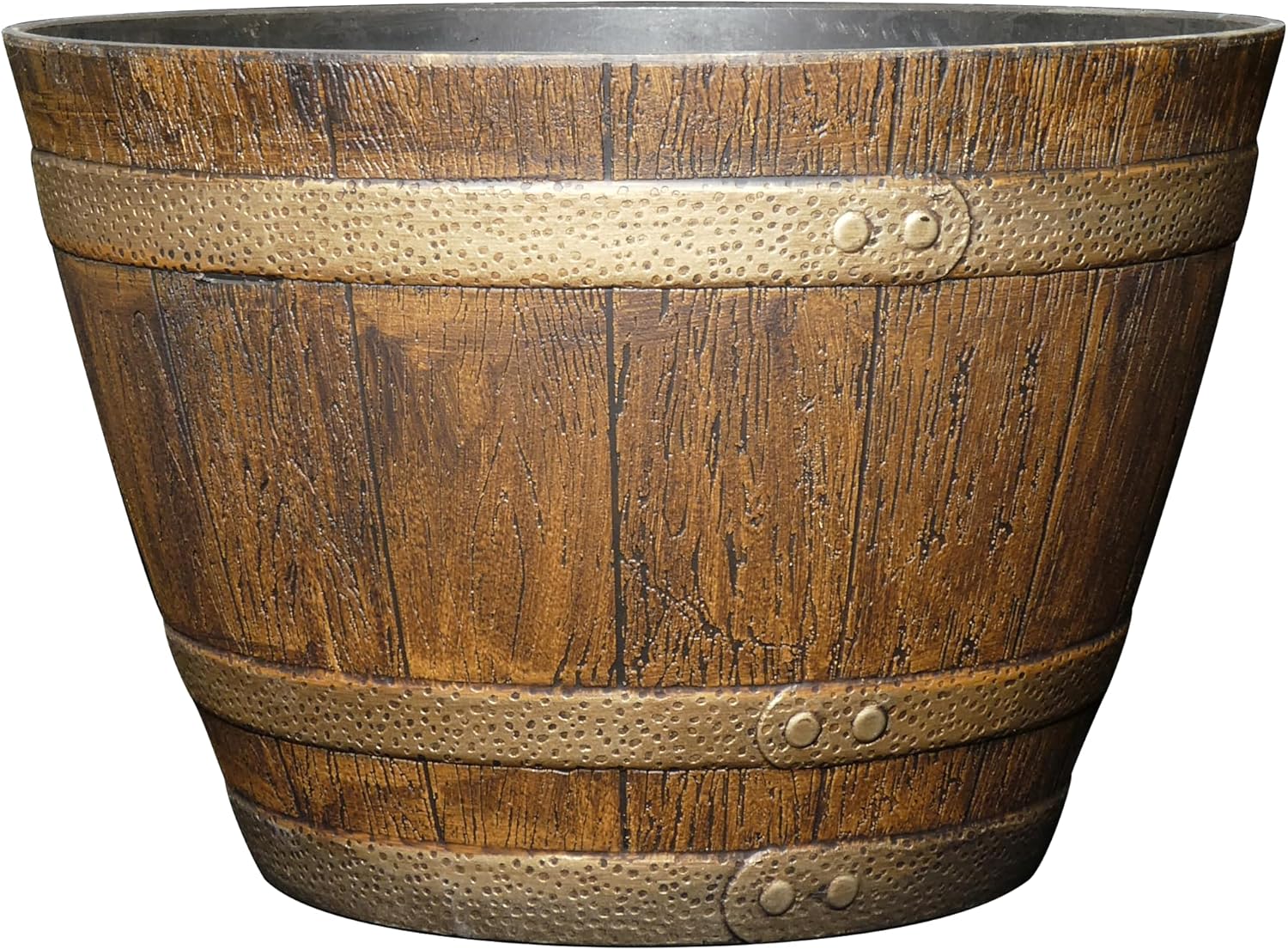
| Capacity | 4.75 gallons |
|---|---|
| Material Type | Resin |
| Other Special Features of the Product | Drainage Hole, Weather Resistant |
| Indoor Outdoor Usage | Outdoor |
This GROWSCAPE Jameson 15" whiskey barrel planter mimics aged oak while staying lightweight thanks to high-density resin construction. It is intended for outdoor use on patios, decks, and entryways and includes drainage holes to prevent overwatering, making it straightforward to use for flowers, herbs, or small vegetable plantings. The weather-resistant, painted finish resists cracking and fading that wooden barrels suffer from, so you get the look of wood without the maintenance. At about 4.75 gallons capacity it fits single larger plants or a mixed container arrangement, and the floor-standing mount means you can place it on hard surfaces without extra support. The main limitations are its modest planting volume compared with full-sized wooden barrels and the synthetic material, which while durable, does not weather like real wood if that is a strict aesthetic priority. It performs well as a decorative, low-maintenance outdoor pot where weight, durability, and drainage are priorities.
Best for: Buyers who prioritize a classic wooden-barrel look with low maintenance and reliable drainage for decorative outdoor container gardening on patios and entryways.
Less Ideal for: Those seeking a very large-capacity or authentic wooden barrel that will age naturally outdoors should consider larger or real-wood alternatives.
- Realistic aged-oak appearance without heavy weight due to resin construction
- Built-in drainage holes to reduce risk of overwatering
- Weather resistant and painted finish for outdoor durability
- Lightweight design easy to move and rearrange
- Capacity is limited to about 4.75 gallons, not ideal for large specimen trees or deep-rooted plants
Verdict: Choose this planter when you want the vintage whiskey-barrel look in a lightweight, weather-resistant container that drains well for outdoor decorative plantings.
Choosing the Right Large Planter for Outdoors: Key Factors to Consider
Material Durability and Weather Resistance
The material a large planter is made from determines how well it stands up to sun, rain, freeze-thaw cycles, and physical wear. Porous clay and terracotta can crack in freezing weather unless they are specifically rated for frost resistance. Metals can corrode unless they have a protective finish, while many modern engineered polymers resist UV degradation and cracking but vary in thickness and brittleness.
Material also affects long-term appearance. Some finishes develop a pleasing patina, others fade or chalk. Think about exposure where the planter will sit and choose materials and coatings designed for that climate to avoid early failure and maintain structural integrity.
Drainage and Root Health
Large planters need effective drainage to avoid waterlogged soil that encourages root rot. The depth and placement of drainage holes, along with whether the design allows for bottom watering or internal reservoirs, influence how you irrigate and how quickly excess water escapes.
Roots in large containers also tend to spread horizontally; adequate soil volume and aeration prevent circling roots and oxygen starvation. Consider whether you will add a layer of drainage aggregate, use a potting mix formulated for containers, or need a planter with built-in features to promote healthy root systems.
Capacity, Shape, and Planting Space
Capacity matters for larger plants because soil volume buffers temperature swings and stores water. Deeper, wider planters give roots room to anchor and access nutrients. Shape influences what you can plant together: tall narrow pots suit columnar specimens, while wide shallow bowls work for mixed arrangements or perennials with spreading root systems.
Also factor in the weight of a full container. Larger soil volumes increase stability but also make the planter heavy to move. Decide whether you need maximum volume for plant health or a size constrained by transport and placement.
Stability and Wind Resistance
Large planters catch wind and can tip if top-heavy or lightweight. Stability depends on base footprint, weight distribution, and whether the planter can be anchored. Some designs are intended to be filled partially with ballast or include wider bases for added resistance.
If the planter will hold tall shrubs or be placed in a windy spot, prioritize wider, lower-profile options or those designed with anchoring points. Stability considerations also affect whether you can safely containerize trees or tall specimens outdoors.
Maintenance, Repairability, and Longevity
Think about how easy it will be to maintain the planter over years. Can it be cleaned, repainted, or patched? Are drainage holes accessible for clearing? Some materials resist staining and require little upkeep, while others may need seasonal protection, such as moving to shelter or applying sealants.
Repairability matters when a planter sustains chips or cracks. A product that can be sealed or patched will usually outlast one that fails catastrophically. Considering long-term maintenance helps you choose an option that fits how much effort you are willing to invest.
Handling, Mobility, and Placement
Large outdoor planters can be bulky and heavy when filled, so plan for how you will position and move them. Features like built-in handles, recessed rims for lifting, or compatibility with plant caddies make a difference. If you rent or change layouts seasonally, mobility may be a higher priority.
Also consider the surface where the planter will sit. Some materials can scratch decking or cause staining, so feet or pads can protect surfaces and improve airflow beneath the pot. Good handling features reduce back strain and allow you to safely reposition plants as light or design needs change.
Sizing for Plant Type and Climate
Match planter size to the plant's mature root needs and the local climate. In hot, dry areas, larger volumes hold more moisture and protect roots from rapid temperature swings. In cool climates, larger soil masses buffer against freeze-thaw cycles but take longer to warm in spring.
When choosing dimensions, think both horizontally and vertically. Trees and shrubs often require deeper pots for anchorage, while many perennials do better with broader surface area for root spread.
- Measure expected root ball dimensions and allow extra room for growth
- Account for insulation needs in cold zones and water retention in hot zones
- Remember full soil weight when planning placement and supports
Soil Mix and Watering Strategies for Large Containers
Use a high-quality container mix that balances moisture retention with drainage. Amendments like coarse perlite, bark, or pumice improve aeration in deep containers where compaction can occur. Avoid using unamended garden soil alone because it compacts and drains poorly in pots.
Watering large planters requires an eye for moisture gradients. Top layers can dry while lower layers stay wet. Consider drip irrigation, porous soaker options, or inserting moisture meters to prevent overwatering. Mulch the surface to reduce evaporation and moderate soil temperature.
- Blend lightweight soil components to reduce total weight
- Use moisture sensors for more accurate irrigation in deep containers
Winter Care and Seasonal Protection
In climates with freezing temperatures, plan for winter protection. Some large planters are sufficiently frost-resistant, but others can crack if waterlogged and frozen. Options include moving containers to sheltered locations, insulating them with bubble wrap or straw, or elevating them to reduce contact with cold surfaces.
Also consider the plants' needs. Some species tolerate container overwintering well, while others require lifted roots or different microclimates. Big planters retain heat better than small ones, but you still need to manage drainage and avoid ice buildup.
- Elevate planters slightly to prevent water pooling at the base
- Allow extra drainage before a freeze and avoid overwatering late in the season
Placement and Visual Considerations
Large planters are both functional and design elements in a garden. Think about sight lines, scale, and proportion to surrounding structures. A single large pot can serve as an anchor, while groups of oversized planters create rhythm and structure.
Also plan for access. Make sure there's room to service plants for pruning, watering, and winterizing without damaging foliage or the container.
- Choose finishes and textures that complement nearby materials
- Allow clearance for watering and maintenance around large pots
Transport, Installation, and Anchoring Options
Large planters may need professional delivery or at least a plan for how to get them into place. If access is tight, consider modular or lightweight designs you can assemble on site. For permanent installations, use anchors or straps designed for outdoor planters to prevent tipping.
If you expect to move containers seasonally, check compatibility with wheeled plant caddies or installed glide systems that handle substantial weight.
- Assess site access and plan for how to lift filled containers
- Consider permanence versus portability when selecting materials and hardware
How We Chose the Best Large Planter for Outdoors
We prioritized attributes that matter for big containers used outdoors and filtered out options that do not meet minimum durability or performance expectations. Our selection criteria emphasized material longevity in outdoor exposure, drainage and root health, structural stability when filled with soil, ease of handling and repositioning, and maintenance needs over multiple seasons. We also considered capacity and shape to suit common plant types like shrubs, patio trees, and large perennials, plus how the planters interface with winter care and frost-prone climates. Excluded from the list were indoor-only containers, decorative-only pots without proper drainage or UV resistance, and fragile materials that routinely fail in outdoor settings. The final shortlist contains units that score well across the measurable criteria above and represent practical choices for gardeners who need larger planting capacity for outdoor use.
FAQ
How deep should a large planter be for small trees or shrubs?
Depth depends on the species, but generally a depth of at least 18 to 24 inches gives roots room to establish for many shrubs and small trees. Some trees need even deeper containers; check the mature root spread and add extra depth to allow comfortable anchorage.
Can I use regular garden soil in a large outdoor planter?
Regular garden soil often compacts in containers and drains poorly. A loose, well-draining container mix with organic matter and aeration amendments is usually better. Mixing in coarse materials helps keep the soil structure open in larger volumes.
What is the best way to prevent a large planter from tipping in high winds?
Choose a planter with a wide, low profile or increase ballast at the base to lower the center of gravity. Anchoring to a stable surface or using straps can help, and planting combinations that keep mass low and evenly distributed reduce tipping risk.
How often should I water a large outdoor planter?
Watering frequency depends on plant type, weather, and soil mix. Large volumes retain moisture longer than small pots, so you may water less often but in larger amounts. Check moisture a few inches down and adjust irrigation rather than relying on a fixed schedule.
Are lightweight composite planters suitable for outdoor use long-term?
Many composite materials are formulated for outdoor use and resist UV and frost, but longevity varies by formulation and thickness. Inspect construction details and look for thicker walls or reinforced rims if long-term outdoor exposure and heavy plants are expected.
Final Verdict
Choosing the right large planter for outdoors comes down to balancing material longevity, drainage, and the soil volume your plants require. Prioritize planters that offer good drainage, stable footing, and materials suited to your climate while accounting for how you will water and move the container. Be realistic about the weight and maintenance you can handle so that the planter supports healthy roots and fits your garden layout over multiple seasons.
