

Note: This article contains affiliate links. If you click on these links and make a purchase, I may earn a small commission at no extra cost to you. This helps support my research and content. Read my full affiliate disclosure here.
If you want to add thriving greenery to a balcony, small yard, or blank wall, the right living wall planter makes the difference between a lasting vertical garden and constant maintenance. Properly chosen planters protect roots, manage water, and simplify planting and seasonal care so your vertical display stays healthy and attractive. This guide covers seven shortlisted Living Wall Planters chosen for common urban and suburban situations. We evaluate installation, drainage and irrigation compatibility, plant capacity, and durability so you can pick the option that fits your site and skill level. Read on to see which styles work best for shallow walls, sunny facades, or sheltered patios before the product list below.
Top Picks at a Glance
| Best Overall The best all-around choice for most situations | Make Good PlantPod Luxe Self-Watering Wall Planters (Set of 6) |  |
| Best Quality Built to a higher standard if you want something more solid | Modern Home Living Wall Galvanized Steel Succulent Planter, 16-Pocket |  |
| Best Value The sweet spot between price and what you get | ZOENHOU 2-Pack 36-Pocket Vertical Felt Wall Planter |  |
| Best Budget The cheapest option that still gets the job done reliably | LITLANDSTAR 18-Pocket Hanging Grow Bags, 2-Pack Wall Planters |  |
| Highest Rated A top-rated pick with lots of positive feedback | NEATOOM 36-Pocket Wall-Mounted Self-Watering Planter System with Timer and Rain Sensor | 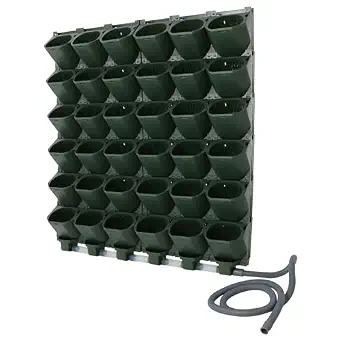 |
| Most Popular A crowd favorite that many people choose with confidence | Ogrmar 36-Pocket Felt Vertical Wall Planter |  |
| Best Seller A high-volume bestseller chosen again and again | Dnnnii 2-Pack Wooden Wall Vase Set |  |
Make Good PlantPod Luxe Self-Watering Wall Planters (Set of 6)

| Unit Count | 6 Count |
|---|---|
| Capacity | 0.1 liters |
| Mounting Type | Wall Mount |
| Material Type | Plastic, Resin |
| Indoor Outdoor Usage | Indoor |
The PlantPod Luxe set provides six compact wall-mounted planters that make it simple to build a vertical indoor display without frequent watering. Each planter has a built-in self-watering reservoir so potted plants and small succulents can go several days to weeks between top-ups depending on plant type. The lightweight plastic/resin construction with a matte finish looks clean and modern and is installed with a single small nail per pod, which minimizes wall damage and makes rearranging straightforward. These are best for small plants and decorative groupings rather than large specimens because the capacity is very limited. The included hangers and consistent shape produce a tidy, uniform look across a wall or hallway. Expect to manage watering schedules for higher-drain plants and to limit plant size because the pods are shallow; also plastic construction is durable but not intended to mimic heavy ceramic. For buyers focused on efficient use of indoor wall space, this set delivers an easy-to-install, low-maintenance solution for casual houseplants.
Best for: Buyers who want a space-efficient, low-maintenance way to create a neat indoor vertical garden and prefer easy installation and minimal upkeep.
Less Ideal for: Not a good fit for people who want to grow larger houseplants, vegetable herbs that need deep soil, or those seeking ceramic or heavyweight planters for a premium look.
- Self-watering reservoir reduces how often you need to water plants
- Lightweight plastic construction is easy to mount and move
- Matte finish and uniform shape create a clean, modern vertical display
- Single-nail installation keeps wall damage minimal and simplifies setup
- Very small capacity unsuitable for larger or fast-draining plants
- Shallow depth limits root growth and plant choices
Verdict: An efficient, low-maintenance set for building compact indoor vertical displays with minimal installation and watering effort.
Modern Home Living Wall Galvanized Steel Succulent Planter, 16-Pocket

| Material Type | Alloy Steel |
|---|---|
| Mounting Type | Wall Mount |
| Other Special Features of the Product | Lightweight, Rust Resistant, Weather Resistant |
| Plant or Animal Product Type | Succulent |
| Indoor Outdoor Usage | Indoor, Outdoor |
This galvanized steel living wall planter is built to create a durable, low-profile vertical display for succulents and other small plants. It mounts on a wall and provides 16 individual cubed pockets so you can arrange dozens of small plants into a compact living artwork. The alloy steel construction with a patina finish is rust resistant and weather resistant, so it works on a protected outdoor wall or indoors without needing frequent replacement. At about 3.6 inches deep the planter stays slim against the wall while still giving each plant a few inches of soil space. It arrives ready to hang and is lightweight for easier installation. Important limitations are the shallow pocket volume, which is best for succulents or other shallow-rooted plants rather than larger perennials, and the metal finish will develop a natural patina over time if left outdoors. If you want a rugged, space-saving vertical display that prioritizes longevity and a tidy modern look, this planter delivers.
Best for: Buyers who want a durable, low-maintenance vertical planter to create a compact succulent living wall and who prioritize long-term performance over deep soil capacity.
Less Ideal for: Not a good fit for gardeners who plan to grow larger or deep-rooted plants or who need large soil volumes per pocket.
- Galvanized alloy steel construction offers rust and weather resistance for outdoor or indoor use.
- 16 individual pocket design makes it simple to arrange many succulents into a cohesive living wall.
- Slim, lightweight profile mounts easily and keeps the display close to the wall.
- Patina finish gives an intentional aged look that hides minor wear.
- Pockets are shallow and intended for succulents or small, shallow-rooted plants only.
- Metal construction can develop additional patina over time when exposed to the elements.
Verdict: A rugged, ready-to-hang steel living wall planter ideal for building a long-lasting succulent display where durability matters.
ZOENHOU 2-Pack 36-Pocket Vertical Felt Wall Planter

| Unit Count | 36 Count |
|---|---|
| Number of Pieces | 2 |
| Number of Levels | 18 |
| Mounting Type | Wall Mount |
| Indoor Outdoor Usage | Indoor, Outdoor |
The ZOENHOU 2-pack vertical wall planter converts vertical surfaces into dense growing space using 36 deep felt pockets per set. Each panel mounts with reinforced metal grommets and is made from breathable, water-retaining felt with a rear layer intended to protect walls from moisture. Typical uses are herb walls, strawberry towers, dense bedding for annuals, or staggered vegetables on balconies and fences where floor space is limited. Notable features include automatic drainage through the felt to prevent overwatering, lightweight construction for easy hanging, and the ability to stack multiple panels to cover larger areas. Practical benefits are expanded growing area in small spaces, simpler irrigation because excess water wicks away, and portability for seasonal storage. Limitations are the felt/metal construction which will need more frequent watering and eventual replacement compared with rigid planters, and limited soil volume per pocket that restricts large root crops. Installation requires sturdy anchors on the wall or fence to support saturated weight.
Best for: Buyers who need to maximize planting area on fences, balconies, or small yards and prefer a low-effort system for herbs, strawberries and annuals.
Less Ideal for: Gardeners focused on long-term planting of large, deep-rooted vegetables or those who want permanent rigid planters for heavy, infrequent maintenance.
- Large total pocket count (36 pockets per panel) increases planting density
- Breathable felt with a water-preserving rear layer reduces wall staining and helps moderate soil moisture
- Reinforced metal grommets make hanging and stacking multiple panels straightforward
- Lightweight and portable for seasonal relocation or storage
- Designed for indoor and outdoor use so it fits balconies, fences, patios and interiors
- Pockets hold limited soil so only small plants or shallow-rooted vegetables are suitable
- Felt material requires more frequent watering and will wear faster than rigid planters
- Manufacturer lists material as metal in one area creating mixed material expectations
Verdict: If you want to turn a vertical wall into a high-density herb or strawberry bed, this lightweight 36-pocket felt panel pair is an easy, space-saving solution.
LITLANDSTAR 18-Pocket Hanging Grow Bags, 2-Pack Wall Planters

| Included Components | 18 Pockets |
|---|---|
| Unit Count | 2 Count |
| Capacity | 35.6 liters |
| Mounting Type | Wall Mount |
| Material Type | Non-Woven |
These LITLANDSTAR grow bags are a budget-friendly way to build a living wall without heavy planters or construction. Each pack includes two horizontal felt planters with 18 flat pockets that hang from metal eyelets so you can mount them on a wall, fence, or railing. The non-woven felt is breathable and drains well, which helps roots avoid waterlogging and encourages healthier growth for herbs, annuals, and small vegetables. Setup is simple: attach with nails, S-hooks, zip ties, or rope, fill pockets three quarters full with potting mix and a water-retention amendment, then plant seedlings. The lightweight construction keeps cost and installation effort low, but the felt is thinner than rigid planters so expect some sagging when heavily watered or when planted with larger root systems. These are best for shallow-rooted or compact plants and for creating a quick green feature across a balcony or small exterior wall. For someone watching their budget, this gives a large planted surface area for minimal outlay, though it trades off long-term structure and heavy-duty durability compared with rigid modular systems.
Best for: Buyers who want an inexpensive, easy-to-install living wall solution for herbs, annuals, or small vegetables and prefer a low-cost way to green a balcony or fence.
Less Ideal for: Gardeners who need a permanent, heavy-duty vertical system or who plan to grow large, deep-rooted perennials should choose a sturdier modular planter instead.
- Provides 18 planting pockets per unit for high plant density in a small footprint
- Breathable felt material improves drainage and reduces root rot risk
- Simple wall-mounting with metal eyelets works with nails, hooks, or zip ties
- Includes two units so you can cover more wall area or stagger plantings
- Non-woven felt can sag when wet or under heavier plants and lacks rigid support
- Not intended for deep-rooted or large plants due to shallow pocket depth
Verdict: A low-cost, easy-to-hang pair of felt grow bags that delivers a lot of planted surface area for building a living wall on a budget.
NEATOOM 36-Pocket Wall-Mounted Self-Watering Planter System with Timer and Rain Sensor

| Number of Planting Baskets | 36 |
|---|---|
| Hose Length | 9.84 feet |
| Drainage Pipe Length | 6.56ft |
| Water-proof Level | IPX6 |
| Power Supply | Battery Powered (2 x AA) |
This NEATOOM wall-mounted planter converts vertical space into a 36-plant living wall with an integrated drip irrigation system and timer. Installation requires mounting the rectangular frame, fitting the 36 leak-proof soil bags, and connecting the included 9.84 ft drip hose to a threaded water source. Once set up you can program watering interval (1 hour to 30 days) and duration (1 second to 999 minutes) while the IPX6 rain sensor pauses irrigation on wet days. The adjustable drip heads let you set small, medium, or strong flow to suit herbs, flowers, or small vegetables, and the stackable layout helps recycle runoff to lower water use. The kit is battery powered using two AA cells for the timer, and the plastic PP/PE construction and stated 82 kg load capacity make it suitable for a stable living wall on a balcony or sheltered exterior wall. Limitations include the need for a threaded faucet or pressurized source, seasonal winter storage of the irrigation components, and the requirement to keep the timer battery compartment dry.
Best for: Buyers who want a dependable, low-maintenance living wall for a balcony or sheltered exterior wall and prioritize automated, water-conserving irrigation that can be scheduled and adjusted.
Less Ideal for: People without an accessible threaded water supply or those who need a portable, freestanding planter solution.
- Complete kit includes frame, 36 leak-proof planting bags, timer, drip hose, and drainage pipe for a ready living wall
- Programmable timer with wide interval and duration range plus a rain sensor to avoid overwatering
- Adjustable drip heads offer small, medium, and strong flow to match different plant water needs
- Stackable design and drip irrigation reduce water waste by reusing runoff
- Made from PP/PE with a stated overall load capacity of about 82 kg for secure mounting
- Requires a faucet with external threads or a pressurized water source to operate
- Timer runs on two AA batteries and the battery compartment must be kept dry
- Not intended for horizontal or inverted installation and irrigation parts must be removed for winter
Verdict: A reliable, ready-to-install vertical planter with programmable irrigation and a rain sensor for automated, water-saving living walls.
Ogrmar 36-Pocket Felt Vertical Wall Planter

| Material Type | Felt |
|---|---|
| Number of Pieces | 36 |
| Mounting Type | Wall Mount |
| Indoor Outdoor Usage | Indoor |
| Included Components | Plant Hanger |
The Ogrmar 36-pocket wall planter is a felt grow bag that turns any vertical surface into a living wall by providing 36 individual planting pockets. It is typically hung using the reinforced metal grommets and works well for herbs, annual flowers, strawberries, succulents, or small vegetables where you want to maximize vertical space. The breathable felt holds moisture while allowing drainage, which helps roots avoid waterlogging and supports healthy growth. Lightweight construction and included hanging holes make installation straightforward on fences, railings, or walls and allow easy removal for repositioning. Practical benefits include a large planted area in a compact footprint and simple expansion of green space on balconies or patios. Important limitations are that felt pockets can dry faster in hot, sunny locations so more frequent watering may be required, and the lightweight material offers limited insulation or heavy-soil support for larger plants. Expect to monitor irrigation and select smaller, shallow-rooted varieties for best results.
Best for: Gardeners who want to add a prominent living wall quickly and affordably and who prefer social-proofed, low-commitment solutions for small edibles and ornamentals.
Less Ideal for: People seeking a permanent, heavy-duty planter for large shrubs or trees or those who want minimal irrigation maintenance in hot climates.
- 36 individual pockets maximize vertical planting area
- Breathable felt fabric retains moisture while permitting drainage
- Reinforced grommets simplify hanging and make it easy to move
- Lightweight design is easy to install and reposition
- Felt construction can dry out faster in hot, exposed sites requiring more frequent watering
- Not suitable for large, heavy soil volumes or big root systems
Verdict: A simple, high-capacity felt wall planter for creating an eye-catching living wall of herbs and small plants with minimal installation fuss.
Dnnnii 2-Pack Wooden Wall Vase Set

| Material Type | Wood |
|---|---|
| Finish Types | Lacquered |
| Mounting Type | Wall |
| Number of Pieces | 2 |
| Additional Features | Frostproof |
These Dnnnii wall vases are a simple, decorative solution for adding small plants or faux arrangements to entryways, hallways, bathrooms, or living rooms. Each rectangular piece is made from lacquered wood and mounts to the wall, functioning as both art and a shallow planter for lightweight greenery or dried flowers. The pair arrives ready to hang and their farmhouse-geometric look blends with rustic or boho interiors. Notable features include a frostproof finish for durability and a compact footprint that fits narrow spaces where floor planters do not. Because the planter is shallow and made of wood, it is best used with potted succulents in waterproof liners or with artificial stems rather than heavy, water-soaked soil. Installation is straightforward but requires secure wall mounting to support the weight of plants and liners. For buyers who prioritize low-risk, fuss-free styling, these vases offer an attractive, low-maintenance way to introduce greenery without major commitment.
Best for: Buyers who want an easy, low-maintenance way to add greenery or decorative stems to small walls and prefer a coordinated farmhouse look without committing to large planters.
Less Ideal for: Gardeners who need deep, regularly watered planters for larger live plants or those who prefer metal or ceramic vessels for constant moisture use.
- Lacquered wood finish gives a warm farmhouse look suitable for multiple rooms
- Comes as a pair to create a coordinated display or staggered arrangement
- Compact, narrow profile fits entryways and tight wall spaces
- Frostproof finish adds surface durability for occasional damp environments
- Shallow interior and wooden construction limit use with regularly watered, heavy soil plants
- Requires proper wall mounting hardware for safe installation
Verdict: A safe, attractive pair of wall-mounted wooden vases that add low-maintenance farmhouse style to narrow spaces.
Choosing the Right Living Wall Planter: Key Factors to Consider
Installation & Mounting Method
How a living wall planter mounts to the wall affects where you can use it and how much load the structure must bear. Surface-mounted panels that screw directly into studs are straightforward for many walls, while systems that rely on rails or hanging hardware spread weight and simplify removal. Consider the wall material and whether you have access to studs or masonry anchors.
Mounting method also influences long-term maintenance. Systems that detach easily let you water and replant at ground level, while permanently fixed pockets require ladders or scaffolding for higher installations. Think about who will care for the plants and how often access will be needed.
Drainage and Water Management
Vertical planters must prevent waterlogging while retaining enough moisture for plants. Look for built-in drainage pathways, removable liners, or wicking layers that balance retention and runoff. Poor drainage leads to root rot and uneven plant health across the wall.
Water management also includes how excess water is collected and directed away from the wall and foundation. Consider whether the planter directs runoff into a gutter, a catch tray, or out away from the building. If you plan to use automatic irrigation, check that the system integrates with drip lines or includes distribution channels to avoid oversaturation in lower pockets.
Planting Depth and Pocket Size
Different plants need different root volumes. Shallow pockets suit succulents, trailing vines, and annuals, while herbs and small perennials require deeper pockets to thrive. Assess pocket depth and total soil volume to match the species you want to grow.
Also evaluate pocket spacing and how plants will interact as they mature. Crowded pockets can cause shading and competition for moisture, so plan for growth and potential future thinning or transplanting when choosing capacity.
Material and Weather Resistance
Materials determine how long a living wall planter lasts outdoors. UV-stabilized plastics resist cracking and color fade, while metal frames need coatings to prevent corrosion. Natural fabrics can work for sheltered areas but degrade faster in direct sun and driving rain.
Think about your climate: freeze-thaw cycles, intense sun, salt air near coasts, and heavy summer storms all influence material choice. Durable materials reduce replacement frequency and protect the building surface beneath the planter.
Irrigation Options and Compatibility
Consistent moisture is crucial for vertical plantings. Some planters are designed to work with drip irrigation, integrated reservoirs, or wicking inserts. Determine whether you want a manual hand-watered system or a low-maintenance automatic solution and select a planter that accommodates that approach.
Irrigation compatibility also affects installation complexity. Systems that accept standard drip tubing simplify adding timers and emitters, while integrated reservoirs may require more careful refilling but reduce watering frequency.
Maintenance Access and Replaceability
Regular pruning, replanting, and pest checks are part of living wall care. Choose a planter system that allows easy access to individual pockets or that can be removed in sections for ground-level work. Systems that force you to work from ladders increase the time and risk associated with care.
Consider also how easy it is to replace liners, pockets, or mounting hardware over the life of the installation. Replaceable components extend useful life without full system teardown.
Choosing Plants for Vertical Conditions
Select plants that tolerate the microclimate created by vertical growth. Upper pockets receive more sun and dry faster, while lower pockets stay cooler and wetter. Group plants with similar light and water needs together to reduce maintenance and uneven growth.
Use shallow-rooted species in narrow pockets and reserve deeper pockets for herbs and small perennials. Trailing plants help disguise pocket edges and create a fuller look over time.
- Match plant root depth to pocket depth
- Plant sun-loving species higher on south-facing walls
- Use drought-tolerant varieties for exposed locations
Preparing the Mounting Surface
Inspect the wall for structural soundness before installation. Reinforce or add blocking behind the finish material if the planter will hold significant weight. For masonry walls, use appropriate anchors and verify load ratings.
Protect the wall finish with a moisture barrier or drip edge if the planter does not include one. This prevents staining and long-term water damage behind the installation.
- Locate studs or use rated masonry anchors
- Install a weather-resistant barrier if needed
- Allow an air gap behind panels to promote drying
Irrigation Strategies for Living Walls
Decide between manual watering and an automated drip system. For larger walls or remote installations, drip irrigation with emitters and a timer keeps moisture consistent. For smaller or accessible walls, hand watering may suffice when done regularly.
If using drip tubing, route lines so each pocket gets adequate flow. Test run time and emitter placement to avoid oversaturating lower pockets.
- Consider a timer for consistent schedules
- Use pressure-compensating emitters on tall installations
- Include an overflow path to protect the wall
Seasonal Care and Winter Considerations
Plan for seasonal changes in light and temperature. In colder climates, some planters should be emptied or plants moved indoors if freezing will damage the rootball or planter material. In mild climates, pruning and fertilizing schedules differ from harsher regions.
Reduce irrigation in dormant seasons but continue checks for pests and water pooling. Protect sensitive species with frost cloth or temporary covers when needed.
- Adjust watering frequency for cooler months
- Move tender plants indoors before first frost
- Inspect mounts and hardware after winter storms
Aesthetics and Design Layouts
Think about color, texture, and growth habit to create visual impact. Alternate foliage shapes and colors to build contrast and avoid a monotonous appearance. Use trailing species at the edges to soften the panel outline.
Plan for vertical and horizontal patterns that complement the architecture. Dense, layered plantings create a lush look but require closer maintenance than sparse, sculptural arrangements.
- Sketch plant placement before filling pockets
- Balance evergreen and seasonal interest
- Allow spacing for mature spread
How We Chose the Best Living Wall Planter
We focused on attributes that directly affect performance and longevity in vertical plantings. Our editorial filters prioritized installation method and mounting security because a stable attachment reduces risk to plants and structures. Drainage and water management were required criteria since vertical planters must shed excess water without drowning roots. Planting capacity and pocket depth were used to assess what species each planter can support, from shallow succulents to medium-rooted herbs. Materials and UV resistance were examined to predict outdoor durability. We also considered irrigation compatibility, including whether a planter accepts drip lines or passive wicking inserts, because consistent moisture control often determines success. Ease of maintenance and access for replanting or pruning factored into selections as well. We excluded purely decorative panels without true planting depth and any wall systems that require professional installation beyond standard household tools. The final shortlist balances real-world installation constraints, water control, and the range of plants homeowners commonly want to grow on a living wall.
FAQ
Can living wall planters damage my exterior wall?
They can if mounted without a moisture barrier or proper drainage. Choose systems that direct runoff away from the structure and install a protective barrier between the planter and wall. Regular inspections will catch any issues early.
What plants generally do best in a living wall planter?
Shallow-rooted, drought-tolerant plants like succulents, certain herbs, and trailing perennials are common choices. Deeper pockets can support herbs and small perennials that need more root volume. Group plants by light and water needs for best results.
Do living wall planters need automatic irrigation?
Not always. Small or easily accessed walls can be hand-watered, but larger or taller installations benefit from drip irrigation and a timer to maintain consistent moisture and reduce labor.
How do I prevent lower pockets from staying too wet?
Ensure the planter has even drainage and consider using emitters with lower flow rates for upper pockets. Wicking layers and overflow channels help balance moisture. Periodic checks and adjusting irrigation timing also prevent saturation.
Are fabric pocket systems durable outdoors?
Fabric pockets can work well in sheltered locations but typically degrade faster under strong sun and heavy rain. Look for UV-stabilized materials and plan for replacement intervals if used in exposed sites.
How often will I need to replant or refresh a living wall?
Frequency depends on plant selection and maintenance intensity. Fast-growing or seasonal plants may need replacement yearly, while a well-planned mix of perennials can go several years with periodic thinning and replanting.
Final Verdict
When choosing a living wall planter, prioritize mounting security, drainage, and the planting depth you need for the species you want to grow. Match irrigation approach to the installation size and access so watering is consistent without oversaturating lower pockets. Balance material durability with the exposure at your site and plan for maintenance access. By focusing on these tradeoffs you can select a system that fits your space and the level of care you are willing to invest, resulting in a sustainable and attractive vertical garden.
