

Note: This article contains affiliate links. If you click on these links and make a purchase, I may earn a small commission at no extra cost to you. This helps support my research and content. Read my full affiliate disclosure here.
Growing pumpkins that set heavy, healthy fruit starts in the soil. The right natural fertilizer for pumpkins improves soil structure, feeds vines during key growth stages, and encourages the microbes that make nutrients available. In this guide we shortlisted seven top natural fertilizer options suited for pumpkins, evaluating nutrient profile, ease of application, and effects on soil life. Read on to learn which fertilizer styles match your garden size and growing plan, with practical guidance on timing and use to help pumpkins produce larger, healthier fruit.
Top Picks at a Glance
| Best Overall The best all-around choice for most situations | Prevegenics Liquid Pumpkin Fertilizer (32 fl. oz.) |  |
| Best Quality Built to a higher standard if you want something more solid | Down To Earth Bio-Fish Organic Fertilizer, 7-7-2, 25 lb |  |
| Best Value The sweet spot between price and what you get | Brut Organic Worm Castings, 5 lb |  |
| Best Budget The cheapest option that still gets the job done reliably | 2nd Nature Organic BSFL Frass Pellets 2.2 lb Shake-n-Spread |  |
| Highest Rated A top-rated pick with lots of positive feedback | Wiggle Worm Pure Worm Castings Organic Fertilizer, 15 lb |  |
| Most Popular A crowd favorite that many people choose with confidence | Dr. Earth Organic Tomato, Vegetable & Herb Fertilizer (64 oz) |  |
| Best Seller A high-volume bestseller chosen again and again | TPS NUTRIENTS Pumpkin Fertilizer Liquid Plant Food, 8 oz |  |
Prevegenics Liquid Pumpkin Fertilizer (32 fl. oz.)

| Item Form | Liquid |
|---|---|
| Specific Uses For Product | Pumpkin Growth, Gourd Growth |
| Target Species | pumpkins and gourds |
| Unit Count | 32 Fluid Ounces |
Prevegenics Liquid Pumpkin Fertilizer is a ready-to-mix liquid feed aimed at growers who want faster, measurable gains in pumpkin and gourd vigor and yields. It supplies 9% nitrogen with 3% phosphorus and 6% potassium plus a suite of chelated micronutrients, which supports leafy growth, stronger roots, and better flowering when applied to foliage or soil. Typical use is diluting to the label rate and applying regularly through the growing season as a foliar feed or soil drench to correct deficiencies and boost productivity. The chelated minerals improve uptake in varied soil conditions and the liquid form makes it easy to tank-mix for spot applications or broadcast feeding. Limitations are that exact mixing ratios are left to the product label and aggressive nitrogen content can encourage foliage over fruit if overapplied, so users must follow timing and dilution closely. For performance-focused gardeners it offers a concentrated, convenient way to push growth and fruit set when used as part of a broader fertility plan.
Best for: Gardeners who prioritize measurable performance and want a concentrated, easy-to-apply fertilizer to drive rapid growth and improve pumpkin yields when carefully timed.
Less Ideal for: Casual or beginner gardeners who prefer low-maintenance, premeasured slow-release feeds or those unwilling to follow dilution and timing instructions closely.
- High nitrogen formula (9% N) promotes rapid leafy growth and vigor
- Includes 3% phosphorus and 6% potassium to support root development and fruiting
- Chelated micronutrients improve nutrient uptake across different soils
- Liquid format is easy to dilute and apply as foliar spray or soil drench
- Mixing ratio on the listing is unspecified, requiring consultation of the label before use
- High nitrogen level can favor foliage over fruit if applied at the wrong stage
Verdict: A concentrated liquid feed designed for growers who want to push pumpkin growth and yields with a high-nitrogen, micronutrient-rich formula.
Down To Earth Bio-Fish Organic Fertilizer, 7-7-2, 25 lb

| Item Form | Granules |
|---|---|
| Specific Uses For Product | Organic,Potting |
| Mixing Ratio | 7:7:2 |
| Unit Count | 400 Ounce |
Down To Earth Bio-Fish is an organic granular fertilizer with a 7-7-2 N-P-K ratio designed to feed heavy-feeding crops like pumpkins, tomatoes, and cole crops. It is typically worked into planting beds, container mixes, or planting holes according to the mixing directions and can be applied through the growing season to support continued vegetative growth and fruit development. The marine-based formulation supplies readily available nitrogen and phosphorus along with organic matter that helps improve soil biology over time. Practical benefits include strong early growth for vines, better flowering and fruit set on heavy feeders, and OMRI listing for organic production. The product comes in a large 25 lb bag that covers full garden beds and larger plantings. Limitations are that it is primarily a general fertilizer rather than a pumpkin-specific formula, so growers may still need to monitor soil calcium and potassium separately for blossom end rot and fruit quality, and granular organics act slower than synthetic fertilizers so results build over weeks rather than days.
Best for: Gardeners who prioritize strong, sustained growth for heavy-feeding outdoor vegetables and want an OMRI-listed organic fertilizer to support vines and fruit set.
Less Ideal for: Growers looking for rapid nutrient corrections or a specialty pumpkin mix addressing calcium or potassium needs should consider targeted supplements or a blended program.
- OMRI-listed organic marine-based formula suitable for organic production
- Balanced 7-7-2 N-P-K that supports vigorous vegetative growth and flowering
- Granular form easy to mix into beds, planting holes, or container mixes
- Large 25 lb bag provides enough product for multiple plantings or larger garden beds
- Not specifically formulated for pumpkins so secondary nutrients like calcium and potassium may need separate attention
- Granular organic nutrients release slowly compared with synthetic fertilizers
Verdict: Choose this product when you want an OMRI-listed, marine-based organic fertilizer that reliably feeds heavy-feeding pumpkins and supports steady vine and fruit production.
Brut Organic Worm Castings, 5 lb

| Item Form | Granules |
|---|---|
| Specific Uses For Product | Gardening,Organic |
| Target Species | All plants |
| Mixing Ratio | 1:5 |
Brut Organic Worm Castings function as a concentrated, natural soil amendment you mix into potting mixes or top-dress garden beds and raised beds. Typical use is mixing at the recommended 1:5 ratio for new indoor plants, sprinkling a cup around established houseplants, or working into outdoor planting holes and beds according to the brand directions. The product is OMRI/CDFA listed and produced in controlled conditions, which supports consistent nutrient content and beneficial microbial life that help roots establish, improve soil structure, and increase moisture retention without burning plants. Practical benefits for raised garden beds include improved aeration, slow-release nutrients, and a boost in microbial activity that supports long-term fertility. Limitations are that it is not a complete NPK fertilizer for immediate heavy feeding needs and larger beds require significant quantities to hit the suggested per-square-foot rates, so frequent applications or bulk purchases may be needed for big projects.
Best for: Gardeners who prioritize dependable, organic soil improvement for raised beds and container gardens and prefer predictable, low-risk amendments that support long-term soil health.
Less Ideal for: Those needing immediate, high-NPK feeding for heavy-feeding crops or gardeners who want to amend very large beds without buying supplemental bulk material.
- Certified organic and produced indoors for consistent purity
- Rich in beneficial microbes that improve soil structure and plant vigor
- Easy-to-use granular form suitable for mixing or top-dressing
- Not a standalone high-NPK fertilizer for rapid nutrient correction
- Five-pound bag may be small for large raised beds and repeated seasonal use
Verdict: Use this OMRI/CDFA-listed worm castings product to reliably build long-term fertility and microbial health in raised beds and containers.
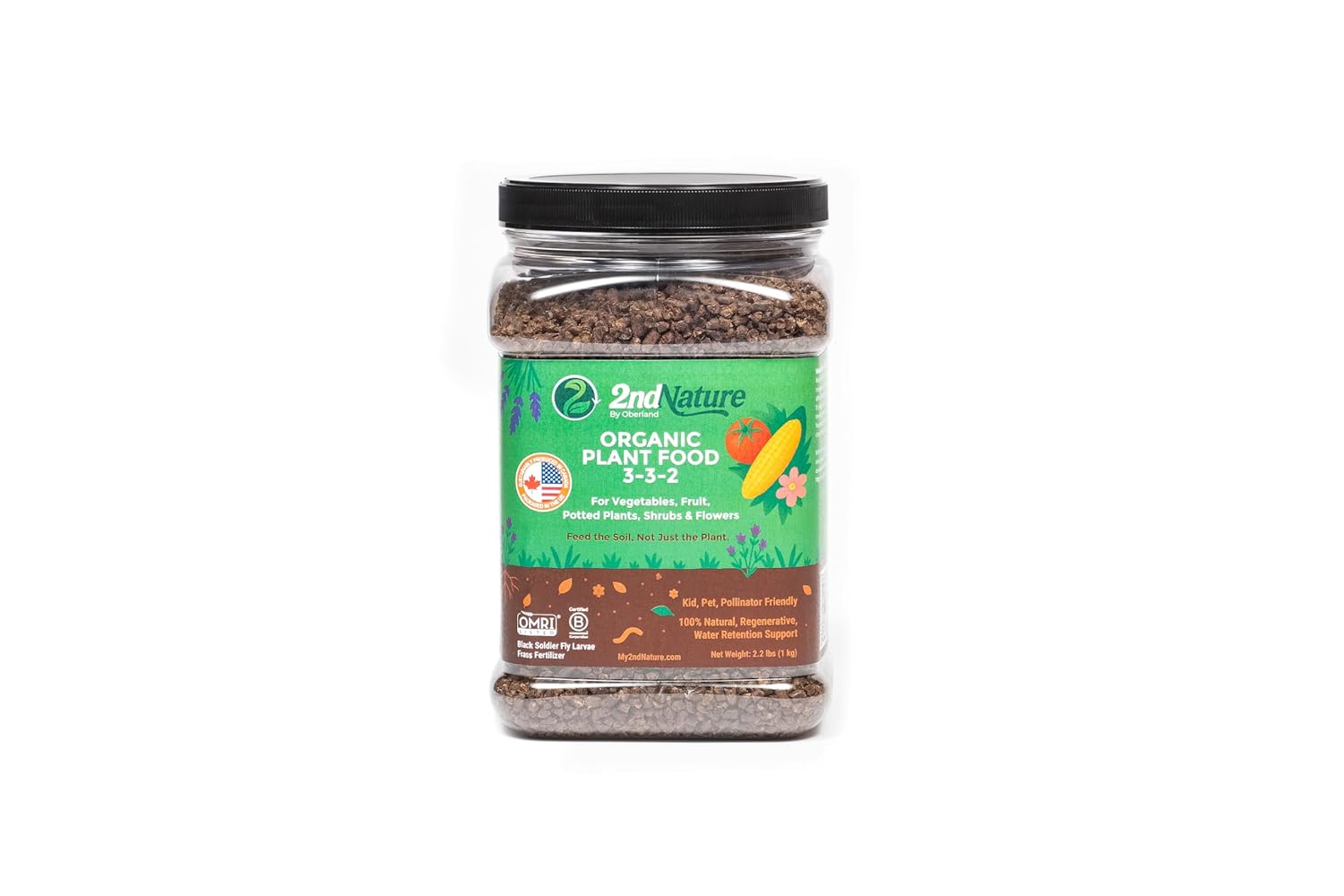
2nd Nature Organic BSFL Frass Pellets 2.2 lb Shake-n-Spread
| Item Form | Pellet |
|---|---|
| Application Method | Shake-n-Spread |
| Specific Uses For Product | Plant Growth, Root Development, Soil Conditioning |
| Mixing Ratio | 3:3:2 |
| Ingredients | 100% Black Soldier Fly Larvae |
This 2nd Nature product is a pelletized organic fertilizer made from black soldier fly larvae frass, packaged in a resealable Shake-n-Spread container for easy application. Typical use is sprinkling the pellets around the base of vegetables, ornamentals, and container plants, or working a light layer into topsoil to support root development and steady nutrient availability. Key features include an NPK ratio of 3-3-2, pelleted form for clean handling, and OMRI listing for organic gardening. Practical benefits are improved root strength, slow-release nitrogen and phosphorus to support foliage and blooms, and added chitin that can boost plant defenses. The pellet format also helps with even distribution and reduced mess compared with loose compost. Limitations: the nutrient levels are moderate so larger pumpkin plants may need supplemental feeding during heavy fruit set, and pellets will release slowly so effects are not immediate for transplants needing a quick boost. Follow package mixing guidance for soil amendments and side dress heavy feeders as needed.
Best for: A budget-minded home gardener seeking an easy-to-use, certified organic fertilizer to support steady growth and healthier roots for pumpkins and other garden plants.
Less Ideal for: Growers needing rapid correction of nutrient deficiencies or those managing very large, high-yield pumpkin plots should look to higher-analysis or supplemental feeds.
- OMRI-listed organic frass made from 100% black soldier fly larvae
- Pellet form in a resealable Shake-n-Spread container for tidy, even application
- Balanced 3-3-2 NPK supports foliage, roots, and resilience
- Contains chitin and micronutrients that can improve root strength and pest resilience
- Moderate NPK means heavy-feeding crops may need additional fertilizer during peak fruiting
- Slow-release action provides gradual benefits rather than immediate correction
Verdict: An affordable, OMRI-listed pellet fertilizer that delivers steady, organic nutrition and root support ideal for small to medium pumpkin patches.
Wiggle Worm Pure Worm Castings Organic Fertilizer, 15 lb

| Item Form | Pure earthworm castings |
|---|---|
| Specific Uses For Product | Soil Conditioning |
| Unit Count | 240 Ounce |
| OMRI Listed | Yes |
Wiggle Worm Pure Worm Castings is a straightforward organic soil amendment that supplies water-soluble nutrients and a boost of beneficial microbes to garden beds, containers, and lawns. It is used by mixing a portion into potting mixes, adding a thin top dressing to established plants, working into planting holes for transplants, or brewing into a quick casting tea for fast uptake. Notable features include its pure castings formulation with screening to remove debris and worm eggs and an OMRI listing that makes it suitable for organic gardens. Practical benefits are improved soil aeration and water retention, enhanced root development, and slow-release nutrition that reduces the need for frequent feeding. The product is non-burning and odorless, so it is safe for use around seedlings and mature plants. Limitations are that a single 15 lb bag covers a modest area so larger lawns or multiple raised beds will require multiple bags, and because it is an amendment rather than a complete fertilizer you may still need to supplement specific nutrients depending on soil test results.
Best for: Gardeners seeking an all-purpose organic soil builder to improve soil health and root development across flower beds, vegetables, and containers who prefer low-risk, easy-to-use amendments.
Less Ideal for: People who need large-scale bulk fertilizer for extensive lawns or those looking for a single product to meet precise N-P-K requirements without soil testing.
- 100% pure worm castings that add beneficial microbes and plant-ready nutrients
- OMRI listed for organic use and safe around seedlings due to non-burning formula
- Versatile application methods: top dressing, soil mix-in, planting hole amendment, or tea
- Improves soil aeration and water retention to support stronger root growth
- 15 lb bag provides only modest coverage for larger gardens or lawns
- Not a complete fertilizer so specific nutrient gaps may still require testing and supplementation
Verdict: A safe, OMRI-listed organic soil amendment that reliably improves soil structure and root health for gardeners who want an easy, low-risk way to boost plant vigor.
Dr. Earth Organic Tomato, Vegetable & Herb Fertilizer (64 oz)

| Unit Count | 64 Ounce |
|---|---|
| Item Form | Granules |
| Specific Uses For Product | Organic |
| Target Species | Herb |
| Coverage | Medium |
This granular organic fertilizer is designed to boost vegetable and herb production by supplying balanced nutrients and soil biology support. It is typically broadcast into beds, mixed into potting mixes, or applied at planting and midseason for a nutritional lift; the manufacturer recommends reapplying every six weeks for containers. Notable features include a fully organic ingredient list, fast but sustained nutrient release, and a blend of probiotic microbes plus ecto and endo mycorrhizae intended to improve nutrient uptake and drought tolerance. In practice that means healthier root systems and potentially better yields and flavor in crops like cucumbers when used as part of an organic program. Limitations are that it is a medium coverage product in a 64 ounce bag so larger plots will need more frequent purchases, and it contains phosphorus so local runoff rules should be checked before use. Follow the directions for pH and application timing to avoid overapplication in small containers.
Best for: Gardeners who prioritize organic soil health and want a single, biology‑focused fertilizer to support vegetables like cucumbers in beds or containers.
Less Ideal for: Large‑scale growers seeking a bulk, high‑coverage fertilizer or those who must avoid phosphorus due to local regulations should consider other options.
- 100 percent organic formula suitable for certified organic gardens
- Contains beneficial microbes and eight strains of mycorrhizae to support root health and nutrient uptake
- Granular form releases nutrients quickly and continues feeding for several months
- Works for beds, raised planters and containers and can be used at planting, transplanting or midseason
- Bag is medium coverage so not economical for very large vegetable plots
- Includes phosphorus which may be restricted in some local jurisdictions
Verdict: Choose this product if you want an organic, microbe‑rich granular fertilizer that supports root health and steady feeding for cucumber and other vegetable plantings.
TPS NUTRIENTS Pumpkin Fertilizer Liquid Plant Food, 8 oz

| Item Form | Liquid |
|---|---|
| Application Method | Foliar spray, Soil drench |
| Target Species | Pumpkin, Squash, Gord |
| Unit Count | 8 Fluid Ounces |
This 8 oz TPS NUTRIENTS Pumpkin Fertilizer is a concentrated liquid plant food designed for foliar spray or soil drench application to pumpkins, squash, and gords. You mix the concentrate and apply it directly to vines and leaves or to the soil around plants to encourage stronger vine growth, fuller foliage, and better fruit set. The formula emphasizes higher potassium and balanced nutrition geared toward fruit development and root health, which is useful during bloom and early fruit growth. Its small bottle is convenient for gardeners who want to treat a few plants or try a specialty product before committing to larger quantities. Because coverage is listed as low, it is best used for targeted treatment on individual plants, container-grown pumpkins, or small patches rather than whole-field feeding. The liquid format allows quick uptake when applied correctly, but frequent mixing and careful measuring are needed with the concentrate to avoid overapplication.
Best for: Gardeners growing a few pumpkins or container-sown squash who want a specialty, fruit-focused fertilizer and prefer products with clear product details and user feedback.
Less Ideal for: Large-scale growers or those who need to feed many plants at once should choose a higher-volume fertilizer designed for broad coverage.
- Concentrated liquid formula for foliar or soil drench application
- Targets pumpkins and related squash with a high-potassium focus to support fruit set
- Small 8 oz bottle is easy to store and suitable for trials or small gardens
- Promotes vine, leaf, and root development for healthier plants and better fruit uptake
- Low coverage means one bottle treats a limited number of plants
- Requires careful mixing and measurement to avoid overapplication
Verdict: A compact, fruit-focused liquid concentrate that is ideal for gardeners who want targeted nutrient support to boost pumpkin vine growth and fruit set.
Choosing the Right Natural Fertilizer for Pumpkins: Key Factors to Consider
Nutrient Balance and Ratios
Pumpkins need a mix of nutrients at different stages: nitrogen for early leaf and vine growth, phosphorus for root development and flowering, and potassium for fruit set and size. A natural fertilizer with a clear nutrient analysis lets you match inputs to growth stages. Too much nitrogen during flowering can prolong leafy growth at the expense of fruit, while inadequate potassium limits fruit size and rind quality.
Look for fertilizers or amendments that either provide a balanced N-P-K or pair well with complementary products. For example, a higher-nitrogen amendment applied early can be followed by a potassium-rich top dressing as fruits form. Understanding the ratios helps you plan feeding so nutrients are available when pumpkins need them most.
Soil Biology and Organic Matter
Natural fertilizers often contribute organic matter that feeds soil microbes. Those microbes mineralize nutrients, improving availability over weeks and seasons rather than creating a quick flush of soluble nutrients. Better soil biology also enhances water retention and root growth, both important for heavy pumpkin fruit.
Consider options that include composted materials, humates, or microbial inoculants if your soil is depleted. These inputs improve structure and nutrient cycling but act more slowly than soluble feeds, so combine them with timely nutrient sources if you need faster results.
Release Pattern and Timing
Different natural fertilizers release nutrients at different rates depending on particle size, processing, and biological activity. Blood meal and fresh manures release nitrogen quickly, while compost, bone meal, and rock powders release more slowly as microbes break them down.
Match release pattern to pumpkin growth stages: quicker-release nitrogen early, then slower-release phosphorus and potassium as plants flower and fruit. Also plan applications around weather and soil temperature since cold soils slow microbial activity and nutrient release.
Application Method and Garden Scale
How you apply a fertilizer affects effectiveness and labor. Granular amendments are easy to broadcast for patch planting or incorporate into hills. Liquid compost teas and fish emulsion deliver nutrients quickly and can be foliar-fed, useful for correcting short-term deficiencies. Bulk compost or manure is practical for large plantings but may be overkill for a single hill.
Consider the size of your patch, whether you grow on mounds or in raised beds, and how much mixing or spreading you are willing to do. Application method also influences how close you place fertilizer to the seed or roots to avoid burning young plants.
Safety, Salt Content, and Nitrogen Burn Risk
Natural does not always mean low salt or low burn risk. Some organic amendments can have high soluble salts or release a strong nitrogen spike that can stress seedlings. Excessive salts concentrate near the root zone and impair water uptake, while abrupt nitrogen surges can encourage lush foliage and weak fruiting.
Choose materials with documented salt levels for container-grown pumpkins and apply fresh manures or high-nitrogen meals cautiously. When in doubt, blend with compost to buffer concentration and perform a small-scale trial before treating an entire patch.
Sustainability and Source Traceability
Where and how an amendment is sourced matters for long-term garden health. Composted yard waste, well-aged manures, and responsibly mined rock powders have lower environmental and contamination risks than poorly processed materials. Traceability helps you avoid amendments contaminated with herbicide residues or heavy metals.
Prefer products with clear sourcing or certification statements. For gardeners aiming to build soil over years, choose inputs that contribute steady organic matter rather than single-use quick fixes.
When to Feed Pumpkins During the Season
Timing feeds to pumpkin growth stages makes the most of each input. Apply a balanced organic amendment at planting to support early root and vine development, then supply a nitrogen boost as vines establish. Once flowering begins, shift toward phosphorus and potassium-focused inputs to support pollination and fruit development.
Avoid heavy nitrogen applications after fruit set. Instead use low-dose topdressings or foliar feeds that supply potassium and phosphorus without stimulating excessive leafy growth.
- Pre-plant: work compost or well-rotted manure into hills or beds.
- Early growth: apply a quick-release nitrogen source if vines are slow.
- Flowering and fruit set: prioritize potassium and phosphorus sources.
- Late season: reduce nitrogen and maintain potassium to support ripening.
How to Apply Natural Amendments to Hills and Raised Beds
Pumpkins planted on hills benefit from concentrated placement of nutrients below the planting spot. Mix granular amendments into the top few inches of the hill material before planting, keeping strong sources slightly away from seed contact to avoid burn. For raised beds, incorporate compost across the bed and use targeted topdressings near the plant base.
For liquid feeds, apply after watering so nutrients move into the root zone, and avoid foliar applications during the heat of the day to reduce leaf stress.
- Incorporate granular products into planting mix, not directly on seed.
- Topdress around the root zone for established plants and lightly fork in.
- Use foliar sprays for quick symptom correction but not as a long-term replacement for soil amendments.
Compost, Manure, and Plant-Based Amendments Compared
Compost is the foundation of many pumpkin fertility plans because it supplies a broad suite of nutrients and builds soil structure. Well-aged manure provides a nutrient boost but varies in nitrogen content and should be composted or aged to avoid burning. Plant-based amendments such as alfalfa meal or kelp offer micronutrients and growth stimulants without the heavier nitrogen of animal meals.
Use a combination approach: compost for baseline soil health, targeted manures or meals for specific nutrient needs, and plant-based extracts for micronutrient support and hormonal stimulation during flowering.
- Compost: slow, broad benefits and improved texture.
- Aged manure: nutrient boost but variable; compost first when possible.
- Alfalfa, kelp, and seaweed: trace elements and natural growth stimulants.
Testing and Adjusting Based on Soil Conditions
A simple soil test guides fertilizer choices. Knowing pH and baseline phosphorus and potassium levels prevents unnecessary applications and helps avoid nutrient antagonisms. Many backyard soils need more organic matter and potassium than phosphorus, but testing prevents guessing.
After applying amendments, monitor plant vigor and fruit set. Yellowing younger leaves usually indicates nitrogen shortage early, while poor fruit development can signal low potassium or pollination problems. Adjust timing and product choices based on observed plant response.
- Test soil before planting and again midseason if growth stalls.
- Use test results to prioritize amendments with the needed nutrients.
- Observe plant symptoms before adding more nitrogen late in the season.
Balancing Quick Fixes and Long-Term Soil Building
Fast-acting organic feeds can rescue a nutrient deficiency but do not replace the benefits of steady soil-building materials. For sustained pumpkin productivity, layer strategies: apply compost and organic matter to improve drainage and water retention, then use milder, faster feeds timed to growth stages.
This balanced approach reduces the risk of short-term excesses that harm soil life while ensuring pumpkins get the nutrients they need when it matters.
- Use compost annually to build reserves.
- Reserve stronger meals or manures for targeted, early-season use.
- Topdress with potassium-rich options as fruits develop rather than heavy nitrogen later.
How We Chose the Best Natural Fertilizer for Pumpkins
We prioritized fertilizers that support pumpkin growth without synthetic chemicals, focusing on practical factors gardeners can verify on the bag or label. Primary evaluation criteria included nutrient balance for pumpkins, organic matter and soil biology benefits, application flexibility across garden sizes, and ease of use for common backyard techniques. We also considered source sustainability and whether an amendment could be applied safely at common pumpkin rates. Products were excluded if they relied on synthetic inputs, lacked clear nutrient labeling, or were impractical for typical home garden quantities. We favored options that provide phosphorus and potassium for fruiting, steady nitrogen release for vine growth, and visible benefits to soil texture or microbial activity. The scoring emphasized measurable specs and real-world handling rather than marketing claims, so only fertilizers with transparent analyses and straightforward instructions made the shortlist.
FAQ
How often should I feed pumpkins with natural fertilizer?
Often feeds are timed to stages rather than a fixed schedule. Apply a foundational organic amendment at planting, then a mild nitrogen feed as vines establish. Shift to potassium-rich or balanced topdressings at flowering and fruit set. Many gardeners feed two to three times across the season depending on soil tests and plant vigor.
Can I use fresh manure around pumpkins?
Fresh manure can be too strong and may contain weed seeds or pathogens. Use well-composted or aged manure worked into the soil before planting. If you must use fresh manure, apply it months before planting and compost it in place to avoid burning plants and contaminating fruit.
Will compost alone grow big pumpkins?
Compost provides broad benefits and is an excellent foundation, but very large pumpkins often need additional potassium and targeted phosphorus during fruit set. Combining compost with specific amendments timed to growth stages gives the best balance of soil health and fruit size.
Is foliar feeding effective for pumpkins?
Foliar feeding can quickly correct micronutrient deficiencies and supply short-term potassium or nitrogen, but it is not a substitute for soil amendments. Foliar sprays work best as a supplement when root uptake is limited or to correct specific visible symptoms.
How does soil pH affect natural fertilizer choices?
Soil pH affects nutrient availability. Pumpkins prefer slightly acidic to neutral soil. If pH is low or high, some natural amendments will be less effective until pH is adjusted. Test pH and correct it before relying on amendments to supply deficient nutrients.
Final Verdict
Choose a natural fertilizer plan that matches your soil test, garden scale, and the pumpkin growth stages. Prioritize foundational organic matter to build soil biology, then use targeted amendments to supply nitrogen early and potassium and phosphorus as fruits set. Balance quick-acting feeds with slower, soil-building inputs to avoid burn and support long-term productivity. Focus on application timing, release pattern, and source quality. That approach helps ensure stronger vines, better pollination, and larger, healthier pumpkins without relying on synthetic inputs.
