

Note: This article contains affiliate links. If you click on these links and make a purchase, I may earn a small commission at no extra cost to you. This helps support my research and content. Read my full affiliate disclosure here.
Containers can be the most flexible way to keep color and structure on a patio or entry through cold months. Choosing the right outdoor winter potted plants matters because container soils freeze faster than beds and winter winds and salt exposure can stress roots and foliage. This guide shortlists the top cold-ready container plants and explains the traits that help them survive and look good in winter. We evaluated durability, seasonal interest, container handling, and minimalist maintenance so you can pick plants suited to your space and climate.
Top Picks at a Glance
| Best Overall The best all-around choice for most situations | Green Promise Farms Helleborus x 'Ivory Prince' (Christmas Rose) 1-Gallon Perennial |  |
| Best Quality Built to a higher standard if you want something more solid | Blooming & Beautiful Yuletide Camellia, Live Evergreen Flowering Shrub, 3 Gallon |  |
| Best Value The sweet spot between price and what you get | Southern Living Obsession Nandina Shrub (2 Gal) |  |
| Best Budget The cheapest option that still gets the job done reliably | Frostproof Gardenia 1 Gal. Live Shrub |  |
| Most Popular A crowd favorite that many people choose with confidence | PERFECT PLANTS Frostproof Gardenia Live Plant, 1 Gallon |  |
Green Promise Farms Helleborus x 'Ivory Prince' (Christmas Rose) 1-Gallon Perennial

| Sunlight Exposure | Full Shade |
|---|---|
| USDA Hardiness Zone | 6 |
| Expected Blooming Period | Fall |
| Soil Type | Sandy Soil |
| Moisture Needs | Moderate Watering |
The Green Promise Farms Helleborus x 'Ivory Prince' is a ready-to-plant perennial that performs in shade where many potted flowers struggle. It arrives in a 1‑gallon container with established roots and forms a tidy mound of leathery evergreen leaves; reddish-pink buds open to up-facing creamy white flowers from late fall into early spring, extending visual interest when most other plants are dormant. Use it in shaded patio containers, mixed shade borders, or as a low groundcover in rock gardens. It prefers organically rich, well-drained soil and moderate watering, and tolerates summer heat and humidity in USDA zones 5–8. Notable practical benefits are low ongoing maintenance, winter-to-spring bloom timing that fills a seasonal gap, and a compact habit that fits small pots and tight shade spots. Limitations are that it is adapted to part to full shade so it will not perform well in hot full sun, and buyers seeking very large showy summer blooms should consider other species. Planting instruction and care guidance are included to help ensure quick establishment after planting.
Best for: Gardeners who need a low‑maintenance, high‑impact shade perennial for patios, containers, or shaded borders and who prioritize seasonal performance over large summer blooms.
Less Ideal for: Those wanting bright full‑sun annuals or very large, showy summer flowering plants should look elsewhere.
- Delivered in a 1‑gallon pot ready to plant, reducing transplant shock
- Blooms in late fall through early spring to provide color when most shade flowers are dormant
- Evergreen, leathery foliage forms an attractive low mound year‑round
- Performs reliably in part to full shade and tolerates heat and humidity in appropriate zones
- Not suited for full sun exposure which can stress the plant
- Mature spread recommends planting multiple inches apart, so single small pots limit long‑term growth potential
Verdict: Choose this Helleborus if you want an easy‑care potted perennial that reliably blooms in late fall to early spring and thrives in shaded patios and containers.
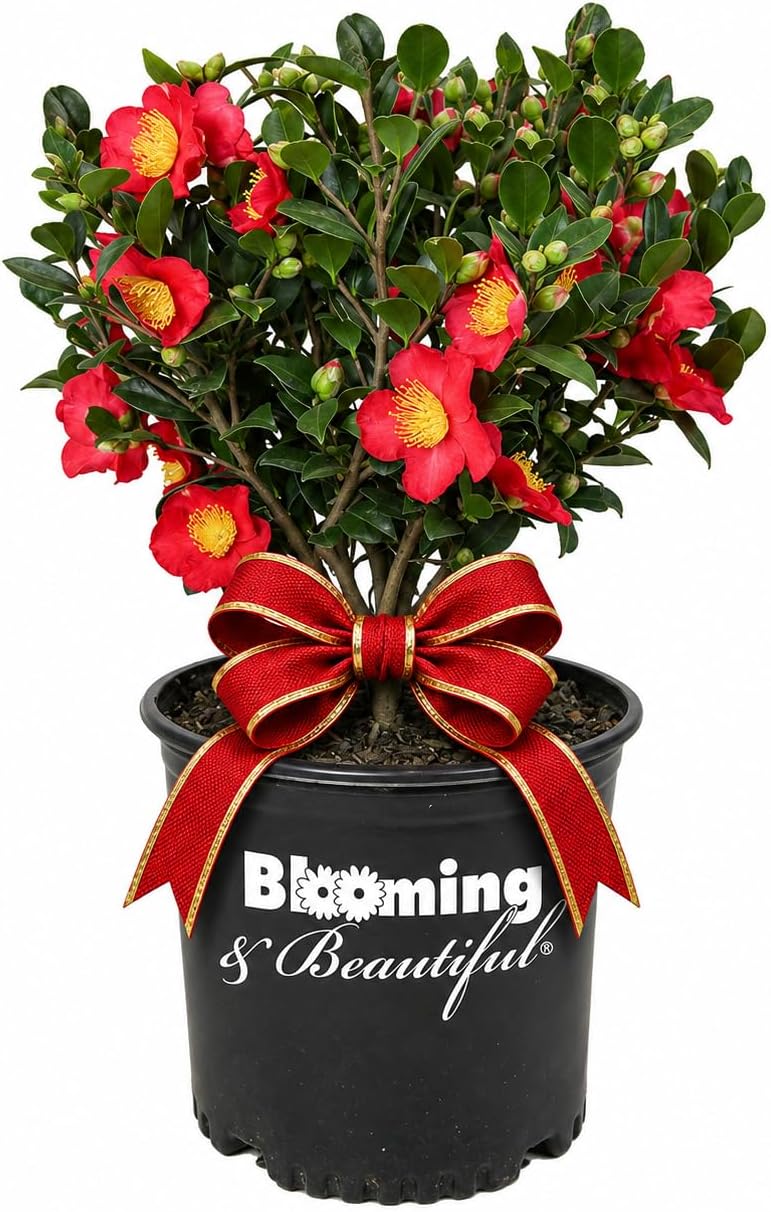
Blooming & Beautiful Yuletide Camellia, Live Evergreen Flowering Shrub, 3 Gallon
| Expected Blooming Period | Fall to Winter |
|---|---|
| Sunlight Exposure | Full Sun |
| USDA Hardiness Zone | 7 |
| Moisture Needs | Moderate Watering |
| Expected Planting Period | Spring |
This 3-gallon Yuletide camellia arrives nursery-grown with established roots and glossy evergreen foliage, making it a low-risk choice for gardeners who want reliable seasonal color. It produces small orange-red blooms with gold stamens in fall through winter, and its year-round foliage helps a container or small garden look attractive beyond the bloom period. Typical use is as a specimen shrub, foundation planting, or planted in a large pot on a protected patio where it will receive morning sun and afternoon shade. The plant is best in acidic, moist, well-drained soil and is described for USDA zones 7 to 10. Practical benefits include strong root establishment at purchase, extended bloom time, and compact upright habit that fits a large pot or tight landscape space. Limitations are climate and site needs: it is not cold-hardy below zone 7 and prefers specific light and soil acidity, so it will need placement or winter protection in cooler areas and monitoring of soil moisture and pH for best performance.
Best for: Gardeners who prioritize a dependable, professionally grown shrub that establishes quickly and provides seasonal blooms and year-round foliage in a container or protected patio setting.
Less Ideal for: Gardeners in cold climates below zone 7 or those who cannot provide acidic soil conditions and consistent moisture should consider hardier or lower-maintenance alternatives.
- Nursery-grown with established root system for quicker establishment
- Produces late-season orange-red blooms when many plants are dormant
- Evergreen foliage provides year-round structure and interest
- Compact upright habit suitable for large pots or small garden sites
- Recommended for USDA zones 7–10 so not suitable for colder climates
- Prefers acidic, moist, well-drained soil which may require soil amendments
Verdict: Choose this Yuletide camellia when you want a reliably established evergreen shrub that delivers late-season color and fits well in a large pot or protected outdoor spot.
Southern Living Obsession Nandina Shrub (2 Gal)

| Sunlight Exposure | Full Sun to Part Shade |
|---|---|
| USDA Hardiness Zone | 6, 7, 8, 9, 10 |
| Moisture Needs | Moderate Watering |
| Expected Planting Period | Year Round |
The Southern Living Obsession Nandina is a 2-gallon evergreen shrub prized for intense red foliage that holds color through much of the year. It is marketed for outdoor beds and containers, and performs in full sun to part shade across USDA zones 6 to 10. Typical use is as an accent in mixed borders, a colorful container specimen on a patio, or a low hedge where a 3- to 4-foot mature height is acceptable. Practical benefits include low maintenance, deer resistance, and moderate water needs once established; the plant is described as organic and suited to loam soils with well-drained conditions. Limitations to consider are that it does not produce notable blossoms and requires routine watering while establishing; it will also reach about 48 inches, so plan placement or pruning accordingly. For container use, choose a generous pot and monitor soil moisture to keep foliage vibrant in hot, sunny sites.
Best for: Gardeners who want a low-maintenance, colorful evergreen for patio containers or small landscape accents and value year-round foliage interest.
Less Ideal for: People seeking a showy flowering shrub or those who need a very small dwarf variety for tight spaces should consider other options.
- Bright red evergreen foliage provides season-long color
- Suitable for containers or landscape beds thanks to compact mature size
- Tolerates full sun to part shade across USDA zones 6–10
- Low maintenance and described as deer resistant
- Does not produce significant blossoms for floral interest
- Requires consistent watering until established
Verdict: Choose this nandina when you want an easy-care, brightly colored evergreen that performs well in pots and small garden settings.
Frostproof Gardenia 1 Gal. Live Shrub

| Indoor Outdoor Usage | Outdoor |
|---|---|
| Other Special Features of the Product | Fragrant |
| Expected Blooming Period | Spring to Summer |
| Sunlight Exposure | Partial Shade |
| USDA Hardiness Zone | 7, 8, 9 |
This Frostproof Gardenia is a compact, fragrant shrub meant for outdoor beds, foundations, or containers placed near patios and entryways. It produces glossy dark green foliage and abundant large white blooms from spring into summer, with buds bred to resist late spring frosts. Use it in part-shade sites close to outdoor living areas to enjoy the scent, or plant several to form a low hedge or screen. The plant ship size (1 gal/2.5 qt) and care notes emphasize planting in sun to part shade, mulching, regular watering while establishing, and fertilizing in early spring. Practical benefits include strong fragrance, a naturally upright habit that fits small spaces, and better sun tolerance than many gardenias. Limitations are that it is only hardy to zones 7–9 so cooler climates will need alternatives or protection, and it still requires regular moisture and attention to soil and placement to avoid leaf scorch or poor blooming.
Best for: Gardeners in mild climates who want a fragrant, compact shrub for shaded patios or near outdoor living spaces and who value plants with proven customer acceptance.
Less Ideal for: People in colder hardiness zones or those seeking a very low-maintenance, drought-tolerant shrub for full sun sites.
- Fragrant large white blooms ideal for placing near patios or entryways
- More frost resistant than typical gardenias so buds survive late spring chills
- Upright, compact habit that works as a small hedge or foundation planting
- Tolerates full sun to part shade giving flexibility in shady patio sites
- Hardy only to USDA zones 7–9 so not suitable for colder regions without winter protection
- Requires consistent moisture and soil care to bloom reliably
Verdict: Choose this Frostproof Gardenia when you want a compact, highly fragrant shrub that performs well in part-shade patios and small hedges in mild climates.
PERFECT PLANTS Frostproof Gardenia Live Plant, 1 Gallon

| Indoor Outdoor Usage | Outdoor |
|---|---|
| Other Special Features of the Product | Deer Resistant, Fragrant |
| Expected Blooming Period | Summer |
| Sunlight Exposure | Full Sun, Partial Shade |
| Expected Planting Period | Spring |
This 1-gallon Frostproof gardenia is a compact, fragrant shrub intended for outdoor landscape use. It arrives as a live plant with a recommended mature height around 5 feet and is typically planted in mulch beds, as a low hedge, or as an accent near entries where its scent can be enjoyed. Notable features include deer resistance, a history of reliable spring and summer blooms, and included easy-to-use plant food for a simpler start. The plant prefers full sun to partial shade, so it will tolerate some shaded locations but performs best where it receives several hours of direct light. Practical benefits for a cautious buyer are straightforward care, minimal pruning to maintain shape, and an aromatic presence that enhances small gardens or patios. Limitations are that it is sold as a 1-gallon specimen so it will need time to reach mature size, and the product text notes shipping exclusions to a few states which affects availability for some buyers.
Best for: Buyers who want an easy-care, scented shrub for a small garden or patio and prefer reliable, low-maintenance plants that establish steadily rather than instant large specimens.
Less Ideal for: Gardeners seeking an immediate tall screening hedge or a plant for deep, full shade should consider alternative species better suited to dense shade or instant privacy needs.
- Fragrant white blooms that enhance outdoor seating areas during spring and summer
- Deer resistant variety reduces need for protective measures in deer-prone yards
- Includes plant food to simplify initial establishment
- Tolerates partial shade, allowing placement in spots without full sun all day
- Sold as a small 1-gallon plant so it requires time to reach mature size
- Per product notes it does not ship to certain states which limits access for some buyers
Verdict: Choose this gardenia if you want a low-maintenance, fragrant shrub that tolerates some shade and adds seasonal white blooms to small outdoor spaces.
Choosing the Right Outdoor Winter Potted Plants: Key Factors to Consider
Cold Hardiness in Containers
Cold hardiness is different for potted plants than for in-ground specimens because container roots are exposed to air and freeze more quickly. Know the minimum temperatures your chosen plant can tolerate in a pot and compare that to your typical winter lows. If you live near coasts or in urban heat islands your container may withstand lower ratings, but in exposed inland sites you need plants rated for colder conditions plus protective measures.
Choosing species with naturally denser root balls, smaller root systems, or dormancy adaptations reduces the risk of winter root loss. When a plant's root zone can tolerate the expected lows, it is less likely to suffer from winter dieback even when top growth looks winter-damaged.
Soil Mix and Drainage
A well-draining container mix prevents waterlogging and ice formation around roots. Winter containers should use a mix that balances moisture retention with quick drainage so excess water does not freeze and heave the root ball. Avoid straight garden soil; add coarse materials to maintain porosity and include organic matter to retain just enough moisture for dormant roots.
Good drainage also helps prevent root rot from thaw-refreeze cycles. If your pots sit on hard surfaces, lift them slightly to let water escape and keep the container base from freezing to the porch or patio.
Container Size and Material
Container volume buffers roots against rapid temperature swings. Larger pots hold more soil and stabilize root temperatures better than small ones, though they are heavier to move. Material matters because clay and ceramic conduct cold faster than insulated or thick-walled resin and wooden planters. Consider double-potting or using insulating sleeves for porous materials.
The pot should also provide room for root growth over the coming seasons without being oversized. A pot that is too large relative to the plant can retain excessive moisture and increase freeze risk.
Winter Watering and Moisture Strategy
Plants in containers need less frequent but timely watering in winter. Roots still require moisture during dry cold spells, and completely dry root balls are more vulnerable to freeze damage. Check containers during thawing periods and water on mild, unfrozen days so the soil remains slightly moist but not saturated.
Avoid heavy feeding late in the season. Reducing fertility before dormancy helps plants harden off and lowers tender new growth that is prone to winter injury.
Exposure, Wind, and Salt Management
Winter sun, prevailing winds, and de-icing salts shape what will thrive in an outdoor container. Wind can desiccate foliage and increase evaporation from the root ball even in cold weather; salt spray or runoff can scorch leaves and accumulate in soils. Place containers in sheltered spots or use windbreaks and choose tolerant species for exposed entries or roadside patios.
If salt exposure is likely, select plants known to tolerate salt or rinse down foliage and container surfaces periodically to reduce buildup. Position pots away from drip lines of salted paths where possible.
Seasonal Interest and Structure
Winter containers are often chosen for more than survival alone. Consider plants that provide structure, color, or berries when most garden beds are dormant. Evergreen foliage, persistent seed heads, colorful stems, and long-lasting berries all add visible value. Structural plants like small conifers or upright grasses give a backbone to mixed pots and reduce the need for frequent refreshes.
Balancing evergreens with seasonal accent plants can extend visual interest and help each specimen display its best traits during the cold months.
Preparing Containers for Winter
Start by inspecting pots for cracks and ensuring drainage holes are clear so water cannot pool and freeze against roots. If you use porous pots, consider moving them to a more protected spot or adding an insulating layer of bubble wrap or burlap around the outside.
Double-potting is a useful technique where you set the planted container inside a slightly larger, empty vessel with a layer of dry materials between. This creates an insulating air gap that reduces freeze-thaw stress and is reversible if you need to move plants quickly during extreme weather.
- Elevate pots off cold surfaces with pot feet or blocks.
- Use a coarser top dressing to reduce surface crusting.
- Group containers together to create a microclimate.
Designing a Winter-ready Container
Aim for a mix of textures: an evergreen for form, a berry-producing shrub for color, and a small accent for contrast. Keep heights varied so the arrangement looks intentional even after snow or frost hits.
Consider seasonal swaps for the top layer if you want to refresh color; inexpensive accent plants can be clipped out in spring without disturbing the permanent backbone.
- Combine evergreens, ornamental grasses, and berrying shrubs for varied interest.
- Use contrasting foliage colors to brighten dull winter light.
- Include some durable accents like sculptural sticks or decorative stones for long-term structure.
Protecting Pots During Extreme Cold
When prolonged deep freezes are forecast, add extra insulation and move vulnerable pots to more sheltered locations such as against a south-facing wall. Wrap pots with breathable material rather than plastic to avoid trapping moisture against the container.
For very large or heavy containers that cannot be moved, mound insulating mulch around the base and cover the topsoil with a breathable frost cloth during the coldest nights. Avoid using insulation that can stay wet and freeze solid against the pot.
- Use breathable wraps and avoid airtight plastic sheeting.
- Mound straw or dry leaves around the pot base for extra insulation.
- Temporarily relocate portable containers to garages or unheated sheds on the coldest nights.
Managing Pests and Diseases in Winter Pots
Cold weather reduces many pest outbreaks but some insects and fungi can overwinter in containers. Remove spent annuals and decayed foliage to cut down on habitats for pests and disease organisms. Clean pruning and removing debris helps keep containers healthier when spring arrives.
Inspect evergreens and shrubs periodically for scale, mites, or fungal spots. Early detection and manual removal limit winter damage and reduce the need for chemical controls when temperatures warm.
- Clear away dead leaves and old mulch to reduce shelter for pests.
- Check soil surface for signs of voles or rodents in heavy snow years.
- Treat scale or heavy infestations before dormancy if practical.
Transitioning Containers Back to Spring
As temperatures moderate, gradually reintroduce more frequent watering and light feeding. Start by removing insulating wraps on milder days and begin checking drainage and soil condition as thaw cycles return.
Replace any severely damaged specimens and refresh the top layer of soil or mulch. Spring is a good time to assess container stability and repot into a larger vessel if roots have become pot-bound over winter.
- Inspect root health before heavy spring fertilization.
- Prune out winter-damaged branches to encourage new growth.
- Top-dress with fresh compost or potting mix to replenish nutrients.
How We Chose the Best Outdoor Winter Potted Plants
We focused on traits that actually matter when plants spend winter in containers rather than in the ground. Primary evaluation criteria included cold hardiness for containerized roots, winter foliage or bloom interest, tolerance of wind and salt exposure, container-root behavior (susceptibility to freeze-thaw heaving), and maintenance demands for winter care. We also considered how well plants handle reduced light and sporadic watering, plus visual value through structure or persistent berries. Products that require regular greenhouse conditions, overwintering indoors, or specialized heat sources were excluded. We prioritized selections that perform across a range of temperate to cold climates when provided with standard winter container practices such as insulating wraps, well-draining mixes, and raised placements. The same criteria guided score labels so gardeners can compare cold tolerance, seasonal interest, winter care needs, container resilience, and site adaptability at a glance.
FAQ
Can any hardy garden plant survive in a pot over winter?
Not always. Plants that are hardy in the ground may still lose roots or suffer freeze-thaw damage in pots because the root zone is more exposed. Choose species with proven container winter performance or provide extra winter protection.
How often should I water outdoor winter containers?
Usually less often than in the growing season. Check containers on mild days and water only when the soil is not frozen and the root ball is dry to the touch. Aim to maintain slight moisture without saturating the mix.
Will insulating a pot cause rot or fungal problems?
If you use breathable materials and avoid trapping moisture against the pot, insulation rarely causes rot. Avoid plastic sheeting that holds condensation next to the container. Monitor moisture levels and remove wraps during warmer spells.
Should I move winter pots indoors during a cold snap?
Moving containers indoors can help if you have a cool, frost-free space like an unheated garage. Avoid warm indoor spots that force growth. For many gardeners, relocating to a sheltered outdoor area or adding insulation is sufficient.
Do evergreen pots need fertilizer in winter?
No. Fertilizing in winter can trigger tender growth that is prone to cold damage. Resume feeding in spring when new growth begins and the risk of hard freezes has passed.
How can I prevent salt damage to winter containers near sidewalks?
Place pots out of direct spray paths from salted walkways, use salt-tolerant species, and rinse residual salt from foliage and container surfaces after melt cycles when practical.
Final Verdict
For winter container gardening prioritize plants and practices that protect roots and provide visual interest despite cold conditions. Focus on container cold hardiness, good drainage, appropriate pot material and size, and low-season moisture management. Balance evergreen or structural plants with berrying or colorful-stemmed accents to keep pots attractive through thaw cycles. Decide first by how exposed the planting site is and how much time you can spend on winter care. Where movement and insulation are possible, many hardy species will thrive in pots; in fully exposed sites choose the most cold-tolerant and salt-resistant options and plan for extra protection during extreme freezes.
