

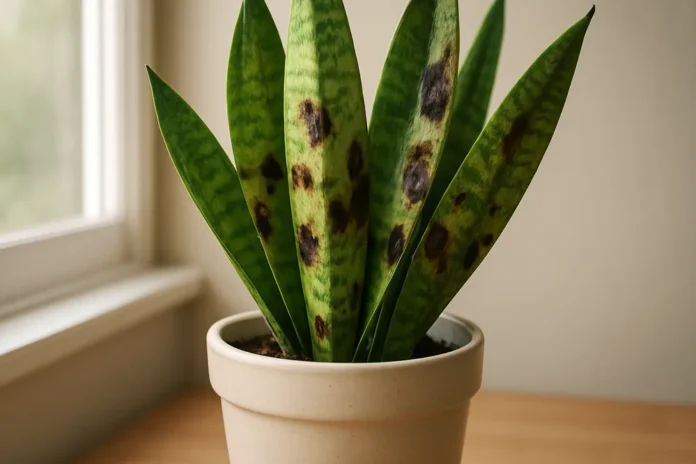
Snake plants usually develop black spots from excess moisture, fungal or bacterial leaf problems, cold injury, or pest damage. The exact cause often shows up in the size, texture, and spread of the spots.
A snake plant with black spots can look alarming because these plants are usually tough, tidy, and slow to show stress. When dark marks suddenly appear, it often means something in the plant's environment has stayed off long enough for the leaves to react.
In my experience, black spotting on snake plants is most often tied to too much moisture around the roots, wet leaves that stay damp too long, or cold exposure near a drafty window or door. Sometimes the issue is simple and cosmetic. Other times, the spotting is an early warning that rot or infection is starting.
The good news is that black spots on snake plant leaves are often manageable if you catch the problem early. The key is figuring out whether the spots are dry or mushy, isolated or spreading, and limited to older leaves or showing up across the whole plant.
What Black Spots Usually Mean on a Snake Plant
Black spots are a symptom, not a diagnosis by themselves. On snake plants, they usually fall into a few broad categories: moisture stress that leads to rot, leaf disease caused by fungi or bacteria, pest feeding that leaves damaged tissue behind, or environmental injury such as cold shock or sun scorch that later darkens.
The appearance of the spots matters a lot. Soft, water-soaked, or mushy spots often point to rot or bacterial problems. Dry, firm, sharply outlined spots may be old physical damage, cold damage, or a leaf spot disease. Tiny black specks accompanied by silvery scarring can suggest thrips or another sap-feeding pest.
- Spots near the base of leaves often go along with overwatering or crown rot.
- Spots on upper leaf surfaces can come from splashing water, pests, or temperature injury.
- Spots that enlarge quickly and feel wet deserve prompt attention.
- Old scars that stay the same size are often cosmetic rather than active.
When I diagnose snake plants, I look at the newest leaf and the leaf base before anything else. If the newest growth is firm and clean but one older leaf has a stable black mark, I worry much less than when dark tissue is creeping upward from the soil line.
Overwatering and Root Stress Are the Most Common Causes
If I had to guess the most likely reason for black spots on a snake plant in an average home, I would start with excess water. Snake plants store moisture in their thick leaves and rhizomes, so they do not need frequent watering. When the potting mix stays wet too long, roots begin to suffocate and decay. That stress can show up as dark spots, collapsing leaf tissue, or blackened areas near the crown.
Signs the Problem Is Too Much Water
- Black or dark brown patches that feel soft
- Leaves yellowing before turning dark
- A musty smell from the soil
- Mushy tissue at the base of the leaves
- Soil that stays damp for many days after watering
- A heavy pot with little sign of drying
Overwatering is not just about how often you pour water in. It can also be caused by a pot without drainage, a dense soil mix, low winter light, or a decorative cachepot that traps runoff. Many snake plants are watered on a schedule that makes sense for thirstier houseplants but is far too frequent for sansevieria.
If root rot has started, the black spots may be only the visible part of a larger problem below the surface. Healthy roots are firm and pale. Rotten roots turn brown or black, become stringy or mushy, and stop supplying the leaves properly.
Fungal and Bacterial Leaf Spot Can Also Cause Dark Lesions
Snake plants are not especially disease-prone indoors, but leaf spot diseases do happen, especially when leaves stay wet, air circulation is poor, and the plant is already stressed. Fungal leaf spots often start as small brown or dark lesions that gradually enlarge. Bacterial issues can look more water-soaked and may spread faster.
How Disease-related Black Spots Tend to Look
- Small round or irregular spots that slowly get larger
- Dark centers with yellow halos on some leaves
- Spots that appear after overhead watering or misting
- Multiple affected leaves rather than a single damaged area
- Wet-looking patches that may crack or collapse later
Water on the leaves is a common setup for this problem. A snake plant sitting in a dim corner, watered late in the day, or misted regularly can stay damp long enough for pathogens to take hold. If the spots are spreading leaf to leaf, disease becomes more likely than old injury.
I do not mist snake plants, and I avoid rinsing the foliage unless I know it will dry quickly. If you need to clean dusty leaves, wiping them with a barely damp cloth is usually safer than leaving free water sitting in the crown or on the leaf surface.
Cold Injury Can Leave Sudden Black Patches
Snake plants tolerate a lot, but they dislike cold drafts and chilly windowsills. Exposure to low temperatures can injure the leaf tissue, and that injury may show up as dark, almost black patches a day or two later. This often surprises people because the plant looked fine right after the cold event.
Cold damage tends to produce broad areas of discoloration rather than many tiny spots. The tissue may first appear gray-green or water-soaked, then turn dark and sunken. If one side of the plant faced a cold window, the damage may be concentrated there.
- Spots appeared after a cold snap, shipping exposure, or repotting outdoors
- Leaves closest to glass or a door are affected first
- Dark areas feel soft at first, then dry out and scar
- The damage does not usually move once conditions improve
This type of injury cannot be reversed, but it usually stops progressing once the plant is moved into steadier warmth. New growth should emerge normally if the roots and crown stayed healthy.
Pests Sometimes Create Black Spotting or Secondary Damage
Although snake plants are not the first houseplant pests usually attack, they can still pick up thrips, spider mites, mealybugs, or scale. Pest feeding wounds the leaf surface and can leave stippling, silvery patches, rough scars, or tiny black marks. In some cases, the black material is pest waste rather than dead leaf tissue.
Clues That Pests Are Involved
- Tiny black dots paired with pale, scraped-looking areas
- Sticky residue, cottony masses, or shell-like bumps
- Fine webbing along the leaf edges or at the base
- New leaves emerging distorted or scarred
- Damage concentrated on tender new growth
Pests can also create openings where disease organisms enter, so a plant may end up with both feeding damage and infection. If you see active insects, deal with them first so the problem does not keep spreading.
Sunburn, Fertilizer Buildup, and Physical Injury Are Possible but Less Common
Not every black spot means a serious health problem. Snake plant leaves can scar after being bent, bruised, or scraped during moving. A hard kink in a leaf may later darken at that injured point. Sunburn can also start as bleached, tan, or gray patches that eventually develop darker dead tissue around the damaged area.
Excess fertilizer or salt buildup from tap water can stress roots and contribute to leaf damage too, though this more often shows up as brown tips and margins rather than scattered black spots. Still, if your plant is fed heavily and watered lightly, salts can accumulate and make the whole plant more vulnerable.
- A single dark scar after a leaf was bent usually stays localized
- Sun-related damage is more likely on plants moved abruptly into intense direct light
- Fertilizer stress often appears alongside crusty soil or white mineral deposits
- Cosmetic scars do not spread to nearby leaves
How to Tell Which Cause You Are Dealing With
Because several issues can create dark marks, it helps to work through the plant methodically. Start with where the spots are located, how the tissue feels, and whether the problem is getting worse.
Questions That Narrow It Down
- Are the spots soft and wet-looking or dry and firm?
- Do they begin near the soil line or on the upper leaf surface?
- Is the potting mix staying wet for too long?
- Did the plant recently experience cold drafts or a sudden move?
- Do you see insects, webbing, sticky residue, or silvery scarring?
- Are the spots spreading to new leaves or staying unchanged?
Soft black tissue plus wet soil strongly suggests overwatering or rot. Small spreading lesions on multiple leaves point more toward leaf spot disease. Sudden localized dark patches after cold exposure suggest chill damage. Tiny black specks with surface scarring raise the odds of pests.
I try not to judge by one spot alone. Looking at the pattern across the whole plant usually tells the real story. A random scar is one thing, but repeated marks in the same zone on several leaves usually mean the environment, watering, or pests are driving the problem.
What to Do Right Now to Stop the Damage
Once you suspect the cause, the first goal is to stop any active damage. Snake plants recover best when you correct the growing conditions before the entire root system or crown is affected.
Immediate Steps That Help Most Cases
- Pause watering until the potting mix dries appropriately.
- Move the plant away from cold drafts, heating vents, and harsh midday sun.
- Inspect the leaves, crown, and roots for mushy tissue or pests.
- Trim off badly damaged leaves or sections with clean scissors if the tissue is clearly dead or rotting.
- Improve airflow and keep water off the foliage.
- Repot if the soil is dense, soggy, foul-smelling, or the roots are rotten.
If rot is present, unpot the plant and check the roots and rhizomes. Remove black, soft, or slimy parts and keep only firm tissue. Repot into a fast-draining mix in a pot with drainage holes. A cactus or succulent mix improved with extra perlite or pumice often works well.
If pests are the issue, isolate the plant and treat based on the pest involved. Wiping leaves, using insecticidal soap, or applying horticultural oil can help, though you should follow product directions carefully and avoid overapplying anything to an already stressed plant.
How to Prevent Black Spots From Coming Back
Prevention mostly comes down to keeping the plant dry enough, warm enough, and clean enough for a succulent-type houseplant. Snake plants are forgiving, but they stay healthiest when their roots dry between waterings and their leaves are not kept damp.
- Water only when the mix has dried well, especially in fall and winter.
- Use a gritty, fast-draining potting medium.
- Choose a pot with at least one drainage hole.
- Empty any saucer or cachepot after watering.
- Keep the plant in bright, indirect light or gentle direct morning light.
- Protect it from temperatures below about 50 degrees Fahrenheit.
- Inspect new plants for pests before placing them near your collection.
- Skip routine misting and avoid splashing water into the crown.
One simple habit makes a big difference: judge success by new growth, not by old damage disappearing. Existing black spots usually remain as scars even after the plant is back on track. What you want to see is firm, clean new leaves and no continued spread.
When Black Spots Mean the Leaf Should Be Removed
A snake plant leaf does not always need to be cut off just because it has a dark spot. If the spot is dry, stable, and limited, the leaf can still photosynthesize and support the plant. Removal is more useful when the tissue is mushy, foul-smelling, actively spreading, or aesthetically too damaged to keep.
Cut at the base with clean, disinfected shears if an entire leaf is compromised. If only the tip or edge is affected and the rest is healthy, you can trim away the dead part, though the cut edge will remain visible. Always sanitize tools between cuts if disease is suspected.
If multiple leaves are blackening from the base, the bigger concern is the crown and rhizomes below the soil. In that case, removing leaves alone will not fix the underlying problem.
FAQ
Can Black Spots on a Snake Plant Go Away on Their Own?
The spots themselves usually do not disappear. Damaged tissue stays scarred, but if you fix the cause, the plant can produce healthy new growth and the spotting should stop spreading.
Should I Cut Off Snake Plant Leaves with Black Spots?
Only remove leaves if the spots are spreading, mushy, or unattractive enough that you do not want to keep them. A small dry spot on an otherwise healthy leaf can often be left alone.
Do Black Spots Always Mean Root Rot?
No. Root rot is common, but black spots can also come from cold damage, leaf spot disease, pests, sunburn, or old physical injury. The feel and location of the spot help separate these causes.
Can Overwatering Cause Black Spots Even if the Soil Surface Looks Dry?
Yes. The top inch can dry while the lower root zone stays soggy, especially in deep pots or dense mixes. That hidden moisture is enough to stress roots and trigger dark leaf damage.
Are Black Spots on Snake Plants Contagious to Other Houseplants?
If the cause is fungal, bacterial, or pest-related, the problem can spread under the right conditions. It is smart to isolate the plant until you know what is causing the spotting.
Can I Use a Fungicide on Snake Plant Black Spots?
A fungicide may help if you are dealing with a true fungal leaf spot, but it will not fix overwatering, cold injury, or bacterial rot. Correcting the environment is usually the most important step.
Why Are the Black Spots Only on One Side of My Snake Plant?
One-sided spotting often points to environmental injury such as cold from a window, sunburn from a sudden light change, or physical damage from rubbing or handling.
Need the right setup to prevent rot and spotting for good? See our guide to the best soil mixes, pots, and care tools for snake plants so you can fix the root cause fast.
