

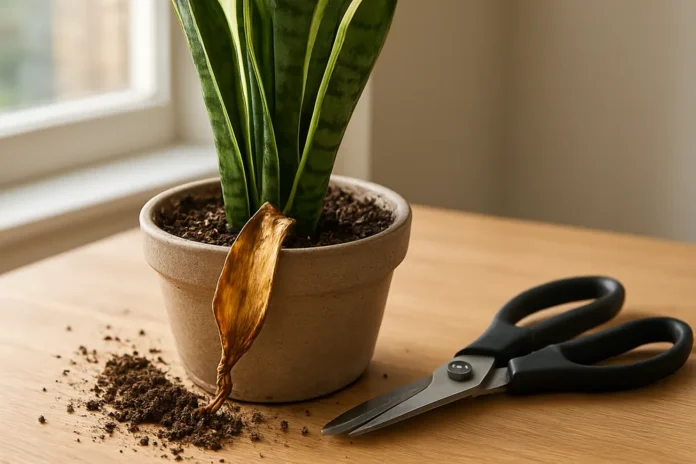
Snake plant leaves usually rot because the plant is staying too wet for too long, especially around the roots or crown. Cold injury, poor drainage, and secondary fungal or bacterial infection can make the rot spread faster.
A snake plant with rotting leaves is almost always reacting to excess moisture somewhere in the system. Even though Sansevieria, now classified under Dracaena, is famously forgiving, it does not tolerate soggy roots, trapped water in the crown, or potting mix that stays damp for too long.
When I see a snake plant leaf turning soft at the base, I usually suspect overwatering first, but that is not the only possibility. Cold drafts, a pot without enough drainage, dense soil, and even hidden damage from an earlier watering mistake can all lead to leaf collapse. The key is to look at where the rot starts, how fast it spreads, and what the roots and soil feel like.
What Rotting Looks Like on a Snake Plant
Rot on snake plants does not always begin with a dramatic mushy mess. It often starts subtly. A leaf may look slightly translucent, feel soft instead of firm, or bend near the soil line. In other cases, the base turns yellow or brown first, then becomes water-soaked and collapses.
You may also notice an unpleasant smell, especially if the roots or crown have been wet for a while. Once rot gets established, the affected tissue usually does not recover. That is why it helps to separate cosmetic damage from active decay as early as possible.
- Leaves feel mushy, slimy, or hollow
- The base of one or more leaves turns yellow, tan, or black
- Leaves fall over from the soil line instead of staying upright
- The center of the plant feels soft where leaves emerge
- The potting mix smells sour or swampy
- Roots look brown or black instead of pale and firm
I pay close attention to where the softness begins. If it starts at the base and moves upward, I think roots, crown, and moisture problems first. If a leaf is damaged higher up while the base stays firm, I look more closely at cold injury or mechanical damage.
The Most Common Reason Is Overwatering
Overwatering is the leading cause of snake plant rot, but it is not just about watering too often on a calendar. It really means the roots are staying wet longer than the plant can handle. That can happen if you water weekly, if the pot is too large, if the soil is heavy, or if the plant sits in a dim room where it dries slowly.
Snake plants store water in their leaves and rhizomes, so they are built to handle dry spells far better than constant moisture. When roots stay damp, oxygen levels in the soil drop. The roots weaken, then rot organisms move in, and the damage climbs into the leaf bases.
Signs the Plant Has Been Kept Too Wet
- Soil is still damp many days after watering
- The pot feels heavy most of the time
- Several leaves are soft at once, especially older outer leaves
- New growth is weak or stunted
- The plant sits in low light and dries very slowly
- A saucer or cachepot often holds extra water under the nursery pot
Sometimes gardeners are surprised because they have only watered every couple of weeks. For a snake plant in winter, in low light, or in a glazed ceramic pot, even that can be too frequent. Rot is less about the exact schedule and more about how long the root zone stays moist.
Poor Drainage Makes Rot Much More Likely
A snake plant can rot even if you are fairly careful with watering when the pot or soil does not drain well. Dense peat-heavy mixes, decorative pots with no drainage hole, and oversized containers all hold moisture longer than this plant likes.
The biggest hidden problem I see is the plant sitting inside a decorative outer pot after watering. Water drains out of the inner pot, collects at the bottom, and gets wicked back into the mix. To the owner, it looks like they watered correctly. To the roots, it feels like standing in a swamp.
Pot and Soil Issues That Contribute to Rot
- No drainage hole in the container
- Potting mix made mostly for moisture-loving houseplants
- Very large pot with lots of unused wet soil around the roots
- Compacted old soil that no longer drains evenly
- Rock layers in the bottom that trap water above them instead of improving drainage
- Water pooling in a saucer or outer container
If I suspect drainage more than watering frequency, I slide the root ball out of the pot before I change my routine. That tells me whether the center of the mix is staying wet, whether the roots are healthy, and whether the plant simply needs a faster-draining setup.
Crown Rot Can Start when Water Sits in the Center
Snake plants grow from a central crown and rhizomes at the base. If water repeatedly collects where the leaves emerge, especially in dense clumps, the tissue can stay damp long enough to rot. This is more common after overhead watering, heavy misting, or when the plant is crowded and airflow is poor.
Crown rot often shows up as softness at the center of the plant rather than only at the outer roots. New leaves may pull out easily, or the middle of the rosette may feel mushy. Once the crown is infected, it can spread fast because the tissue is tightly packed.
When Crown Rot Is More Likely
- You water directly into the center of the plant
- Leaves are packed tightly with little airflow
- The plant stays cool and wet at the same time
- Water droplets sit overnight in the crown
- The center leaves soften before outer leaves do
Cold Damage Can Mimic or Trigger Rot
Snake plants dislike cold temperatures, and chilling injury can make leaves turn mushy even when watering is not the main issue. If the plant sits near a freezing window, an exterior door, or an air conditioning vent, the damaged tissue can collapse and later begin to rot.
Cold-damaged leaves often develop watery patches, then become soft and discolored. This can happen quickly after one bad night near a drafty pane or after transport in winter. Once the tissue is injured, bacteria or fungi can move in secondarily, making the problem look like classic overwatering.
- Damage appears suddenly after a cold snap or delivery
- Only the side facing a window or vent is affected
- The potting mix is not especially wet, but leaves still turn mushy
- Upper leaf sections are damaged even when roots look acceptable
Fungal and Bacterial Rot Usually Follow Stress
Gardeners often ask whether rot is caused by a fungus or bacteria. The honest answer is that pathogens are often involved, but they usually take advantage of tissue that has already been stressed by poor drainage, overwatering, or cold damage. In practical terms, you fix the environment first and treat infected tissue as a cleanup problem.
Bacterial rot tends to be especially wet, smelly, and fast-moving. Fungal issues may show dark lesions, sunken spots, or rot that advances more gradually from the roots upward. Either way, affected parts should be removed promptly because soft tissue rarely bounces back.
Clues Infection Is Involved
- A sour or foul odor from the pot or leaf base
- Slimy tissue rather than simple dryness or crisping
- Rot continues spreading even after soil dries somewhat
- Dark, water-soaked lesions on leaves
- Multiple connected leaves collapse from the same base
How to Tell Which Kind of Rot You Are Dealing With
Diagnosis gets much easier when you inspect the whole plant, not just the damaged leaf. Check the base of the leaf, the crown, the smell of the potting mix, and the condition of the roots. Also think back to the last few weeks. Changes in location, temperature, and watering often reveal the cause.
Quick Diagnosis Guide
- Soft leaf bases plus soggy soil usually point to root or crown rot from excess moisture
- Mushy areas after exposure to cold often point to chilling injury with secondary rot
- A single damaged leaf with healthy roots may be local injury rather than a whole-plant watering problem
- A bad smell and rapid collapse suggest active bacterial decay
- Roots that are dark, mushy, and easily peeled confirm root rot
If the plant has both rotten roots and soft leaf bases, treat it as a moisture and sanitation problem at the same time. Remove affected tissue, repot into a better mix, and adjust the environment so the remaining healthy parts can recover.
When I am unsure, I judge the plant by its firmest tissue, not its ugliest leaf. Snake plants often keep a few healthy divisions even when one side has failed. If the rhizome and some roots are still solid, the plant is usually salvageable.
What to Do Right Away if Leaves Are Rotting
Act quickly, because rotting tissue can spread to nearby leaves and rhizomes. Your goal is to remove dead material, dry out the plant, and prevent the same conditions from repeating. Do not keep watering a stressed snake plant in hopes that it will perk up. Rotting leaves do not recover with extra moisture.
Immediate Steps
- Stop watering until you inspect the roots and base.
- Remove soft, mushy, or foul-smelling leaves with a clean blade.
- Take the plant out of its pot and check the roots and rhizomes.
- Trim away black, brown, or mushy roots and any soft rhizome tissue.
- Let cut surfaces dry briefly before repotting.
- Repot in fresh, fast-draining mix in a pot with a drainage hole.
- Wait to water until the mix is mostly dry and the plant has settled.
If the crown is badly mushy, you may not save that central section, but healthy leaves or divisions can sometimes still be propagated. Firm, undamaged leaf sections can root, though variegated types may not come true from leaf cuttings. If the rhizome has separate healthy pups, divide and save those first.
When Repotting Is Necessary
Repotting is necessary when the existing mix stays wet too long, smells sour, or contains rotted roots. Use a loose, gritty houseplant mix designed for succulents or amend standard potting soil so it drains faster. The container should be only a bit larger than the root mass.
I prefer a pot that dries predictably over one that looks oversized and decorative. Snake plants actually do well when slightly snug in the pot. Too much extra soil around the roots increases drying time and raises the risk of another rot cycle.
Good Repotting Conditions for Snake Plants
- Terracotta or another breathable pot if your home tends to stay humid
- At least one unobstructed drainage hole
- A coarse, airy mix with fast drainage
- No water left standing in saucers or outer pots
- Bright indirect light after repotting so the plant can recover
How to Prevent Leaf Rot From Coming Back
Prevention is mostly about matching care to the plant's slow water use. Snake plants need less water than many indoor gardeners expect, especially in winter or lower light. Let the soil dry substantially between waterings, and always adjust for season, pot size, and room conditions.
Prevention Habits That Work
- Water based on soil dryness, not a fixed weekly schedule
- Reduce watering in winter and in dim rooms
- Keep the plant away from freezing glass and cold drafts
- Avoid repeatedly wetting the crown or leaf bases
- Use pots with drainage and empty saucers promptly
- Inspect roots if the plant stays wet unusually long
- Quarantine badly infected plants away from other houseplants while you clean them up
After a rot episode, success is measured by firm new growth, not by whether damaged leaves rebound. If the plant stays stable, produces healthy new shoots, and the remaining leaves feel solid, you have likely corrected the underlying issue.
FAQ
Can a Rotting Snake Plant Leaf Recover?
No. Once a leaf has become mushy or rotten, that tissue will not turn firm again. Remove the affected part so the decay does not spread to nearby leaves or the crown.
Should I Cut Off Mushy Snake Plant Leaves?
Yes. Trim off soft, slimy, or collapsing leaves with a clean blade. If only part of a leaf is damaged, cut back to firm healthy tissue, but remove the whole leaf if the base is rotten.
How Often Should I Water a Snake Plant to Prevent Rot?
There is no perfect schedule for every home. Water only after the potting mix has dried well, and expect to water much less often in winter, low light, or cool rooms.
Can Root Rot Spread to Healthy Snake Plant Pups?
Yes. If the rhizome connection is affected, rot can move into nearby pups. Separate any firm healthy divisions quickly and repot them into clean, fast-draining mix.
Why Is Only One Snake Plant Leaf Rotting?
A single rotting leaf can happen from localized injury, water trapped at that leaf base, or an early moisture problem that has not spread yet. Check the roots and the crown to make sure it is not the start of a larger issue.
Is Misting Bad for Snake Plants?
Misting is usually unnecessary and can be unhelpful if moisture sits in the crown or between tightly packed leaves. Snake plants prefer good airflow and drier conditions over frequent surface moisture.
Can I Save a Snake Plant with No Healthy Roots Left?
Sometimes. If the rhizome or some leaves are still firm, you may be able to propagate healthy sections. If everything at the base is soft and foul-smelling, recovery is much less likely.
Need the right soil, pot, or rescue tools for a struggling snake plant? Check our houseplant care guides and product picks to stop rot fast and help new growth come back healthy.
