

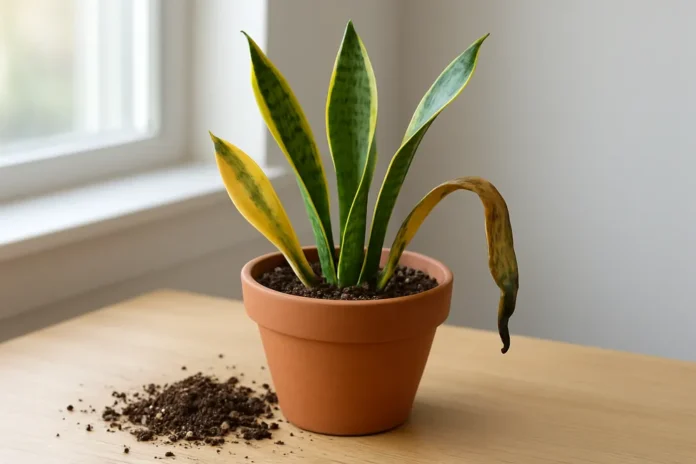
A snake plant usually starts dying because of too much water, poor drainage, weak light, or root damage. Cold stress, pests, and long periods of neglect can also push it into decline.
Snake plants have a reputation for being almost impossible to kill, which is exactly why it is so frustrating when one suddenly looks rough. If your snake plant is dying, the problem is usually not random. These plants decline in fairly predictable ways, and the leaves, soil, and roots usually tell the story.
In my experience, most struggling snake plants are dealing with too much water, a pot that stays wet too long, or roots that have already started to rot. But low light, cold drafts, pest pressure, and old compacted soil can look similar at first glance. The key is matching the symptom pattern to the cause instead of guessing.
Below, I will walk through the most common reasons a snake plant declines, what each one looks like, and how to tell whether your plant can bounce back.
What a Dying Snake Plant Usually Looks Like
A snake plant rarely collapses overnight unless it has severe rot or cold damage. More often, it gives warning signs first. You might see yellowing leaves, soft bases, wrinkled foliage, brown tips, mushy spots, drooping blades, or a plant that seems loose in the pot.
The symptom matters because not all decline means the same thing. A shriveled leaf can point to thirst, but it can also happen when rotten roots can no longer take up water. Yellow leaves can mean overwatering, but they may also show up with poor light or stress after a sudden move.
- Soft, mushy leaves or bases often suggest rot
- Wrinkled, curling, or folded leaves often suggest dehydration or root failure
- Leaves falling over can come from rot, weak roots, or severe low light
- Brown, crispy tips are often tied to inconsistent watering, salt buildup, or dry indoor air
- Pale, stalled growth usually points to low light or exhausted potting mix
When I inspect a weak snake plant, I look at the base of each leaf before anything else. If the bottom inch feels soft or translucent, I treat rot as the leading suspect even when the top of the leaf looks merely droopy.
Overwatering Is the Most Common Cause
If I had to pick one reason most snake plants start dying, it would be overwatering. These plants store water in their thick leaves and rhizomes, so they do not want constantly damp soil. When the pot stays wet for too long, the roots suffocate, pathogens multiply, and the plant begins to rot from below.
Overwatering does not always mean you water too often on a calendar. It can also mean the soil stays wet because the pot is too large, the mix is dense, the drainage hole is blocked, or the plant sits in low light where it uses water slowly.
Signs Your Snake Plant Is Getting Too Much Water
- Yellowing leaves, especially lower or older ones
- Soft or mushy patches near the base
- A sour smell coming from the potting mix
- Leaves that topple even though the soil is wet
- Blackened roots or rhizomes when you unpot the plant
If several leaves are soft at the base and the soil feels damp days after watering, overwatering is very likely. Snake plants prefer a full dry-down between waterings in most indoor conditions.
Root Rot Can Make the Plant Look Both Thirsty and Wet
Root rot is really the consequence of prolonged excess moisture, but it deserves separate attention because it confuses people. A rotten snake plant can look wilted, wrinkled, and dehydrated even while sitting in wet soil. That happens because damaged roots cannot move water into the leaves.
The only reliable way to confirm root rot is to slide the plant out of the pot and inspect the roots and rhizomes. Healthy roots are firm. Rotten roots are dark, slimy, mushy, or hollow. Rhizomes may feel soft instead of dense and solid.
When Root Rot Is Likely
- The potting mix stays wet for a week or longer
- The plant smells musty or sour
- Leaves wrinkle even though watering has been regular
- The plant feels unstable because roots have decayed
- The pot has poor drainage or no drainage hole
If you suspect rot, do not keep adding water because the leaves look thirsty. I always check the roots first, because watering a rootless snake plant only speeds up the decline.
Underwatering and Long Dry Spells Can Still Be a Problem
Snake plants tolerate drought better than many houseplants, but they are not indestructible. If they stay dry for too long, especially in warm bright rooms, the leaves can wrinkle, curl inward, feel thinner than usual, and develop dry brown edges.
A thirsty snake plant usually stays firm at the base. That is one of the easiest ways to separate underwatering from rot. The leaves may be stressed and puckered, but they are not water-soaked or collapsing into mush.
Clues That Point to Underwatering
- Very dry soil that pulls away from the sides of the pot
- Wrinkled or slightly folded leaves
- Crispy brown tips or margins
- Slow growth during the active season
- A noticeably lighter pot because the mix is bone dry
Underwatering usually damages the oldest leaves first, and the plant often perks up once moisture is restored. Rot damage does not recover that way.
Poor Drainage and the Wrong Potting Mix Keep Roots in Trouble
Sometimes the issue is not how much water you give but where that water goes. A snake plant in heavy peat, regular garden soil, or a pot without proper drainage can stay damp long after the surface looks dry. That hidden moisture is enough to start root problems.
Snake plants do best in a loose, fast-draining mix. A cactus or succulent blend often works well, especially when improved with extra pumice, perlite, or coarse bark. The pot should have a clear drainage hole, and it should not be dramatically larger than the root ball.
- Dense soil holds too much water around the roots
- Oversized pots dry slowly and increase rot risk
- Decorative cachepots can trap runoff if they are not emptied
- Compacted old soil can repel water on top but stay soggy underneath
Low Light Weakens Snake Plants Over Time
Snake plants are famous for surviving low light, but surviving is not the same as thriving. In very dim corners, they use water slowly, grow weakly, and become more vulnerable to overwatering. Leaves may lose strong upright posture, appear dull, and stop producing healthy new growth.
Low light by itself may not kill a snake plant quickly, but it creates the conditions for decline. If a plant sits far from a window and is watered like one growing in brighter conditions, trouble usually follows.
Symptoms Tied to Weak Light
- Long stretches with no new leaves
- Floppier growth instead of firm upright leaves
- Faded variegation or dull color
- Soil that stays moist much longer than expected
Bright indirect light is ideal for most indoor snake plants. A little gentle morning sun can also help, but sudden harsh afternoon sun can scorch leaves if the plant is not acclimated.
Temperature Stress and Cold Damage Can Trigger Sudden Decline
Snake plants dislike cold more than many people realize. If they are exposed to chilly windows, freezing drafts, cold garages, or outdoor temperatures that dip too low, the leaf tissue can be damaged quickly. Cold-injured leaves may turn mushy, develop water-soaked patches, or collapse a few days after exposure.
This can look a lot like overwatering, but the timing gives it away. If your plant was fine and then started failing after a cold snap, transport in winter, or exposure to an air-conditioning vent, temperature stress may be the real culprit.
- Mushy spots after exposure to cold air
- Sudden leaf collapse without a long history of wet soil
- Damage concentrated on the side facing a cold window or door
- Brown or translucent tissue after a temperature shock
Pests Can Weaken a Stressed Snake Plant
Snake plants are not the most pest-prone houseplants, but they can still attract mealybugs, spider mites, and occasionally scale. Pest damage usually shows up as stippling, sticky residue, dusty webbing, distorted new growth, or patches that look unhealthy even when watering seems right.
Pests are more likely to take hold when a plant is already stressed by low light, inconsistent watering, or dry indoor conditions. A healthy snake plant can usually handle minor issues much better than a weak one.
What to Look For
- White cottony clusters from mealybugs
- Fine webbing and speckled leaves from spider mites
- Small bumps attached to leaves from scale insects
- Sticky surfaces or residue near affected foliage
I do not assume pests are the main issue unless I can actually see them or their residue. A weak snake plant with yellow leaves is much more often suffering from root trouble than from insects.
Crowded Roots, Old Soil, and Neglect Can Cause a Slow Decline
Snake plants like being somewhat snug in their pots, but they do not want to stay in exhausted soil forever. After a few years, the mix can break down, compact, and stop draining well. Salts from fertilizer or tap water can also accumulate and irritate the roots.
A plant in this condition may not show one dramatic symptom. Instead, it declines gradually with smaller new leaves, brown tips, patchy yellowing, or a general lack of vigor. If the plant has not been repotted in years, the soil itself may be part of the problem.
- Roots circling tightly with very little soil left
- Water running straight through without soaking in evenly
- Crusty mineral buildup on the soil surface or pot edge
- Weak growth despite otherwise decent care
How to Tell if Your Snake Plant Can Be Saved
Most snake plants can recover if the rhizome or at least part of the root system is still firm. If the center is completely mushy, foul-smelling, and detached from any healthy tissue, recovery is less likely. But even then, healthy leaf sections or offsets may still be salvageable.
I judge a rescueable snake plant by three things: whether any roots are firm, whether the base of any leaves is still solid, and whether the rhizome has healthy tissue left. One healthy pup can be enough to restart the whole plant.
Signs There Is Still Hope
- At least some roots are pale and firm
- The rhizome feels solid instead of squishy
- A few leaves are still upright and unblemished at the base
- Offsets or pups remain healthy even if older leaves are failing
The Best Way to Prevent It From Happening Again
Prevention with snake plants is mostly about restraint. They prefer bright indirect light, a fast-draining mix, a pot with drainage, and watering only after the soil has dried thoroughly. In winter, they often need much less water than people expect.
It also helps to avoid stacking stressors. A plant in low light should not be in a huge pot. A plant recovering from rot should not be fertilized heavily. A newly moved plant should not be blasted with direct sun on the first day.
- Use a pot with drainage every time
- Choose a gritty, airy potting mix
- Let the soil dry before watering again
- Keep the plant in brighter indoor light when possible
- Protect it from cold drafts and freezing temperatures
- Inspect occasionally for pests and soft leaf bases
FAQ
Can a Snake Plant Recover From Root Rot?
Yes, if some roots or rhizome tissue are still firm and healthy. Remove rotten parts, let cut areas dry if needed, and replant in fresh fast-draining mix. If everything at the base is mushy, recovery becomes much less likely.
Why Are My Snake Plant Leaves Turning Yellow and Soft?
Yellow, soft leaves usually point to overwatering or root rot. The combination of discoloration and mushiness is a stronger warning sign than yellowing alone.
Why Is My Snake Plant Wrinkled if I Watered It?
Wrinkled leaves after watering often mean the roots are damaged and cannot absorb moisture properly. This is common with root rot, especially when the soil stays wet.
Should I Cut Off Dying Snake Plant Leaves?
If a leaf is badly damaged, mushy, or mostly yellow, it is usually best to remove it with clean pruners. Leaving rotting tissue in place can encourage further problems around the base.
How Often Should I Water a Snake Plant?
There is no perfect schedule because light, temperature, and soil all change how quickly the pot dries. In many homes, watering every couple of weeks in the growing season and less often in winter is more realistic than weekly watering.
Do Snake Plants Need Sunlight to Stay Healthy?
They do best in bright indirect light, though they tolerate lower light better than many houseplants. In very dim spots, growth slows and overwatering risk goes up.
Can Cold Weather Kill a Snake Plant?
Yes. Snake plants can suffer serious damage from cold drafts, chilly windows, or near-freezing temperatures, and the leaves may turn mushy afterward.
Need help choosing the right soil, pot, or rescue supplies for a struggling snake plant? Check out our houseplant care guides and product picks to revive it faster and prevent the same problem next season.
