

Note: This article contains affiliate links. If you click on these links and make a purchase, I may earn a small commission at no extra cost to you. This helps support my research and content. Read my full affiliate disclosure here.
Choosing the right plants for garden troughs matters because these containers have limited soil volume, shallow rooting depth, and different moisture dynamics than beds. The right selection delivers season-long color, fits the trough scale, and reduces maintenance so your planters look full without constant repotting or watering. This guide shortlists six top options suited for trough conditions and small-scale displays. Each pick was chosen for traits gardeners need in troughs, and the guide explains what to expect for watering, pruning, and seasonal turnover.
Top Picks at a Glance
| Best Overall The best all-around choice for most situations | Easy to Grow Oxalis Triangularis Bulbs (20) — Purple Shamrock |  |
| Best Quality Built to a higher standard if you want something more solid | Touch Of ECO Hosta Bare Roots 6-Pack (Mixed Heart-Shaped) |  |
| Best Value The sweet spot between price and what you get | PLANTMEW Lemon Thyme Seeds (10,000+) |  |
| Best Budget The cheapest option that still gets the job done reliably | Carpet Creeping Creeping Thyme Seeds (Ground Cover, 145,000 count) |  |
| Most Popular A crowd favorite that many people choose with confidence | KVITER Rainbow Coleus Seeds — 1,600 Heirloom Coleus (Plectranthus scutellarioides) |  |
| Best Seller A high-volume bestseller chosen again and again | HOME GROWN Rainbow Mix Coleus Seeds (approx. 400) |  |
Easy to Grow Oxalis Triangularis Bulbs (20) — Purple Shamrock

| Indoor Outdoor Usage | Indoor, Outdoor |
|---|---|
| USDA Hardiness Zone | 6, 7, 8, 9, 10 |
| Expected Blooming Period | Spring to Summer |
| Moisture Needs | Moderate Watering |
| Number of Pieces | 20 |
These Oxalis triangularis bulbs are a compact, low-maintenance option for adding purple foliage and delicate lavender blooms to garden troughs, containers, or sunny windowsills. They are sold as 20 corms and can be planted close together for a full, textured look; planting in amended, well-drained soil with partial sun produces the best results. The plants grow in USDA zones 6 through 10 outdoors and can be treated as houseplants in colder climates. They have a spring to summer bloom period and require only moderate watering with light monthly feeding while actively growing. Expect natural dormancy when growth dies back and reduce watering during that rest period. Practical benefits include easy establishment both in-ground and in pots, vivid year-round interest when grown indoors, and versatility for edging or trough displays. Limitations are that bulbs are small and go dormant seasonally so they will not provide continuous foliage without seasonal management, and they need some protection from the hottest midday sun in warm climates.
Best for: Gardeners who want an easy-care, colorful filler for troughs or containers that performs well both outdoors in mild zones and indoors during colder months.
Less Ideal for: Those who need continuous, year-round foliage without seasonal dormancy or gardeners seeking large, fast-growing plants for instant coverage.
- Vibrant purple foliage provides strong color contrast in troughs and containers
- Suitable for both outdoor troughs in zones 6–10 and indoor windowsill displays
- Compact growth habit works well for edging and filling shallow troughs
- Low maintenance needs: moderate watering and monthly light fertilizing during growth
- Plants go dormant seasonally so troughs will need replanting or companion plants for year-round interest
- Corms are naturally small which can mean a slower initial show if not planted densely
Verdict: A compact, low-maintenance purple shamrock that brings reliable color and texture to garden troughs and containers with minimal fuss.
Touch Of ECO Hosta Bare Roots 6-Pack (Mixed Heart-Shaped)

| Unit Count | 6 Count |
|---|---|
| Indoor Outdoor Usage | Outdoor |
| USDA Hardiness Zone | 3-9 |
| Moisture Needs | Regular Watering |
These Touch Of ECO hosta bare roots arrive dormant and are intended to be planted in fall or early spring for reliable, low-maintenance shade interest. Each pack contains six mixed heart-shaped hosta crowns that produce rich green foliage and fragrant white or purple flowers on tall stems from spring through fall. Hostas are typically used in shady borders, under trees, or in large planters where regular watering and indirect light suit them best. The listing notes hardiness to zones 3 through 9, so they will return year after year in a wide range of climates, and the plants attract pollinators while being resistant to deer. Practical gardeners will appreciate that the plants ship as bare roots for easy planting and faster establishment when placed with the crown at soil level and watered in. Limitations are that these are not container-ready potted plants and need initial attention to planting depth and moisture; smaller or shallow planters may not give the crowns enough room to spread.
Best for: Gardeners who want reliable, low-maintenance shade plants to establish in planters or beds and prefer economical bare-root stock they can plant themselves.
Less Ideal for: Buyers who want instant, display-ready potted plants or who need specimens sized for very small decorative containers.
- Six bare-root crowns per pack provide quick value for filling multiple planters or a shady border
- Hardy across USDA zones 3–9 so they are suitable for most climates
- Attractive heart-shaped foliage with seasonal fragrant blooms adds texture and pollinator value
- Ships dormant for easy handling and planting in fall or early spring
- Arrives as bare roots rather than established potted plants, so initial planting care is required
- Not suitable for very small or shallow containers where crowns cannot spread
Verdict: A cost-effective way to fill shady planters or beds with hardy, low-maintenance hostas if you are comfortable planting bare-root stock.
PLANTMEW Lemon Thyme Seeds (10,000+)

| Unit Count | 1.05 Ounce |
|---|---|
| Sunlight Exposure | Full Sun |
| USDA Hardiness Zone | 4-11 |
| Expected Blooming Period | Summer to Fall |
| Moisture Needs | Moderate Watering |
These PLANTMEW lemon thyme seeds provide a large quantity of creeping thyme suitable for creating fragrant, pollinator-friendly ground cover in sunny, well-drained spots. Typically sown in summer into sandy or well-draining soil, the seedlings form low mats about 3 inches tall that tolerate drought once established and release a lemony aroma when crushed. The listing highlights high germination, perennial habit in USDA zones 4 to 11, and summer to fall bloom that attracts bees and butterflies, which makes it useful for pathways, rock gardens, borders, and containers. Practical benefits include low ongoing maintenance, resistance to hot dry conditions, and multiuse landscaping value as both an herb and a groundcover. Limitations to plan for are the slow, creeping spread compared with aggressive groundcovers and the need for full sun and good drainage to avoid rot in heavy soils. If you want quick instant cover you will need to combine seeding with plugs or mats, but for a budget-friendly, long-term full-sun groundcover this seed packet is a sensible choice.
Best for: Gardeners who want an economical, low-maintenance perennial ground cover for sunny, well-drained beds or paths and who are prepared to seed and wait for plants to establish.
Less Ideal for: People needing immediate, dense coverage or working with heavy, poorly drained soils should consider plugs, mats, or different species better suited to shade or wet conditions.
- Large seed quantity (over 10,000) suitable for seeding sizable areas
- Tolerates full sun and drought once established, reducing watering needs
- Attracts pollinators with summer to fall flowers, supporting garden ecology
- Heirloom seed variety with reportedly high germination rate
- Requires well-drained, sandy soil and full sun to perform well
- Spreads slowly compared with faster-establishing groundcovers
Verdict: A cost-effective seed option for establishing fragrant, drought-tolerant ground cover in full-sun, well-drained areas.
Carpet Creeping Creeping Thyme Seeds (Ground Cover, 145,000 count)

| Indoor Outdoor Usage | Outdoor |
|---|---|
| Other Special Features of the Product | Attracts Pollinators, Fragrant, High Germination Rate |
| Expected Blooming Period | Spring to Fall |
| Sunlight Exposure | Full Sun |
| Moisture Needs | Moderate Watering |
These creeping thyme seeds are intended for establishing a fragrant, pollinator-friendly ground cover that blooms from spring through fall. They are typically sown in sandy, well-drained soil in full sun during the recommended planting period and will germinate in about two to four weeks. The listing emphasizes high germination, organic non-GMO seed stock, and suitability for dry, low-water sites, which makes it practical for rock gardens, between pavers, and large areas where a low mat of flowers is desired. Because the packet is a very large unit count, it suits budget-conscious gardeners covering wide areas or restoring erosion-prone slopes. Expect to maintain moderate watering while plants establish and occasional trimming to keep a neat carpet. Limitations are that thyme prefers full sun and sandy soils so it will perform poorly in heavy clay or dense shade, and establishing a uniform stand requires patience through the germination window and proper site prep.
Best for: Buyers who need an affordable way to establish a wide swath of flowering ground cover and prefer low-water, pollinator-friendly plantings in sunny sites.
Less Ideal for: Gardeners who want a ground cover for shady, moisture-retentive soils or those seeking a small packet for container-only planting.
- Very large seed count suitable for covering large areas on a single purchase
- Non-GMO, heirloom, organic seed sourcing
- Adapted to dry, sandy soils and full sun for low-water landscaping
- Attracts pollinators and produces fragrant blossoms across spring to fall
- Not well suited to heavy clay soils or shaded locations
Verdict: A budget-friendly, high-count seed option for quickly establishing a drought-tolerant, pollinator-attracting flowering carpet in sunny, sandy sites.
KVITER Rainbow Coleus Seeds — 1,600 Heirloom Coleus (Plectranthus scutellarioides)

| Unit Count | 1600 Count |
|---|---|
| USDA Hardiness Zone | 4-10 |
| Sunlight Exposure | Partial Shade |
| Material Features | GMO Free, Heirloom |
| Moisture Needs | Regular Watering |
These KVITER Rainbow Coleus seed packets deliver a high-count mix of heirloom, non-GMO coleus seeds designed for easy container and border planting. The seeds are billed for part-shade locations and come with a step-by-step growing guide on every packet, which helps take the guesswork out of starting indoors 6–8 weeks before the last frost or sowing directly into pots and trays. Coleus produces colorful foliage rather than showy flowers and reaches about a foot tall, making it well suited to outside pots, hanging baskets, and shaded patio corners. The seeds are labeled low-maintenance and shade resistant, so once established they respond well to regular watering and occasional pinching to encourage bushier growth. Because this is a bulk 1,600-count pack, it is best for gardeners who want to fill several containers or create repeated plantings through the season. Expect germination within 7–14 days under good light; results can vary with local soil and care. The package focuses on starter guidance rather than advanced cultivation details, so experienced growers may want more specific spacing or fertilization notes.
Best for: Gardeners who prefer low-risk, easy-to-follow planting and want colorful, shade-tolerant foliage for multiple outside pots or shaded patio containers.
Less Ideal for: Buyers who only need a few plants for a single small pot or who want edible or flowering plants rather than foliage-focused coleus.
- Very large 1600-seed count is suitable for filling many pots or repeating plantings
- Heirloom, non-GMO seeds with a step-by-step growing guide on each packet
- Shade-tolerant foliage plant that performs well in part-sun/part-shade container locations
- Low-maintenance habit and responds to pinching for bushier growth
- Bulk quantity may be more than needed for casual single-pot gardeners
- Limited cultivation details on fertilizing and advanced care provided
Verdict: A risk-averse choice for filling multiple shaded pots with colorful, low-maintenance coleus foliage thanks to a large heirloom seed pack and clear growing instructions.
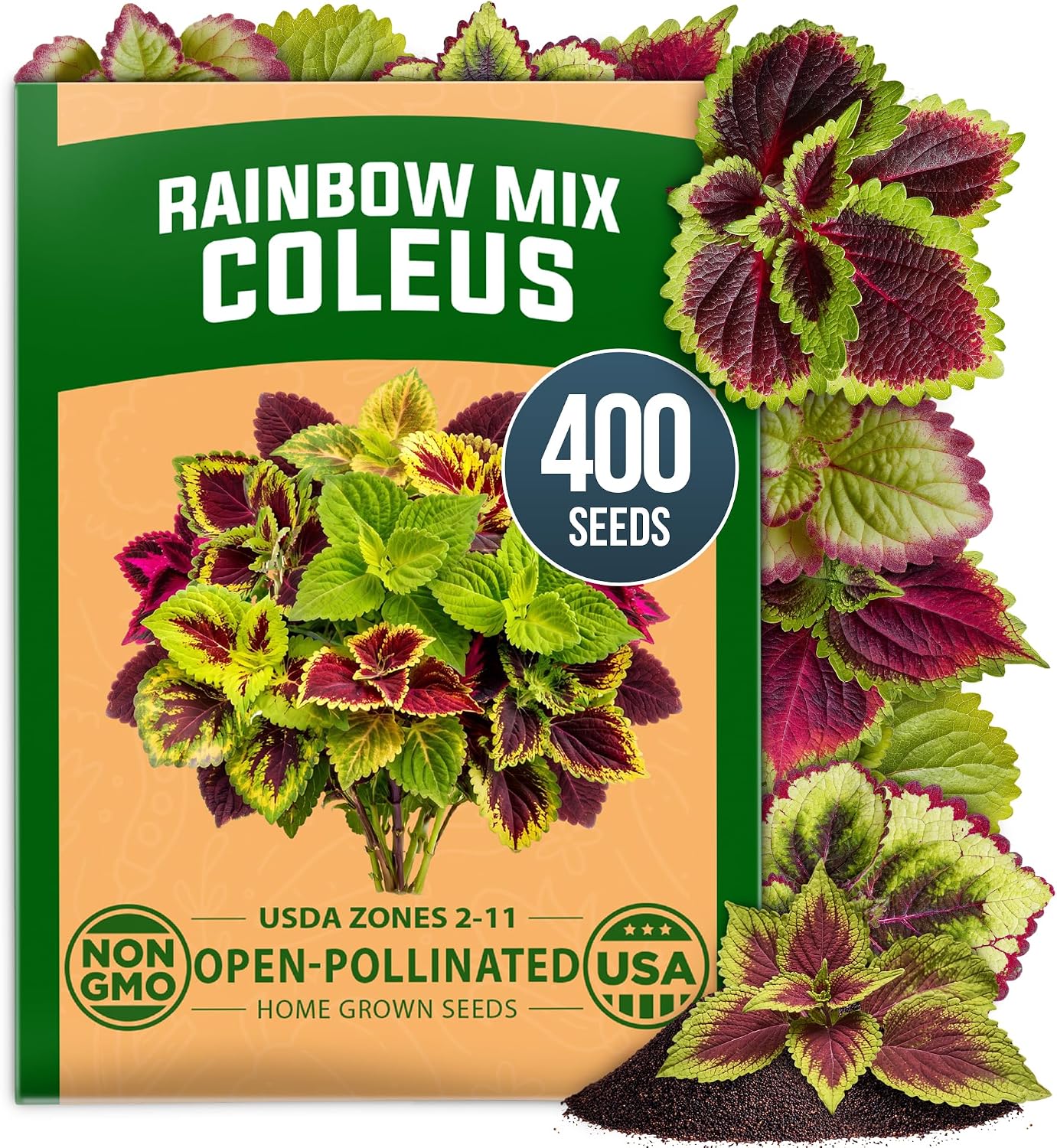
HOME GROWN Rainbow Mix Coleus Seeds (approx. 400)
| Sunlight Exposure | Part Shade to Shade |
|---|---|
| USDA Hardiness Zone | 2-11 |
| Expected Blooming Period | Spring through Frost |
| Material Features | GMO Free, Heirloom |
| Unit Count | 1 Count |
These Rainbow Mix coleus seeds produce compact, colorful foliage plants that are well suited to containers and shaded patio spots. Surface-sow the tiny seeds (do not cover), keep the medium warm and consistently moist, and seedlings typically appear in 10–14 days; pinch growing tips to encourage bushy, mounded plants. The mix is valued for season-long leaf color in shades of rose, green, bronze, cream, and scarlet, so you get visual impact without relying on flowers. Coleus grows indoors near bright north or east windows and outdoors in part shade to shade, making it a flexible choice for window boxes, mixed planters, and small pots. Important limitations are that coleus is a tender annual in most regions and needs protection from frost and prolonged drought, and it prefers warm temperatures for best germination and growth. For container gardeners who want low-maintenance, high-impact foliage, this seed mix is an easy way to produce many plants from one packet.
Best for: Gardeners who want easy-to-grow, high-impact foliage for containers and shaded patios and prefer predictable, low-fuss plants they can start from seed.
Less Ideal for: People seeking long-lived perennial landscaping or plants that tolerate full sun and drought without extra care.
- High seed count (about 400) gives many starts for containers or massing
- Open-pollinated non-GMO seeds from a mix that yields varied, colorful foliage
- Specifically suited to part shade and shade where many flowering plants struggle
- Compact, mounded habit that performs well in pots, window boxes, and mixed planters
- Tender annual in most zones and requires frost protection or indoor overwintering
- Requires consistent moisture and will suffer if soil dries out or remains waterlogged
Verdict: A high-count, non-GMO coleus seed mix that reliably produces compact, colorful foliage perfect for containers and shaded patios.
Choosing the Right Plants for Garden Troughs: Key Factors to Consider
Rooting Depth and Lateral Spread
Garden troughs have limited soil depth and width, so rooting habit is the first factor to check. Plants with shallow, fibrous root systems or naturally compact root balls establish well without needing deep soil. Species that send deep taproots or aggressive lateral runners can become root-bound or destabilize a trough quickly.
Consider how mature roots will occupy the volume available. Plants that stay compact let you combine multiple species in one trough for mixed textures. If a plant tends to widen extensively, you will need frequent root pruning or larger containers, which defeats the purpose of a narrow trough.
Water Use and Drought Tolerance
Troughs dry out faster than beds because of reduced soil volume and greater exposure, so choose plants matched to that moisture cycle. Drought-tolerant species survive and perform with intermittent watering schedules, while moisture-loving types require more frequent attention and richer mixes.
Also think about how thirsty plants affect neighbors in the same trough. Pair species with similar water needs to avoid overwatering some and underwatering others. Good trough plants either tolerate dry periods or signal clearly when they need moisture without collapsing instantly.
Size, Habit, and Visual Scale
A trough is a horizontal focal element in the garden, so plant height, spread, and habit determine the visual outcome. Low, mounding, or cascading forms work best to keep a balanced look and avoid obscuring surrounding elements. Tall, upright growers can be used sparingly as accents but will reduce room for companions.
Choose plants whose mature dimensions match the trough length and depth. Consider seasonal changes: some species flop or become leggy later in the season, which affects how a trough looks over time. Compact habit reduces the need for frequent trimming.
Bloom Time and Foliage Interest
Because troughs present a concentrated display, long bloom duration or sustained foliage interest gives the most satisfying results. Plants with lengthy flowering windows or multi-season foliage color reduce gaps and keep the trough attractive between major bloom flushes.
Think beyond flowers. Decorative foliage, variegation, or architectural leaf shapes can carry a trough when blooms fade. Combining staggered bloomers and plants with reliable foliage contrast extends visual appeal without constant replanting.
Maintenance Requirements
Maintenance for troughs includes watering frequency, deadheading, pruning, root management, and occasional soil refresh. Low-maintenance plants let you enjoy displays with minimal interventions. High-maintenance species may demand weekly deadheading, pinching, or division to stay presentable in a small container.
Also account for how easy it is to trim or divide plants in a confined space. Plants that respond well to light pruning are better suited to trough culture than those needing wholesale renovation midseason.
Cold-Hardy Behavior and Seasonal Care
Troughs are more exposed to temperature swings than the ground, so winter survival and seasonality matter. Some plants are reliably perennial in your climate when planted in a trough, while others behave as annuals or require protection. Root insulation in a narrow trough is limited, so choose species with appropriate hardiness or plan for seasonal replacement.
Evaluate whether you will lift and store plants, add insulating mulch, or accept annual turnover. Plants that tolerate light frost or can be cut back and revived in spring reduce winter work.
Designing a Balanced Trough Planting
Think in layers when composing a trough. Use a low-mounded center or back anchor, trailing plants to soften edges, and a few mid-height fillers for texture and repeat color. This approach creates depth and keeps the trough visually full from multiple angles.
When arranging, consider scale and spacing for mature size rather than current nursery dimensions. Crowd plants gently for a quicker fill, but allow room for airflow to reduce disease risk.
- Place taller, structural plants toward the center or back of the trough.
- Use trailing or cascading plants along the front edge to conceal soil.
- Combine at least two types of texture-leaf contrast or bloom shape-for longer interest.
Soil Mix and Drainage Tips
Use a free-draining potting mix with good organic matter to retain moisture yet avoid waterlogging. Add grit or perlite if your mix holds too much water. Troughs often benefit from a thin drainage layer or a well-pierced bottom to prevent saturation.
Topdress with a bit of slow-release fertilizer at planting to support establishment, then switch to light liquid feeding during the growing season for sustained blooms without excessive growth.
- Avoid heavy, garden soil that compacts in troughs.
- Ensure consistent drainage holes and test with a heavy watering before planting.
Seasonal Care Calendar
Establish a simple seasonal routine: check moisture twice weekly in summer, deadhead spent flowers every 1-2 weeks, and trim back any leggy growth to keep the trough tidy. In shoulder seasons, reduce watering and withhold fertilizer as growth slows.
Plan for at least one midseason refresh of foliage or trimming to maintain form. For winter, either protect frost-sensitive trough plants or accept replacing tender species each year.
- Spring: refresh soil surface and inspect roots for crowding.
- Summer: increase watering frequency and deadhead regularly.
- Autumn: reduce feeding and decide which plants to overwinter.
Combining Annuals and Perennials
Mixing perennials with short-lived annuals is a practical way to guarantee continuous color. Perennials provide structure and foliage continuity while annuals fill gaps and deliver high-impact seasonal flowers.
When blending types, match water and light needs. Use annuals for seasonal color that can be swapped without disturbing perennial roots, or keep perennials in the center and annuals at the edges for easy changes.
- Use perennials as anchors and annuals for color accents.
- Replace annuals midseason if blooms fade, keeping perennials intact.
Pest Management in Confined Plantings
Troughs concentrate plants, which can make pest outbreaks spread quickly. Monitor regularly for common pests such as aphids, slugs, or mites and remove infestations early. Cultural controls like adequate spacing, clean pruning tools, and removing dead foliage go a long way.
Choose robust plants and maintain good vigor through appropriate feeding and watering to reduce susceptibility. If treatment is necessary, use targeted methods that minimize harm to beneficial insects.
- Inspect undersides of leaves and soil surface weekly in peak season.
- Avoid overhead watering late in the day to reduce fungal pressure.
How We Chose the Best Plants for Garden Troughs
We focused on traits that directly affect how plants perform in narrow, shallow troughs. Primary evaluation criteria were rooting habit and size control to ensure plants fit and do not outgrow shallow soil. Drought tolerance and water-use behavior were assessed because troughs dry faster than garden beds. Bloom length and seasonal interest were included to prioritize plants that bring lasting color or texture across the growing season. Resistance to common trough pests and diseases was considered to reduce maintenance in concentrated plantings. Finally, ease of establishment and transplant resilience mattered since trough planting often involves moving nursery liners into confined soil. We excluded plants that require deep or wide root systems, aggressive spreaders that will overwhelm a trough, and species that demand unusually high fertility or constant moisture. The shortlist favors plants that gardeners can maintain with routine pruning, moderate feeding, and typical trough potting mixes. Our scoring emphasized measurable traits gardeners observe after planting, aligning selections with practical container culture rather than theoretical hardiness alone.
FAQ
How deep should soil be in a garden trough?
Most trough-friendly plants do well in 4 to 8 inches of quality potting mix. Some shallow-rooted species tolerate less, but deeper soil supports longer-term growth and reduces watering frequency.
Can I mix plants with different water needs in one trough?
Mixing is possible but risky. It is safer to group plants with similar moisture requirements so watering schedules do not stress some occupants. If you must mix, position thirstier plants together and use micro-irrigation targeted to their root zones.
How often will trough plants need repotting or division?
Expect to divide or refresh soil every one to three years depending on growth rate and root crowding. Faster-growing species may need annual attention, while slow, compact plants can remain longer between interventions.
What is the best way to overwinter trough plants?
Overwintering depends on plant hardiness. For hardy perennials, add mulch or move troughs to a sheltered spot. Tender plants are usually lifted, potted up, and stored indoors or replaced with cold-tolerant choices for the season.
How do I prevent troughs from drying out too quickly?
Use a moisture-retentive but well-draining mix, add organic matter, and apply a surface mulch to slow evaporation. Position troughs in a spot that avoids harsh afternoon sun if rapid drying is a problem, and increase watering frequency during hot spells.
Final Verdict
Pick trough plants with compact roots, matching water needs, and lasting visual interest to minimize maintenance and keep planters looking full. Prioritize steady performers that tolerate the trough environment rather than species that demand constant moisture or deep soil. Balance tradeoffs between long-blooming annuals and reliable perennials, and be prepared to refresh or divide when roots crowd the shallow soil. With attention to rooting habit, drought tolerance, and seasonal care, you can create durable trough displays that suit your site and schedule.
