

Note: This article contains affiliate links. If you click on these links and make a purchase, I may earn a small commission at no extra cost to you. This helps support my research and content. Read my full affiliate disclosure here.
A well-built wooden greenhouse gives you a warm, attractive space for starting seedlings, overwintering tender plants, and extending the growing season. The right structure balances weather resistance, ventilation, and usable growing space so you can manage temperature and humidity without constant intervention. This guide covers seven shortlisted options that excel in key gardener concerns like frame durability, glazing choice, airflow, and ease of assembly. Read on for practical notes about what matters in a wooden greenhouse and how each top pick stacks up against those criteria.
Top Picks at a Glance


Modern Shade 6.5' x 10' Cedar Wooden Greenhouse with Polycarbonate Panels

| Cover Material | Polycarbonate (PC) |
|---|---|
| Frame Material | Wood |
| Number Of Vents | 4 |
| Indoor Outdoor Usage | Outdoor |
This cedar-frame greenhouse is designed as a roomy, walk-in solution for hobbyists who want a durable, all-purpose growing space. It pairs a sturdy wood frame with 6mm polycarbonate panels to give better insulation and protection than thin plastic covers, while the extra-tall 8-foot peak makes it comfortable to work inside and accommodates taller plants or shelving. The unit includes built-in shelving and a workspace, which keeps pots and tools organized, and a preinstalled faucet kit with internal piping makes routine watering easier. Ventilation is handled by four roof vents and a symmetrical fan layout that promotes consistent airflow, and the included window pull rod simplifies vent operation. Unique touches for an outdoor setup are the USB, USB-C and two standard outlets for powering lights or charging devices. Expect a multi-day assembly and routine maintenance for the wood frame to preserve weather resistance, and the greenhouse footprint requires a suitable, level outdoor spot. Overall this product suits gardeners who want a premium, functional wooden greenhouse with practical integrated features rather than a minimal or ultra-cheap temporary structure.
Best for: Gardeners who want a long-lasting, feature-rich wooden greenhouse for year-round hobby growing and prefer integrated conveniences like shelving, irrigation, and power.
Less Ideal for: People who need a lightweight, temporary, or very low-cost greenhouse or who cannot dedicate time to periodic wood maintenance.
- Cedar wood frame with architectural overhang for durable, attractive outdoor structure
- 6mm polycarbonate panels provide improved thermal retention and plant protection
- Integrated faucet kit with brass 1/2" faucet and internal piping for convenient watering
- Built-in shelving and workspace maximize usable area and organization
- Multiple power options including USB, USB-C, and two standard outlets for accessories
- Wood construction requires periodic maintenance to protect against weathering
- Assembly is likely time-consuming and may need two people for safe installation
Verdict: Choose this cedar wooden greenhouse if you want a spacious, well-appointed, and durable walk-in greenhouse with built-in irrigation and power for a balanced long-term backyard growing setup.
Backyard Discovery Bellerose XL Cedar Walk-In Greenhouse with Polycarbonate Panels and Pergola

| Size | 13×11 ft |
|---|---|
| Cover Material | Polycarbonate (PC) |
| Frame Material | Wood |
| Number Of Vents | 2 |
| Closure Type | Sliding Doors |
The Bellerose XL is a purpose-built backyard greenhouse that gives hobby and performance-minded gardeners a robust year-round growing space. It combines a cedar structural frame with commercial-grade 4-wall polycarbonate panels to improve heat retention and withstand heavy snow and high winds when properly anchored. Use it as a seed-starting nursery, winter protection for tender plants, or a staging area for larger projects thanks to five fixed staging shelves, eight moveable plant hooks, hose hook-ups inside and out, and a built-in workstation. The temperature-activated exhaust fan plus two easy-open windows provide both forced and natural ventilation for better climate control. The integrated PowerPort (three outlets and three USB ports) makes it simple to add lights, fans, or heaters. Practical strengths are its weather-tested durability, generous interior space, and thoughtful utility features that reduce trips for extension cords and hoses. Expect a multi-person assembly and the need for a solid foundation and anchoring; it is heavy and requires planning for installation and electrical hookup.
Best for: Gardeners who want a durable, high-capacity backyard greenhouse to extend seasons and run serious growing projects and who are prepared to plan for installation and utilities.
Less Ideal for: Casual gardeners seeking a small, portable greenhouse or anyone who needs a simple, instant setup without hiring help or preparing a permanent foundation.
- Commercial-grade 4-wall polycarbonate panels for improved heat retention and durability
- Cedar frame naturally resistant to rot and engineered to handle heavy snow loads and high winds when anchored
- Integrated PowerPort with three outlets and three USB ports for powering lights, fans, and accessories
- Built-in workstation with multiple fixed shelves, moveable hooks, and interior/exterior hose hook-ups for organized, efficient workflow
- Temperature-activated exhaust fan and two operable windows for active and passive ventilation control
- Large, heavy kit requires multiple people, a stable foundation, and time-consuming assembly
- Electrical supply and anchoring are required but not included
- Stain saturation may vary across panels which could affect appearance
Verdict: If you need a rugged, well-equipped backyard greenhouse for season extension and high-performance growing, this cedar-built Bellerose XL delivers the space, insulation, and utility features to support serious gardening.
MUPATER 8 x 12 ft Walk-In Wooden Greenhouse with Polycarbonate Panels

| Material Type | Cedar |
|---|---|
| Top Material Type | Polycarbonate |
| Frame Material | Metal |
| Water Resistance Level | Not Water Resistant |
| Weight Capacity Maximum | 1000 pounds |
This MUPATER 8 x 12 ft wooden greenhouse is a roomy walk-in structure that pairs a cedar base and metal frame with multi-layer polycarbonate panels to give plants good light while blocking damaging UV. It is typically used for starting seedlings, extending the growing season, or housing tender potted plants on a patio or in a backyard. The ventilated window and adjustable roof bolts let you regulate airflow and internal temperature, and the lockable front door makes it easier to secure tools and plants. The heavy wood base and metal reinforcement raise stability compared with lightweight aluminum kits and the greenhouse is rated to hold up to 1000 pounds, a useful number if you plan to add shelving or heavy benches. Important limitations are the lack of water resistance in the specification and the size and weight that mean assembly requires multiple people and a prepared level site. Expect seasonal maintenance of the wood and routine checks of panel seals if you live in a wet climate.
Best for: Buyers who want a sturdy, season-extending greenhouse for backyard vegetable starts or container plants and who prioritize structural stability and plant protection over minimal assembly time.
Less Ideal for: People needing a lightweight, easy-to-move greenhouse or those who prefer a fully waterproof, maintenance-free structure for very wet climates.
- Cedar wood construction with metal frame offers greater stability than lightweight aluminum kits
- Multi-layer 6mm polycarbonate panels provide high UV protection while allowing plant-friendly light
- Ventilated window and adjustable roof bolts let you control airflow and temperature
- Walk-in layout with lockable door makes access, organization, and security simple
- Not rated as water resistant which may require additional sealing or site preparation in wet climates
- Large, heavy kit requires multiple people and time to assemble
- Wood components need seasonal maintenance to prevent weathering
Verdict: A robust wooden walk-in greenhouse that prioritizes stability and UV-protected light for gardeners who want a durable backyard growing space.
GIANTEX Wooden Cold Frame Greenhouse with Flip-Top Roof and 2-Tier Shelves
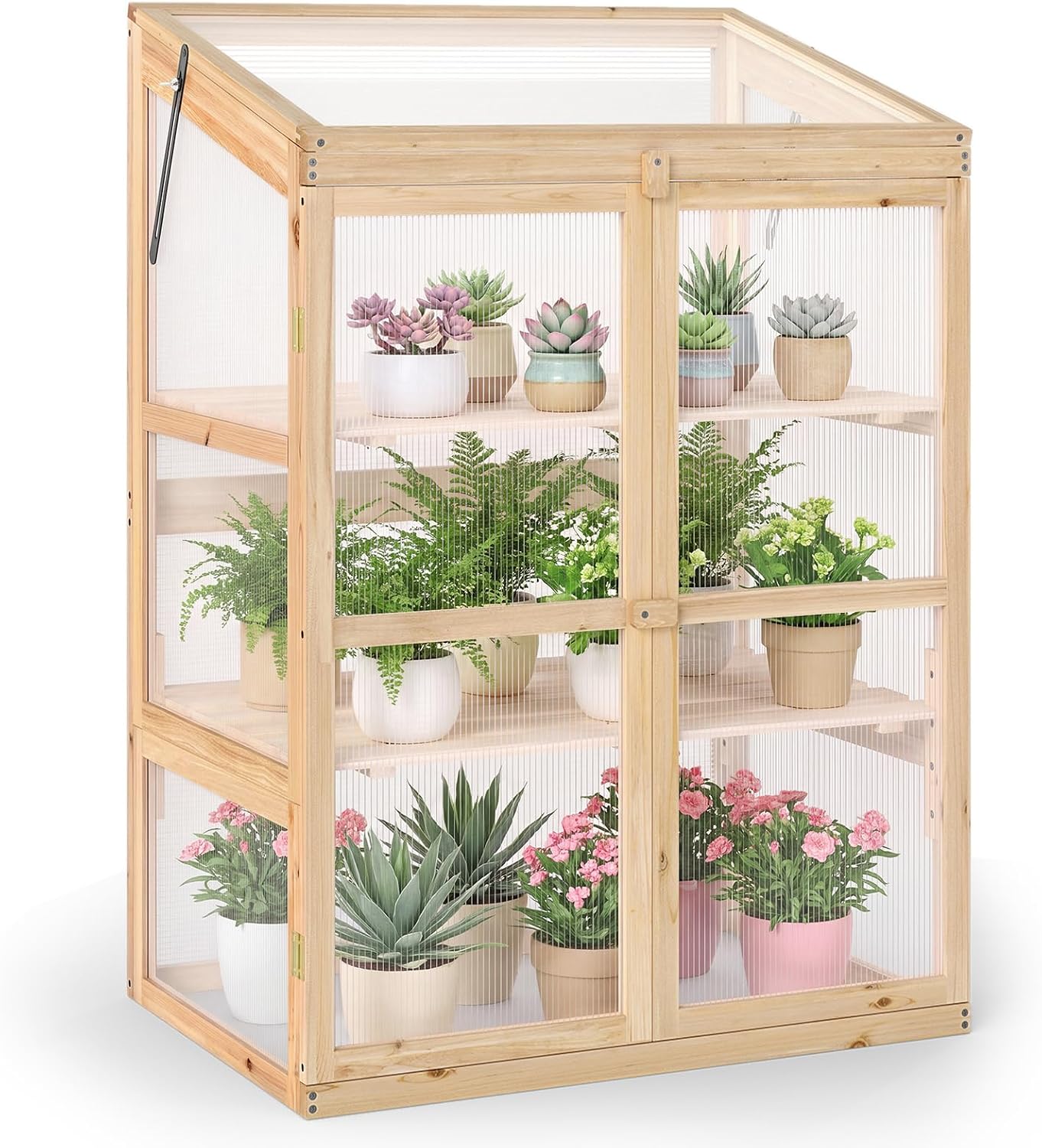
| Number of Doors | 2 |
|---|---|
| Indoor Outdoor Usage | Outdoor |
| Closure Type | Roll Up |
| Cover Material | Polycarbonate (PC) |
| Frame Material | Wood |
This GIANTEX wooden cold frame is a small outdoor greenhouse designed to extend the growing season for seedlings, herbs, and small potted plants. It combines a fir wood frame with transparent polycarbonate panels and hinged double doors so plants get good light while staying sheltered from wind, rain, and light frost. The flip-top roof with a support rod makes routine ventilation simple without fully exposing plants, and the two-tier slatted shelves let you organize trays or pots for better use of vertical space. Build quality looks thoughtful for the price point thanks to reinforced metal hinges and tightened screw connections, though assembly and anchoring are necessary to keep it steady in windy conditions. The unit is best for patios, balconies, and small garden corners where a compact footprint matters; it is not intended for large-scale propagation or heavy-duty overwintering of large shrubs. If you need a modest, attractive cold frame that balances sun exposure and protection on a budget, this model covers those basics well.
Best for: Gardeners looking to extend the season for seedlings or grow a modest collection of potted plants on a patio, balcony, or small backyard who want a natural-looking, budget-friendly wooden solution.
Less Ideal for: People who need a large greenhouse for bulk propagation, overwintering large plants, or heavy commercial use should consider larger or more heavy-duty structures.
- Fir wood frame blends durability with a natural look suitable for outdoor display
- Polycarbonate panels provide high light transmission while protecting plants from rain and light frost
- Flip-top roof with support rod enables easy ventilation control without disassembly
- Two-tier slatted shelves increase usable growing area in a compact footprint
- Compact size limits the number and size of plants that will fit comfortably
- Requires assembly and proper anchoring to remain stable in windy conditions
Verdict: A budget-friendly wooden cold frame that gives small-space gardeners reliable light, shelter, and easy ventilation to extend the growing season.
Backyard Discovery Poppy 11 x 7 ft Cedar Wood Walk-In Greenhouse Kit with Polycarbonate Panels and Exhaust Fan

| Cover Material | Polycarbonate (PC) |
|---|---|
| Frame Material | Wood |
| Number of Doors | 2 |
| Special Features | Integrated Temperature-Activated Exhaust Fan |
The Backyard Discovery Poppy is a heavy-duty walk-in greenhouse kit designed for gardeners who want a durable, year-round growing space. It uses natural cedar for the frame and commercial-grade 4-wall polycarbonate panels to improve heat retention and resist decay, which helps protect plants in cold or windy conditions. The kit includes fixed upper and lower staging shelves plus a 4-tier rack and plant hooks so you can organize seedlings, pots, and tools without adding custom furniture. Ventilation is handled with an integrated temperature-activated exhaust fan and two easy-open windows for passive airflow, and the built-in PowerPort with three outlets and three USB ports lets you plug in lights, fans, or small heaters. Interior and exterior hose hookups and an included interior hose simplify watering. The structure is Pro-Tect tested for high snow loads and wind resistance, but assembly is a team lift and takes time even with pre-cut, pre-drilled pieces and app-guided instructions. If you need a robust, permanent greenhouse rather than a temporary hoop house, the Poppy delivers a reliable, well-equipped solution.
Best for: Buyers who prioritize a long-lasting, weather-resistant backyard greenhouse and want a ready-to-assemble kit that supports year-round growing and organized staging.
Less Ideal for: Gardeners seeking a lightweight, portable, or low-effort seasonal cover should look at simpler poly tunnel or pop-up options instead.
- Commercial-grade 4-wall polycarbonate panels for improved heat retention and light transmission
- Cedar wood frame resists decay and provides long-term structural durability
- Integrated temperature-activated exhaust fan plus easy-open windows for active and passive ventilation
- Built-in shelving, 4-tier rack, and plant hooks provide extensive organized staging space
- PowerPort with three 120V outlets and three USB ports and interior/exterior hose hookups for convenient power and watering
- Large, heavy kit requires multiple people and significant assembly time
- PowerPort requires an external power source not included with the kit
Verdict: Choose the Poppy if you want a robust, cedar-built greenhouse kit with commercial-grade panels and built-in power and staging for dependable year-round gardening.
Yardenaler 8×16 ft Wooden Walk-In Greenhouse with 6mm Polycarbonate Panels

| Cover Material | Polycarbonate (PC) |
|---|---|
| Frame Material | Wood |
| Number Of Vents | 2 |
| Number of Doors | 1 |
This Yardenaler 8×16 ft wooden greenhouse is a full-size walk-in kit for backyard gardeners who want protected, year-round growing space. The wooden frame and reinforced base create a stable structure intended to withstand typical outdoor weather while the multi-layer 6mm polycarbonate panels let in plenty of light and block harmful UV. The greenhouse is used as a planting area or tool storage and features two adjustable roof vents and a hinged lockable door to help control ventilation and temperature. Practical benefits include generous interior space for shelving or beds, improved light transmission versus opaque covers, and the ability to tune airflow with the roof vents. Important limitations are that it arrives as a heavy multi-box kit requiring careful assembly and handling of large wooden panels, and wood will need routine maintenance or treatment in wetter climates to stay durable. Measure your site and plan for installation help before purchase.
Best for: For gardeners who want a roomy, permanent backyard greenhouse and prefer a natural wood aesthetic while prioritizing reliable light and ventilation control.
Less Ideal for: Not a good choice for buyers who need a low-effort, preassembled shelter or who cannot commit to periodic wood maintenance.
- Large walk-in interior suitable for multiple beds or shelving
- Multi-layer 6mm polycarbonate panels for good light transmission and UV protection
- Adjustable roof vents for passive ventilation and temperature control
- Sturdy wooden frame with reinforced base intended for outdoor conditions
- Arrives in multiple heavy boxes and requires substantial assembly effort
- Wood construction will need periodic maintenance in damp or harsh climates
Verdict: Choose this kit if you want a spacious, light-transmitting wooden walk-in greenhouse with adjustable vents for controlled backyard growing.
Jocisland 10 x 13.2 ft Cedar Wood Greenhouse with Polycarbonate Panels

| Frame Material | Cedar Wood |
|---|---|
| Cover Material | Polycarbonate (PC) |
| Number of Doors | 2 |
| Number Of Vents | 2 |
This Jocisland cedar greenhouse is a roomy, walk-in kit aimed at gardeners who want a durable, attractive structure for starting seedlings and protecting plants outdoors. The cedar frame and metal hardware give it solid wind resistance, while the polycarbonate sunboard panels provide UV protection and some insulation compared with thin plastic covers. Assembly is simplified by pre-assembled walls, doors, and windows that connect with supplied fittings, and the double doors plus two adjustable roof vents help control temperature and humidity during warm weather. The design provides comfortable headroom and usable interior space for shelving and potting. Important limitations are the need to anchor it securely and follow the safety guidance during installation, and that cedar and panel joints will need periodic maintenance to stay weatherproof long term. Shipping and handling result in a heavy kit, so plan for two or more people to assemble and site preparation before delivery.
Best for: Buyers who want a stable, attractive backyard greenhouse they can install and maintain for season-long vegetable starts and year-round protection, and who prioritize durability and straightforward assembly.
Less Ideal for: Those needing a temporary or very lightweight greenhouse for occasional use or buyers unable to manage a multi-person assembly and routine wood maintenance.
- Sturdy cedar wood frame with metal hardware for long-term outdoor durability
- Polycarbonate sunboard panels offering UV protection and better insulation than thin plastic
- Pre-assembled walls, doors, and windows to speed up kit assembly
- Two doors and two adjustable vents for effective ventilation and easy access
- Spacious walk-in interior suitable for shelving and potting work
- Heavy, multi-piece kit requires at least two people and a prepared, level site for assembly
- Periodic maintenance of wood frame and panel seals is needed to maintain weatherproofing
Verdict: Choose this cedar greenhouse if you want a sturdy, walk-in backyard structure with polycarbonate panels that balances classic wood aesthetics and practical plant protection.
Choosing the Right Wooden Greenhouse: Key Factors to Consider
Frame Material and Treatment
The type of wood and how it is treated determines a greenhouse frame's lifespan in an outdoor setting. Dense woods resist rot and insect damage better, while pressure-treated or pre-sealed timbers give additional protection in damp climates. Look for information about tongue-and-groove joinery, metal reinforcement at load points, and whether exposed end grain is sealed; these details affect how quickly moisture penetrates the frame.
Frame design also affects maintenance needs. Simple squared posts and accessible connection points make it easier to replace a single board later without dismantling the whole structure. Consider whether the frame design allows for future sanding and re-coating with preservative finishes, because periodic maintenance will extend useful life.
Glazing Type and Light Transmission
Glazing affects both how much light reaches plants and how well the greenhouse retains heat. Traditional glass gives excellent clarity and durability against scratching, but it is heavy and less insulating unless double-glazed. Polycarbonate panels are lighter, impact-resistant, and often have better thermal performance in single-layer formats; however, lower-cost polycarbonate can yellow over time without UV-stable coatings.
Also consider diffused versus clear glazing. Diffused panels reduce hot spots and promote more even light for seedlings, while clear glass or panels maximize direct light for fruiting plants. Glazing attachment method matters too: glazing bead systems that are easy to remove simplify replacement and cleaning.
Ventilation and Climate Control
A wooden greenhouse can trap heat and humidity, so ventilation is a top practical concern. Look for models with adjustable roof vents, side vents, or provision for louvre-style openings to create cross breeze. Automatic vent openers that operate with temperature-sensitive cylinders are helpful for unattended temperature regulation, but check mounting compatibility with the roof pitch and window design.
Think about how you will circulate air on still days: space for a small clip-on fan, ridged benching to avoid blocking airflow, and door width for easy access matter. Adequate ventilation reduces fungal disease risk and gives you finer control over daytime highs and overnight lows.
Usable Interior Layout
Interior layout determines how effectively you can use the square footage for benches, shelving, and moving containers. Higher ridge heights give vertical space for hanging baskets or taller seedlings. Bench depth and position affect how many trays you can stage and how easy it is to water without stepping inside and compacting soil.
Also consider door placement and width for wheelbarrows or large pots, and whether the design includes a foundation channel or baseboard to secure benches and plumbing for an irrigation system. Interior finishes that resist rot at splash zones are helpful where frequent watering occurs.
Ease of Assembly, Repair, and Maintenance
Greenhouses with straightforward assembly and clear part labeling reduce setup time and the likelihood of mistakes that expose wood to moisture. Modular components and standardized fasteners make future repairs faster and less costly. Check whether replacement glazing strips and bespoke timber sections are commonly available or custom-cut.
Maintenance is largely about protecting wood and seals: accessible roof panels for resealing, removable glazing beads for cleaning, and the ability to sand and re-coat exterior wood without dismantling hardware all matter. Consider how easy it is to winterize the structure and to access exterior surfaces for re-preserving.
Sizing for Your Garden and Goals
Choosing an appropriate size is about more than footprint. Smaller hobby greenhouses heat up and cool down quickly, which can be an advantage for early spring seedlings but makes temperature swings more frequent. Larger structures moderate temperature changes but require more effort to ventilate and heat uniformly. Think about the longest plants you will grow upright and whether you need bench space or room for potting and storage.
A practical approach is to map your intended uses. If you only start trays and move plants outside later, a compact shed-style greenhouse may suffice. If you want to grow tomatoes or citrus in place, choose one with ample headroom and stronger glazing that supports heavier hanging baskets.
- Measure clear interior height at the ridge for tall plant varieties
- Allow at least 2 feet of working space in front of benching for potting
- Account for door swing and access for large pots or wheelbarrows
Foundation and Site Preparation
A solid, level foundation is essential for longevity. Sitting the greenhouse on an untreated soil surface concentrates moisture against the timber and shortens its lifespan. Concrete slab, gravel-filled base, or treated timber sleepers set on compacted stone all provide drainage and a plumb base for assembly.
Positioning affects microclimate. A southern exposure maximizes light in temperate regions, while eastern exposure reduces midday heat in hot climates. Keep the site free of overhanging branches that shed sap or drop limbs, and orient ventilation to take advantage of prevailing breezes when possible.
- Ensure base is level to avoid glazing stress and water pooling
- Provide at least 12 inches of clearance from large trees to reduce shading and debris
- Consider anchoring details to resist wind uplift in exposed sites
Adapting a Wooden Greenhouse for Cold Winters
Insulating a wooden greenhouse for colder climates requires balancing heat retention with light needs. Add an insulated base or thermal mass elements like water barrels to moderate nightly temperature drops. Consider secondary glazing or removable thermal screens for overnight protection against severe frost.
Weatherproofing the wooden frame is important: seal gaps, check glazing seals, and apply exterior-grade preservative coatings before the first winter. Allow for easy venting on sunny winter days to avoid excess humidity and disease.
- Use thermal screens for short-term overnight insulation
- Place dark barrels of water along sunlit walls to store daytime heat
- Check seals and roof glazing before the cold season to prevent drafts and leaks
Pest Management and Hygiene
A greenhouse is a controlled environment that can still harbor pests and pathogens. Design choices that aid hygiene include raised benches, smooth interior finishes at splash zones, and easy access for cleaning. Leave space to rotate benches and avoid overcrowding, which reduces airflow and increases disease pressure.
Routine sanitation practices are easier if panels and benches are removable. Plan for drainage paths so runoff does not pool at the base of frames, and avoid installing porous materials on the floor that trap moisture and harbor pests.
- Use raised, removable benches to allow thorough cleaning
- Provide a gentle slope to a drain or gravel pit to carry away excess water
- Avoid placing compost or decaying plant debris inside the greenhouse
How We Chose the Best Wooden Greenhouse
We focused on features that matter in day-to-day greenhouse use rather than marketing claims. Primary evaluation criteria included frame durability and wood treatment, glazing type and clarity, ventilation options, usable interior layout, and ease of assembly and maintenance. Durability assessments considered wood species or treatment, joinery quality, and protective finishes that hold up to wet seasons. Glazing evaluation looked at light transmission, insulating properties, and impact resistance for realistic garden conditions. Ventilation and climate control examined window placement, louvered vents, and ease of retrofitting fans or automatic vents. Usable layout considered benching options, headroom, and access for potting, while assembly and maintenance checked how complex construction is and whether parts are interchangeable for repairs. We excluded non-wood structures, temporary hoop tunnels, and lean-to designs intended for mounting directly to homes, since the goal was freestanding wooden greenhouses. Prefab sizes from compact hobby sheds to larger hobby-commercial footprints were included so gardeners can compare typical backyard options. We did not consider specific brand warranties or pricing tiers as part of these selections; instead we prioritized construction attributes and real-world functional features that affect how a wooden greenhouse performs over seasons.
FAQ
How much light does a wooden greenhouse need to grow seedlings year-round?
Seedlings need bright, diffuse light. South-facing glazing provides the most winter light in temperate zones, but avoid direct sun in hot climates without shading. Supplemental grow lights are often used for consistent results in low-light months.
Can I add heating to a wooden greenhouse if I want year-round growing?
Yes. Small electric or propane heaters are commonly used for frost protection and overwintering. Choose equipment compatible with the greenhouse size and ensure proper ventilation to manage humidity and combustion gases if using fossil-fuel heaters.
How often should I treat or seal the wood frame?
Treatment frequency depends on climate and exposure, but exterior finishes typically need touch-ups every 2 to 5 years. Inspect exposed end grain and joints annually and reapply preservative where water tends to collect.
Is polycarbonate glazing OK for a wooden greenhouse?
Polycarbonate is a practical choice because it is lighter and more impact-resistant than glass and often offers better thermal performance for single-wall installations. Make sure panels are UV-stable and fitted with proper sealing profiles to avoid moisture ingress.
What ventilation is enough to prevent overheating in summer?
Cross-ventilation with adjustable roof vents and side vents works best. A combination of automatic roof openers and manually adjustable side vents gives flexible control. In very hot regions, shade cloth and active circulation fans may be necessary.
Final Verdict
Prioritize frame protection, glazing choice, and ventilation when choosing a wooden greenhouse. Tradeoffs are inevitable: heavier glazing and insulated panels improve temperature stability but increase structural load and cost to assemble. Higher ridge heights and well-planned interior layouts make the structure more versatile, while simpler compact models reduce maintenance and heating needs. Decide first on the primary uses you expect from the greenhouse, then match size, glazing, and ventilation choices to that purpose. Focus on durable framing details and easy maintenance features to ensure the greenhouse serves your garden reliably for many seasons.
