

Note: This article contains affiliate links. If you click on these links and make a purchase, I may earn a small commission at no extra cost to you. This helps support my research and content. Read my full affiliate disclosure here.
If your raised beds sit under trees, next to high fences, or on a north-facing patio, the wrong plants will struggle. Choosing the right shade-tolerant plants makes the difference between a sparse bed and one that looks full, healthy, and intentionally layered. This guide focuses on plants for shady raised beds and the traits that help them thrive in low light, from leaf texture and mature size to moisture and soil preferences. We shortlisted seven reliable choices that perform well in typical raised-bed conditions and evaluated them for light tolerance, soil and moisture needs, seasonal interest, and maintenance. Read on to understand which traits matter most for your site and how to arrange shade-friendly combinations before the plant profiles that follow.
Top Picks at a Glance
| Best Overall The best all-around choice for most situations | Touch Of ECO Hosta Bare Roots 6-Pack (Mixed Heart-Shaped) |  |
| Best Quality Built to a higher standard if you want something more solid | GardeningProducts4Less Hosta Bare Roots 12-Pack, Mixed Heart-Shaped Hostas |  |
| Best Value The sweet spot between price and what you get | Gardening4Less Hosta Bare Root Perennial 9-Pack |  |
| Best Budget The cheapest option that still gets the job done reliably | 115‑Count Hosta Seed Mix for Shade Gardens |  |
| Highest Rated A top-rated pick with lots of positive feedback | Loseedsoo Wild Ginger (Asarum canadense) Seeds — 30+ Perennial Woodland Groundcover |  |
| Most Popular A crowd favorite that many people choose with confidence | KVITER Rainbow Coleus Seeds — 1,600 Heirloom Coleus (Plectranthus scutellarioides) |  |
| Best Seller A high-volume bestseller chosen again and again | HOME GROWN Rainbow Mix Coleus Seeds (approx. 400) |  |
Touch Of ECO Hosta Bare Roots 6-Pack (Mixed Heart-Shaped)

| Unit Count | 6 Count |
|---|---|
| Indoor Outdoor Usage | Outdoor |
| USDA Hardiness Zone | 3-9 |
| Moisture Needs | Regular Watering |
These Touch Of ECO hosta bare roots arrive dormant and are intended to be planted in fall or early spring for reliable, low-maintenance shade interest. Each pack contains six mixed heart-shaped hosta crowns that produce rich green foliage and fragrant white or purple flowers on tall stems from spring through fall. Hostas are typically used in shady borders, under trees, or in large planters where regular watering and indirect light suit them best. The listing notes hardiness to zones 3 through 9, so they will return year after year in a wide range of climates, and the plants attract pollinators while being resistant to deer. Practical gardeners will appreciate that the plants ship as bare roots for easy planting and faster establishment when placed with the crown at soil level and watered in. Limitations are that these are not container-ready potted plants and need initial attention to planting depth and moisture; smaller or shallow planters may not give the crowns enough room to spread.
Best for: Gardeners who want reliable, low-maintenance shade plants to establish in planters or beds and prefer economical bare-root stock they can plant themselves.
Less Ideal for: Buyers who want instant, display-ready potted plants or who need specimens sized for very small decorative containers.
- Six bare-root crowns per pack provide quick value for filling multiple planters or a shady border
- Hardy across USDA zones 3–9 so they are suitable for most climates
- Attractive heart-shaped foliage with seasonal fragrant blooms adds texture and pollinator value
- Ships dormant for easy handling and planting in fall or early spring
- Arrives as bare roots rather than established potted plants, so initial planting care is required
- Not suitable for very small or shallow containers where crowns cannot spread
Verdict: A cost-effective way to fill shady planters or beds with hardy, low-maintenance hostas if you are comfortable planting bare-root stock.
GardeningProducts4Less Hosta Bare Roots 12-Pack, Mixed Heart-Shaped Hostas

| Indoor Outdoor Usage | Outdoor |
|---|---|
| Sunlight Exposure | Full Shade, Partial Shade |
| Expected Blooming Period | Summer |
| USDA Hardiness Zone | 3 |
| Moisture Needs | Moderate Watering |
These bare-root hostas arrive dormant and are intended for planting in fall or early spring to establish in shady raised beds. Each pack contains 12 mixed heart-shaped hosta crowns that grow into low-maintenance perennials with broad green leaves and fragrant white or purple flowers on tall stems in mid to late summer. They prefer full to partial shade and well-drained soil and perform well with moderate watering; the plants spread over time to create dense, attractive groundcover beneath trees or along shaded borders. Because the roots ship without foliage, planting at crown level and thorough watering are important for successful establishment. Expect gradual spread and seasonal emergence rather than instant impact, and plan spacing to accommodate mature width. These are heirloom selections that attract pollinators and are reported to be deer resistant, making them a practical choice for long-term shade plantings where reliability and low upkeep matter.
Best for: Gardeners installing or improving shady raised beds who want dependable, low-maintenance perennials that establish over seasons rather than provide instant color.
Less Ideal for: People seeking immediate, uniform visual impact or exact cultivar match for a highly curated planting should consider container-grown or named-variety hostas instead.
- Comes as 12 bare-root crowns for quick coverage in a raised bed
- Dormant roots are easy to plant in fall or early spring and establish reliably
- Tolerates full to partial shade so ideal for shaded raised beds
- Low maintenance perennial habit returns each year and spreads to fill space
- Attracts pollinators and reported deer resistance adds ecological and practical benefits
- Arrives dormant with little or no foliage so visual impact is delayed until shoots emerge
- No cultivar-specific sizing or variety names provided, so mature look may vary
Verdict: A practical 12-pack of hardy, shade-loving hostas that reliably establish and fill raised beds with low upkeep.
Gardening4Less Hosta Bare Root Perennial 9-Pack

| Expected Blooming Period | Summer |
|---|---|
| Sunlight Exposure | Full Shade |
| Expected Planting Period | Summer |
| USDA Hardiness Zone | 3 |
| Soil Type | Sandy Soil |
This 9-pack of bare-root hostas supplies a mix of shade-tolerant perennials that fill low-light patio beds with varied foliage and summer flowers. Plant in summer in well-draining, sandy soil and choose a full-shade to part-shade site; the plants are intended to spread and create dense clumps over time, bringing heart-shaped leaves in different textures and mid-to-late-summer bell-shaped purple or white blooms. The bare-root format makes them lightweight to handle at planting and economical when reestablishing shade borders or filling gaps under trees. These hostas are hardy to USDA zone 3, so they suit cold climates and will come back each year with minimal care once established. Expect medium growth rate and a mix of leaf forms for visual interest. Because they are bare-root, you will need to plant promptly and water regularly during establishment, and slugs or deer may still browse foliage in some areas. For gardeners who want a straightforward, reliable shade groundcover, these offer an easy way to bulk up plantings quickly.
Best for: Gardeners who need dependable, low-maintenance shade plants to bulk up borders or fill under-tree areas and who prefer hardy perennials that return year after year.
Less Ideal for: Those who need instant potted plants or require named cultivars with predictable size and variegation should look elsewhere.
- Nine plants per unit lets you fill borders or establish a patch quickly.
- Hardy to USDA zone 3 so suitable for cold-climate gardens.
- Varied foliage textures add visual interest in shade where flowering options are limited.
- Produces mid-to-late-summer bell-shaped purple or white blooms for seasonal color.
- Sold as bare-root plants so they require prompt planting and initial attentive watering.
- No cultivar names or size ranges provided, so exact mature spread is uncertain.
Verdict: A cost-effective way to establish reliable, cold-hardy shade plantings that provide varied foliage and summer blooms.
115‑Count Hosta Seed Mix for Shade Gardens

| Indoor Outdoor Usage | Outdoor |
|---|---|
| Other Special Features of the Product | Attracts Pollinators |
| Expected Blooming Period | Year Round |
| Unit Count | 115 Count |
| Material Features | GMO Free |
This packet contains 115 Hosta seeds meant for growers who want to establish textured, shade‑loving clumps in raised beds or containers. The listing notes these seeds produce a variety of foliage colors and that cold stratification for 4–6 weeks improves germination, followed by surface sowing after the last frost and consistent moisture. Hostas are typically used as understory or border plants in partial to full shade and will fill in as ground cover over a few seasons. Practical benefits here are the large seed count for the price and clear basic growing guidance so you can start multiple plants or replace losses. Limitations include variable results from mixed seed lots and the usual delay from seed to sizeable clump compared with buying established plants. Also the product information lists sunlight exposure as full sun in one place but the description correctly emphasizes shade, so follow the seed instructions for best success in shady raised beds.
Best for: Budget‑minded gardeners who want to populate shady raised beds or containers with hostas from seed and are willing to wait a couple of seasons for full clumps.
Less Ideal for: Gardeners who need instant, mature plants for immediate impact or who prefer exact cultivar uniformity in foliage color and size.
- Generous 115‑count packet supports multiple plants or replacements
- Described as shade‑tolerant so suited to shady raised beds and containers
- Includes germination guidance recommending cold stratification and surface sowing
- Non‑GMO labeling appeals to gardeners preferring untreated seed
- Mixed‑variety seed can produce unpredictable foliage colors and sizes
- Seed-to-clump timeline is slow compared with buying established plants
Verdict: A high‑count, budget‑friendly seed packet that lets you establish many shade‑loving hostas in raised beds without buying mature plants.
Loseedsoo Wild Ginger (Asarum canadense) Seeds — 30+ Perennial Woodland Groundcover

| Botanical Name | Asarum canadense |
|---|---|
| Plant Type | Perennial |
| Light | Partial Shade to Full Shade |
| Unit Count | 1 Count |
These Loseedsoo wild ginger seeds provide a straightforward way to establish Asarum canadense as a durable, shade-tolerant groundcover. The packet includes 30+ seeds intended for partial to full shade planting in rich, moist, well-drained soil. Gardeners typically sow the seeds shallowly, keep the medium consistently moist, and often cold-stratify the seed first to improve germination because seedlings can be slow to appear. Once established, wild ginger forms heart-shaped foliage that spreads gradually to suppress weeds and fill shady borders beneath trees. Notable features are its native provenance, perennial habit, and distinctive low flowers hidden under the leaves. Practical benefits are low long-term maintenance and good performance where many sun-loving plants fail. Important limitations are the slow and sometimes erratic germination from seed and the need for consistent moisture during establishment, so results require patience and some initial care.
Best for: Gardeners who need a reliable, low-maintenance native groundcover for shaded areas and are willing to give seeds careful moisture and time to establish.
Less Ideal for: People who need instant coverage or a guaranteed quick result should choose plugs or established plants instead.
- Shade-adapted perennial suitable for partial to full shade sites
- Provides low, spreading heart-shaped foliage that creates a natural woodland groundcover
- Native species that fits well in shaded borders, beneath trees, and naturalized landscapes
- Includes 30+ seeds, allowing coverage of multiple small planting spots or patches
- Seeds germinate slowly and may require cold stratification and patient care
- Establishment needs consistently moist, rich soil during the early growth period
Verdict: A good choice for gardeners seeking a long-term, shade-loving native groundcover when they can commit to patient seed sowing and moist establishment.
KVITER Rainbow Coleus Seeds — 1,600 Heirloom Coleus (Plectranthus scutellarioides)

| Unit Count | 1600 Count |
|---|---|
| USDA Hardiness Zone | 4-10 |
| Sunlight Exposure | Partial Shade |
| Material Features | GMO Free, Heirloom |
| Moisture Needs | Regular Watering |
These KVITER Rainbow Coleus seed packets deliver a high-count mix of heirloom, non-GMO coleus seeds designed for easy container and border planting. The seeds are billed for part-shade locations and come with a step-by-step growing guide on every packet, which helps take the guesswork out of starting indoors 6–8 weeks before the last frost or sowing directly into pots and trays. Coleus produces colorful foliage rather than showy flowers and reaches about a foot tall, making it well suited to outside pots, hanging baskets, and shaded patio corners. The seeds are labeled low-maintenance and shade resistant, so once established they respond well to regular watering and occasional pinching to encourage bushier growth. Because this is a bulk 1,600-count pack, it is best for gardeners who want to fill several containers or create repeated plantings through the season. Expect germination within 7–14 days under good light; results can vary with local soil and care. The package focuses on starter guidance rather than advanced cultivation details, so experienced growers may want more specific spacing or fertilization notes.
Best for: Gardeners who prefer low-risk, easy-to-follow planting and want colorful, shade-tolerant foliage for multiple outside pots or shaded patio containers.
Less Ideal for: Buyers who only need a few plants for a single small pot or who want edible or flowering plants rather than foliage-focused coleus.
- Very large 1600-seed count is suitable for filling many pots or repeating plantings
- Heirloom, non-GMO seeds with a step-by-step growing guide on each packet
- Shade-tolerant foliage plant that performs well in part-sun/part-shade container locations
- Low-maintenance habit and responds to pinching for bushier growth
- Bulk quantity may be more than needed for casual single-pot gardeners
- Limited cultivation details on fertilizing and advanced care provided
Verdict: A risk-averse choice for filling multiple shaded pots with colorful, low-maintenance coleus foliage thanks to a large heirloom seed pack and clear growing instructions.
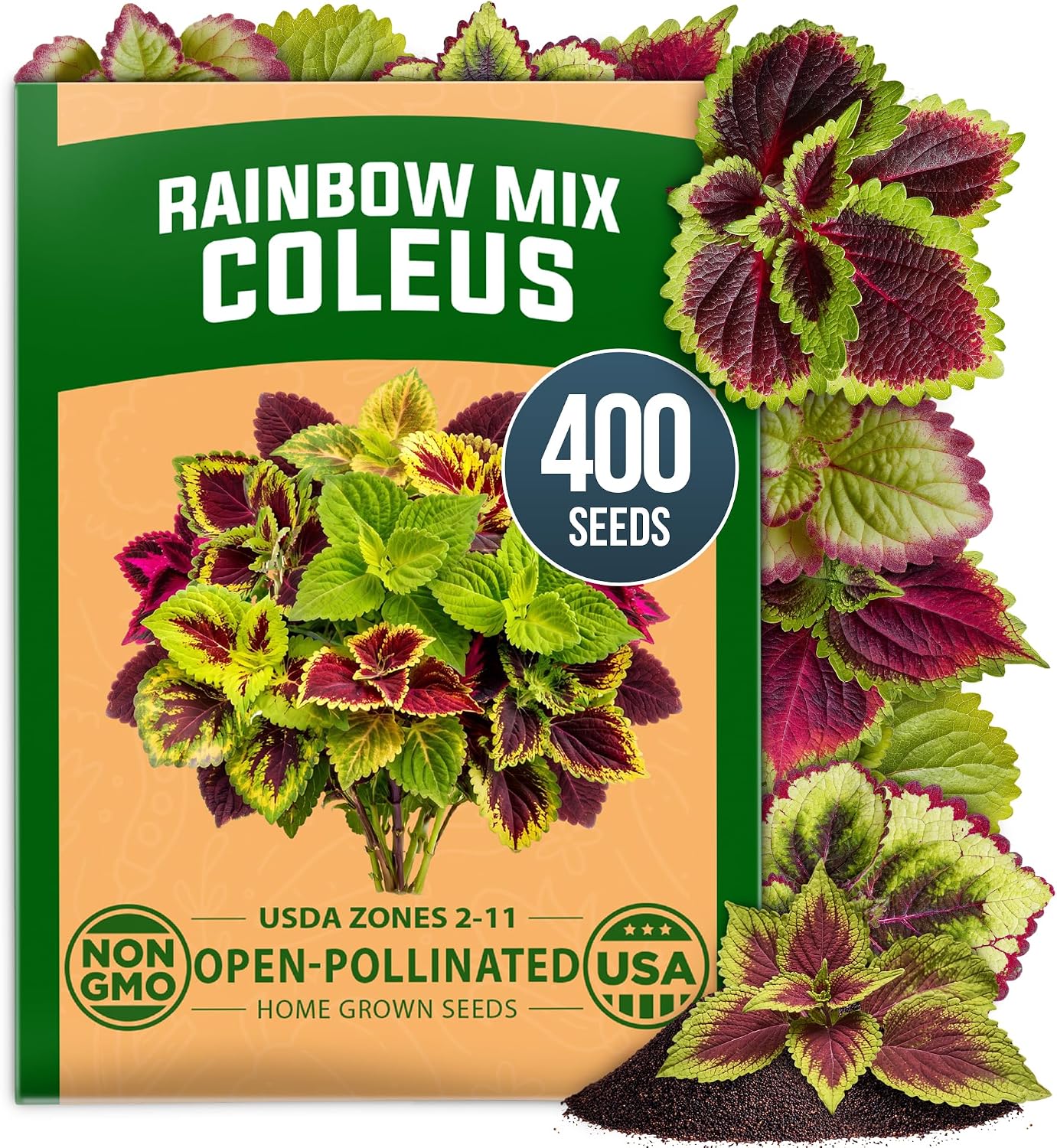
HOME GROWN Rainbow Mix Coleus Seeds (approx. 400)
| Sunlight Exposure | Part Shade to Shade |
|---|---|
| USDA Hardiness Zone | 2-11 |
| Expected Blooming Period | Spring through Frost |
| Material Features | GMO Free, Heirloom |
| Unit Count | 1 Count |
These Rainbow Mix coleus seeds produce compact, colorful foliage plants that are well suited to containers and shaded patio spots. Surface-sow the tiny seeds (do not cover), keep the medium warm and consistently moist, and seedlings typically appear in 10–14 days; pinch growing tips to encourage bushy, mounded plants. The mix is valued for season-long leaf color in shades of rose, green, bronze, cream, and scarlet, so you get visual impact without relying on flowers. Coleus grows indoors near bright north or east windows and outdoors in part shade to shade, making it a flexible choice for window boxes, mixed planters, and small pots. Important limitations are that coleus is a tender annual in most regions and needs protection from frost and prolonged drought, and it prefers warm temperatures for best germination and growth. For container gardeners who want low-maintenance, high-impact foliage, this seed mix is an easy way to produce many plants from one packet.
Best for: Gardeners who want easy-to-grow, high-impact foliage for containers and shaded patios and prefer predictable, low-fuss plants they can start from seed.
Less Ideal for: People seeking long-lived perennial landscaping or plants that tolerate full sun and drought without extra care.
- High seed count (about 400) gives many starts for containers or massing
- Open-pollinated non-GMO seeds from a mix that yields varied, colorful foliage
- Specifically suited to part shade and shade where many flowering plants struggle
- Compact, mounded habit that performs well in pots, window boxes, and mixed planters
- Tender annual in most zones and requires frost protection or indoor overwintering
- Requires consistent moisture and will suffer if soil dries out or remains waterlogged
Verdict: A high-count, non-GMO coleus seed mix that reliably produces compact, colorful foliage perfect for containers and shaded patios.
Choosing the Right Plants for Shady Raised Beds: Key Factors to Consider
Light Level and Positioning
Shade varies. A bed that gets only dappled light from morning leaf-filtered sun provides very different conditions than a bed that receives no direct sun for most of the day. Knowing whether your site is deep shade, dappled shade, or bright shade helps you pick plants with the right leaf physiology. Many shade-tolerant plants still need some morning or late-afternoon light to bloom well.
Positioning also affects microclimate. Beds next to buildings and fences often retain heat and reflect light, which can slightly increase light and temperature compared with beds under dense tree canopies. Map sun patterns through the day before planting so you match plants to the actual light they will receive.
Soil Depth and Drainage in Raised Beds
Raised beds often have shallower, amended soils than natural woodland floors. Confirm your bed depth and the soil mix before choosing plants. Some shade plants prefer a humus-rich, moisture-retentive mix while others need sharper drainage to avoid root rot.
If your raised bed is shallow, choose species with relatively compact root systems or plant in deeper pockets. Improving organic matter with compost and ensuring even drainage helps establish plants without encouraging waterlogging that shade sites can be prone to.
Moisture Regime and Watering Needs
Shade often means slower evaporation and higher soil moisture, which can suit moisture-loving shade plants but can also invite fungal problems if soils stay soggy. Group plants by water needs so thirsty species are planted together and separated from drier-tolerant ones.
Plan irrigation accordingly. Shallow-rooted shade plants may need more frequent light watering in summer, while established woodland perennials usually prefer consistent but not saturated soil. Mulch helps retain even moisture and moderates temperature swings in shaded beds.
Mature Size and Layering
Raised beds read like a miniature garden stage. Choose plants with mature heights and spread that fit the bed dimensions and allow for layering: low groundcovers at the front, mid-height perennials in the center, and taller foliage at the back or center island.
Consider spacing for mature spread rather than planting at tight nursery spacing. Many shade plants spread by clumping or short rhizomes; understanding whether a species clumps or creeps will determine future maintenance and whether it will fill the bed or fight for space.
Foliage Texture and Seasonal Interest
In low light, foliage often becomes the main show. Look for plants with varied leaf shapes, colors, variegation, or glossy textures to create contrast. Some shade plants also offer late-spring flowers, summer blooms, or attractive fall color and berries that extend interest beyond foliage alone.
Plan for seasonal layering so the bed has focal points in spring, summer, and fall. Combining evergreen and deciduous shade plants provides year-round structure and reduces gaps in the winter months.
Maintenance and Longevity
Shade beds can be lower maintenance if you choose long-lived perennials and shrubs appropriate to the space. Consider how often plants need division, pruning, or deadheading, and whether they are prone to leaf spot and mildew in humid shade.
Also think about replacement cycles. Bulbs and short-lived perennials can be used for seasonal pops, but rely on robust perennials and small shrubs for the long-term framework that anchors the bed and reduces the need for frequent replanting.
Designing a Layered Shade-Bed Planting
Start by sketching the raised bed and noting sun patterns and sightlines. Place taller foliage toward the back or center so it does not cast additional shade on smaller specimens, and use low-mounding plants at the bed edge to keep borders crisp. Texture contrast is critical in shade where bright flower colors may be less reliable; combine broad matte leaves with fine-textured, glossy, and variegated foliage for visual depth.
- Place taller, upright plants toward the rear or center of an island bed.
- Use evergreen or semi-evergreen foliage to maintain winter structure.
- Plant in odd-numbered groupings for a natural look and to avoid a rigid rowed appearance.
Soil Prep and Amendments for Shady Beds
Amend raised-bed soil with generous compost and leaf mold to mimic woodland humus. A light, well-draining mix with good organic content helps roots establish while retaining enough moisture that shade plants often prefer. Avoid heavy clay mixes in raised beds that can hold too much water under low-evaporation conditions.
- Work 2 to 3 inches of compost into the top layer before planting.
- Add a slow-release, low-nitrogen fertilizer if the soil is very depleted; many shade plants prefer moderate fertility.
- Top-dress with mulch to conserve moisture and slowly build organic matter.
Grouping by Water Needs and Microclimates
Divide the bed into microzones where plants with similar moisture needs are grouped together. Even within a shady garden, areas near downspouts, under large trees, or against warm walls will differ in moisture and temperature. Grouping reduces the risk of overwatering or underwatering individual species.
- Place moisture-loving ferns and hostas in consistently damp spots.
- Reserve slightly drier pockets for variegated or evergreen species that resent saturated roots.
- Use mulch depth and irrigation placement to control moisture microclimates.
Seasonal Care and Pest Prevention
Observe shady beds for signs of fungal disease common in humid, low-light conditions and improve air circulation by selective thinning rather than dense massing. Clean up dead foliage in fall and cut back spent growth in spring as appropriate to each species to reduce overwintering pests and disease.
- Avoid overhead watering late in the day to reduce leaf wetness at night.
- Divide overgrown clumps in spring or fall to rejuvenate plants and control spread.
- Remove leaves with severe mildew or rust and monitor soil moisture to avoid prolonged soggy conditions.
How We Chose the Best Plants for Shady Raised Beds
Our selection prioritized plants that reliably thrive in reduced light and raised-bed settings. We favored species with documented shade tolerance in garden literature and with growth habits suited to contained beds rather than wide, spreading groundcovers that can overwhelm edging. Plants were evaluated on measurable horticultural traits and practical gardener experience indicators. Key evaluation criteria included documented light tolerance range, mature size and habit for raised beds, soil and moisture adaptability, seasonal interest (foliage, flowers, or berries), and routine maintenance needs such as pruning or division. We also considered disease and pest resistance common to shady, humid microclimates and the plant's ability to establish in amended raised-bed soils. We excluded plants that require deep, undisturbed woodland soil or extensive root runs better suited to open borders. Invasive or aggressively spreading species were filtered out. The final shortlist balances ornamental interest, ease of cultural care, and compatibility with typical raised-bed depth and soil mixes.
FAQ
How much sun is 'shade' for raised-bed plants?
Shade ranges from deep shade with almost no direct sun to dappled light where filtered sun reaches the bed. Most plants labeled shade-tolerant do best with some morning or late-afternoon light rather than total darkness.
Can I grow bulbs in a shady raised bed?
Yes. Many spring bulbs perform well in shade because they bloom before tree canopies fully leaf out. Choose bulbs known to tolerate lower light and plant them with enough organic matter so their roots avoid waterlogged soils.
Do shade plants need different fertilizer than sun plants?
Shade plants often thrive on moderate fertility. Excess nitrogen can produce floppy, weak growth, so use a balanced or lower-nitrogen feed and focus on building organic matter rather than heavy feeding.
How do I prevent fungal disease in a shady bed?
Improve air circulation by spacing plants correctly and removing dense, dead foliage. Water at the soil level rather than overhead and avoid watering late in the day to minimize leaf wetness that encourages fungi.
Will raised-bed soil dry out less in shade?
Yes, shaded soils generally retain moisture longer because of reduced evaporation. That can be an advantage for moisture-loving species but requires care to avoid chronic waterlogging. Amend soil for good drainage and monitor moisture levels.
Final Verdict
Choosing plants for shady raised beds is about matching plant traits to the real conditions of your site: the exact light level, soil depth and drainage, and moisture patterns. Prioritize shade tolerance, appropriate mature size, and foliage texture to build a bed that reads well even when flowers are modest. Focus on long-lived perennials and small shrubs for the structural backbone, then add bulbs and seasonal accents for flashes of color. By grouping plants with similar moisture needs and planning for maintenance like division and pruning, you can create a resilient, low-stress shady raised bed that looks intentionally planted and performs year after year.
