

Note: This article contains affiliate links. If you click on these links and make a purchase, I may earn a small commission at no extra cost to you. This helps support my research and content. Read my full affiliate disclosure here.
Growing pumpkins on a trellis changes how you manage space, pest pressure, and harvest ergonomics. When the trellis can hold heavy fruit and let vines climb naturally, you reduce ground rot and make harvesting less of a chore. This guide covers the top seven pumpkin trellises selected for use in home gardens, patios, and small plots. We shortlisted options that balance load capacity, ease of setup, and vine support. Below you will find practical notes on installation, durability, and real-world handling to help you pick the right trellis for your growing situation.
Top Picks at a Glance
| Best Overall The best all-around choice for most situations | Gardener's Supply Company Titan Extra-Tall Garden Arch (80") |  |
| Best Quality Built to a higher standard if you want something more solid | Anleolife 4×6 ft Heavy-Duty Double-Arch Garden Trellis |  |
| Best Value The sweet spot between price and what you get | HIHADUUM Heavy-Duty Adjustable A-Frame Trellis, 2-Pack |  |
| Best Budget The cheapest option that still gets the job done reliably | K-Brands A‑Frame Garden Trellis for Cucumbers and Climbing Vegetables |  |
| Highest Rated A top-rated pick with lots of positive feedback | Vego Garden Modular Arched Trellis System, 7 ft Long |  |
| Most Popular A crowd favorite that many people choose with confidence | Adorox 7.3 ft Metal Garden Arch Trellis |  |
| Best Seller A high-volume bestseller chosen again and again | RUBFAC 7.8 ft Metal Garden Arch Trellis |  |
Gardener's Supply Company Titan Extra-Tall Garden Arch (80")

| Material Type | Polyethylene-coated steel tubing |
|---|---|
| Netting Included | Nylon netting |
| Weather-proof | Yes |
| Weight limit | 70 lbs |
This extra-tall garden arch is a rigid support for sprawling vines like squash, melons, and zucchini that keeps fruit off the ground and frees up bed area. Built from polyethylene-coated steel tubing with nylon netting, the arch provides a weatherproof frame that resists rust and is gentle on stems while the netting gives many secure attachment points for heavy fruit. It assembles without special tools and breaks down for compact storage at season end, making it convenient for seasonal vegetable plots and ornamental entrances. The manufacturer states a 70 lb weight limit, so it handles multiple heavy fruits but you should distribute loads and tie larger fruits to avoid concentrated strain. Its open arched profile creates walk-through space and makes harvesting and pruning easier, though the fixed footprint and tall height mean it is best sited where it will not block pathways or sightlines. Expect a durable, low-maintenance support that replaces flimsy cages and short trellises for larger vining crops.
Best for: Gardeners who want a durable, permanent-looking support to grow heavy vining vegetables vertically and reclaim ground space while simplifying harvests.
Less Ideal for: Growers with very small raised beds, low overhead clearance, or who need adjustable modular supports for mixed crop layouts should consider alternative, lower-profile options.
- Polyethylene-coated steel frame resists rust and is gentle on plant stems.
- Nylon netting offers ample attachment points for sprawling vines and fruit.
- Holds up to 70 pounds for supporting multiple heavy fruits.
- Tool-free assembly and collapses for compact off-season storage.
- Fixed footprint and tall profile may not fit small beds or low-clearance locations.
- Has a specified maximum weight capacity so very heavy or concentrated loads need extra support.
Verdict: Buy this if you need a sturdy, weatherproof arch that lifts heavy vining crops off the ground and makes harvesting easier.
Anleolife 4×6 ft Heavy-Duty Double-Arch Garden Trellis

| Finish Type | Galvanized |
|---|---|
| Item Highlight | 5FT Wide Growing Tunnel; Swaged Joints; Raised-Bed or In-Ground |
| Size | 4x6ft |
| Number of Items | 1 |
This double-arch trellis is built from galvanized square-steel tubing with swaged joints to give a rigid, low-wobble frame for heavy climbing vegetables. Installed as a walk-through tunnel it provides overhead and side support for large vines so you can train cucumbers, squash, pumpkins and grapes upward while still reaching into the bed for pruning and harvest. The design includes 17 crossbars and supplied jute rope for many tie-in points, and the pointed legs allow either direct soil insertion or attachment to compatible raised beds. In practice the structure feels noticeably stiffer than basic wire arches and holds developing fruit weight without obvious sagging. Expect straightforward assembly but plan for two people to align the swaged joints easily. The frame is substantial enough for heavier crops but will occupy a fixed footprint in the bed and is not easily moved once installed in-ground. If you want a durable, high-capacity support for a productive vegetable bed, this trellis delivers dependable structural performance.
Best for: Gardeners who prioritize strong, reliable plant support for heavy-yielding vegetable crops and need a stable walk-through structure for training and harvesting.
Less Ideal for: People seeking a lightweight, easily moved trellis or a decorative, non-structural arch for occasional climbers.
- Galvanized square-steel frame with swaged joints for increased rigidity and reduced wobble
- 17 crossbars plus jute rope provide many tie-in points for training vines and supporting fruit
- Pointed legs support both in-ground insertion and attachment to compatible raised beds
- Designed as a walk-through tunnel for easy access to plants for pruning and harvest
- Once inserted into soil the tunnel is not easily relocated
- May require two people for alignment during assembly and installation
Verdict: Choose this trellis when you need a durable, walk-through support that reliably holds heavy vines and fruit for high-yield vegetable gardening.
HIHADUUM Heavy-Duty Adjustable A-Frame Trellis, 2-Pack

| Material Type | Iron, Metal |
|---|---|
| Finish Type | Powder Coated |
| Grid Size | 3.15"×3.94" |
| Frame Thickness | 1.2 cm outer frame |
| Number of Items | 2 |
These HIHADUUM A-frame trellises are built to support climbing vegetables like cucumbers, tomatoes, peas, and beans in raised beds and small garden plots. Each kit includes two preassembled panels that fold flat and bolt together to create a 17 to 50 inch tall A-frame with dense 3.15"×3.94" grid spacing that guides vines and spreads fruit weight across the frame. The powder-coated iron construction and reinforced 1.2 cm outer frame make the trellis noticeably stiffer than thin-wire options, and the factory-forged hinge avoids wobble at the top. Setup is straightforward: panels connect with a few hand-tightened bolts and the unit collapses for compact storage. The box also includes plant clips, twist wire, tape, and gloves so you can tie and protect stems without buying extras. Expect a sturdy, low-maintenance support for medium to heavy vine crops, though the fixed grid spacing and A-frame shape suit vertical training more than sprawling varieties and the pair is sized for raised beds rather than large field rows.
Best for: Gardeners who want a durable, no-nonsense support for vertical vegetable production in raised beds and who value easy assembly and included accessories.
Less Ideal for: Growers who need trellises for wide sprawling crops or long single-row trellises for large-scale beds should consider different shapes or longer panels.
- Reinforced 1.2 cm powder-coated steel frame resists sagging and corrosion
- Adjustable 17" to 50" height and fold-flat design for flexible use and compact storage
- Dense grid spacing provides more attachment points to support heavy fruit
- Includes clips, twist ties, tape, and gloves so no extra accessories are required
- A-frame shape and dimensions are optimized for raised beds and may not fit larger garden rows
- Fixed grid spacing limits training options for very large sprawling plants
Verdict: A practical, heavy-duty trellis pair that gives raised-bed gardeners a sturdy, easy-to-install vertical support with all the accessories needed to train medium and heavy vine crops.
K-Brands A‑Frame Garden Trellis for Cucumbers and Climbing Vegetables
| Material | Metal, Plastic |
|---|---|
| Finish Type | Powder Coated |
| Item Highlight | Support for Climbing Plants Outdoor |
| Unit Count | 1 Count |
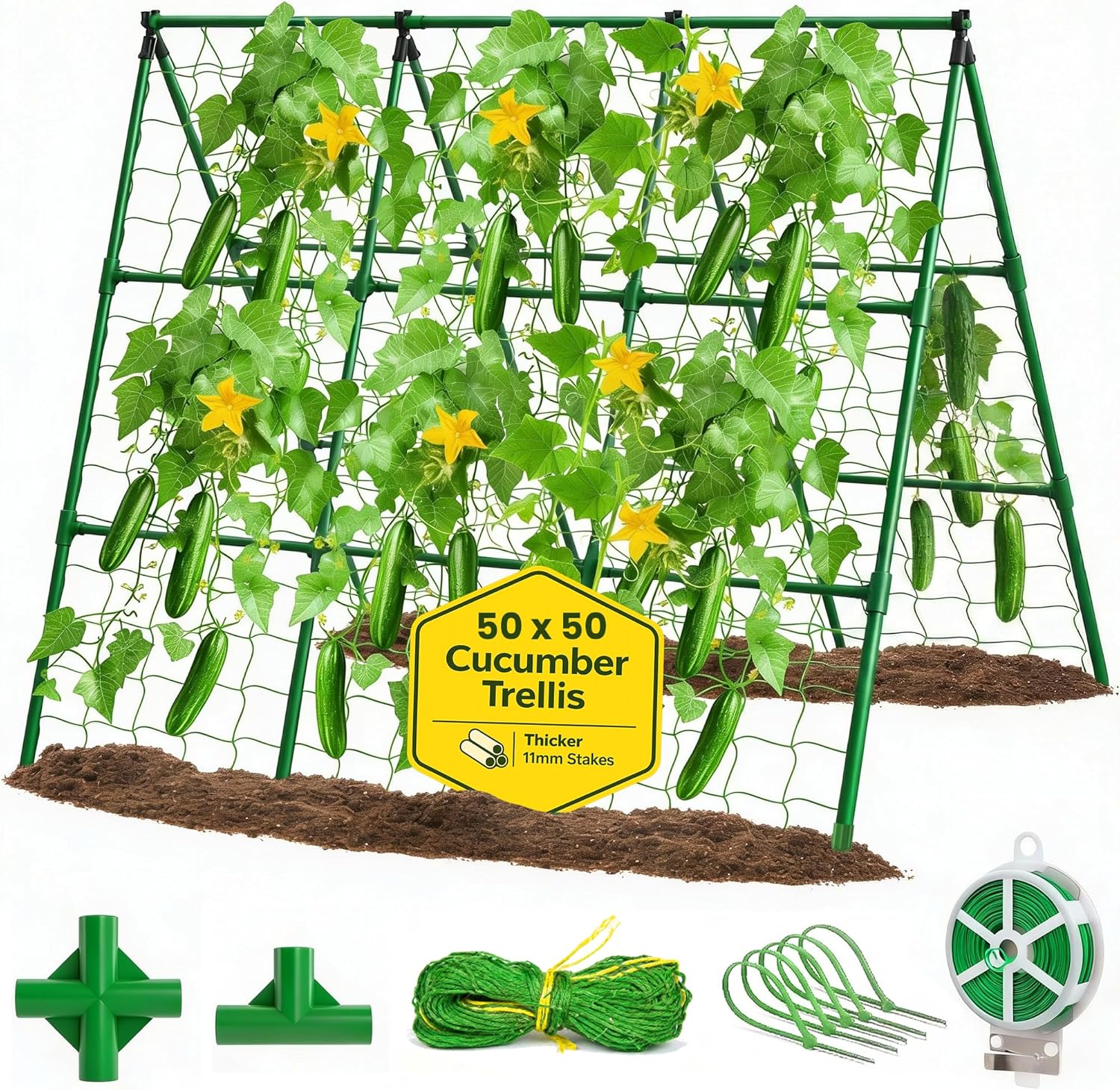
This A-frame trellis is a no-frills support system aimed at giving vining vegetables vertical structure without a complicated build. The kit snaps together in minutes using simple connectors so you can set it inside a raised bed, planter, or directly in the garden without tools. Its powder-coated steel frame provides weather-resistant support, and the included heavy-duty netting plus twist ties and zip ties let you train cucumbers, peas, beans, tomatoes, and small squash up the frame. For small-space vegetable gardens it saves ground space and improves air flow around plants, which helps with pollination and disease reduction. The main limitations are its modest height and light weight compared with welded or commercial-grade trellises, so very heavy fruit or extremely vigorous vines may need additional bracing. Also the frame has sharp edges noted in safety info, so handle carefully during assembly and placement.
Best for: Gardeners working on a budget who want a simple, ready-to-use trellis to add vertical support for cucumbers and other climbing vegetables in raised beds or containers.
Less Ideal for: Growers who need permanent, heavy-duty support for large pumpkins, watermelons, or very vigorous vines should choose a sturdier commercial-grade structure.
- Tool-free, quick assembly with easy-connect joints
- Powder-coated steel frame resists rust and seasonal weathering
- Includes netting, twist ties, and 50 zip ties so no extra purchases are needed
- A-frame shape fits well in raised beds, containers, and small garden plots
- Not as robust as heavy industrial or welded trellises for very heavy fruit loads
- Sharp edges reported in safety information require careful handling
Verdict: An affordable, easy-to-assemble A-frame trellis that gives small-space gardeners ready-to-use vertical support for cucumbers and other climbing vegetables.
Vego Garden Modular Arched Trellis System, 7 ft Long

| Material Type | Metal |
|---|---|
| Finish Type | Powder Coated |
| Shape | Semicircular |
| Size | 7.0 Ft Long |
The Vego Garden 7.0 ft Modular Arched Trellis is a powder-coated metal arch that attaches to compatible raised beds to give cucumbers, beans, tomatoes and other vines a durable vertical support. It is built as a modular system so multiple arches can be combined or adjusted to span bed widths from about 1.5 ft up to 7.0 ft, and it uses stainless steel hardware and a powder finish aimed at corrosion resistance. In practice the arch provides a stable semicircular frame that keeps heavy vines off the soil and creates a comfortable 4.5 ft walking gap between beds. Installation and removal are straightforward thanks to the connector design, making seasonal setup or winter storage simple. The trellis is optimized for use with Vego raised beds and complements their styling, but it is not a freestanding structure and depends on correct bed compatibility and placement above ground to achieve its stated longevity. If you need a long-lasting trellis to pair with a modular raised-bed system, this gives a dependable, rust-resistant solution with easy assembly.
Best for: Gardeners who prioritize a long-lasting, low-maintenance trellis to integrate with an existing modular raised-bed system and who want reliable vertical support for vining crops.
Less Ideal for: People who need a standalone freestanding arch or who do not use Vego raised beds should consider a different trellis that does not depend on bed mounting.
- Modular design allows combining arches to cover different bed lengths
- Powder-coated metal and 304 stainless hardware for strong corrosion resistance
- Connector system enables relatively quick installation and removal
- Semicircular arch creates usable walking space between beds while supporting tall vines
- Designed to mount to compatible raised beds so it is not freestanding
- Requires matching Vego bed configuration to achieve intended fit and height
Verdict: Choose this Vego modular arched trellis when you want a corrosion-resistant, easy-to-install vertical support that integrates with Vego raised beds for reliable long-term use.
Adorox 7.3 ft Metal Garden Arch Trellis
| Material Type | Metal |
|---|---|
| Finish Type | Powder Coated |
| Shape | Single Arch |
| Size | Standard |
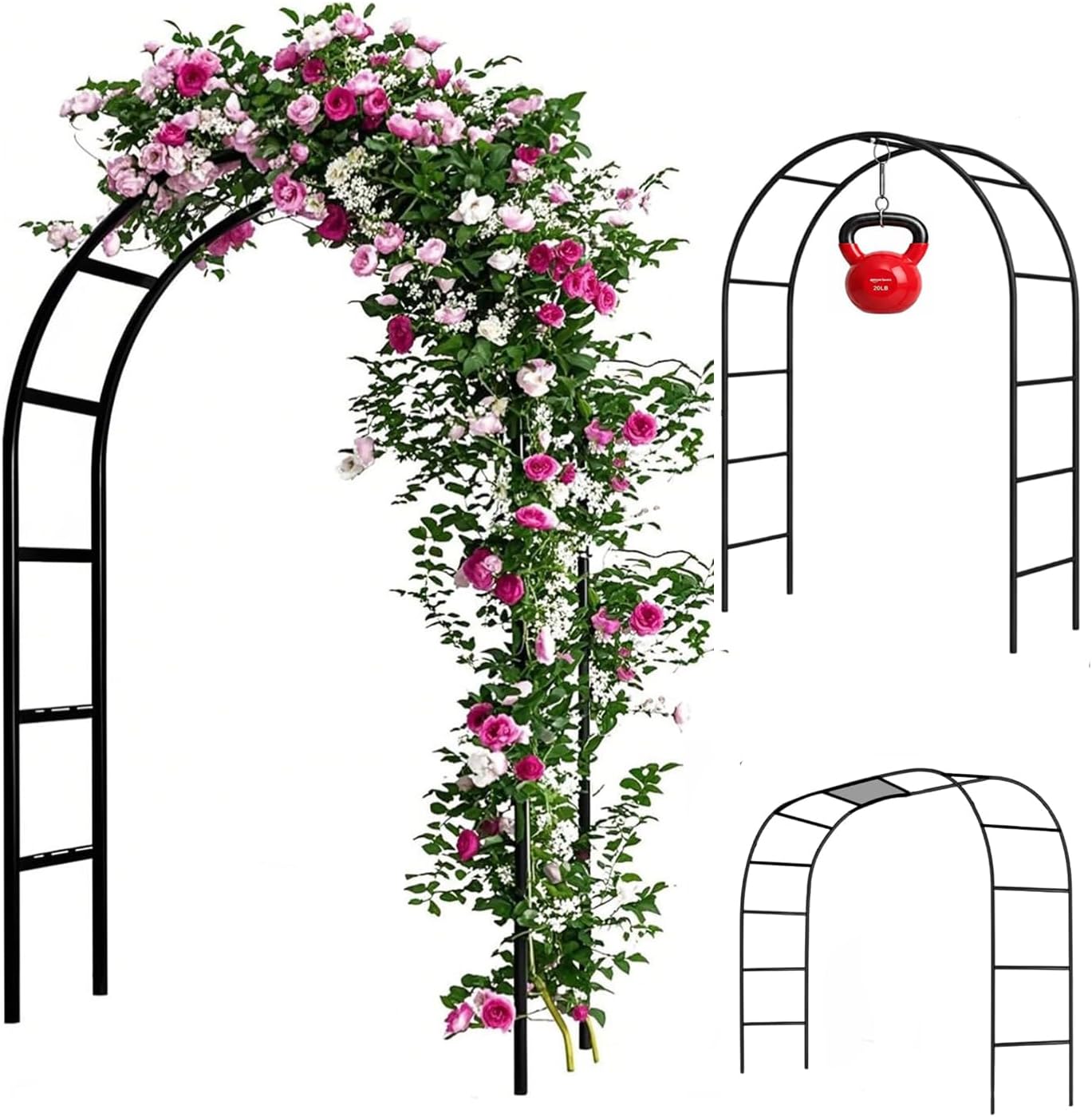
This Adorox garden arch is a simple, classic metal trellis meant to give climbing roses, clematis, and other vines a tall anchor point and to frame walkways or garden beds. It assembles from sectional metal pieces with a powder-coated finish that helps resist rust and makes the arch suitable for outdoor display. The open framework lets plants weave through easily and the 7.3 foot height adds vertical interest without overwhelming a small yard. Typical use is staking or setting the arch at a path or bed edge and training vines up the sides over a single season. The design is lightweight and easy to move during planting, but because it is relatively light it should be securely anchored before heavy growth or decorations are added. Expect straightforward assembly with basic tools and the need to check stability as plants get heavier. For gardeners who want an affordable, attractive support for flowering climbers, this arch delivers function and style, though heavier or permanent arbors will outperform it where extreme load bearing or long-term permanence is required.
Best for: Gardeners who want an attractive, easy-to-assemble trellis to support seasonal flowering climbers and to add vertical interest or an entrance feature in a backyard or pathway.
Less Ideal for: People seeking a heavy-duty, permanent arbor for large vines or structural landscaping should consider sturdier, load-rated alternatives.
- Powder-coated metal finish offers basic corrosion resistance for outdoor use
- Open arch design is well suited for training climbing roses, clematis, and vines
- Sectional frame is lightweight and easy to assemble and move during setup
- Classic black silhouette integrates with many garden styles and event décor
- Lightweight construction means it can require additional anchoring for heavy plants or windy sites
- Not intended for very heavy loads or as a permanent structural arbor
Verdict: Buy this arch if you want an affordable, easy-to-assemble metal trellis that creates height and supports flowering climbers in a garden or along a pathway.
RUBFAC 7.8 ft Metal Garden Arch Trellis

| Material Type | Metal |
|---|---|
| Finish Type | Painted |
| Shape | Semicircular |
| Size | 7.85ft |
This RUBFAC metal garden arch is a simple semicircular trellis designed as a decorative entrance or backdrop for weddings, parties, and garden paths. It ships as a multi-piece painted metal frame that assembles into a roughly 7.8 foot tall arch; customers commonly use it to support climbing plants, drape lights or fabric, or anchor balloon and floral arrangements for events. The painted finish helps it resist weathering compared with bare metal, and the straightforward design keeps assembly and disassembly manageable for seasonal or occasional use. Because it is lightweight, it is easy to move into position and dress with decorations, but you will want to anchor it securely for windy conditions or heavy plant growth. The arch does not include ground stakes or heavy base plates, so plan basic anchors or tie-downs if you expect sustained outdoor exposure. For buyers seeking a low-profile, attractive trellis or event arch, this model does the job without complicated installation, but it is best for decorative and light-duty plant support rather than heavy structural tasks.
Best for: Someone who wants an easy-to-assemble decorative arch for seasonal garden styling, weddings, or lightweight plant support and prioritizes straightforward setup and appearance over heavy-duty strength.
Less Ideal for: Gardeners who need a permanent, high-strength arbor for large vines or those who want a fully anchored professional installation should consider sturdier, purpose-built arbors.
- Attractive semicircular design suited for entrances, wedding backdrops, and garden paths
- Painted metal finish offers basic protection against the elements
- Lightweight multi-piece construction is easy to assemble and reposition
- Works well as a frame for lights, fabric, balloons, and light climbing plants
- No included heavy base or stake kit so additional anchoring is required for windy or permanent outdoor use
- Not intended for heavy structural loads or large, mature climbing vines
Verdict: Buy this if you want a lightweight, attractive arch that makes an easy seasonal trellis or event backdrop with simple assembly.
Choosing the Right Pumpkin Trellis: Key Factors to Consider
Load Capacity and Anchoring
Pumpkins are heavy, especially as they mature. A trellis must support not just vine weight but several pounds of fruit without bowing or collapsing. Check for robust frame members, reinforced joints, and strong connection hardware. A well-anchored trellis resists wind and the leverage of heavy fruit, so consider ground anchors, concrete footings, or wide base designs for windy sites.
Anchoring also affects long-term plant health. A trellis that shifts under load can abrade stems or pinch vines. If you plan to grow multiple large pumpkins on a single structure, plan for additional bracing or supplemental support such as hammocks or slings for individual fruits.
Vine Support Design and Spacing
The surface the vine climbs matters. Mesh, lattice, and slatted designs each guide tendrils differently. Mesh with moderately sized openings lets tendrils catch easily and supports fruit when paired with slings. Narrow slats let vines weave but may not cradle heavy fruit without supplemental ties. Wider grid patterns can be gentler on stems but may require more frequent tying to keep fruit positioned.
Spacing affects airflow and light penetration. A more open trellis reduces humidity around foliage, lowering rot and mildew risk. Conversely, very tight mesh can increase moisture retention on leaves. Choose a design that balances grip for tendrils with enough openness to promote drying and light exposure.
Ease of Setup and Adjustability
Backyard gardeners benefit from trellises that assemble quickly and allow seasonal adjustments. Look for pieces that lock together without special tools and frames that can be widened or shortened to match row spacing. Modular designs let you expand later if you want to add more plants.
Adjustability also includes the ability to add fruit slings or reposition tie points as pumpkins develop. If you expect to move the trellis for crop rotation or storage, check whether the structure breaks down into manageable sections and whether connectors are corrosion-resistant so they remain usable year after year.
Material Durability and Weather Resistance
Materials determine how a trellis performs over multiple seasons. Steel frames should be galvanized or powder-coated to resist rust. Wooden trellises need rot-resistant wood or protective finishes to avoid splintering and decay. Synthetic materials can resist moisture and insects but must still be UV-stable to avoid brittle failure under sun exposure.
Consider local climate. In wet, humid areas choose rust-proof metal or treated wood. In hot, sunny climates choose UV-stable plastics or coated metals. Durability reduces maintenance time and preserves structural integrity when supporting heavy fruit loads.
Footprint and Garden Layout Compatibility
The trellis footprint affects planting density and garden flow. Tall, narrow trellises save ground space but require secure anchoring. Wide A-frame or arch styles offer more surface area for vines but take more bed space. Consider the path you need for harvesting and maintenance; a trellis that blocks access can make routine tasks harder.
Also think about height relative to your varieties. Some pumpkins benefit from a low, gently sloped trellis while others need vertical height. Match the trellis footprint and height to vine vigor and the intended number of fruits per plant.
Fruit Support Options and Maintenance
Even strong trellises often need fruit slings or nets to cradle pumpkins. Check how easy it is to attach slings and whether the trellis design offers natural crotches or ledges to position fruit. Frequent inspection is necessary to re-tie or adjust supports as fruit grows larger.
Maintenance also includes seasonal storage and cleaning. Materials that resist mold and are easy to hose down reduce offseason chores. Designs that allow replacing a single panel rather than the whole structure can extend usable life and simplify repairs.
Best Trellis Shapes for Pumpkins
Different trellis shapes change how vines move and how you manage fruit. A-frame trellises provide two climbing faces and a stable base that handles lateral load well. Vertical panels save ground space and keep fruit higher but need stronger anchoring to resist leverage from heavy pumpkins.
Arches and tunnels can distribute weight across a curved frame and are good for long rows when you want continuous vine coverage. Simple flat panels are easiest to build and repair, but you may need to add slings or additional bracing for fruit support.
- A-frame: stable base and double-sided climbing surface
- Vertical panel: space-saving, needs strong anchoring
- Arch/tunnel: continuous coverage, gentle curvature for fruit
Adding Fruit Slings and Cradle Supports
Even when a trellis is strong, individual pumpkins usually need slings to prevent stems from breaking. Slings can be made from breathable fabric, mesh produce bags, or woven straps. Tie slings loosely so the fruit can grow without pressure points.
Position slings early as small fruits set, not when they are already heavy. That reduces stress on the vine and makes it easier to guide fruit into a supportive cradle.
- Use breathable materials to avoid trapping moisture
- Attach slings to multiple points for even weight distribution
- Check and adjust slings every 1 to 2 weeks during rapid growth
Site Selection and Wind Considerations
Choose a location with full sun and good air circulation for trellised pumpkins. Wind can be the biggest threat to an unsupported vertical system. If your garden is exposed, orient trellises to minimize wind tunnel effects and use deeper or heavier anchors.
When possible, place trellises near a windbreak such as a fence or hedge. That reduces sway and the chance of mechanical failure while still allowing light and airflow.
- Avoid low spots where water pools and increases rot risk
- Anchor deeply in sandy or loose soils
- Consider guy lines for tall trellises in open areas
Seasonal Storage and Offseason Care
Taking care of your trellis during the offseason extends its lifespan. Disassemble modular systems and clean off soil and plant debris to prevent fungal growth. Metal parts benefit from a quick inspection for rust and a light touch-up coating if needed.
Store wooden pieces out of direct ground contact to avoid moisture wicking. If you keep a trellis outdoors year-round, plan for periodic maintenance like tightening fasteners and replacing worn slings before planting season.
- Label parts for easier reassembly
- Store slings and ties separately in a dry place
- Inspect connectors and replace any corroded hardware
DIY Reinforcement Techniques
You can beef up an existing trellis without full replacement. Add diagonal bracing to reduce racking and distribute loads. Supplement with mid-span supports or secondary posts where vines concentrate fruit.
Simple additions like plastic-coated wire, wooden crosspieces, or reusable garden ties can turn a marginal trellis into a reliable fruit carrier. Always keep long-term maintenance and material compatibility in mind so reinforcements do not cause abrasion or trap moisture against vines.
- Use soft ties where vines contact rigid materials
- Place slings at the first sign of fruit set
- Avoid sharp edges that can cut tendrils or stems
How We Chose the Best Pumpkin Trellis
We focused on criteria that matter in real pumpkin production rather than vague popularity metrics. Load capacity and structural strength were primary filters because pumpkins are heavy and a failing trellis damages vines. Ease of setup and adjustability came next to reflect backyard gardeners who need quick installation and seasonal teardown. Vining support design mattered because effective meshes, slats, or tie points reduce stem abrasion and guide fruit placement. Weather resistance and material durability were evaluated for multi-season use, especially resistance to moisture and UV exposure. Finally, portability and storage were considered for gardeners who move trellises between plots or store them offseason. We excluded temporary decorative stakes or purely ornamental structures that cannot bear fruit weight. We also excluded solutions that require significant custom fabrication unless they represent a common DIY approach. The shortlisted trellises meet minimum strength and support thresholds, with additional distinctions in setup time, footprint, and long-term durability.
FAQ
Can all pumpkin varieties be grown on a trellis?
Often, but it depends on the variety and desired fruit size. Smaller and semi-bush varieties adapt well to vertical support. Very large heirloom types can be trellised if you provide strong frames and individual fruit slings, though some growers prefer ground support for the largest specimens.
When should I attach fruit slings?
Usually attach slings shortly after fruit sets and is still small. Adding support early prevents stem stress and makes it easier to position the fruit as it grows. Recheck sling placement every week or two during rapid growth.
How high should a pumpkin trellis be?
Height depends on variety and available space. Many gardeners choose 5 to 7 feet for vertical systems to keep fruit off the ground while remaining reachable for care. Taller trellises need stronger anchors and may require guying in exposed sites.
What is the best way to anchor a trellis?
Anchoring options include ground spikes, auger-style anchors, concrete footings, or wide base frames. The best choice depends on soil type and trellis design. In loose or sandy soils, deeper anchors or concrete footings reduce the risk of pullout.
Do trellised pumpkins need different watering or fertilizing?
Water and feed requirements are similar, but trellised plants may dry faster because of increased air circulation. Monitor soil moisture and adjust irrigation to avoid drought stress, which can weaken vines and reduce fruit set.
Can I reuse trellis slings year after year?
Often yes if the material is durable and stored properly. Inspect slings for wear, UV damage, or fraying before reuse. Replace any slings that show significant deterioration to avoid unexpected failures during the season.
Final Verdict
Choose a trellis that matches how large your pumpkins will grow and how much work you want to invest in setup and maintenance. Prioritize load capacity and anchoring for large fruit, and pick a vine support design that minimizes stem abrasion while allowing good airflow. Be realistic about footprint and storage needs, and plan to use slings for individual fruits when necessary. If you balance strength, ease of setup, and durability for your site and varieties, you will reduce fruit loss and make harvests easier. Use the guide above to weigh tradeoffs and select the trellis style that fits your garden and growing goals.
