

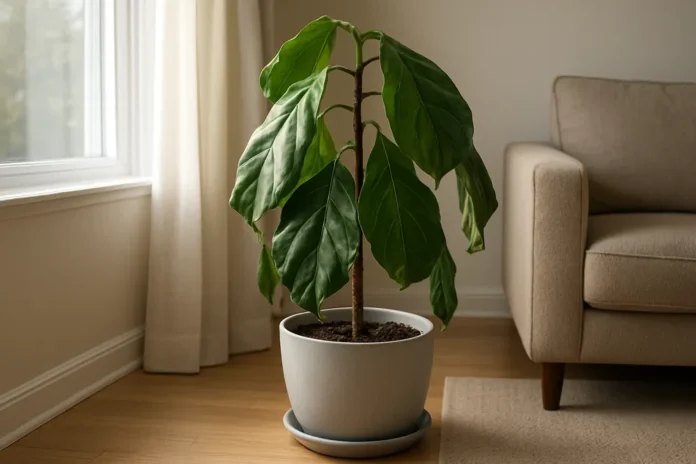
Fiddle leaf fig leaves usually droop because the plant is stressed by improper watering, low light, root problems, or sudden environmental changes. Drooping can also happen after repotting or moving the plant, even when the issue is temporary.
Seeing a fiddle leaf fig suddenly look limp can be frustrating, especially when the leaves were upright and healthy just days before. In most homes, drooping is a stress signal rather than a mystery disease, and the cause is often tied to watering, light, roots, or temperature.
The good news is that droopy fiddle leaf fig leaves are usually reversible if you catch the problem early. Once you understand what this plant needs and how to read the clues it gives you, it becomes much easier to correct the issue and help it regain a firm, upright shape.
What Drooping Leaves Usually Mean
A fiddle leaf fig holds its large leaves with internal water pressure and steady energy from healthy roots and adequate light. When that balance is disrupted, the leaves lose firmness and begin to hang downward. Drooping is a symptom, not the root cause.
Unlike crisp browning or spotted damage, drooping often appears before more serious decline sets in. That is why it is one of the earliest warning signs that your care routine or the plant's environment needs attention.
- Leaves hanging lower than normal but still green often suggest watering stress or low light.
- Soft stems, yellowing leaves, or a sour soil smell can point to overwatering and root stress.
- Dry soil, curling edges, and leaf drop often lean toward underwatering or very dry air.
- Sudden drooping after moving the plant may be temporary transplant or location shock.
Overwatering Is One of the Most Common Causes
Many drooping fiddle leaf figs are getting too much water, not too little. When potting mix stays wet for too long, roots cannot take up oxygen properly. Stressed roots stop moving water efficiently, so the leaves droop even though the soil feels moist.
Signs Your Plant Is Overwatered
- Soil feels wet several days after watering
- Leaves droop and may also turn yellow
- The pot feels heavy for a long time
- Brown patches appear, especially with a softer texture
- A musty or sour smell comes from the soil
Overwatering is not only about frequency. It can also happen when the container is too large, the pot has poor drainage, the mix is too dense, or the plant sits in a dim area where water evaporates slowly.
How to Correct It
Let the upper portion of the potting mix dry before watering again. Empty any saucer after watering so roots are not left sitting in runoff. If the soil stays soggy for a week or more, consider repotting into a chunky indoor tree mix with strong drainage.
Underwatering Can Make Leaves Limp Fast
Fiddle leaf figs also droop when they become too dry. Large leaves lose turgor pressure quickly if roots cannot pull enough moisture from the pot. This is especially common in bright rooms, warm homes, or during winter when indoor heat dries the soil faster than expected.
Signs Your Plant Is Too Dry
- The soil pulls away from the edge of the pot
- The pot feels unusually light
- Leaf edges look dry or slightly curled
- Lower leaves may drop after a period of drought
- Water runs straight through the pot because the mix has become very dry
When a root ball dries out too much, the soil can become hydrophobic, which means it resists absorbing water evenly. In that case, a quick splash is not enough. Water slowly until the mix is evenly moist and excess drains out the bottom.
If the plant repeatedly goes bone dry, the leaves may recover only partially and some may drop. Consistency matters more than occasional rescue watering.
Low Light Weakens Leaf Support
Fiddle leaf figs need bright light to support large, heavy foliage. In rooms that are too dim, the plant cannot produce enough energy to maintain strong growth. Leaves may become softer, droopier, and more widely spaced along the stem.
A plant that sits far from a window may also use water more slowly, which increases the chance of overwatering at the same time. This is why low light and watering issues often show up together.
Light Clues to Watch For
- The plant leans toward the nearest window
- New growth is small or sparse
- Older leaves droop without obvious dryness
- The soil stays wet longer than it used to
- Leaf drop increases after moving the plant deeper into a room
Most fiddle leaf figs do best near a bright window with several hours of strong indirect light, and some can handle a bit of gentle direct morning sun. If your plant is in a dark corner, moving it closer to brighter light often improves leaf posture over time.
Root Problems Can Keep Water From Reaching the Leaves
Healthy roots are what keep the leaves hydrated and supported. If roots are rotting, circling tightly, damaged during repotting, or crowded in a pot that dries too fast, the plant may droop even when your watering routine seems reasonable.
Root Rot
Root rot develops when roots stay too wet and begin to decay. Rotten roots turn dark, soft, and ineffective at moving water. The plant can look thirsty and limp even though the soil is damp. This mismatch is a classic sign of serious root stress.
Rootbound Plants
A rootbound fiddle leaf fig may dry out too quickly because the pot contains more roots than soil. Water can rush through without soaking in well, and the leaves may droop shortly after watering. If roots are circling densely around the inside of the pot, it may be time to move up one pot size.
Repotting Stress
After repotting, temporary drooping is common. Even gentle handling can disturb fine feeder roots, and the plant may need a few weeks to settle in. Mild droop after repotting is usually not alarming unless it keeps worsening or is paired with soggy soil.
Temperature Swings and Dry Indoor Air Can Trigger Drooping
Fiddle leaf figs prefer stable indoor conditions. Cold drafts, hot air blasts, sudden HVAC changes, and low humidity can all stress the foliage. While humidity alone is not always the main cause, dry air can worsen drooping when watering is already inconsistent.
- Cold air from a drafty window can shock leaves and slow root function.
- Heating vents can dry the soil too quickly and dehydrate the plant.
- Air conditioning can create uneven temperatures that the plant dislikes.
- Very low humidity can make leaf edges curl while the whole canopy looks tired.
Try to keep the plant away from doors that open frequently, leaky windows, fireplaces, and direct vent airflow. A stable room is often better than a room that is bright but full of temperature extremes.
Drooping After a Move Is Common
Fiddle leaf figs are famous for reacting to change. If your plant started drooping after you brought it home, moved it to another room, rotated it sharply, or changed its light level, it may simply be adjusting.
This kind of stress response can happen even when the plant is otherwise healthy. Changes in light direction, temperature, watering rhythm, or airflow are enough to affect leaf posture. As long as you place it in a suitable spot and keep care consistent, the plant often rebounds.
What Adjustment Stress Looks Like
- Drooping starts soon after relocation
- Leaves remain mostly green
- There is no strong odor or obvious stem collapse
- The plant is otherwise stable but looks less perky than before
How to Tell Which Issue Is Affecting Your Plant
The fastest way to solve drooping is to look at the full pattern, not just the leaves. Soil moisture, light exposure, container size, drainage, and recent changes all matter. A simple check can help you narrow the cause quickly.
- Feel the soil 2 to 3 inches down. Wet suggests overwatering risk, while very dry suggests underwatering.
- Lift the pot if possible. A very heavy pot points to excess moisture, while a very light pot often means the mix is dry.
- Check the room location. If the plant is far from a bright window, low light may be a major factor.
- Look for yellowing, mushy spots, or odor. Those signs support root stress from too much water.
- Think about timing. If drooping started after a move or repotting, adjustment stress may be involved.
This broader view helps prevent the most common mistake, which is adding more water to a plant that is already suffering from wet roots.
How to Fix Drooping Fiddle Leaf Fig Leaves
The right fix depends on the cause, but your goal is always the same: restore root health, improve consistency, and give the plant enough light to support its foliage.
If the Soil Is Too Wet
- Pause watering until the upper layer of mix dries out.
- Make sure the pot has drainage holes.
- Remove any standing water from the saucer or cachepot.
- Move the plant into brighter light if it has been sitting in a dim spot.
- Repot if the mix stays soggy or smells sour.
If the Soil Is Too Dry
- Water thoroughly and slowly until excess drains from the bottom.
- Rewet a very dry root ball gradually so the mix absorbs moisture evenly.
- Increase watering consistency instead of waiting for severe wilt.
- Keep the plant away from hot vents or intense afternoon heat.
If Light Is Too Low
- Move the plant closer to a bright window.
- Rotate it occasionally for even growth, but avoid constant repositioning.
- Supplement with a grow light if your space is naturally dim.
If Roots Are Damaged or Crowded
- Inspect roots during repotting if decline continues.
- Trim clearly rotten roots with clean pruners.
- Repot into fresh, well-draining mix.
- Choose a pot only slightly larger than the previous one.
Do not expect instant recovery. Leaves may take days or weeks to firm up, and badly damaged leaves may never return to perfect posture. What matters most is that new growth looks healthy and the plant stops declining.
How to Prevent Drooping in the Future
Prevention is mostly about consistency. Fiddle leaf figs prefer a steady routine rather than dramatic swings between dry and soaked, dark and bright, or warm and cold.
- Water based on soil dryness, not a rigid calendar.
- Use a fast-draining potting mix for indoor trees or tropical plants.
- Grow the plant in bright, stable light.
- Keep it away from vents, cold drafts, and sudden temperature swings.
- Repot before the plant becomes severely rootbound, but do not oversize the pot.
- Avoid moving the plant frequently once it is thriving.
A moisture meter can be helpful, but your hands and observation are often enough. Once you learn how quickly your specific pot and room conditions dry out, your watering decisions become much easier.
When Drooping Is a Serious Warning Sign
Some drooping is mild and temporary, but severe collapse deserves quick attention. If leaves are drooping alongside yellowing, blackening, mushy stems, leaf drop, or a foul smell from the pot, root rot may be advancing.
Likewise, if the plant remains limp after proper watering and good light, inspect the roots or reassess the container and soil. The earlier you respond, the better the odds that your fiddle leaf fig will recover without major leaf loss.
FAQ
Will Drooping Fiddle Leaf Fig Leaves Perk Back Up?
Often, yes. If the cause is caught early and corrected, leaves can regain some firmness within days to a couple of weeks. Severely damaged leaves may stay somewhat droopy even after the plant recovers.
How Often Should I Water a Drooping Fiddle Leaf Fig?
There is no perfect schedule for every home. Water when the top few inches of potting mix feel dry, then water thoroughly. Bright light, pot size, season, and indoor temperature all affect timing.
Can Drooping Mean Root Rot?
Yes. Drooping with wet soil, yellowing leaves, soft brown spots, or a sour smell strongly suggests root stress or root rot. In that case, adding more water usually makes the problem worse.
Should I Mist My Fiddle Leaf Fig if the Leaves Are Drooping?
Misting is not a reliable fix for drooping. It may briefly raise surface moisture, but it will not solve problems with watering, light, or roots. Stable humidity and proper soil moisture matter more.
Is It Normal for Leaves to Droop After Repotting?
Mild drooping after repotting is common because roots have been disturbed. The plant usually improves if it is kept in bright indirect light and watered carefully, without keeping the soil soggy.
Can Low Light Alone Cause Drooping?
Yes, especially over time. In low light, the plant cannot produce enough energy to support large leaves well. It may also use water more slowly, which increases the chance of overwatering.
Why Are Only the Lower Leaves Drooping?
Lower leaves often show stress first, especially from inconsistent watering, low light, or natural adjustment. If the top growth still looks healthy, the issue may be mild, but it is still worth correcting before more leaves are affected.
Need the right fix fast? Read our guide to the best soils, pots, moisture meters, and grow lights for fiddle leaf figs so you can stop drooping and keep new growth strong.
