

Note: This article contains affiliate links. If you click on these links and make a purchase, I may earn a small commission at no extra cost to you. This helps support my research and content. Read my full affiliate disclosure here.
A good trellis for growing peas changes the way your plants climb, improves airflow, and makes harvesting faster. Whether you have a small patio, a backyard row, or a community garden bed, the right support keeps tendrils high and pods cleaner and more accessible. This guide shortlists the top trellis options suited specifically for growing peas, and evaluates each pick against the needs most gardeners face: structural strength, ease of installation, and how well the design supports pea vines. Below you'll find our top selections and detailed evaluation criteria so you can choose the trellis that fits your spacing, planting style, and season extension goals.
Top Picks at a Glance
| Best Overall The best all-around choice for most situations | iGreely Adjustable Heavy-Duty A-Frame Metal Trellis (48") for Climbing Plants |  |
| Best Quality Built to a higher standard if you want something more solid | MQHUAYU Heavy-Duty Adjustable A-Frame Trellis for Climbing Plants |  |
| Best Value The sweet spot between price and what you get | Tcamp Heavy-Duty Polyester Plant Trellis Netting, 5 x 15 ft, 6" Mesh |  |
| Best Budget The cheapest option that still gets the job done reliably | 15 ft x 5 ft Trellis Netting for Climbing Plants, 6" Square Mesh Polyester |  |
| Highest Rated A top-rated pick with lots of positive feedback | Gardgue 4 ft Willow Teepee Trellis for Climbing Plants |  |
| Most Popular A crowd favorite that many people choose with confidence | UWIOFF Plastic Stackable Mini Trellis for Potted Plants (12 Pack) |  |
iGreely Adjustable Heavy-Duty A-Frame Metal Trellis (48") for Climbing Plants

| Material Type | Metal |
|---|---|
| Finish Type | Powder Coated |
| Shape | A-Shape |
| Size | 1 pack |
This iGreely A-frame trellis is a straightforward support for climbing vegetables that assembles quickly and adapts as plants grow. The unit ships as pre-assembled panels that lock together with a forged steel hinge and a few hand-tightened bolts, so you can set it up or change height in minutes without tools. The powder-coated alloy construction and reinforced 3.5"x3.7" grid provide solid vertical support for cucumbers, beans, tomatoes and similar vines, and the A-shape gives good stability in breezy garden spots. It folds flat for seasonal storage and includes cable ties to guide stems through the grid. The main compromises are its fixed panel footprint and 48" maximum height, which limit use for very large vines or if you need a custom long run of trellis; also the green finish and metal grid spacing may not suit every ornamental planting. For most raised beds and vegetable rows it delivers durable, easy-to-use vertical support that speeds harvesting and improves air flow around plants.
Best for: Gardeners who want a durable, no-fuss trellis to add vertical space to raised beds and support common vegetables like cucumbers, beans and tomatoes with minimal setup.
Less Ideal for: Growers who need extremely tall supports, long continuous trellis runs, or a decorative trellis for ornamental climbing plants should consider other options.
- Pre-assembled panels with forged steel hinge for quick tool-free setup
- Powder-coated metal construction resists corrosion and weather
- Adjustable height from low seedling support up to full 48" for maturing vines
- A-frame shape and reinforced grid distribute weight for stable support
- Folds flat for compact seasonal storage
- Maximum height and fixed panel width limit use for very tall or long-running vines
- Green powder-coat and grid spacing may not suit ornamental planting styles
Verdict: A sturdy, easy-to-assemble A-frame trellis that gives raised-bed vegetable gardeners quick, weather-resistant vertical support for common climbing crops.
MQHUAYU Heavy-Duty Adjustable A-Frame Trellis for Climbing Plants
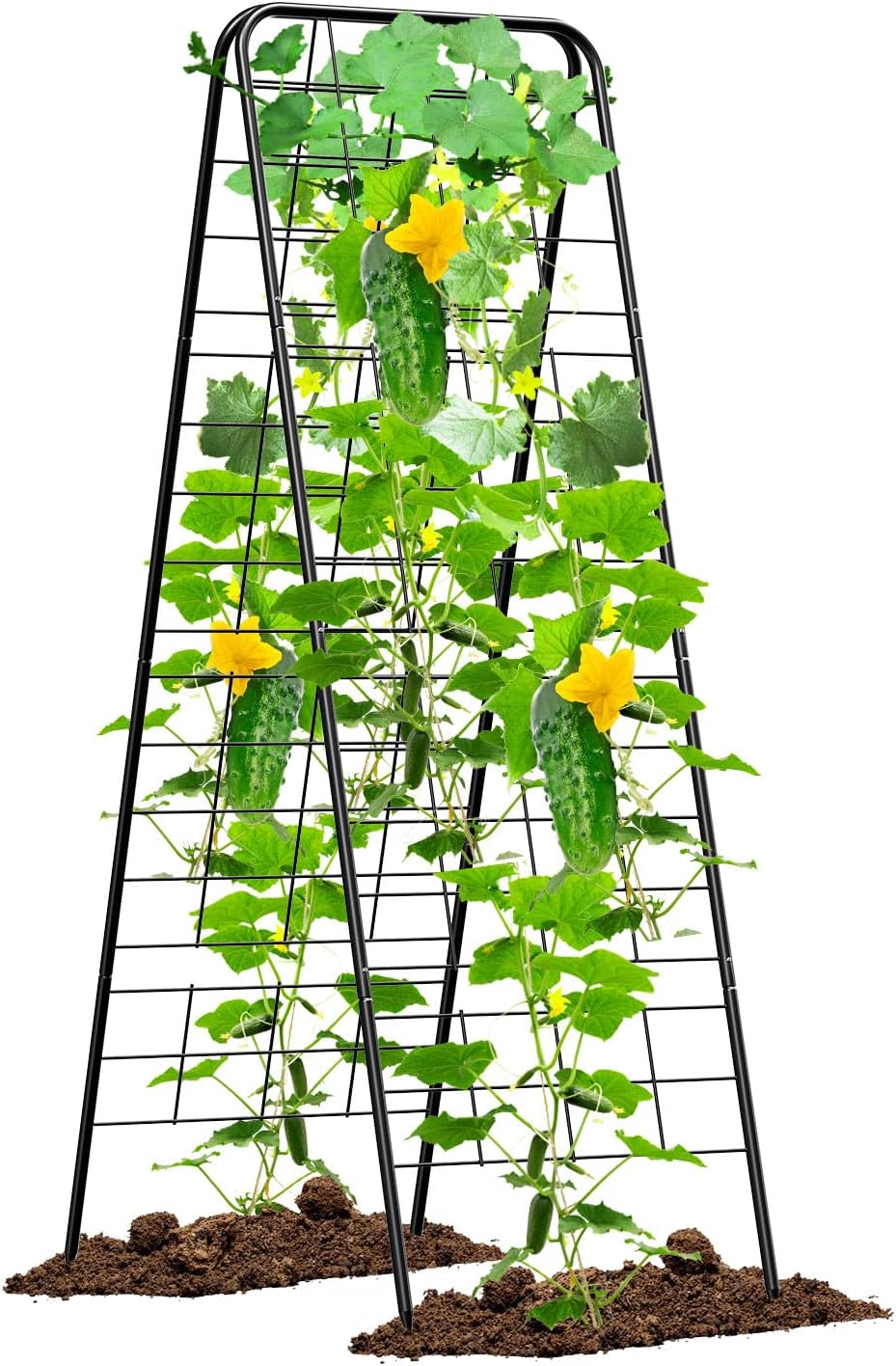
| Material Type | Galvanized Metal, Steel |
|---|---|
| Finish Type | Powder Coated |
| Adjustable Height | 17" to 50" |
| Item Highlight | 100% Metal Mesh,Rust-Proof and UV-Resistant |
This A-frame trellis is a no-nonsense support designed for heavy vining vegetables like cucumbers, peas, and tomatoes. Constructed from galvanized steel with a powder-coated finish, it uses dense metal mesh and a thick outer frame to spread load and resist bending, so it stays rigid under heavy fruit loads. The hinge is factory-fused and the panels fold flat, letting you set it up in under three minutes without tools and store it compactly at season end. Height adjusts quickly from 17 to 50 inches with hand-tightened bolts, which makes it useful from seedling stage through full maturity. Ground stakes and the A-frame geometry add wind resistance for more exposed gardens. Limitations to note are that it is a single-panel support best suited to row or raised-bed placements rather than wide trellis runs, and it does require staking into soil for maximum stability in very loose or sandy beds.
Best for: Gardeners who prioritize robust, high-performance supports for heavy-yielding vines and want a quick, tool-free solution that holds up under load and wind.
Less Ideal for: People needing wide continuous trellis fencing or a permanent hard-surface mounting solution should consider alternative multi-panel or anchored systems.
- Thick galvanized steel frame and dense metal mesh provide strong, no-sag support for heavy crops
- Tool-free setup and folding panels allow fast installation and compact off-season storage
- Adjustable height from 17" to 50" covers seedling to mature vine stages
- Powder-coated, rust-proof finish improves outdoor durability and weather resistance
- Designed as a single A-frame panel so multiple units are required for longer trellis runs
- Requires driving ground stakes into soil for full wind stability, limiting use on hard surfaces
Verdict: Buy this trellis if you need a compact, heavy-duty, tool-free support that reliably holds heavy vining harvests from seedling to maturity.
Tcamp Heavy-Duty Polyester Plant Trellis Netting, 5 x 15 ft, 6" Mesh

| Material Type | Nylon, Plastic |
|---|---|
| Size | 6" Mesh, 5 x 15 Ft (1-Pack) |
| Item Weight | 0.08 kg |
This Tcamp trellis netting is a simple, utilitarian support for vines, peas, cucumbers and other climbing crops. The 6 inch square mesh is sized to guide stems and fruit while still allowing light and air circulation, and the nylon construction is described as heavy-duty so it should handle the weight of mature plants. It is sold as a single 5 by 15 foot piece that can be cut to fit raised beds, trellis frames, fences or walls, and the soft, knotless weave makes it easy to tie in plants without damaging stems. Setup is straightforward: attach the net to a frame or posts and train plants through the squares as they grow. The net is lightweight and packs flat for storage, and the white finish makes it unobtrusive in most gardens. Limitations to note are that it is not a rigid support so very heavy loads may need additional tying or a sturdier frame, and the net arrives vacuum packed which can crease the material until it is stretched taut during installation.
Best for: Gardeners looking to maximize yield from vertical or compact beds who prefer a low-cost, adaptable support that can be trimmed to size and reused season to season.
Less Ideal for: People who need a permanent, rigid support system for very heavy crops or large fruiting vines should choose a trellis or wire grid designed for fixed loads.
- Heavy-duty nylon construction intended to support substantial crop loads
- 6 inch square mesh balances plant support with light and air flow
- Flexible sheet can be cut to size for vertical or horizontal installations
- Soft, knotless weave reduces abrasion to stems and is safe for people and wildlife
- Not a rigid structure so very heavy fruits may require extra bracing or ties
- Vacuum packaging can cause creases that need smoothing during setup
Verdict: A practical, cut-to-fit nylon trellis that gives budget-focused gardeners flexible vertical support for vines and vegetables.
15 ft x 5 ft Trellis Netting for Climbing Plants, 6" Square Mesh Polyester

| Coverage | 15 ft x 5 ft |
|---|---|
| Mesh size | 6 inch square |
| Material | Polyester |
This trellis netting is a simple, low-cost support sheet for vining vegetables and ornamental climbers across a 15 by 5 foot area. Made from polyester with roughly 6 inch square openings, it is typically draped or stapled to a frame, fence, or trellis posts to give plants something to cling to as they grow. The open square mesh is large enough to accommodate stems and tendrils while letting light and air through, and the lightweight construction makes it easy to unroll, cut to size, and reposition. Because it is an inexpensive, non-rigid sheet rather than a built frame, the main benefits are quick installation, portability, and minimal storage footprint when not in use. It is not a heavy-duty structural support, so for very large fruiting vines or permanent installations you will need a stronger wire or wooden trellis. The netting performs well for seasonal crops, training seedlings, or adding temporary vertical growing area on a budget.
Best for: Gardeners wanting an inexpensive, temporary way to add vertical growing space for seasonal vines and vegetables who prioritize low cost and easy setup.
Less Ideal for: Homeowners seeking a permanent, heavy-duty trellis for large fruit loads or structural landscaping should choose a sturdier fixed trellis system.
- Covers a large area (15 ft by 5 ft) for vertical gardening with one piece
- Lightweight polyester is easy to handle, cut, and store
- 6 inch square mesh accommodates most vegetable and ornamental vine stems
- Simple to install on temporary frames, fences, or stakes
- Not designed as a rigid or permanent structural support for very heavy vines
Verdict: A very affordable, easy-to-install netting solution to add temporary vertical support for seasonal climbing plants.
Gardgue 4 ft Willow Teepee Trellis for Climbing Plants

| Material Type | Willow Wood |
|---|---|
| Finish Type | Unfinished |
| Shape | Triangular |
| Size | 4FT |
This Gardgue 4 ft willow teepee trellis provides a simple, natural support for light climbing vines and vegetables. It unfolds into a conical lattice that guides stems upward and gives multiple attachment points for peas, beans, clematis, morning glories and similar plants. The unfinished willow construction is lightweight and decorative, so it works over seedlings in beds, in large planters, or tucked into a raised bed without overpowering the space. Setup is straightforward: spread the legs, position over plants and push the ends into soil; it also collapses for easy off-season storage. Because it is made from natural willow and intended for light-duty use, it is best for seasonal plantings and will not hold heavy fruiting loads or withstand extreme weather without additional anchoring. Expect gradual wear if left exposed to wet conditions year-round, so bring it under cover or replace as needed for long-term reliability.
Best for: Gardeners who want a low-effort, attractive support for seasonal climbers and prefer natural materials and simple setup over heavy-duty hardware.
Less Ideal for: Growers who need permanent, heavy-load support or live in very windy, wet climates where weather-resistant metal or treated supports are required.
- Natural willow material blends with garden beds and looks decorative
- Expands into a stable cone shape that directs climbers upward
- Lightweight and easy to install or remove for seasonal use
- Collapses flat for compact storage between seasons
- Designed for light-duty support and not suitable for heavy or large fruiting vines
- Natural, unfinished willow will degrade faster if left exposed to wet weather
Verdict: Buy this if you want an attractive, easy-to-use natural willow teepee that provides reliable light-duty support for seasonal climbing plants.
UWIOFF Plastic Stackable Mini Trellis for Potted Plants (12 Pack)

| Material Type | Plastic |
|---|---|
| Unit Count | 12 Count |
| Design | Stackable |
| Suitable for | Indoor and outdoor potted climbing plants |
These UWIOFF mini trellises are lightweight plastic supports intended for small pots and climbing houseplants. Each piece pushes into potting soil or can be linked side-by-side or stacked upward to give vines and trailing stems something to climb as they grow. Made from PP plastic and sold in a 12-pack, the trellises are easy to assemble and reposition, making them handy for seedlings, pothos, hoya cuttings, small peas and similar plants. The dark green color blends into foliage so supports stay discreet. Because they are small and plastic they will not bear heavy loads, but they do keep stems off the soil and help training without bending or tying delicate shoots. The practical limitations are modest strength and longevity outdoors in extreme sun, so plan to replace or supplement them for larger or long-term heavy vines. For everyday potted plant training these are inexpensive, simple supports that save time and make plants look tidier.
Best for: Buyers who want an inexpensive, low-effort way to train and tidy small indoor or patio potted climbers and who prefer social-proofed, commonly used solutions.
Less Ideal for: Growers wanting permanent heavy-duty outdoor trellises or support for large, mature vines should choose stronger, larger supports instead.
- Stackable and connectable design lets you adjust height and width as plants grow
- Comes in a 12-pack so multiple pots or larger combined supports are possible
- Dark green finish is discreet among foliage
- Easy to insert, rearrange, and use without tools
- Made of plastic so not suitable for heavy vines or high-load outdoor use
- Small size limits use to pots and compact plants rather than large climbing species
Verdict: A cheap, easy-to-use pack of small stackable trellises that quickly trains and tidies multiple potted climbers.
Choosing the Right Trellis for Growing Peas: Key Factors to Consider
Material and Weather Resistance
The material a trellis is made from determines how well it stands up to outdoor conditions. Metal frames resist sagging and can handle windy sites, but thin gauges can bend over time. Wood offers a natural look but will weather, rot, or splinter unless treated or replaced periodically.
UV-stabilized plastics or coated metals reduce corrosion and surface degradation, extending the useful life of a trellis used year after year. Consider local climate when choosing materials: salt air, heavy rain, and prolonged sun exposure will shorten the lifespan of some materials more quickly than others.
Mesh Size and Climbing Surface
Pea tendrils need something they can wrap around. A trellis with small openings, horizontal slats, or fine mesh gives many points for tendrils to grab and encourages upward growth rather than bunching at the base. Large, widely spaced rungs can work if vines are trained early, but they increase the risk of tangling and slower vertical progress.
Also think about the plant stage: seedlings need closer grip points than mature vines. A climbing surface that balances open airflow with ample anchor points will improve vigor and reduce mildew risk by promoting circulation.
Height and Span
Peas vary by variety, but most need 4 to 8 feet of vertical support to maximize pod production. Choose a trellis tall enough to accommodate the tallest variety you intend to grow, with allowance for additional height in vigorous seasons. The width across planting rows matters too: a wider span lets you plant denser rows and harvest from both sides, while narrow panels suit small beds or container gardening.
For limited spaces, consider shorter or modular trellises you can stack or combine. A trellis that is too short forces sideward growth, increasing leaf shading and reducing yield.
Anchoring and Stability
A trellis must stay upright under wind and the weight of wet foliage. Look at how a design anchors into soil or attaches to existing structures. Ground stakes, screw-in anchors, and flanged bases each offer different stability levels. Some freestanding frames benefit from added guy lines or burying legs deeper.
Stability also affects plant health: a wobbly trellis may damage stems or cause vines to fall and rot. Consider the bed type-raised beds, in-ground rows, or containers-and choose anchoring compatible with that setting.
Ease of Plant Training and Harvesting
How easy it is to reach pods and train vines determines how much time you spend tending plants. Open trellis styles and removable panels make it straightforward to harvest without cutting vines. Designs that allow you to access both sides reduce bruising and missing pods.
Training is easier when the trellis gives clear vertical channels. If harvesting requires pulling plants through a dense weave, you may damage tender shoots. Pick a layout that matches how often you plan to pick and how much handling your crop will need.
Storage, Portability, and Seasonal Use
Many gardeners reuse trellises season after season, so storage and portability matter. Collapsible frames or lightweight panels are convenient for moving between beds or storing in a shed. Heavier permanent structures may offer better durability but can be difficult to remove or reposition.
Think about whether you will leave supports in place year-round for overwintering beneficials, or take them down to protect the structure. Ease of disassembly affects off-season maintenance and replacement costs.
Trellis Styles That Work Best for Peas
Different trellis styles suit different garden setups. Netting or mesh hung between posts is inexpensive and gives many grip points for tendrils. A-frame or tepee supports offer easy access for harvesting from two sides and are stable in small plots. Vertical panels and fence attachments integrate well with long rows and allow for continuous planting along a bed.
Gardeners with containers may prefer narrow, tall panels or obelisk-style supports that concentrate vertical space. If you need to protect seedlings from heavy winds, freestanding frames that can be anchored deeply provide extra security.
- Netting: many small anchor points, lightweight, easy to install.
- A-frame/Tepee: two-sided access, stable, good for narrow beds.
- Panels/Fence attachments: work for long rows and continuous planting.
- Obelisks/Pillars: suited to containers and decorative beds.
Installing a Trellis for Best Results
Position trellises on the south or east side of beds when possible to reduce shading on companion crops. Plant peas close to the base and set supports before vines get tall so you avoid root disturbance. For netting and panels, use posts spaced to prevent sagging; for taller trellises, drive supports deeper into the soil for better anchoring.
Train young vines by loosely guiding tendrils to the structure in the first two weeks after emergence. Avoid tying plants tightly; the tendrils naturally wrap when they have enough contact points. Mulch and a steady watering routine reduce stress so vines climb more vigorously.
- Install before significant growth to avoid plant damage.
- Space posts to prevent sag and maintain tension.
- Guide seedlings early but avoid tight ties that constrict stems.
Maintenance and Seasonal Care
Inspect trellises during the season for loose anchors, broken mesh, or bent frames. Prompt repair prevents entire panels from collapsing under the weight of wet vines. If a trellis is reusable, clean off soil and plant debris before storing to reduce pest and disease carryover.
At season end, remove dead vines and compost them where appropriate. For wooden supports, check for rot and sand or seal as needed. For metal and plastic pieces, rinse and dry thoroughly before stacking in a dry place to extend lifespan.
- Check anchors mid-season and after storms.
- Clean reusable trellises before storage.
- Replace or repair damaged sections promptly to avoid crop loss.
Best Practices for Small and Container Gardens
In compact spaces, maximize vertical area by using taller, narrow trellises or stacking panels over containers. Ensure containers are heavy or anchored so the trellis does not tip when vines are in full leaf. Spiral or obelisk supports that attach directly to the pot work well for balconies and patios.
For succession planting, choose removable trellises you can shift as beds are cleared. Lightweight netting that hooks to temporary posts lets you reuse the same support across multiple planting blocks.
- Use weighted or anchored containers to prevent tipping.
- Prefer removable supports for rotation and succession planting.
- Choose trellis profiles that do not block airflow in tight spaces.
Common Mistakes to Avoid
Underbuilding a trellis for the expected vine mass leads to sagging and collapsed supports. Avoid using very thin materials for tall or windy sites. Another error is installing a trellis after vines are already tangled; this risks root or stem damage during retrofitting.
Also avoid designs that trap moisture against stems and pods. Tight weaves that prevent airflow increase disease risk. Finally, do not neglect anchoring-appealing lightweight displays can be impractical if they tip or fall under load.
- Do not undersize materials for your site conditions.
- Install supports early to avoid damaging established plants.
- Prioritize airflow to reduce disease risk.
How We Chose the Best Trellis for Growing Peas
We focused on choices that reliably support pea vines through an entire season without collapsing or causing tangling. Primary evaluation criteria included structural durability to resist wind and repeated use, climbability of the surface or mesh for tendrils, and ease of setup and removal for seasonal planting. Weight and portability were considered for gardeners who move trellises between beds or store them during the off-season. We also evaluated how the design affects harvesting and plant maintenance, including access for picking and pruning. Products were excluded if the materials were clearly undersized for pea vines or if the design required excessive modification to work for peas. We did not include decorative-only supports that lack practical climbing surfaces. The resulting list emphasizes practical performance in real garden situations and a range of sizes and installation styles so gardeners with different spaces can find a good fit.
FAQ
How tall should a trellis be for common pea varieties?
Most garden peas do well with 4 to 8 feet of vertical support. Dwarf varieties may only need 2 to 3 feet, while long-vined shelling peas benefit from taller trellises. Choose height with the specific variety in mind.
Can I reuse trellis netting from one season to the next?
Often yes, if the netting is cleaned and stored dry. Inspect for UV damage and broken strands; replace if significant wear could cause sagging. Proper storage extends usable life.
Is it better to train peas to a single support or between two supports?
Both approaches work. Single-plane supports save space and are easy to manage. Two-sided supports like A-frames let you harvest from both sides and are useful for wider rows. The choice depends on bed width and access needs.
How should I anchor a freestanding trellis in a raised bed?
Drive posts deeper into the bed or secure them with metal stakes that extend below the soil line. For very tall frames, add cross-bracing or soil-packed legs to prevent tipping. Ensure your anchoring method does not interfere with root zones.
Will a dense trellis design increase disease risk?
Dense designs can reduce airflow and increase humidity around foliage, which often raises the risk of fungal diseases. Choose meshes or panels that balance climbing points with adequate ventilation and prune to maintain circulation.
Final Verdict
Prioritize trellis features that match how and where you grow peas. Structural durability, an appropriate climbing surface, and stable anchoring are the most important considerations. Balance height and access needs with storage and portability preferences. Decide which tradeoffs matter most for your garden-long-term permanence versus seasonal flexibility, or maximum yield versus minimal footprint-and choose the trellis type that aligns with those priorities. That approach will give you steadier vines, cleaner pods, and a simpler harvest.
