

Note: This article contains affiliate links. If you click on these links and make a purchase, I may earn a small commission at no extra cost to you. This helps support my research and content. Read my full affiliate disclosure here.
If you grow gourds, the right trellis changes how well vines climb, how easily you harvest, and how much space the plants need. Vining gourds can produce heavy fruits that strain flimsy supports and create tangled growth if not guided early. This guide narrows the field to five shortlisted trellises chosen for real garden use, from small backyard plots to larger vegetable beds. We focus on how each design handles weight, directs vines, and fits in different layouts. Read on to understand the practical differences that matter when staking out your next gourd patch.
Top Picks at a Glance
| Best Overall The best all-around choice for most situations | Gardener’s Supply Titan Extra-Tall Garden Arch (80") |  |
| Best Value The sweet spot between price and what you get | AIMUCT Metal Garden Arch Trellis for Climbing Plants, 7.1 ft |  |
| Best Budget The cheapest option that still gets the job done reliably | Hoyejyou U‑Shape Metal Cucumber Trellis with Netting (50.8" x 17" x 62") |  |
| Most Popular A crowd favorite that many people choose with confidence | Adorox Metal Garden Arch Trellis, Powder-Coated Black |  |
| Best Seller A high-volume bestseller chosen again and again | LeJoy Garden Galvanized Metal Garden Arbor, 7.6 ft H x 4.6 ft W |  |
Gardener’s Supply Titan Extra-Tall Garden Arch (80")

| Material Type | Metal |
|---|---|
| Finish Type | Steel |
| Weather-proof | Yes |
| Netting Included | Nylon netting |
| Weight limit | 70 lbs |
This Titan garden arch is a heavy-duty metal arch and squash tunnel intended to lift sprawling vines and fruiting crops off the soil so you can grow vertically and keep produce cleaner. It assembles without special tools and uses polyethylene-coated steel tubing with nylon netting to give a strong, weatherproof frame that resists rust and is gentle on stems. In use it creates an overhead tunnel for squash, melons, zucchini and similar vines, reducing ground crowding and making harvesting and airflow easier. The frame is rated to support up to 70 pounds, so it can handle several medium fruits or clusters of vines, and disassembles to a compact bundle for off-season storage. Expect a straightforward setup and a visually attractive entrance or focal point in the garden, but note the arch is best for supporting moderate loads rather than very heavy single fruits and it will need secure anchoring in exposed sites to resist wind.
Best for: Gardeners who want a durable, space-saving support to train and elevate sprawling vines and fruiting crops while improving airflow and harvest access.
Less Ideal for: People needing a support for extremely heavy single fruits or a freestanding decorative arbor for frequent large-traffic entryways.
- Durable polyethylene-coated steel tubing resists rust and sunlight degradation.
- Nylon netting combined with sturdy frame supports climbing vines and keeps fruit off the ground.
- Rated to hold up to 70 lbs, suitable for multiple medium fruits and heavier vine loads.
- Easy tool-free assembly and disassembles for compact off-season storage.
- Not intended for supporting very large single fruits that exceed the 70 lb limit.
- May require additional anchoring in windy or exposed locations to stay stable.
Verdict: Buy this arch if you want a long-lasting, weatherproof support that lifts sprawling vines and reliably holds a moderate harvest off the ground.
AIMUCT Metal Garden Arch Trellis for Climbing Plants, 7.1 ft

| Material Type | Iron, Stainless Steel |
|---|---|
| Finish Type | Baked Paint |
| Shape | Triangular |
| Size | 86" H x 52" W x 71" L |
This metal garden arch trellis provides a sturdy, walk-through frame for vining vegetables and ornamentals, letting you grow plants up and off the ground to improve airflow and make harvesting easier. The triangular reinforced design and thickened metal tubing reduce wobble and bending, while deep-insert ground stakes and screws help hold the arch steady once assembled. Finished with baked paint and made from iron and stainless steel, it resists weathering better than plain metal garden stakes. Typical uses include training cucumbers, peas, beans and small melons on both sides of the arch to maximize vertical space in a raised bed or narrow yard. Assembly takes about 45 minutes with two people and the frame is large enough to walk under for pruning and picking. The arch is heavy enough to be stable but will still require firm soil insertion or additional anchoring in very windy sites, and it is a single fixed structure rather than a modular trellis you can easily reconfigure for different layouts.
Best for: Gardeners who want to maximize vertical growing in a backyard or raised-bed setting and prefer a durable, walk-through metal structure that stays in place season after season.
Less Ideal for: People who need a lightweight, portable, or frequently reconfigurable trellis system for changing garden layouts.
- Reinforced triangular frame and thick metal tubing give stable, wobble-free support for heavy vines
- Deep-insert ground stakes and included screws improve anchoring in the soil
- Baked paint finish and mixed iron/stainless construction reduce rust and weather damage
- Spacious walk-through design lets you train plants on both sides and access crops for harvesting
- Large fixed arch requires two people and about 45 minutes to assemble
- May need extra anchoring in very loose or high-wind locations
Verdict: Buy this if you want a robust, walk-through metal arch that gives reliable vertical support for heavy vining vegetables and makes harvesting easier.
Hoyejyou U‑Shape Metal Cucumber Trellis with Netting (50.8" x 17" x 62")

| Material Type | Metal |
|---|---|
| Finish Type | Powder Coated |
| Style | U Shape |
| Indoor Outdoor Usage | Indoor&Outdoor |
This Hoyejyou U‑shape trellis is a straightforward support system for vining vegetables like cucumbers, peas, beans and small melons. Its semicircular U‑frame and cross-shaped connectors create a stable arch that you push into soil or a raised bed; the included trellis netting and many clips make training young vines easy. The metal is plastic coated and powder finished to resist rust and sun damage, and the kit ships with leaf ties, twist ties and gloves so you can install and start using it right away. For budget-conscious gardeners the trellis offers a lot of usable support for a low price and the simple assembly means no special tools are required. Limitations are its relatively lightweight construction, so very heavy fruits or high winds could stress the frame, and the fixed height and width suit narrow beds better than wide open plots. Also the product has some sharp edges noted in safety info, so handle carefully during setup.
Best for: Gardeners on a tight budget who need an affordable, ready‑to‑use support for cucumbers and other vining vegetables in raised beds or small plots.
Less Ideal for: Growers seeking a heavy‑duty permanent structure for large fruits or open, wind‑exposed areas should consider sturdier commercial trellises.
- U‑shape arch and cross connectors provide stable vertical support for climbing plants
- Powder coated metal construction resists rust and sun exposure
- Includes netting, 30 clips, ties and gloves so it is ready to use out of the box
- Easy to assemble and adjust without special tools
- Lightweight frame may not hold very heavy fruits or withstand extreme winds
- Sharp edges reported in safety information require careful handling during installation
Verdict: A low‑cost, easy‑to‑install U‑shaped trellis kit that gives budget gardeners practical vertical support for vining vegetables.
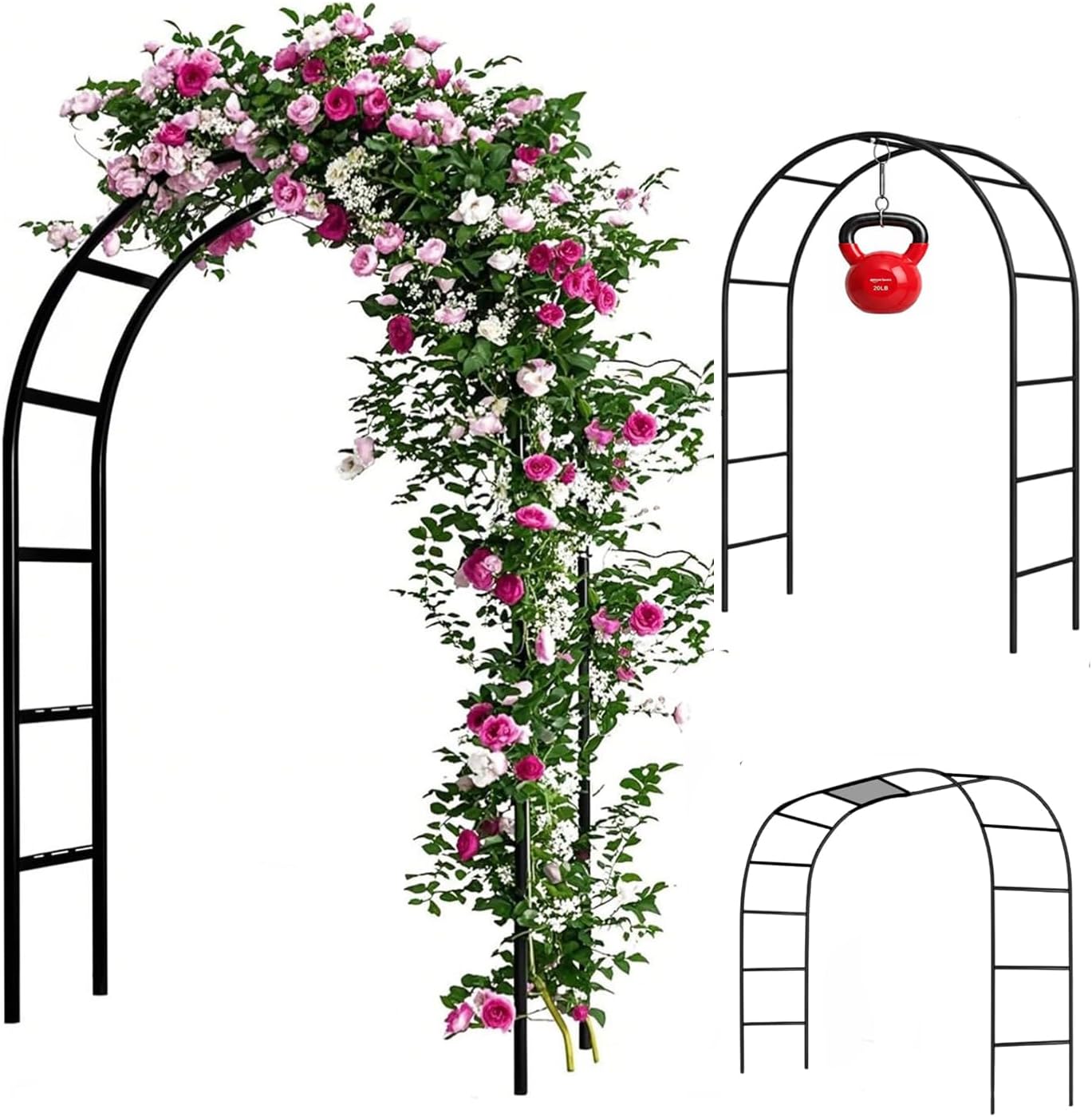
Adorox Metal Garden Arch Trellis, Powder-Coated Black
| Material Type | Metal |
|---|---|
| Finish Type | Powder Coated |
| Shape | Single Arch |
| Size | Standard |
This Adorox garden arch is a straightforward metal arbor that gives climbing roses, clematis, vines, or seasonal decorations a neat vertical framework. It arrives as sectional metal pieces with a powder-coated finish and assembles in simple steps to create a single arched entrance or focal point for a walkway, garden bed, or event backdrop. The open-frame design lets plants weave through the bars and provides height without blocking sightlines, while the powder coating helps resist rust in typical outdoor conditions. Because it is relatively lightweight and sectional, it is easy for two people to position and plant around, and it is also simple to dress with string lights or fabric for celebrations. Expect to secure it into the ground or use anchors before loading with heavy mature vines, since the slim metal sections will perform best when planted with lighter to moderate climbers rather than very heavy, established growth. Assembly is convenient but may require basic tools and a second person to steady the arch while tightening connections.
Best for: Buyers who want an attractive, easy-to-install arch to add vertical interest and support for climbing plants or seasonal decor, and who prefer a straightforward product with visible user feedback to inform the choice.
Less Ideal for: Gardeners seeking a heavy-duty permanent arbor to bear large mature vines or climbing shrubs should look for a sturdier, commercial-grade structure with integrated anchoring.
- Simple sectional design that is easy to assemble and position
- Powder-coated metal finish improves resistance to outdoor corrosion
- Open-arch framework allows vines and flowers to weave naturally and creates visual height
- Lightweight enough for two people to handle and decorative enough for events or pathways
- Relatively lightweight construction needs anchoring before supporting heavy, mature vines
- No built-in ground stakes or heavy bases included for long-term high-wind stability
Verdict: A lightweight, powder-coated metal arch that quickly creates a decorative entry or plant support for garden paths and small to moderate climbers.
LeJoy Garden Galvanized Metal Garden Arbor, 7.6 ft H x 4.6 ft W

| Material Type | Galvanized metal |
|---|---|
| Finish Type | Galvanized |
| Size | 7.6 Feet H x 4.6 Feet W |
| Item Weight | 5 pounds |
This LeJoy Garden arbor is a simple, sturdy steel arch intended to support climbing vines or act as a decorative backdrop for events. Made from galvanized metal with a thicker 0.4mm construction than earlier versions, it resists rust and is suitable for year-round outdoor use in typical garden conditions. The arch ships with pre-drilled holes, a screwdriver, and straightforward instructions so one person can assemble or disassemble it quickly for seasonal display or storage. Its arch shape and open lattice work let vines climb naturally while also providing an attractive frame for lights, fabric, or event decor. Because it is relatively lightweight yet reinforced, it is easy to move into position but will need to be anchored in soft ground or with added ties in windy sites. The product is focused on practicality rather than ornamental detailing, so buyers should expect a functional, modern-looking support rather than a highly ornate arbor.
Best for: Buyers who prioritize a low-maintenance, durable garden structure that can be set up and stored easily and who want a practical support for climbing plants or occasional event use.
Less Ideal for: Those seeking a heavy, permanently mounted arbor for very windy sites or buyers who want an ornate, decorative focal point rather than a straightforward plant support.
- Galvanized steel construction for improved corrosion resistance.
- Thicker metal (0.4mm) for increased strength compared with earlier versions.
- One-person assembly with pre-drilled holes and included screwdriver.
- Dual-purpose use as a plant trellis or event backdrop.
- Lightweight design may require anchoring or stakes in exposed, windy locations.
- Simple modern styling may not suit buyers seeking ornate, decorative arbors.
Verdict: Choose this galvanized LeJoy arbor if you want a straightforward, rust-resistant arch that is easy to assemble and works reliably as a trellis or event backdrop.
Choosing the Right Trellis for Gourds: Key Factors to Consider
Load Capacity
Gourds can become heavy as they mature, and their weight concentrates at attachment points. A trellis with a high load capacity prevents sagging, bending, or collapse when multiple fruits develop on a single vine. Consider the maximum projected fruit weight for your gourd varieties and choose a structure with a margin above that load. Heavier-duty frames or reinforced mesh will reduce strain on joints and connection points.
Load capacity also affects vine training choices. If a trellis weakens under weight, gardeners must use slings or additional supports for individual gourds, increasing labor. A sturdier trellis keeps the crop off the ground and reduces pest and rot risk without extra interventions.
Vine Training and Attachment
How easily you can guide vines determines long-term plant shape and fruit distribution. Trellises with evenly spaced crossbars, grid panels, or accessible mesh simplify wrapping and tying vines as they grow. Wide gaps may encourage vines to tangle, while very tight mesh can snag and damage stems. Look for designs that balance grip with space for you to reach through and reposition vines.
Attachment points matter as well. Smooth surfaces are gentler on stems but may require ties. Built-in hooks or adjustable straps let you secure heavy gourds without kinking stems. A trellis that permits staged adjustments makes seasonal pruning and training less awkward.
Anchoring and Ground Stability
A trellis must stay firmly in place in wind, rain, and when supporting heavy fruit. Anchoring options include deep ground stakes, screw-in anchors, or wide base feet. In loose or sandy soil, longer or more robust anchors reduce the chance of overturning. For gardeners planting on slopes or raised beds, choose a trellis with adaptable anchoring or that can be fixed to a nearby structure.
Consider how permanent you want the support to be. Some setups are intended for a single season and can be temporary, while others are designed as a long-term garden feature and need corrosion-resistant anchors and stronger bases.
Material Durability and Weather Resistance
Trellis materials face sun, moisture, and temperature swings. Metal frames should be coated or made of rust-resistant alloys to avoid weakening over two or more seasons. Natural wood offers a pleasing look but can rot unless treated; composite materials resist decay but can be more costly. UV-resistant plastics keep mesh from becoming brittle in hot climates. Matching material to your local climate extends the useful life of the trellis and reduces maintenance.
Also consider hardware quality. Bolts, clips, and fasteners that corrode will compromise the entire support even if the main frame holds up.
Access for Pruning and Harvest
Frequent access to fruit and foliage makes managing gourds easier. A trellis that provides clear openings or removable panels reduces the need to climb over beds. Designs that allow you to reach into the canopy let you prune, inspect for pests, and harvest without dislodging nearby vines. Accessibility is particularly important for gardeners with limited mobility; lower-effort access reduces strain and crop loss.
Think about typical harvest needs for your gourd varieties. Large, heavy fruits benefit from being supported at harvestable heights rather than high overhead, where retrieval becomes awkward.
Footprint and Vertical Height
Space availability will influence whether you choose a tall, narrow trellis or a broader, lower support. Taller trellises increase vertical growing area and reduce horizontal spread, useful in small yards or against fences. However, very tall supports can be harder to manage and may transfer more leverage to anchors. Shorter, wider trellises may fit raised beds and make harvest easier but require more ground space.
Plan the trellis height relative to plant maturity and expected vine length. Also consider seasonal wind exposure at greater heights, which can add load and sway that your anchoring system must handle.
Choosing Between Frame, Netting, and Panel Designs
Different trellis forms suit different gardening styles. Rigid frame trellises with crossbars give predictable attachment points and handle concentrated fruit loads well. Mesh or netting systems increase the area vines can climb but must be strong enough to carry gourds where they attach. Panel systems strike a balance, offering defined openings for vine training alongside structural support.
Think about how you prefer to train vines. If you want clear placement for each fruit, a framed grid helps. If you want to maximize vertical coverage in tight spaces, a high-tension netting may be more efficient.
- Frame trellises are best for heavy, infrequent fruits that need fixed support.
- Netting covers more area and is lighter weight, but choose high-strength mesh for gourds.
- Panels combine accessibility with predictable attachment points for fruit slings.
DIY Vs Prebuilt Trellis Options
Many gardeners build their own trellises from wood, bamboo, or rebar. DIY allows you to tailor height, spacing, and anchoring to your garden and gourd varieties. Use treated or rot-resistant materials and reinforce joins where heavy fruits will hang. Simple designs like A-frames and teepees are easy to construct and can be stable with proper anchoring.
Prebuilt trellises save time but watch for weak connectors or lightweight mesh not rated for fruit loads. Whether DIY or bought, inspect joints, fasteners, and attachment points before the growing season to avoid midseason failure.
- DIY lets you custom-fit dimensions and materials to local conditions.
- Prebuilt saves time but verify load ratings and replace any weak fasteners.
Supporting Individual Fruits
Even a strong trellis benefits from supplemental support for very large gourds. Use slings, cloth bags, or soft ties to cradle fruit and reduce stress on stems and the trellis mesh. Place slings when fruits are small and expanding so the stem forms naturally into the support without pinching.
Position slings to distribute weight across multiple points where possible. Sling materials should be breathable and gentle on the rind to avoid abrasion or trapping moisture that can lead to rot.
- Add slings early to prevent stem damage as gourds expand.
- Use breathable fabric or soft webbing rather than wire or twine.
Placement and Garden Layout
Where you position a trellis affects sun exposure, airflow, and ease of maintenance. Orient trellises north-south where possible to allow even sun on both sides of the canopy. Keep space between rows for access and to reduce disease pressure from poor airflow. Avoid placing heavy trellises where they will cast long shadows on other crops.
If you plan to reuse the trellis for multiple seasons, think about moving it or integrating it into a perennial bed so it does not interfere with future rotations.
- Orient trellises to balance light and ease of access.
- Leave service space for pruning and harvesting on at least one side.
Seasonal Care and Storage
Trellises take wear from weather and plant debris. Clean off plant material at season end and inspect connections for corrosion or rot. Dismantling and storing lightweight components indoors will lengthen service life. For permanent metal structures, touch up any protective coatings to prevent rust.
Consider whether components are reusable across seasons or if you need to refresh mesh or straps each year. Routine checks at the start and end of the season prevent surprises during peak fruiting.
- Remove plant debris and clean connections after harvest.
- Store removable parts indoors or under cover to extend lifespan.
How We Chose the Best Trellis for Gourds
We selected trellises based on practical garden performance and durability factors that matter for growing gourds. Key criteria included structural strength under fruit load, material weather resistance, ease of training and pruning vines, anchoring and stability in typical garden soils, and footprint versus usable vertical height. We favored designs that let heavy gourds hang without stressing attachment points and that provided accessible gaps or panels for inspection and harvest. Ease of assembly and storage was considered to reflect seasonal gardeners who dismantle supports after the season. Excluded were any trellis types clearly unsuitable for heavy vining fruit or those designed only for ornamental climbing plants without adequate load capacity. Our process prioritized features that reliably affect yield, plant health, and long-term garden maintenance.
FAQ
How high should a trellis for gourds be?
Usually 6 to 8 feet is sufficient for most gourd varieties, giving vines room to climb and fruits room to hang. Very tall trellises are possible, but they increase wind leverage and may need heavier anchoring or staged supports for large fruits.
Can I train gourds on netting instead of a rigid frame?
Yes, high-strength netting works well if it can carry the expected fruit weight and is kept taut. Netting offers more climbing area but may require supplemental slings for very heavy gourds and strong anchors to prevent sagging.
When should I add slings or supports for developing gourds?
Add slings early, when fruits are still small and starting to gain weight. Placing supports early lets stems settle into the sling without pinching and prevents sudden stem stress as gourds expand.
What is the best way to anchor a trellis in loose soil?
Use longer stakes, screw-style ground anchors, or concrete-set posts for the most secure anchoring. Broad base plates also help distribute overturning forces. In raised beds, affix the trellis to bed sides or neighboring fixed structures to improve stability.
Should I prune gourd vines when training them up a trellis?
Pruning is often helpful to control vigor and direct energy into fruit rather than excessive foliage. Remove weak or tangled shoots and keep a few main leaders trained vertically. The exact pruning depends on the gourd species and your production goals.
Final Verdict
Prioritize a trellis that matches the expected fruit load and your garden layout. Strong anchoring and materials that resist weathering are the most important long-term considerations, while accessible openings and ease of vine training reduce daily labor. Expect to use supplemental slings for very large gourds and to inspect anchors and fasteners each season. By balancing capacity, access, and durability, you can choose a trellis that supports healthy vines and easier harvests for years.
