

Note: This article contains affiliate links. If you click on these links and make a purchase, I may earn a small commission at no extra cost to you. This helps support my research and content. Read my full affiliate disclosure here.
A good trellis changes how cucumbers grow and how you garden. With vigorous vines, heavy fruit, and disease risks from ground contact, the right trellis reduces breakage, improves air flow, and makes harvesting simpler. This guide covers seven top trellis options selected for growing cucumbers in home gardens and small plots. We evaluated candidates for structural strength, vine training ease, and how they affect fruit size and plant health. Read on to understand the tradeoffs so you can pick a trellis that fits your space, planting style, and harvest goals.
Top Picks at a Glance
| Best Overall The best all-around choice for most situations | HIHADUUM 2-Pack 50" A-Frame Metal Trellis for Climbing Plants |  |
| Best Quality Built to a higher standard if you want something more solid | PyraLine 50" x 17" Heavy-Duty Steel A-Frame Garden Trellis (1 Pack) |  |
| Best Value The sweet spot between price and what you get | K-Brands A-Frame 50 x 50 in Garden Trellis with Netting |  |
| Best Budget The cheapest option that still gets the job done reliably | 7Queen Adjustable A‑Frame Garden Trellis with Climbing Net |  |
| Highest Rated A top-rated pick with lots of positive feedback | Generic A‑Frame Metal Cucumber Trellis (foldable, powder‑coated) |  |
| Most Popular A crowd favorite that many people choose with confidence | LifeisLuck Adjustable A‑Frame Cucumber Trellis with Climbing Net and Clips |  |
| Best Seller A high-volume bestseller chosen again and again | Generic Heavy-Duty A-Frame Cucumber Trellis, 2-Pack (Galvanized Steel) |  |
HIHADUUM 2-Pack 50" A-Frame Metal Trellis for Climbing Plants

| Number of Packs | 2 |
|---|---|
| Material Type | Iron, Metal |
| Finish Type | Powder Coated |
| Shape | A-Shape |
| Size | 50" X 17" |
This two-pack of A-frame trellises gives home gardeners a heavy-duty, space-saving way to train cucumbers, beans, tomatoes and other vining crops. The frames are powder-coated iron with a reinforced 1 cm outer frame and solid steel support bars, so they stay upright under load and resist bending in wind. The 5.3 x 6.1-inch grid balances airflow with plenty of places for tendrils to grab, while the modular adjustable design lets you change height and stack or pair frames across raised beds. Setup is straightforward because the frames unfold and lock without extra hardware, and the kit includes 20 plant clips, twist wire and garden tape so you can secure vines immediately. Practical limitations are that the A-frame footprint is fairly narrow, so it is best for rows or raised beds rather than wide sprawling plants, and the metal construction will still need occasional inspection for surface wear over many seasons. Packed flat for offseason storage, these trellises are a durable, low-effort support solution for backyard vegetable plots.
Best for: Gardeners who want a reliable, low-maintenance trellis for raised beds or row planting and value durability and easy setup over decorative features.
Less Ideal for: People growing very wide-spreading squash, pumpkins, or large melons that need broader horizontal support should consider larger or ground-level supports instead.
- Reinforced powder-coated steel frame for good stability and rust resistance
- Adjustable, modular A-frame design that folds flat for storage
- Grid spacing that promotes airflow while providing multiple attachment points
- Includes accessory kit with plant clips, twist ties and tape for immediate use
- Sturdy enough to support heavy vine loads like cucumbers and tomatoes
- Narrow 17" footprint limits use with very wide or sprawling plants
- Metal finish may require occasional inspection for surface wear over many seasons
Verdict: A sturdy, ready-to-use two-pack trellis that delivers durable vertical support and easy setup for backyard vegetable growers.
PyraLine 50" x 17" Heavy-Duty Steel A-Frame Garden Trellis (1 Pack)
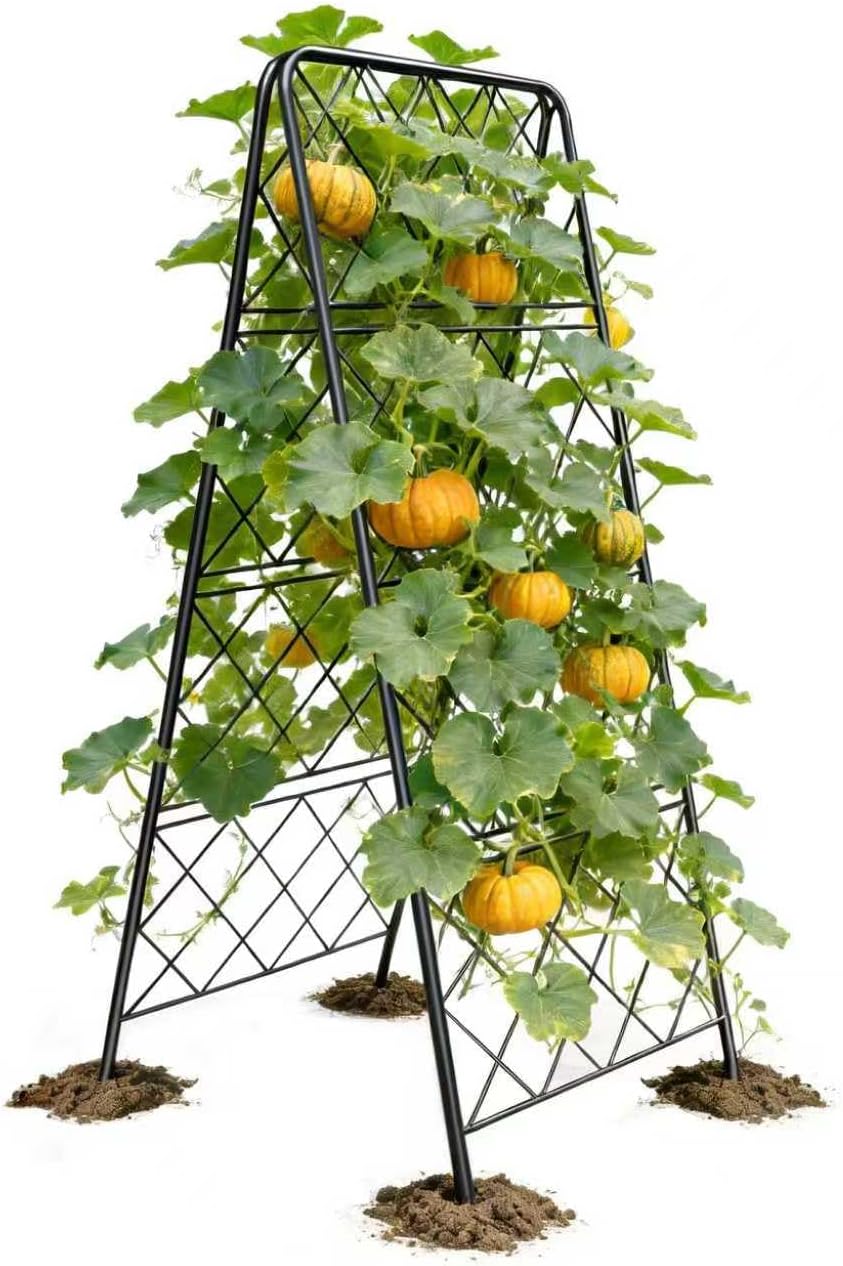
| Material | Steel |
|---|---|
| Finish | Powder Coated |
| Shape | A-Shape |
This PyraLine A-frame trellis is a one-piece, powder-coated steel support designed to hold heavy vines and fruiting crops. It sets up as a stable A-frame with high-density rhombus steel grids that distribute weight across the panel, so cucumbers, tomatoes, beans, and even small melons can climb without overly stressing individual bars. The hinge is factory-fused rather than bolted, which keeps the frame rigid under load and reduces the need for periodic tightening. The trellis adjusts from a low height to full 50 inches as plants grow and then folds flat for compact storage after the season. Practical benefits include strong wind resistance from the thick steel frame, rust protection from the powder coating, and quick deployment in raised beds or containers. Limitations are that it is a single-panel solution so larger climbs may require multiple units or additional anchoring, and its steel construction makes it heavier to move compared with lightweight bamboo or plastic supports.
Best for: Gardeners who prioritize long-lasting, load-bearing plant supports and want a sturdy, low-maintenance trellis for heavy fruiting vines in raised beds or containers.
Less Ideal for: People who need long continuous trellis runs, extremely lightweight temporary supports, or those who prefer completely tool-free, ultra-light structures for annual annuals.
- High-density rhombus steel grid evenly distributes plant weight and reduces sagging
- Factory-fused one-piece hinge increases rigidity and stays solid under heavy vines
- Powder-coated steel finish resists rust, UV, and outdoor weathering
- Collapses flat for compact off-season storage
- Single 1-pack panel may require multiple units for longer trellising runs
- Heavier steel construction is less portable than bamboo or plastic options
Verdict: Buy this trellis if you need a durable, rust-resistant steel support that holds heavy cucumbers and tomatoes upright season after season.
K-Brands A-Frame 50 x 50 in Garden Trellis with Netting
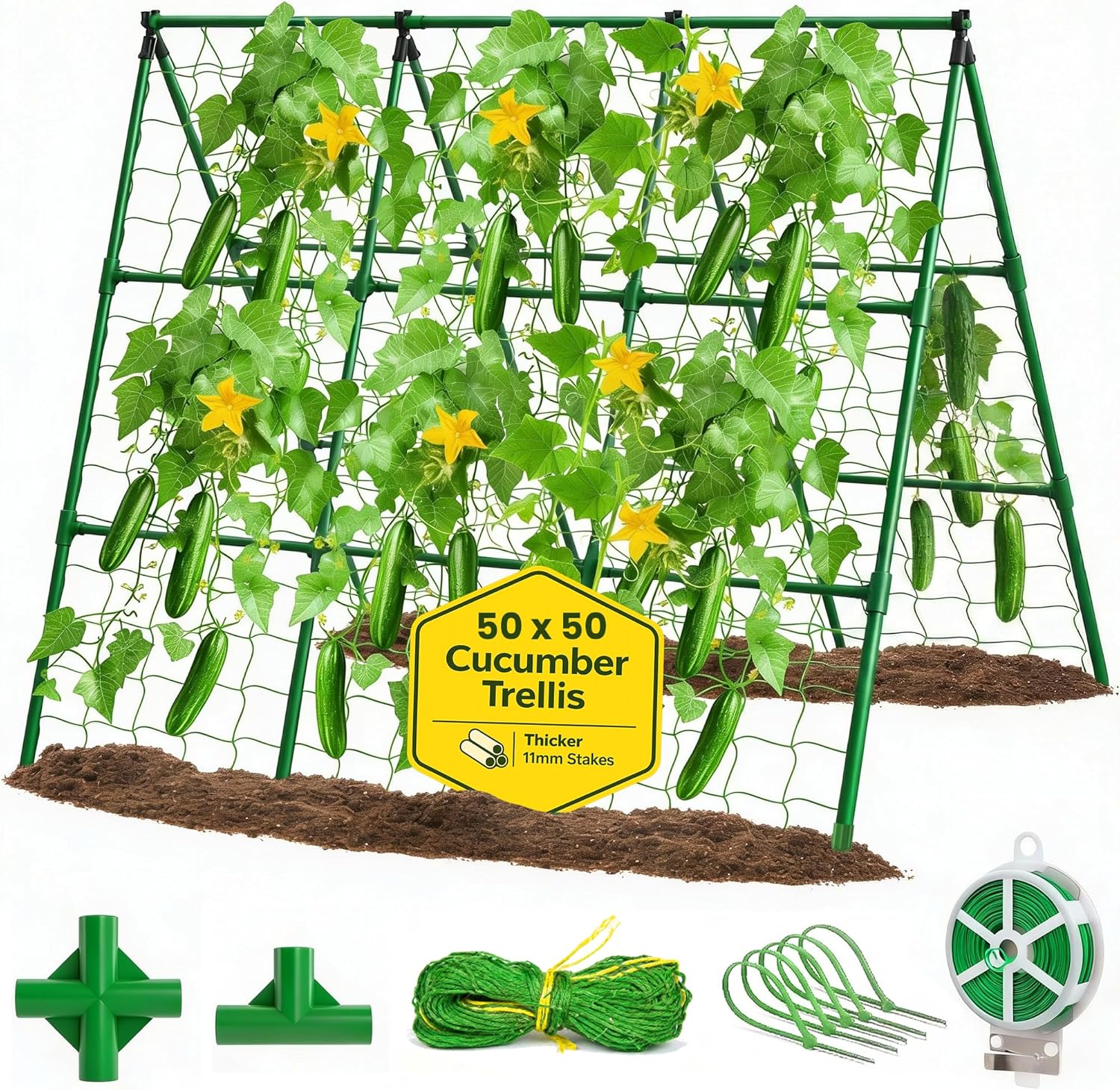
| Material Type | Metal, Plastic |
|---|---|
| Finish Type | Powder Coated |
| Shape | A-Shape |
| Item Highlight | Support for Climbing Plants Outdoor |
This A-frame trellis is a simple, no-tools kit that gives cucumbers, beans, peas, tomatoes and other vining vegetables sturdy vertical support. The powder-coated steel frame is built to resist rust and the included heavy-duty netting, twist ties and zip ties make it ready to use right away. It assembles quickly with easy-connect joints and is sized to fit raised beds and containers, so it helps free ground space and improves air circulation for healthier plants. The design is lightweight for handling and seasonal setup, but the warning about sharp edges and a note to avoid extreme weather show it is best used in typical garden conditions rather than as a permanent exposed structure. If you need a taller, heavy-duty permanent trellis for large pumpkins or wind-prone sites you may want a more robust anchored solution, otherwise this kit is a practical, ready-to-install option for backyard vegetable growers who want efficient vertical support.
Best for: Gardeners who want an efficient, ready-to-use vertical support for common climbing vegetables and prefer a practical, easy-to-install solution for raised beds or containers.
Less Ideal for: Growers seeking a permanent, heavy-gauge trellis for oversized fruit or very windy sites should consider sturdier, anchored structures instead.
- Powder-coated steel frame resists rust for season-to-season use
- Includes heavy-duty netting, twist ties and 50 zip ties so no extra purchases are needed
- Tool-free, quick assembly with easy-connect joints for fast setup
- A-frame shape fits raised beds, containers, and garden rows to save ground space
- Not designed as a permanent, heavy-duty anchor for very large or wind-exposed vines
- Sharp edges reported in safety information require careful handling during assembly
Verdict: An affordable, ready-to-install A-frame trellis kit that gives raised beds and containers quick, rust-resistant vertical support for common climbing vegetables.
7Queen Adjustable A‑Frame Garden Trellis with Climbing Net

| Finish Type | Galvanized Steel |
|---|---|
| Size | 0.9×1.8meter |
| Unit Count | 1 Count |
This 7Queen A-frame trellis is a straightforward support system for cucumbers, beans, tomatoes and other climbers in raised beds or small garden plots. The kit includes metal stakes, T-shaped connector pipes, two A‑frame connectors and a 0.9 x 1.8 meter net so you can build a freestanding A-frame and adjust the width using the included connectors. The galvanized steel finish helps resist rust while the net provides plenty of attachment points for vines, and the pieces are light enough for one person to assemble without tools. Practical benefits are faster vertical growing, better air circulation and easier harvesting compared with letting vines sprawl on the ground. Limitations are its lightweight construction which may need anchoring in windy sites and modest height and width compared with heavier commercial trellises, so very large or heavy fruit loads may require additional support or a sturdier frame.
Best for: Gardeners on a tight budget who want an easy-to-assemble, temporary support to train cucumbers and other vining vegetables in raised beds or small plots.
Less Ideal for: Growers needing a long-term, heavy-duty or very tall support for large melons, heavy grape clusters or commercially productive vines should choose a sturdier welded trellis or post system.
- Complete kit with stakes, connectors and a 0.9 x 1.8 m climbing net for quick setup
- Galvanized steel finish for basic corrosion resistance outdoors
- Adjustable A-frame design lets you change width to fit raised beds or narrow garden rows
- Lightweight components make assembly and seasonal removal easy
- Light construction may flex under heavy fruit loads or strong winds
- Not as tall or heavy-duty as welded metal trellises for large vines
Verdict: A low-cost, easy-to-assemble A-frame trellis that gives small-scale gardeners quick vertical support for cucumbers and other climbers.
Generic A‑Frame Metal Cucumber Trellis (foldable, powder‑coated)

| Material Type | Metal |
|---|---|
| Finish Type | Powder Coated |
| Shape | A-Shape |
| Number of Packs | 1 |
This A‑frame cucumber trellis is a ready‑to‑use metal support for vining vegetables like cucumbers, peas, beans and small melons. It arrives assembled and simply folds into position, so you can place it in a raised bed or on bare soil and plant on both sides to save space. The powder coated steel frame resists rust and the triangular A‑shape gives stable vertical support even in windy conditions, which helps keep fruit off the ground and improves air circulation around foliage. Because it is lightweight and foldable it is easy to move, store, or set up multiple units for longer rows. Limitations are its modest height and width relative to large squash or indeterminate tomato varieties, so very heavy vines will still need additional ties or reinforcement. The trellis works best for everyday backyard gardeners who want a reliable, low‑maintenance plant support that extends the productive use of a raised bed.
Best for: Gardeners who prioritize a dependable, low‑maintenance support for climbing vegetables and want to maximize planting space in raised beds or small plots.
Less Ideal for: Growers of very large vining crops or those needing extra height and load capacity should choose a taller, heavy‑duty trellis or custom support system.
- Ready to use out of the box with no assembly required
- Powder coated steel construction resists rust and corrosion
- A‑frame design allows planting on both sides to maximize bed space
- Foldable for easy storage and repositioning
- Not tall or heavy‑duty enough for very large or extremely heavy vines without extra reinforcement
Verdict: Buy this if you want a simple, rust‑resistant A‑frame trellis that reliably supports and saves space for common climbing vegetables.
LifeisLuck Adjustable A‑Frame Cucumber Trellis with Climbing Net and Clips

| Material Type | Metal |
|---|---|
| Finish Type | Powder Coated |
| Item Type Name | Cucumber Trellis |
| Size | 1pack 45 x 53 Inch |
This LifeisLuck A-frame trellis is a modular metal support system designed for cucumbers, beans, tomatoes and similar climbers in raised beds or small garden plots. It arrives as straight stakes, connectors, zip ties, plant clips and a roll of vine netting that you assemble into a triangular A-frame; the kit lets you change the span and height by varying how you combine the included pieces. The powder-coated metal parts and multiple Tee and Cross connectors give the structure good rigidity for typical vegetable loads, while the supplied netting and clips make training vines straightforward. Assembly is tool-light but requires a little patience to fit multiple connectors and secure the netting. The system is best for seasonal vegetable use rather than heavy perennial vines or large fruiting loads because it is a light, modular kit rather than a welded heavy-duty frame. It is a practical, adaptable support if you want an inexpensive, easy-to-store trellis and prefer products with visible component lists and customer feedback to guide buying decisions.
Best for: Gardeners who want a visible, componentized trellis for seasonal vegetables and value adjustable, easy-to-store supports with plenty of user feedback to judge performance.
Less Ideal for: Landscapers or growers needing a permanent, heavy-duty welded trellis for large perennial vines should look for sturdier steel frames or anchored structures.
- Adjustable A-frame design adapts to different bed widths and plant heights
- Includes netting, zip ties and plant clips so you can train vines immediately
- Powder-coated metal stakes and multiple connectors increase rigidity and weather resistance
- Modular kit is easy to disassemble and store between seasons
- Lightweight modular construction is less suited to very heavy perennial vines or large fruit loads
- Assembly requires time and careful fitting of many small connectors
Verdict: A flexible, component-based A-frame trellis that gives seasonal vegetable growers an adjustable, easy-to-store support solution.
Generic Heavy-Duty A-Frame Cucumber Trellis, 2-Pack (Galvanized Steel)

| Material Type | Metal |
|---|---|
| Finish Type | galvanized steel |
| Number of Packs | 2 |
| Shape | A-shape, Rectangular |
This two-pack of galvanized-steel A-frame trellises is designed to give quick, sturdy vertical support for cucumbers, peas, beans and similar vining vegetables. The panels arrive ready to use with no assembly required and connect together with supplied springs and twist ties so you can make a wider span by pairing units. The metal grid and galvanized finish resist rust for outdoor use and the A-frame shape provides stable support for fruiting vines while allowing airflow and easier harvesting. Practical benefits include quick setup straight out of the box, compact folding for off-season storage, and compatibility with raised beds or small plots. Important limitations are the modest height and single-panel width per unit, which means very heavy gourds or large pumpkins may need additional bracing or multiple units chained together; the panels also have sharp edges so careful handling and secure anchoring in windy sites are necessary. If you want a simple, low-maintenance way to add vertical space for common garden vines, these trellises do the job with minimal fuss.
Best for: For gardeners who prefer low-effort, reliable support for common climbing vegetables and want something ready to install without tools or complex setup.
Less Ideal for: Not the best choice for growers of very large melons or pumpkins who need extra height and heavy-duty bracing, or for landscapers seeking decorative trellis styles.
- No assembly required so units are usable straight from the box
- Galvanized steel grid offers rust resistance for outdoor seasons
- A-frame design gives stable, breathable support for climbing vegetables
- Includes connectors and ties to join panels for wider coverage
- Folds flat for compact storage when not in use
- Height and single-panel width limit support for very large or heavy fruiting vines
- Edges can be sharp and require careful handling during installation
Verdict: A simple, no-assembly galvanized-steel trellis pair that quickly adds durable vertical support for everyday vining vegetables.
Choosing the Right Trellis for Growing Cucumbers: Key Factors to Consider
Frame Strength and Anchoring
Cucumber vines produce clusters of heavy fruit that can rapidly load a trellis. A rigid frame with deep anchors or ground stakes prevents leaning and collapse. Consider how the trellis is fixed: embedment depth, ground spikes, or bolted connections all change how much load the structure can bear.
Stronger frames let you train vines vertically, which reduces ground rot and frees bed space. If you garden in windy sites or on sloped soil, prioritize designs with cross-bracing or the ability to be guyed out to maintain alignment during storms.
Mesh Size and Tendril Grip
The spacing and shape of mesh or rungs determine how well cucumber tendrils catch and hold. Smaller grid sizes let young tendrils find purchase quickly, supporting stems early and reducing reliance on manual ties. Larger spacing can work for more mature vines but may require additional ties to keep fruit-bearing branches from sagging.
Also consider how the mesh affects fruit contact. A grid that supports cucumbers without pressing them against rough surfaces minimizes scarring and misshapen fruit. For heavy-fruited varieties, ensure the mesh can be adapted with slings or nets where needed.
Accessibility for Training and Harvesting
You will be interacting with the trellis throughout the season to guide vines, pinch tips, and pick fruit. Designs that allow access from both sides or have open spacing at reachable heights reduce strain and crop loss. Taller panels require ladders or step stools for top sections, so think about how you will reach the whole vine.
Low and mid-height trellises let you inspect foliage for pests and diseases more easily. Consider whether the trellis design permits temporary adjustments, such as lowering a panel for late-season maintenance or removing sections to ease harvest.
Material and Weather Resistance
Trellis material affects longevity and maintenance. Metal frames offer high strength but can rust over time unless treated. Wood provides a natural look but needs rot-resistant species or preservative treatments. Synthetic materials resist decay and are lightweight, but UV degradation and brittle failure can occur on cheaper products.
Match material choice to local climate: wet, humid areas favor rot-resistant choices, while very sunny sites need UV-stable plastics or powder-coated metals. Consider replacement parts and whether you can reinforce weak points yourself.
Size, Footprint, and Garden Fit
Think about how much horizontal and vertical space you have. A tall, narrow trellis maximizes vertical yield in small plots, while wider panels can support more vines without crowding. For container-grown cucumbers, choose a trellis with a stable base or the ability to be anchored into the container media.
Also factor in bed orientation and sun exposure. Trellises placed east-west can shade plants differently than north-south installations, which affects leaf drying and disease risk. Choose a size that balances capacity with sunlight and airflow for the bed.
Ease of Installation and Seasonal Storage
You will want a trellis that you can assemble, install, and remove with reasonable effort. Snap-together panels, foldable frames, or modular sections simplify setup and let you adapt the configuration year to year. Consider whether installation requires digging, concrete footings, or heavy anchors.
Seasonal storage matters for materials that could degrade if left in place in winter. Lightweight or collapsible trellises are easier to store and reuse, while permanent installations may need occasional maintenance but reduce annual work.
Training Techniques for Upright Growth
Training cucumbers to climb changes canopy shape and fruit distribution. Start guiding young shoots onto the trellis early, using soft ties or clips to direct the main leader upward. Regularly check for lateral branches and either tuck them into the mesh or prune to keep the canopy open.
For vining types, maintain a single or double leader system to concentrate energy into fewer stems and larger fruit. For bushier varieties, use shorter trellis heights and horizontal supports to prevent overcrowding.
- Tie vines loosely to avoid stem constriction as they thicken
- Train at least twice weekly during rapid growth
- Use biodegradable ties to avoid long-term removal work
Support Solutions for Heavy Fruit
When cucumbers set multiple fruits on a single node, the weight can distort vines and damage the fruit. Supplementing the trellis with fruit slings, nets, or small hammocks under developing cucumbers prevents sagging and scarring. Use soft, breathable materials that will not cut into the skin.
Plan for supplemental support early in the season for heavy-yielding varieties. Attaching slings to the trellis crossbars distributes weight across a wider area of the frame.
- Create slings from old pantyhose or soft mesh
- Attach slings at multiple points to spread load
- Check slings weekly and adjust as fruit grows
Container and Patio Trellis Options
Growing cucumbers in containers requires trellises that either sit in the pot securely or attach to a nearby railing. Look for lightweight designs with broad bases or the option to stake through the container into the soil for stability. Narrow, tall trellises save floor space but need reliable anchoring to prevent tipping.
Consider mobile trellises on casters or frames that can be moved to follow sun angles. In urban patios where space is limited, choose modular trellises that can be expanded or folded away between seasons.
- Use wider, heavier pots for tall trellises to lower center of gravity
- Anchor trellises through the pot when possible
- Place containers on wind-protected sides of balconies
Managing Pests and Disease with a Trellis
Elevating cucumbers off the ground reduces contact with soil-borne pathogens and many crawling pests. Better air circulation from vertical training helps foliage dry faster after rain, lowering fungal pressure. Inspect the interior of the trellis regularly for downy mildew or powdery mildew symptoms.
Also consider how the trellis affects spray or foliar application access. Open designs that let you reach both sides of the canopy simplify targeted treatments and help you remove infected leaves promptly.
- Space trellises to allow airflow between rows
- Prune lower leaves to improve light and drying
- Monitor for signs of pests hidden in dense foliage
Seasonal Care and Off-Season Storage
At season end, remove dead vines from the trellis to reduce disease carryover. Clean frames of soil and organic debris before storing. For metal trellises, consider a light rinse and thorough drying to minimize rust formation.
Collapsible or modular trellises store more compactly. If you use a permanent wooden frame, inspect joints and replace any compromised pieces during the dormant season so the structure is ready for spring.
- Label modular parts for faster reassembly
- Store synthetic mesh away from direct sun
- Treat wooden posts with preservative annually if left in ground
How We Chose the Best Trellis for Growing Cucumbers
We prioritized criteria that matter in real cucumber gardens rather than abstract ratings. Structural strength and anchoring were essential because cucumber vines become heavy when laden with fruit; weak frames or shallow stakes lead to collapse. Accessibility for training and harvesting was another core filter since gardeners need to tie, guide, and pick fruit without damaging vines. Material durability and weather resistance were assessed to ensure a trellis lasts through wet seasons and UV exposure. Mesh or spacing design was considered because grid size affects tendril grip and fruit support. Ease of installation and adaptability to different garden layouts rounded out our evaluation. We excluded flimsy decorative-only structures and options that require advanced carpentry beyond basic home tools. The final list emphasizes trellises that balance load-bearing capacity, vine management, longevity, and straightforward setup so gardeners can confidently support cucumber production in varied backyard and container situations.
FAQ
What height is ideal for a cucumber trellis?
Trellis height often depends on variety and available space. Many gardeners find 5 to 7 feet works well for standard vining cucumbers because it allows vertical growth without excessive ladder use. For space-limited patios, 3 to 4 feet can work with more frequent pruning.
Can bush cucumber varieties use the same trellis as vining types?
Bush types are usually smaller and may not need a full-height trellis. Short panels or horizontal supports can work better for bush varieties. Using a tall trellis with a bush type is possible but may be unnecessary and inefficient.
How soon after planting should I train cucumbers onto a trellis?
Begin training when seedlings have two to three true leaves and young tendrils appear. Early guidance helps vines find the structure naturally and reduces the need for corrective tying later in the season.
Are mesh trellises better than rod or pole systems?
Mesh trellises offer many attachment points and often make training easier, while rod systems can be stronger and simpler to clean. The best choice depends on vine density and how much manual tying you plan to do.
How do I prevent a trellis from tipping in windy areas?
Use deeper anchors, ground augers, or guy lines to stabilize the frame. Increasing the mass at the base, such as with buried footings or heavy planter weights, also lowers the chance of tipping during storms.
Can I reuse a trellis year after year?
Many trellises are reusable if they are maintained. Clean off plant material, check fastenings, and store components that are sensitive to weather. Replace degraded mesh or rotten wood before reinstalling to protect new plantings.
Final Verdict
Choosing the right trellis for growing cucumbers means balancing strength, vine management, and how you harvest. Prioritize a frame that can bear fruit weight, a mesh or rung layout that supports tendrils, and a design that gives you easy access for training and picking. Consider garden size, container needs, and local weather to decide on materials and anchoring. With the right priorities, you can pick a trellis that boosts yield, reduces disease risk, and makes the season easier to manage.
