

Note: This article contains affiliate links. If you click on these links and make a purchase, I may earn a small commission at no extra cost to you. This helps support my research and content. Read my full affiliate disclosure here.
Picking the right weed barrier for flower beds changes how much time you spend pulling weeds, mulching, and watering. In a planted bed you want a solution that suppresses unwanted growth while allowing water, air, and nutrients to reach roots. The wrong material can trap moisture, break down rapidly, or interfere with planting and root expansion. This guide covers seven shortlisted weed barriers that perform well in garden beds and explains the practical tradeoffs. We evaluate durability, water permeability, and ease of installation so you can choose the option that fits your bed type and maintenance approach.
Top Picks at a Glance
| Best Overall The best all-around choice for most situations | DeWitt Professional Max 4.1 oz Woven Weed Barrier Fabric, 3 x 250 ft |  |
| Best Quality Built to a higher standard if you want something more solid | DeWitt Pro-5 Heavy-Duty Woven Weed Barrier Fabric, 4 x 250 ft |  |
| Best Value The sweet spot between price and what you get | EXTRAEASY 3 ft x 300 ft Heavy-Duty Woven Weed Barrier Fabric (3.2 oz) |  |
| Best Budget The cheapest option that still gets the job done reliably | HANWRAPS 3.3 ft x 13 ft Heavy-Duty Weed Barrier Fabric (3.2 oz) |  |
| Highest Rated A top-rated pick with lots of positive feedback | Broadfashion 4 ft x 250 ft Heavy-Duty 5 oz Weed Barrier Landscape Fabric |  |
| Most Popular A crowd favorite that many people choose with confidence | DeWitt Sunbelt Woven Weed Barrier Fabric, 3.2 oz, 4 x 300 ft |  |
| Best Seller A high-volume bestseller chosen again and again | LAVEVE Heavy Duty Weed Barrier Landscape Fabric, 4 ft x 100 ft (two 4×50 ft rolls) |  |
DeWitt Professional Max 4.1 oz Woven Weed Barrier Fabric, 3 x 250 ft

| Material | Woven polypropylene |
|---|---|
| Fabric weight | 4.1 oz |
| Features | Needle‑punched for permeability |
| Markings | Green planting stripes 12 in apart |
This DeWitt woven weed barrier is a heavy‑duty option for flower beds and larger landscape areas where long‑lasting weed suppression is desired. The 4.1 oz polypropylene weave is reinforced to resist tearing and stretching, so it holds up when walked on or when installing edging and plantings. Needle‑punched construction lets water, air, and nutrients move through to the soil, so it can be used under mulch or decorative rock without suffocating plants. The fabric is marked with green planting stripes every 12 inches, which helps keep rows and spacing straight during installation. It is UV resistant but must be covered completely to avoid sun damage over time. Expect easier maintenance and fewer weeds under heavy mulch, but plan for careful cutting around perennials and replacements where exposed to constant sunlight or high abrasion. For balanced garden use, this product pairs well with mulch and standard planting techniques to reduce weeding workload.
Best for: Gardeners who want a durable, low‑maintenance fabric for flower beds and larger landscape areas and who plan to cover it with mulch or decorative rock for long life.
Less Ideal for: People with very small, intricate plantings or those who prefer to remove weeds by cultivation rather than installing a permanent ground cover.
- Commercial‑grade woven polypropylene resists tearing, punctures, and stretching
- Needle‑punched design allows water, air, and nutrients to pass through to soil
- Green planting stripes every 12 inches simplify straight row layout and spacing
- UV‑resistant formulation for longer life when fully covered with mulch or stone
- Requires complete coverage with mulch, stone, or soil to avoid UV damage
- Large roll size can be bulky to handle and trim for small or intricate beds
Verdict: A tough, commercial‑grade woven fabric that reduces weeding and supports healthy beds when covered with mulch or stone.
DeWitt Pro-5 Heavy-Duty Woven Weed Barrier Fabric, 4 x 250 ft

| Material weight | 5 oz |
|---|---|
| Roll length | 250 ft |
| Manufacturer | Dewitt |
The DeWitt Pro-5 is a commercial-grade woven weed barrier made for long runs and high-traffic landscape installations. It is typically rolled out under mulch, gravel, or around long planting beds where durable, long-term weed suppression is needed. The fabric is strong and puncture-resistant, so it stands up to installation with staples, foot traffic, and edging work better than lightweight nonwoven covers. Gold alignment stripes every 12 inches make it easy to lay straight rows and space plants consistently in beds or garden rows. Because it is woven, the material permits water, air, and nutrients to pass through to the soil while still blocking sunlight that fuels weed growth. The main compromises are that heavy woven fabric is less flexible to conform to very irregular terrain and it requires cutting and careful anchoring at edges to prevent lifting. For large landscapes, commercial beds, and raised-row gardens where longevity and mechanical strength matter, this fabric performs reliably.
Best for: Gardeners and contractors who prioritize durable, long-lasting weed control for large beds, long rows, or commercial landscaping projects and need a fabric that stands up to heavy use.
Less Ideal for: Home gardeners with small, highly contoured planting areas or those who want a very flexible, lightweight fabric for tight curves should consider more pliable options.
- Commercial-grade woven construction resists tears and punctures during installation and use
- Allows air, water, and nutrients to reach soil while blocking weed growth
- Gold alignment stripes every 12 inches simplify straight-row layout and plant spacing
- Sized for long runs and large projects, suitable for pathways, borders, and raised beds
- Stiffer woven material is less conformable on very uneven or contoured ground
- Requires careful cutting and anchoring at edges to prevent lifting in windy areas
Verdict: Choose this heavy-duty woven fabric when you need long-lasting, tear-resistant weed control for large or commercial landscape projects.
EXTRAEASY 3 ft x 300 ft Heavy-Duty Woven Weed Barrier Fabric (3.2 oz)

| Material | Woven PP |
|---|---|
| Weight | 3.2oz |
| Coverage | 3 ft x 300 ft (900 sq. ft.) |
This EXTRAEASY woven weed barrier is a no-nonsense option for covering large flower beds and landscape areas. The 3.2 oz woven polypropylene construction resists tearing and stands up to mulch, foot traffic, and typical outdoor exposure, so it can serve as a multi-year underlayer when covered. It blocks most sunlight to inhibit weed germination while still permitting water, air, and nutrients to reach the soil, which helps planted beds stay healthy. Installation is straightforward: roll it out, cut to shape, overlap seams, and secure with staples; it works well around trees, raised beds, and irrigation lines. Because it is heavy duty, it requires basic tools to position and may be overkill for very small or decorative beds where a thinner fabric would be easier to handle. Also note that woven fabrics can eventually allow fine weed seeds to settle on top of the material if not covered with mulch or gravel. For gardeners who want a durable, low-maintenance base layer for flower beds, this fabric reduces ongoing weeding and extends the time between maintenance sessions.
Best for: Gardeners who prioritize efficient, long-lasting weed suppression across multiple or large flower beds and want to reduce routine maintenance with a durable underlayer.
Less Ideal for: Those planting many small, densely planted or ornamental beds where frequent soil access or delicate planting is required; also not the best choice for gardeners who prefer biodegradable options.
- Heavy-duty 3.2 oz woven polypropylene resists tearing and holds up under mulch and foot traffic
- Allows water, air, and nutrients to pass through while blocking most sunlight to suppress weeds
- Large 3 ft x 300 ft roll covers extensive area, reducing installation time for big beds
- Straightforward lay-and-pin installation that integrates around trees, raised beds, and irrigation
- Thicker material can be cumbersome to cut and position for small or intricate planting areas
- Woven fabric can allow fine seeds and debris to accumulate on top if not covered with mulch or gravel
Verdict: Choose this heavy-duty woven fabric when you need a durable, water-permeable weed barrier to cut maintenance across large flower beds.
HANWRAPS 3.3 ft x 13 ft Heavy-Duty Weed Barrier Fabric (3.2 oz)

| Material | Polypropylene |
|---|---|
| Fabric weight | 3.2 oz |
| Size | 3.3 ft x 13 ft |
| Manufacturer | HANWRAPS |
HANWRAPS weed barrier fabric is a budget-friendly woven polypropylene cloth sold in a 3.3 ft by 13 ft roll intended for garden beds, pathways, and light landscaping. It is a 3.2 oz heavy-duty fabric with a high-density weave that resists tearing and holds up to sun and cold exposure, yet remains permeable so water and air reach the soil. Typical use is to lay the fabric over prepared soil, cut to shape, secure with pins, and cover with mulch or gravel to suppress weeds while retaining soil moisture. The material is easy to cut for custom beds and can be butted or overlapped to cover larger areas. Practical benefits include simple installation, decent durability for seasonal projects, and versatility for small home gardens or underlayment tasks. Limitations are the single-roll size that may require several pieces for larger beds and that woven polypropylene will eventually degrade under prolonged UV exposure, so it is better for medium-term rather than permanent installations.
Best for: A gardener on a budget who needs an affordable, easy-to-install weed barrier for small to medium beds, pathways, or under mulch and gravel.
Less Ideal for: People planning permanent, heavy-traffic installations or covering large areas who prefer industrial-grade geotextiles designed for long-term civil projects.
- High-density woven polypropylene offers good tear resistance for routine garden use
- Permeable weave lets water and air reach roots while reducing weed growth
- Easy to cut and splice for custom bed shapes and modular coverage
- Single 3.3 ft x 13 ft roll is small for larger landscapes so multiple rolls may be needed
- Woven polypropylene will slowly break down with long-term UV exposure and heavy wear
Verdict: A cost-conscious, easy-to-cut woven fabric that reliably suppresses weeds and retains soil moisture for small to medium garden projects.
Broadfashion 4 ft x 250 ft Heavy-Duty 5 oz Weed Barrier Landscape Fabric
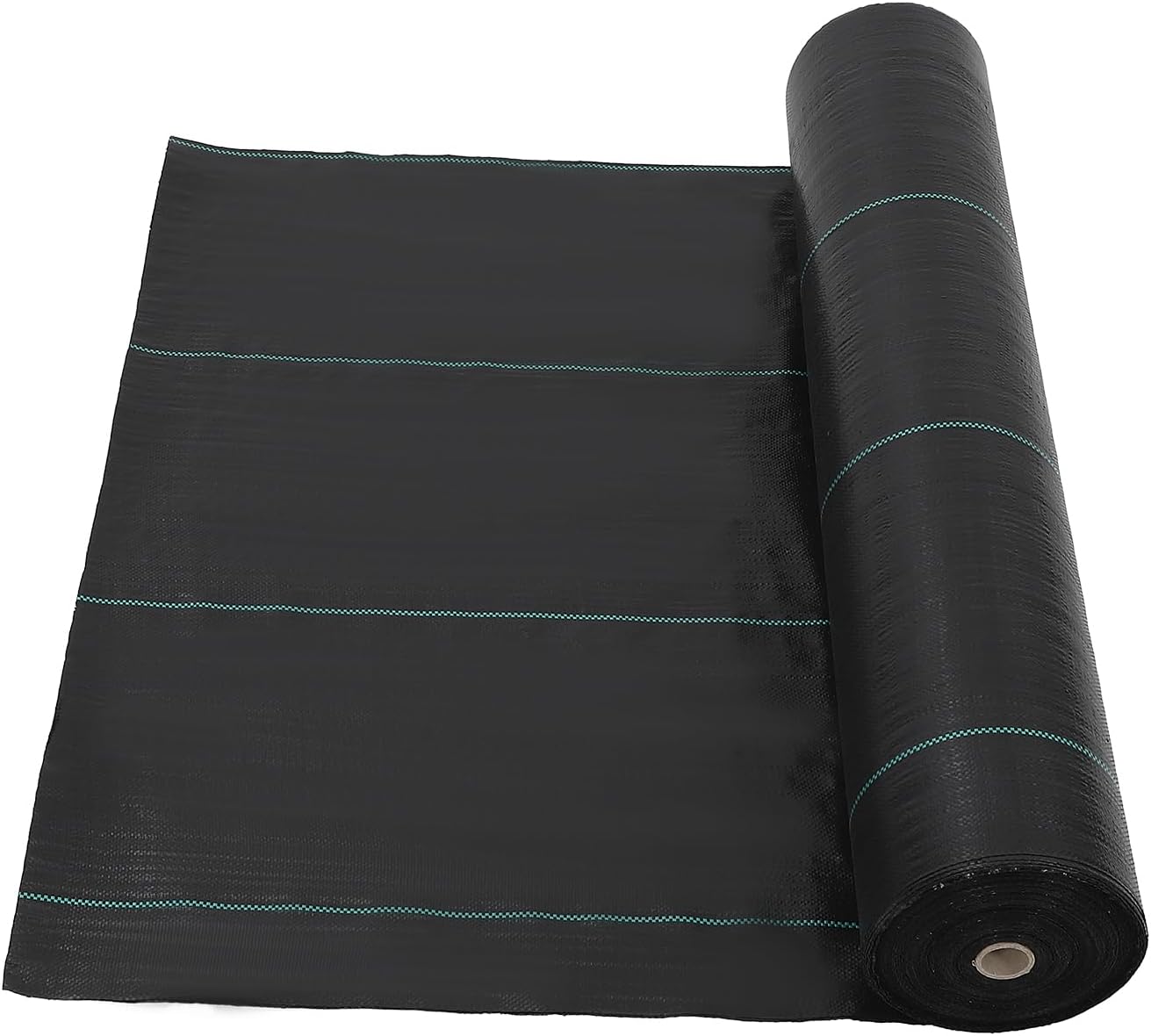
| Material | Polypropylene |
|---|---|
| Weight | 5 oz |
| Coverage | 4 x 250 ft |
This Broadfashion 4 x 250 ft landscape fabric is a heavy-duty, polypropylene ground cover made to control weeds in flower beds and larger landscaping areas. It is typically rolled out over prepared soil, cut or slit for plants, and anchored with staples before being covered with mulch or decorative stone. The 5 oz material is described as tear resistant and weatherproof, so it stands up to foot and light vehicle traffic and resists breakdown from sun and moisture. Permeability is a key feature here: water and air pass through the textile so you do not get surface puddling while soil moisture is conserved. The large roll gives long continuous coverage for multi-bed projects, reducing seams and installation time. Important limitations are that it still requires proper installation around plants and edging to stop weed edges, and like any nonwoven fabric it will slowly degrade over many seasons and can be less effective against persistent deep-rooted weeds that grow through mulch into soil underneath.
Best for: Gardeners who prioritize a reliable, long-lasting barrier for flower beds and larger landscape areas and want a product that stands up to weather and light traffic without frequent replacement.
Less Ideal for: People looking for a zero-maintenance, permanent solution for aggressive perennial weeds or those who prefer biodegradable mulches that fully break down within a season.
- Heavy-duty 5 oz polypropylene construction for improved tear resistance and durability
- High permeability lets water and air reach the soil while reducing surface puddling
- Large 4 x 250 ft roll reduces seams and speeds installation for multi-bed projects
- Designed for long-term outdoor exposure and suitable for landscaping and erosion control
- Will not permanently stop deep-rooted perennial weeds that can grow through mulch or around edges
- Requires careful cutting and anchoring at plant openings and borders to remain effective
Verdict: Choose this heavy-duty, high-permeability fabric when you need a dependable, long-roll weed barrier that reduces seams and stands up to outdoor exposure in flower beds.
DeWitt Sunbelt Woven Weed Barrier Fabric, 3.2 oz, 4 x 300 ft

| Fabric weight | 3.2 oz |
|---|---|
| Material | Woven polypropylene |
| Roll length | 4 x 300 ft |
| UV-stabilized | Yes |
This DeWitt Sunbelt woven weed barrier is a commercial-grade ground cover for large garden and landscape projects. The dense polypropylene weave blocks most weed growth while remaining permeable so water and nutrients still reach the soil, which makes it suited for raised beds, greenhouse floors, garden rows, and long planting runs. The material is UV-stabilized and resists tears and punctures from foot traffic, tools, and repositioning, so it holds up under frequent use. Golden alignment stripes every 12 inches simplify straight-row layout and spacing when installing in nursery or orchard rows. Installation is straightforward but requires staples or pins for secure anchoring, and the roll size means handling and cutting can be bulky for one person. It is a practical, durable choice when you need dependable, long-lasting weed suppression across large areas, though smaller hobby gardeners may find the roll unwieldy to manage alone.
Best for: Gardeners and landscapers who need a robust, long-lasting ground cover for large beds, greenhouse floors, or long planting rows and value durability and ease of layout.
Less Ideal for: Small-plot or container gardeners who want a lightweight, easy-to-handle product or anyone looking for a temporary, disposable fabric option.
- Woven polypropylene construction lets water and air through while blocking weeds.
- UV-stabilized for sustained outdoor exposure without rapid degradation.
- Durable against tears and punctures from tools and foot traffic.
- 12-inch alignment stripes help lay out straight rows and consistent plant spacing.
- Large roll size can be bulky and awkward for a single person to unroll and position.
- Requires pins or staples to secure; not a standalone solution for weed control.
Verdict: Choose this fabric when you want a durable, UV-stable woven barrier that provides long-term weed suppression and easy row alignment across large garden or landscape areas.
LAVEVE Heavy Duty Weed Barrier Landscape Fabric, 4 ft x 100 ft (two 4×50 ft rolls)

| Material | Polypropylene |
|---|---|
| Permeability | Breathable, allows water and air flow |
| UV resistance | Resistant to sun exposure |
| Package | Two rolls totaling 4 ft x 100 ft |
This LAVEVE landscape fabric is a heavy-duty woven polypropylene ground cover intended to suppress weeds while letting moisture and air reach the soil. It ships as two 4 ft x 50 ft rolls (total 4 ft x 100 ft) with printed guide lines that make cutting and alignment straightforward. In practice it is laid over prepared beds, cut for plantings, and secured with U-shaped pegs; the fabric’s permeability helps reduce erosion and allows irrigation to penetrate. The material is UV-resistant and built for typical garden uses such as flower beds, vegetable plots, gravel paths, and sidewalks. Because it is a woven polypropylene, it is sturdier than thin nonwoven mats and stands up to foot traffic when covered with mulch or gravel. Limitations to expect are that surface-seeded weeds or seeds blown onto mulch can still germinate on top, and long-term burial or heavy soil compaction can reduce effectiveness; occasional maintenance and proper installation around plants are required to keep beds weed-free.
Best for: Gardeners who want a durable, breathable ground cover to reduce routine weeding and tidy beds across medium-length runs of pathway or planting area, and who value a product with solid usage feedback.
Less Ideal for: People seeking a permanent, maintenance-free solution or those who prefer chemical weed control methods; also not the best choice for beds where frequent deep digging or planting changes are required.
- Woven polypropylene construction provides durable, tear-resistant coverage
- Permeable design allows water and air to reach soil, reducing erosion
- Printed guide lines make measuring and cutting easier during installation
- Suitable for multiple applications including beds, paths, and under gravel
- Comes as two rolls totaling 4 ft x 100 ft for extended coverage
- Does not prevent weeds that germinate in mulch or on top of the fabric
- Requires proper securing and occasional maintenance to stay effective
Verdict: A sturdy, breathable woven fabric that gives reliable, easy-to-install weed suppression for medium garden beds and paths backed by strong user approval.
Choosing the Right Weed Barrier for Flower Beds: Key Factors to Consider
Durability and Material Life
How long the barrier lasts in a flower bed determines how often you will need to replace it. Durable woven or heavy nonwoven fabrics resist tearing from foot traffic, tool use, and root growth. UV resistance also matters for surfaces that receive sunlight during installation or seasonal exposure.
Less durable materials may break down within a single season, creating holes that let weeds establish and increasing long-term work. Consider whether you want a temporary seasonal cover or a multi-year fabric that can stay in place beneath mulch.
Water Permeability and Breathability
A good weed barrier for flower beds must allow water, oxygen, and nutrients to pass to the roots. High-permeability fabrics let rainfall and irrigation percolate without pooling on the surface, which prevents root rot and delivers evenly distributed moisture to plants.
Breathable materials also let soil gases escape and maintain healthy microbial activity. Models marketed for impermeability are better for paths or patios but are unsuitable for planted beds because they block essential water and air exchange.
Weed Suppression Effectiveness
Effective suppression depends on the material's opacity, edge management, and how well seams are overlapped or taped. Opaque, tightly woven fabrics stop light and prevent seed germination; however, suppression can fail where fabric is cut for planting or where edges are left exposed.
Long-term suppression also requires correct installation and a covering layer such as organic mulch. Without proper overlap and anchoring, perennial weeds and runners can exploit gaps. Evaluate how the barrier handles root intrusion and whether it discourages shallow-rooted weeds.
Ease of Installation and Maintenance
Some barriers are lightweight and quick to cut, making them ideal for small beds or frequent replanting. Heavier fabrics take longer to position but resist displacement by wind and animals. Installation features to consider include preprinted grid lines for straight cuts, included fasteners or recommended anchoring methods, and how the material behaves when dimpled around plants.
Maintenance considerations include how easy it is to lift the fabric for dividing or adding plants, and whether the material collects debris. Choose a balance between initial effort and long-term convenience based on how often you will modify the bed.
Compatibility with Planting and Root Growth
Flower beds often include annuals, perennials, and bulbs, which present different needs. Some barriers are easy to cut and let you set plants through slits or X-shaped cuts, while others require creating planting holes and may impede root expansion.
Consider whether the barrier will be used under raised plantings, around established root systems, or in beds where new plants are added frequently. Materials that allow roots to pass without constriction reduce stress on perennials and bulbs.
Environmental Impact and Disposal
Material composition affects both garden health and end-of-life disposal. Some fabrics are synthetic and long-lasting, which reduces replacement frequency but may not be recyclable locally. Others use biodegradable fibers designed to break down over a predictable timeframe.
Weigh the tradeoff between longevity and compostability. In beds with heavy organic mulching, biodegradable options can be practical, but confirm decomposition rates and how breakdown affects weed suppression over time.
Preparing Your Flower Bed for a Barrier
Start by removing existing weeds and large roots to minimize future regrowth under the fabric. Rake the soil smooth and remove stones that could create gaps or puncture the material.
Measure the bed and cut the barrier with enough overlap at edges and seams to prevent light from reaching soil. Anchor the material securely with landscape staples or pins, paying attention to slopes where material might shift.
- Clear perennial roots and large clumps before laying fabric
- Leave extra length for overlap and anchoring
- Smooth soil to avoid high spots that create tearing points
Planting Through a Barrier
When planting, create minimally sized openings to reduce exposed soil. Use a sharp blade to cut X-shaped slits or round holes just large enough for the root ball. Fold back fabric carefully and set the plant so the crown sits at the correct soil level.
For bulbs and small annuals, consider using mulch above the barrier and planting bulbs before laying the fabric in seasonal beds to avoid repeated cutting and disturbance.
- Cut small planting holes and avoid large exposed areas
- For frequent planting, plan access points to minimize fabric damage
- Mulch over the barrier to moderate soil temperature and hide cuts
Managing Mulch and Surface Coverings
Applying an adequate layer of organic mulch over the barrier improves weed suppression, moderates soil temperature, and stretches the life of the fabric by shielding it from UV. Aim for a depth appropriate to your plants, typically 2 to 3 inches for flower beds.
Avoid using fine mulch that can compact and fill surface pores on permeable fabrics. Larger bark chips or shredded materials maintain airflow while giving good coverage.
- Use 2 to 3 inches of compatible mulch for best results
- Avoid compactive fines that can block permeable fabrics
- Refresh mulch annually rather than layering it endlessly
Seasonal Care and Replacement Timing
Inspect the barrier each season for tears, exposed edges, and plant access needs. Small repairs can be made with landscape staples or patch pieces; larger failures usually require replacing a section or the whole sheet.
For biodegradable fabrics, plan for replacement on the schedule indicated by the material. Synthetic options may last many years but can eventually become brittle after prolonged UV exposure.
- Check anchor points and seams in spring and fall
- Patch small holes promptly to stop weed establishment
- Schedule replacement based on material life rather than appearance alone
Integrating Barriers with Irrigation
Make sure the chosen fabric works with your irrigation system. Drip lines can run over or under some barriers, but access points for emitters should be planned so water reaches the root zone directly.
Permeable fabrics generally work best with drip irrigation or soaker hoses placed under the mulch. Avoid impermeable materials that force water to run off the surface.
- Place drip lines where roots can access water through the fabric
- Test irrigation after installation to confirm soak depth
- Adjust emitter spacing to account for any reduced lateral water movement
How We Chose the Best Weed Barrier for Flower Beds
We focused on attributes that matter for flower beds and for gardeners who want dependable, low-fuss results. Durability was a first filter because garden fabrics that shred or decay quickly leave gaps for weeds and require frequent replacement. Water permeability and breathability were next: materials must let rain and irrigation reach the root zone while avoiding waterlogging. We also assessed ease of installation and adaptability to planting: good barriers work around existing plants and allow future transplanting without excessive disturbance. Weed suppression was judged on actual coverage behavior rather than marketing claims. Environmental impact and material composition were included as tie-breakers, favoring options that break down predictably or are recyclable. We excluded products designed exclusively for paved areas, landscape gravel beds, or heavy-duty geotextile road use because those trade construction performance for a different set of needs. We also excluded flimsy, single-season fabrics that lack documented breathability ratings. The final choices reflect a balance of longevity, water handling, and gardener-friendly installation.
FAQ
Can I use landscape fabric under mulch in a flower bed?
Yes, many breathable landscape fabrics are designed to be used under mulch in planted beds. Choose a permeable material so water and air reach the roots, and cut small planting holes to minimize exposed soil.
Will a weed barrier stop all weeds permanently?
No barrier stops every weed forever. Proper installation, enough overlap, and a sufficient mulch layer greatly reduce weed pressure, but perennial roots or windblown seeds can find gaps over time and require occasional maintenance.
Is biodegradable fabric a good choice for perennial beds?
Biodegradable options can be suitable if you expect to rework beds frequently or prefer to avoid synthetic waste. Be aware that breakdown reduces suppression over time, so plan for staged replacement to maintain control.
How deep should I mulch over a weed barrier?
A typical depth is 2 to 3 inches of organic mulch for flower beds. This level improves suppression, moderates soil temperature, and protects the fabric from UV exposure while still allowing plant crowns to sit at the correct height.
Can I run drip irrigation under the fabric?
Yes. Drip tubing can be placed under the fabric if the material is permeable; place emitters near plant roots and verify that water infiltrates the soil. For nonpermeable surfaces, routing irrigation to the rooting zone is essential.
Final Verdict
Choose a weed barrier for flower beds by balancing longevity, water permeability, and how often you plan to plant or divide. Durable, breathable fabrics paired with a proper mulch layer give the best mix of suppression and healthy root access. If you prefer lower waste and frequent bed changes, a biodegradable option can be acceptable but expect to replace it sooner. Prioritize materials that let water and air through and that are easy to cut neatly for planting. With correct installation and seasonal checks, a well-chosen barrier will reduce weeding time and help your flower beds look tidy with less ongoing effort.
