

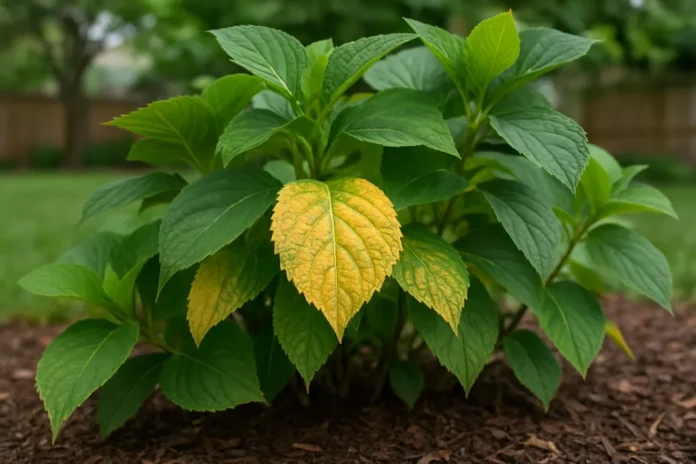
Hydrangea leaves usually turn yellow because of watering stress, nutrient deficiencies, poor drainage, or heat and sun stress. In some cases, yellowing is also caused by pests, disease, or normal aging of older leaves.
When I see hydrangea leaves turning yellow, I do not assume there is just one cause. Hydrangeas are quick to show stress, but the color change can come from something as simple as uneven watering or something more specific like iron chlorosis, root problems, or too much afternoon sun.
The good news is that yellow leaves usually leave clues. Whether the whole leaf is pale, the veins stay green, only lower leaves are affected, or the plant also looks limp can tell you a lot. If you read the pattern instead of reacting to one yellow leaf, you can usually get your hydrangea back on track without guessing.
What Yellow Leaves Are Telling You
Before you reach for fertilizer or start watering more, look closely at how the yellowing appears. Hydrangeas often show different yellowing patterns depending on the underlying problem. A plant that is evenly pale all over is giving a different signal than one with bright yellow leaves and dark green veins.
- If older lower leaves turn yellow first, think normal aging, inconsistent moisture, or a mobile nutrient shortage such as nitrogen.
- If new leaves are yellow while veins stay green, iron chlorosis is more likely.
- If leaves turn yellow and also droop or feel thin, watering stress is often involved.
- If yellowing comes with brown crispy edges, heat, sun scorch, or dry roots may be part of the problem.
- If leaves yellow in patches with spots, holes, or webbing, pests or disease deserve a closer look.
When I troubleshoot hydrangeas, I always compare new growth to older leaves first. That simple step often separates a feeding issue from a root or watering issue faster than any product label can.
Watering Stress Is the Most Common Cause
Too Little Water
Hydrangeas have large leaves that lose moisture quickly, especially in summer. If the soil dries too far between waterings, leaves may fade from healthy green to light green or yellow, then develop brown margins or wilt. This often starts during heat waves, after windy weather, or when nearby trees compete for moisture.
Underwatering is especially common in newly planted hydrangeas and container plants. Their roots have not spread far yet, so they depend on steady moisture. A mature shrub in the ground can also suffer if the top few inches dry out repeatedly.
Too Much Water
Yellow leaves do not always mean the plant is thirsty. Soggy soil can cause the same symptom because roots need oxygen as much as water. In waterlogged ground, roots begin to struggle or rot, and leaves turn yellow, limp, and sometimes drop. The soil may smell sour, stay wet for days, or sit in a low area after rain.
- Dry-stressed hydrangeas often look limp in heat and improve after deep watering.
- Overwatered hydrangeas stay weak even when the soil is wet.
- Dry soil pulls away from the edge of a container, while overly wet soil feels heavy and cool for too long.
- A plant in wet soil with yellow leaves and little new growth often has root stress, not a lack of fertilizer.
If you are not sure whether your hydrangea is too dry or too wet, dig a small test hole 4 to 6 inches deep near the root zone. I trust what the soil feels like below the surface much more than what the top crust looks like.
Nutrient Deficiencies Can Change Leaf Color Fast
Nitrogen Deficiency
Nitrogen helps produce lush green growth, so when it runs low, older leaves often turn uniformly pale yellow. Growth may slow, and the shrub can look thin or tired overall. This is more likely in poor soil, in beds that have not been amended in years, or after heavy rain has leached nutrients away.
Iron Chlorosis
Iron chlorosis is one of the classic reasons hydrangea leaves turn yellow while the veins stay green. It usually affects newer leaves first. The plant may have enough iron in the soil, but it cannot access it well if soil pH is too high or roots are stressed by wet conditions.
Magnesium or Other Minor Imbalances
Magnesium deficiency can also cause yellowing, often between veins on older leaves. It is less common than watering issues, but it does show up in sandy soils or where repeated feeding has pushed the soil out of balance. Overfertilizing can create problems too, especially when excess salts damage roots and make leaves yellow and scorched at the edges.
- Uniform yellowing on older leaves suggests nitrogen may be low.
- Yellow new leaves with green veins points more strongly to iron chlorosis.
- Yellowing between veins on older foliage can indicate magnesium shortage.
- Leaf burn after feeding may come from too much fertilizer rather than too little nutrition.
Soil pH and Chlorosis Are Frequent Hydrangea Issues
Hydrangeas prefer slightly acidic soil, and some types become chlorotic when the soil drifts too alkaline. When that happens, the plant cannot take up iron efficiently, even if the nutrient is technically present. The result is yellow leaves, especially on fresh growth, with veins that remain noticeably greener.
This often happens in areas with naturally alkaline soil, near concrete foundations, or where irrigation water is high in lime. Gardeners sometimes mistake chlorosis for simple hunger and add more general fertilizer, but that does not fix the underlying uptake problem.
A soil test is the best way to confirm pH issues. If pH is high, gradual acidifying steps and improved root health tend to help more than random feeding. I have seen hydrangeas look dramatically better once the pH and drainage were corrected together.
Poor Drainage and Root Problems Can Mimic Other Issues
Hydrangeas like moist soil, but they do not want to sit in a swamp. Heavy clay, compacted planting holes, buried root crowns, and low spots in the yard can all trap water. When roots stay wet too long, they lose function, and leaves begin to yellow because the plant cannot move water and nutrients normally.
Root problems may also show up after transplanting. A rootbound hydrangea planted without loosening circling roots can struggle for months. Damaged roots from construction, trenching, or aggressive cultivation can create the same yellowing pattern, often along with wilting during warm afternoons.
- Water pools around the shrub after rain.
- Soil stays saturated for several days.
- The plant wilts even though the ground is damp.
- Leaves yellow and drop during the growing season.
- New growth is small or sparse.
Sun, Heat, and Weather Stress Can Bleach Foliage
Many hydrangeas prefer morning sun and protection from hot afternoon exposure, especially in warmer parts of the U.S. When a plant gets more intense sun than it can handle, leaves may yellow, fade, or scorch. This is common after unusually hot weather, reflected heat from walls or pavement, or when a tree canopy is removed and the shrub suddenly gets much more light.
Heat stress often overlaps with dry soil, so the plant may show both yellowing and brown crispy patches. Broadleaf hydrangeas are especially expressive about summer stress. Panicle hydrangeas usually handle more sun, but even they can struggle if roots are dry and temperatures spike.
I pay attention to which side of the plant yellows first. If the sun-facing side looks washed out while shaded leaves stay greener, I start thinking light and heat stress before I blame fertilizer.
Pests and Diseases Are Less Common but Still Possible
Sap-sucking Pests
Aphids, spider mites, and scale can weaken hydrangea foliage and leave it yellow or stippled. Spider mites are especially likely during hot, dry weather and often hide on leaf undersides. You may notice fine webbing, tiny speckles, or a dusty look before leaves fully yellow.
Leaf Spot and Root-related Diseases
Fungal leaf spots can cause yellow halos around dark lesions, and severe infection may lead to broader yellowing and leaf drop. Root diseases are more serious and usually tied to poor drainage. If the plant stays yellow despite correct watering and the root zone remains wet, root rot becomes more likely.
- Check leaf undersides for mites, aphids, and scale.
- Look for dark spots with yellow halos on the leaves.
- Notice whether yellowing is patchy and tied to damaged tissue rather than uniform across the plant.
- Watch for blackened, mushy, or foul-smelling roots if you inspect a container plant.
Sometimes Yellow Leaves Are Normal
Not every yellow hydrangea leaf means trouble. Older interior leaves often yellow and drop as the plant redirects energy to newer growth. This is especially common later in the season, after flowering, or when the shrub is dense and shaded inside.
Seasonal change also matters. In fall, many hydrangeas begin to shift color before dormancy. If the plant is otherwise healthy, yellowing on a limited number of older leaves may simply be part of its normal cycle rather than a sign of disease or a serious deficiency.
How to Fix Yellow Hydrangea Leaves
The best fix depends on the cause, but the goal is always the same: restore healthy roots and support strong new growth. Existing yellow leaves may not turn green again, so judge improvement by what the plant does next.
- Adjust watering so the soil stays evenly moist but never waterlogged.
- Add 2 to 3 inches of mulch to cool the root zone and reduce moisture swings, while keeping mulch a few inches away from the stems.
- Improve drainage if the planting site stays soggy. That may mean amending surrounding soil carefully, redirecting runoff, or moving the plant if the location is chronically wet.
- Use a soil test before adding fertilizer or pH products. This is the quickest way to avoid treating the wrong problem.
- Feed lightly with a balanced fertilizer if a general nutrient shortage is confirmed or strongly suspected.
- Treat chlorosis by addressing high pH and using iron products only as part of a broader soil correction plan.
- Provide afternoon shade in hot climates or during extreme heat if sun stress is part of the issue.
- Inspect for mites, aphids, scale, and leaf spot if yellowing includes visible damage, stippling, or lesions.
Change one thing at a time when possible. If you water more, fertilize, acidify the soil, and spray for pests all in the same week, it becomes much harder to tell what actually helped or whether the plant is reacting to too much intervention.
When Yellowing Means the Plant Needs Closer Attention
Most hydrangeas recover well once the underlying stress is corrected, but some warning signs deserve faster action. A shrub that declines quickly in wet soil, loses a large share of leaves, or has yellowing combined with stem dieback may have more than a minor watering issue. Container hydrangeas can collapse quickly if roots are badly damaged, and newly planted shrubs can fail if drainage is poor from the start.
- Yellowing is spreading rapidly across the entire plant.
- Leaves are yellowing and falling while the soil stays consistently wet.
- Stems are blackening, softening, or dying back.
- The plant shows little or no healthy new growth.
- Pests or leaf spotting are severe enough to affect most of the foliage.
In those cases, it helps to slow down and diagnose carefully rather than adding more products. Hydrangeas are forgiving, but repeated overwatering, poor drainage, and unneeded fertilizer can turn a manageable problem into a much bigger one.
FAQ
Should I Remove Yellow Leaves From My Hydrangea?
You can remove fully yellow or damaged leaves if they come off easily, especially if they are diseased or badly scorched. If only a few older leaves are yellowing naturally, it is also fine to leave them until they drop on their own.
Can Too Much Sun Make Hydrangea Leaves Yellow?
Yes. Too much hot afternoon sun can fade leaves, cause yellowing, and lead to brown crispy edges, especially on bigleaf hydrangeas in warmer regions.
Will Yellow Hydrangea Leaves Turn Green Again?
Usually no. Once a leaf has turned noticeably yellow, it often stays that way or drops. The real sign of recovery is healthy green new growth after the problem is corrected.
How Often Should I Water a Hydrangea with Yellow Leaves?
There is no perfect schedule because soil type, heat, wind, and plant size all matter. In general, water deeply when the root zone starts to dry slightly, and avoid letting the soil swing between bone dry and saturated.
Does Epsom Salt Help Yellow Hydrangea Leaves?
Only if magnesium deficiency is actually the issue. It will not fix yellowing caused by overwatering, iron chlorosis, poor drainage, or high soil pH, so it should not be the first treatment you try.
Why Are My Hydrangea Leaves Yellow with Green Veins?
That pattern usually suggests chlorosis, often linked to iron uptake problems and soil that is too alkaline. It tends to show most clearly on newer leaves.
Can Overfertilizing Cause Hydrangea Leaves to Yellow?
Yes. Too much fertilizer can damage roots, build up salts in the soil, and cause yellowing or scorched leaf edges. More fertilizer is not always the answer to pale foliage.
Is It Normal for Hydrangea Leaves to Yellow in Fall?
Yes. Many hydrangeas naturally yellow as they head into dormancy. If the plant looked healthy through the growing season, fall yellowing is often normal seasonal change.
Want the right fix faster? Read our hydrangea care and soil guide to choose the best fertilizer, mulch, and watering setup for greener growth and stronger blooms.
