

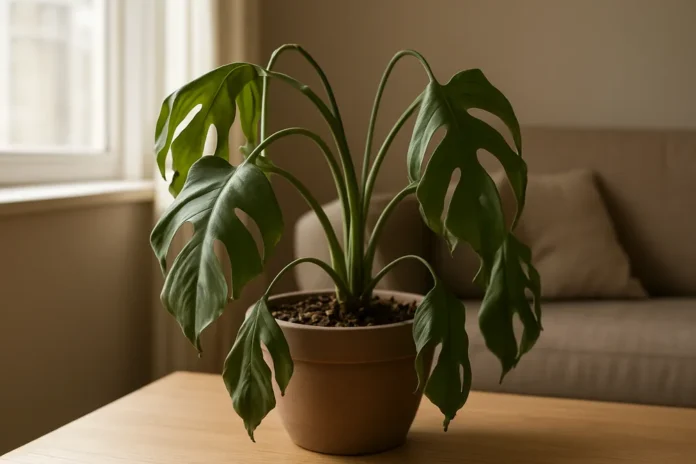
Monstera leaves usually wilt because the plant is not moving water properly through its roots and stems. The most common reasons are overwatering, underwatering, root damage, low humidity, temperature stress, or pests.
Seeing Monstera leaves droop all at once can be alarming, especially if the plant looked healthy just days earlier. When leaves start to hang limp or lose their usual firmness, your plant is telling you that something is interfering with normal water balance, root function, or overall plant stress.
Wilting does not always mean your Monstera is thirsty. In many cases, the real issue is overwatering, compacted soil, root rot, transplant shock, cold exposure, or even a pest problem that weakens the plant over time. The key is to look at the soil, roots, room conditions, and leaf pattern together instead of assuming one cause.
The good news is that most wilting problems can be corrected once you identify the source. Below, you will find the most likely causes, how to tell them apart, and what to do to help your Monstera recover.
What Wilting Means on a Monstera
Wilting happens when leaf tissues lose firmness because the plant cannot maintain enough internal water pressure, also called turgor. On a Monstera, this can show up as leaves that droop downward, petioles that bend more than usual, or foliage that feels soft instead of crisp and sturdy.
A wilted Monstera may still have green leaves, or it may also show yellowing, browning, curling, or mushy stems depending on the cause. That is why wilt alone is not a precise diagnosis. It is a symptom with several possible triggers.
- If the soil is bone dry and the plant perks up after watering, underwatering is likely.
- If the soil is wet for days and leaves are drooping with yellowing, overwatering or root rot is more likely.
- If wilting began right after repotting or moving the plant, stress or root disturbance may be involved.
- If the plant is near an AC vent, heater, drafty window, or hot sun, environmental stress may be the main issue.
Overwatering Is One of the Most Common Causes
Many gardeners assume a wilted houseplant needs more water, but Monsteras often wilt when they are watered too often. Roots need both moisture and oxygen. When potting mix stays wet too long, air pockets disappear and roots begin to suffocate. Once roots are stressed, they cannot take up water efficiently, so the leaves droop even though the soil is wet.
Signs That Overwatering Is the Problem
- Soil feels damp several inches down for more than a few days after watering
- Leaves droop but the pot feels heavy
- Older leaves start turning yellow
- The base of stems feels soft or discolored
- There is a sour or swampy smell coming from the pot
Overwatering is not just about how much water you pour in at once. It can also mean watering too frequently, using a dense potting mix, keeping the plant in a pot with poor drainage, or placing it in a room where the soil dries very slowly.
If you suspect overwatering, pause watering until the top few inches of mix have dried appropriately. Make sure the pot has drainage holes and consider switching to a chunkier aroid mix that contains bark, perlite, and a moisture-retentive base such as coco coir or potting soil.
Underwatering Can Make Leaves Collapse Quickly
Underwatering is the opposite problem, but the symptom can look similar at first. When the root ball gets too dry, the plant cannot pull enough water into the leaves, so they lose rigidity and hang limp. Monsteras usually show this most clearly in the leaf blades and petioles.
Clues That Your Monstera Is Too Dry
- Pot feels very light when lifted
- Soil pulls away from the sides of the pot
- Leaves may wilt, curl, or develop dry brown edges
- Newer growth looks weak or slow
- The plant improves within a day after a deep watering
A severely dry root ball can become hydrophobic, meaning water runs down the sides and out the drainage holes without fully soaking the mix. In that case, surface watering may not solve the problem. A slow, thorough watering or bottom watering session can help rehydrate the root zone more evenly.
Monsteras prefer to dry somewhat between waterings, but not to the point that the entire pot stays dry for long periods. Exact timing depends on pot size, light levels, humidity, and season, so watering by soil moisture works better than watering on a strict calendar.
Root Rot Can Cause Lasting Wilt Even in Wet Soil
If your Monstera stays wilted even though the soil is moist, root rot is a strong possibility. Root rot develops when chronically wet conditions allow roots to decay. Once healthy white roots turn brown, black, or mushy, the plant loses its ability to move water upward, so the leaves wilt as if the plant were dry.
Common Root Rot Symptoms
- Persistent drooping that does not improve after watering
- Yellowing leaves along with wilt
- Soft roots or roots that slough off when touched
- A musty or rotten smell in the pot
- Blackened stem tissue near the soil line in advanced cases
To confirm root rot, gently slide the plant from its pot and inspect the roots. Healthy Monstera roots are usually light colored and firm. Rotted roots look dark, mushy, hollow, or stringy.
If root rot is present, trim away damaged roots with clean scissors, repot into fresh airy mix, and use a clean container with drainage. Avoid fertilizing immediately after treatment, since damaged roots are more sensitive and need time to recover.
Poor Drainage and Compacted Soil Stress the Root System
Sometimes the issue is not how often you water but what the roots are growing in. Monsteras prefer a loose, breathable medium. If the potting mix has broken down into a dense mass, roots may sit in stale moisture and struggle for oxygen. This can lead to drooping, slow growth, and leaves that never seem fully turgid.
Compacted soil is common in older pots, bargain houseplant mixes, or containers that have gone a long time without repotting. Heavy decorative pots without proper drainage can make the problem worse by trapping water at the bottom.
How to Improve Drainage
- Use a pot with at least one unobstructed drainage hole
- Repot in a chunky mix with bark, perlite, and standard potting base
- Empty saucers or cachepots after watering so roots are not left standing in water
- Replace old mix if it feels muddy, heavy, or compacted
Low Humidity and Dry Indoor Air Can Contribute to Drooping
Monsteras are more adaptable than some tropical houseplants, but very dry air can still stress them. When indoor humidity is low, especially in winter, leaves lose moisture faster. If the roots cannot keep up, the foliage may look limp, thin, or less robust.
Low humidity alone does not usually cause dramatic collapse unless paired with underwatering, root restriction, or hot conditions. More often, it makes an existing watering issue show up faster. You may also see crispy edges, browning tips, or slower unfurling leaves.
- Aim for moderate indoor humidity, often around 40 to 60 percent
- Keep the plant away from heating vents and forced hot air
- Group tropical plants together to create a slightly more humid microclimate
- Use a humidifier if your home is very dry for long stretches
Temperature Stress and Drafts Can Make a Monstera Wilt
Monsteras grow best in warm, stable indoor temperatures. Cold drafts, chilly windows, blasting air conditioning, or sudden heat exposure can interrupt normal plant function and cause drooping. Rapid swings are often more stressful than a slightly imperfect but steady temperature.
If your plant wilted after being placed near an exterior door, a drafty window, or a heat source, environment may be the trigger. Cold stress can also cause leaves to darken or turn translucent in patches. Excess heat can lead to faster soil drying and a dehydrated look.
Better Placement for Steady Growth
- Keep Monsteras in rooms that stay roughly between 65 and 85 degrees Fahrenheit
- Avoid placing the pot directly in front of AC or heating vents
- Move it back from single-pane windows if the glass gets very cold or hot
- Protect it from sudden outdoor exposure during moves or summer patio transitions
Too Much Direct Sun or Too Little Light Can Weaken the Plant
Light problems can indirectly cause wilting. Intense direct sun, especially afternoon sun through glass, can increase water loss and scorch leaves. The plant may droop because it is overheating or drying too fast. On the other hand, very low light slows water use, which makes overwatering more likely.
Monsteras usually do best in bright, indirect light. In dim corners they often grow more slowly and stay wet longer after each watering. In harsh sun they can bleach, burn, and dehydrate quickly.
- Use bright indirect light near an east window or a few feet back from a south or west window
- Filter harsh sun with a sheer curtain if leaves are exposed during hot afternoon hours
- Adjust watering after changing the plant's light conditions
- Rotate the pot occasionally for more even growth
A Rootbound Monstera May Wilt Because It Dries Too Fast
When a Monstera outgrows its container, roots can circle the pot densely and leave very little room for soil. That means less moisture retention and faster drying. A rootbound plant may wilt soon after watering cycles because the roots use available water quickly.
Rootbound plants can also become harder to rewet evenly, especially if the mix has shrunk away from the pot sides. You may notice roots pushing from drainage holes, slower growth, smaller new leaves, or the need to water much more often than before.
If the root ball is tightly packed, repotting into a container 1 to 2 inches wider than the current pot is usually enough. Oversizing the pot too much can hold excess moisture and create a new set of problems.
Transplant Shock Can Cause Temporary Drooping
It is common for a Monstera to droop briefly after repotting, dividing, shipping, or moving to a new room. Disturbed roots need time to reestablish contact with the fresh mix and resume normal water uptake. During that transition, leaves can look limp even if you did everything correctly.
Transplant shock usually improves within days to a couple of weeks if the plant is kept in stable conditions. Problems last longer when the new mix is too wet, the roots were heavily damaged, or the plant was moved into stronger light immediately after repotting.
- Keep the plant in bright indirect light, not harsh direct sun
- Water enough to settle the mix, then avoid keeping it soggy
- Do not fertilize immediately after repotting
- Give the plant time before making repeated changes
Pests Can Weaken Leaves and Stems
While watering issues are more common, pests can also contribute to wilting. Spider mites, thrips, mealybugs, and scale feed on plant tissues and sap. Heavy infestations reduce vigor, distort growth, and can make leaves lose firmness over time.
Pest Clues to Look For
- Fine webbing under leaves or between petioles, often from spider mites
- Silvery scarring or streaks from thrips feeding
- White cottony clusters from mealybugs
- Sticky residue or small bumps on stems from scale insects
- Leaf yellowing, spotting, or twisted new growth along with drooping
If pests are present, isolate the plant from others and begin treatment with repeated cleanings and a houseplant-safe product such as insecticidal soap or horticultural oil, following label directions carefully. One treatment is rarely enough because eggs and hidden insects can survive the first round.
How to Tell Which Cause Is Most Likely
The fastest way to diagnose wilt is to match the drooping leaves with soil moisture, root condition, and recent changes. Looking at one factor alone often leads to the wrong fix.
- Dry soil + light pot + quick recovery after watering: underwatering or a rootbound plant
- Wet soil + yellowing + foul smell: overwatering or root rot
- Wilting after repotting or moving: transplant or environmental stress
- Dry edges + winter heat or AC exposure: low humidity or temperature stress
- Spots, webbing, residue, or distorted growth: pest pressure
If your Monstera has several symptoms at once, the primary cause is often root-related. For example, low light plus frequent watering plus dense soil is a classic combination that leads to wilt from root stress.
How to Help a Wilted Monstera Recover
Recovery depends on fixing the underlying cause, not simply adding water. Once conditions improve, many Monsteras perk back up gradually over several days. Badly damaged leaves may not fully recover, but healthy new growth is a good sign the plant is on the right track.
General Recovery Steps
- Check the soil several inches down instead of judging by the surface alone.
- Confirm the pot drains freely and is not sitting in trapped water.
- Inspect roots if the plant stays wilted despite correct watering.
- Move the plant into bright indirect light with steady warmth.
- Hold off on fertilizer until the plant shows active recovery.
Do not overcorrect by swinging from one extreme to another. A Monstera that was overwatered does not need to become bone dry for weeks, and a thirsty Monstera does not need daily watering. Consistency is more helpful than panic treatments.
How to Prevent Wilting in the Future
Most Monstera wilting problems become much less common when the plant is grown in the right container, the right mix, and the right light. Prevention is mostly about creating a routine that lets roots breathe while still receiving steady moisture.
- Water when the upper portion of the mix has dried, not on a fixed weekly schedule
- Use a fast-draining aroid mix rather than dense standard potting soil alone
- Repot when the plant becomes rootbound or the soil breaks down
- Keep the plant in bright indirect light
- Avoid cold drafts, heater blasts, and abrupt environmental changes
- Inspect foliage regularly so pests are caught early
A healthy Monstera should look upright, full, and resilient most of the time. If your plant begins to droop again, the pattern of when it happens will usually point you toward the cause.
FAQ
Can a Monstera Recover After Wilting?
Yes, a Monstera can often recover if the cause is corrected early. Leaves may firm up within hours after proper watering or over several days after root or environmental stress is resolved.
Should I Water My Monstera Right Away if the Leaves Are Drooping?
Not automatically. Drooping can come from both dry soil and overly wet soil, so watering immediately without checking moisture may make the problem worse.
How Do I Know if My Wilted Monstera Has Root Rot?
Root rot is more likely when the soil stays wet, leaves droop and yellow, and the pot smells sour or musty. Confirm by checking for dark, mushy, or hollow roots.
Why Is My Monstera Wilting After Repotting?
Repotting can disturb roots and cause temporary transplant shock. If the roots were damaged or the new mix stays too wet, drooping may last longer.
Can Low Humidity Make Monstera Leaves Wilt?
Yes, especially when dry air combines with underwatering, heat, or root stress. Low humidity more often causes limp growth, brown edges, and a generally stressed appearance than severe collapse by itself.
Do Pest Infestations Make Monstera Leaves Droop?
They can. Heavy infestations of spider mites, thrips, mealybugs, or scale weaken the plant and can lead to drooping along with spots, residue, webbing, or distorted growth.
How Often Should I Water a Monstera to Prevent Wilting?
There is no single schedule that fits every home. Water when the upper portion of the potting mix has dried to the appropriate level for your plant's size, light, and season.
Want a healthier, fuller Monstera fast? Read our guide to the best Monstera soils, pots, and care tools so you can fix drooping leaves and prevent the problem from coming back.
