

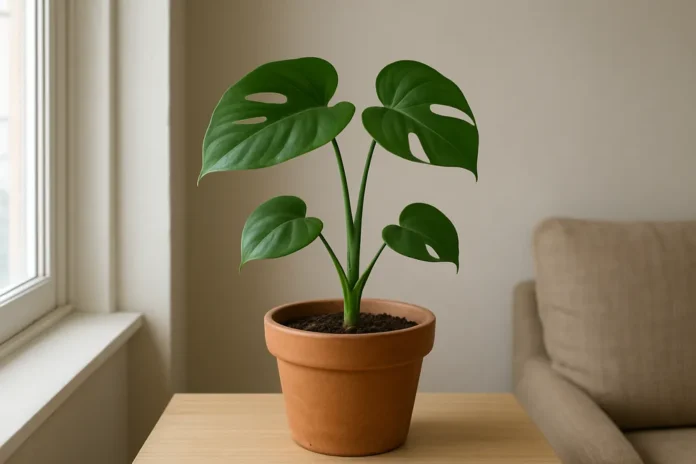
A Monstera usually stops growing because it is not getting enough light, warmth, root space, or balanced moisture. Slow growth can also come from dormancy, low nutrients, pest pressure, or transplant stress.
A monstera that looks healthy but refuses to put out new leaves can be frustrating, especially when you expect it to grow into a large, dramatic houseplant. If your plant is not growing, the problem is usually tied to a few common conditions rather than anything mysterious.
Most Monsteras slow down when indoor light is too weak, watering is inconsistent, temperatures are cool, or roots are stressed. Growth can also pause after repotting, during winter, or when the plant is spending energy on survival instead of pushing new foliage.
The good news is that a stalled Monstera often recovers once its environment improves. By narrowing down the likely cause, you can usually get it back to producing stronger leaves and steadier growth.
How Fast a Monstera Should Grow
Monstera deliciosa is not the fastest houseplant in every home, but it should show some progress during spring and summer. In good indoor conditions, an established plant often produces a new leaf every few weeks during active growth. Younger plants may grow more slowly at first, while mature plants can speed up once they have strong roots, adequate light, and support for climbing.
A plant is not necessarily unhealthy just because it is not growing quickly. Growth rate depends on season, age, pot size, room temperature, humidity, and how much light reaches the leaves. The real warning sign is a Monstera that has stopped growing for months during the warm season, especially if it also has small leaves, yellowing, drooping, or poor root health.
- Normal: slower growth in fall and winter
- Usually normal: a short pause after repotting or moving to a new room
- Concerning: no new leaves through spring and summer despite otherwise stable indoor conditions
- Concerning: new leaves emerge much smaller than older ones or fail to unfurl well
Insufficient Light Is the Most Common Cause
Weak light is the top reason a Monstera stalls indoors. These plants tolerate medium light, but tolerance is not the same as thriving. In a dim corner, a Monstera may stay alive for a long time while barely producing new leaves. Without enough energy from bright light, the plant cannot support vigorous growth.
What Low Light Growth Looks Like
- Long stretches of stem between leaves
- Small new leaves with no splits or holes
- Leaning toward a window
- Very slow or completely stalled growth
- Soil that stays wet for a long time because the plant uses water slowly
Monsteras grow best in bright, indirect light. A spot near an east window or a few feet back from a bright south or west window often works well, especially with a sheer curtain if harsh afternoon sun is intense. In many U.S. homes, the difference between medium light and bright indirect light is enough to completely change the plant's growth rate.
If your Monstera has been sitting far from natural light, moving it gradually to a brighter area can make a big difference. Sudden exposure to direct hot sun can scorch leaves, so increase brightness in steps over a week or two rather than all at once.
Watering Problems Can Stall Growth
Monsteras do best when the soil dries slightly between waterings, but not so much that the roots stay bone dry for long stretches. Both overwatering and underwatering interfere with growth. When roots cannot function well, the plant directs energy toward stress response instead of making new foliage.
How Overwatering Slows a Monstera
If the potting mix stays soggy, roots struggle to access oxygen. Over time, that can lead to root rot, a condition that damages the root system and prevents the plant from taking up water and nutrients properly. A Monstera with root problems may look droopy, yellow, or stagnant even though the soil is wet.
How Underwatering Slows a Monstera
When the plant stays too dry too often, it cannot maintain steady growth. Leaves may curl, brown at the edges, or emerge small and weak. Repeated drought stress can cause the plant to pause growth for a while, even after you resume watering.
- Overwatering clues: yellow leaves, mushy stems near the base, musty soil smell, consistently wet mix
- Underwatering clues: limp leaves, dry compacted soil, crispy edges, pot pulling away from the sides
- Best approach: water thoroughly, then wait until the top 1 to 2 inches of soil feels dry before watering again
Poor Soil and Root Stress Hold the Plant Back
Even with good light and decent watering, a Monstera may stop growing if the roots are under stress. Houseplants depend on a healthy root zone, and Monsteras especially prefer a chunky, airy mix that drains well while still holding some moisture.
Signs the Potting Mix Is Part of the Problem
- Soil becomes dense and muddy after watering
- Water runs straight through because old mix has turned hydrophobic
- Roots are circling tightly around the pot
- The plant dries out extremely fast and needs water constantly
- There is little new growth despite the growing season
A rootbound Monstera can slow down because the roots have taken over the container and there is little room left for expansion. On the other hand, a plant in an oversized pot can struggle too, because excess soil stays wet longer and increases the risk of root problems. The best pot size is usually just 1 to 2 inches wider than the root ball.
A fresh mix for Monstera usually includes regular potting soil plus amendments like orchid bark, perlite, pumice, or coco chips. This kind of blend improves airflow and helps roots grow actively instead of sitting in compacted material.
Low Nutrients Mean Limited Growth
Monsteras are not heavy feeders compared with some outdoor plants, but they still need nutrients to make new leaves and stems. If your plant has been in the same pot for a long time, it may have used up much of what was available in the mix. A nutrient-starved plant often looks pale and sluggish rather than vigorously green.
Nitrogen supports leafy growth, while phosphorus and potassium help overall plant function, root development, and stress tolerance. Micronutrients also matter. If one or more nutrients are lacking, growth may slow even if everything else looks fairly good.
Fertilizer Mistakes That Can Also Cause Problems
- Never feeding during active growth
- Using fertilizer too often and causing salt buildup
- Fertilizing a dry or stressed plant
- Continuing heavy feeding during winter dormancy
During spring and summer, many indoor gardeners use a balanced liquid houseplant fertilizer at a diluted rate every few weeks. If salts have built up from repeated feeding, the roots can become stressed and growth may stop. In that case, flushing the soil and adjusting your feeding schedule is often more helpful than adding more fertilizer.
Temperature and Humidity Affect Growth More Than Many Gardeners Expect
Monsteras are tropical plants, so they grow best in warm, stable indoor conditions. If your home is cool, drafty, or dry, growth may slow down noticeably. Temperatures below about 60 degrees Fahrenheit can reduce growth, and cold window glass in winter can stress leaves and roots even when the rest of the room feels comfortable.
Most Monsteras grow best when daytime temperatures stay roughly between 65 and 85 degrees Fahrenheit. Moderate humidity helps leaves develop and unfurl more easily, though a Monstera does not need a jungle-like environment to survive. What matters most is avoiding prolonged cold, heat blasts from vents, and sudden swings.
- Keep the plant away from heater vents and cold drafts
- Do not let leaves press against freezing winter windows
- Aim for average to moderately high indoor humidity
- Expect slower growth in air-conditioned or very dry rooms
Seasonal Dormancy Can Be Completely Normal
Many home gardeners worry when a Monstera stops growing in late fall or winter, but that slowdown is often natural. Shorter days and weaker sunlight reduce the plant's energy supply. Even if your indoor temperature stays fairly warm, lower light alone can cause the plant to rest.
During dormancy or semi-dormancy, your Monstera may not produce any new leaves for weeks or even a few months. That does not automatically mean something is wrong. If the foliage still looks healthy and the plant resumes growth when days lengthen, the pause was likely seasonal.
This is also why winter is a poor time to expect dramatic results from repotting or fertilizing. The plant may simply not be in an active growth phase yet.
Pests Can Drain Energy and Stop New Growth
Sap-sucking pests can weaken a Monstera enough to slow or halt growth, especially spider mites, thrips, mealybugs, and scale. These insects feed on plant tissue and reduce the plant's ability to photosynthesize and develop normally.
Common Pest Symptoms
- Tiny speckling or stippling on leaves
- Silvery scars or distorted new growth
- Sticky residue on leaves or nearby surfaces
- White cottony clusters along stems or nodes
- Fine webbing, especially under leaves
Pests are especially common when a plant is stressed by dry air, low light, or irregular watering. A mild infestation may not look dramatic at first, but it can be enough to stop fresh growth. Catching the issue early gives your Monstera the best chance to rebound quickly.
Repotting Shock and Recent Changes Can Pause Growth
If your Monstera recently moved to a new pot, a new room, or a new home, a temporary pause in growth is common. Plants need time to adjust to changes in light, temperature, and root disturbance. A repotted Monstera may spend several weeks rebuilding roots before it sends up new leaves.
This is especially true if roots were pruned heavily, the new pot is much larger than the old one, or the plant was repotted during a low-light season. Growth pauses after change are not always a sign of failure. They often mean the plant is redirecting energy below the soil line.
Support and Maturity Influence Leaf Size and Growth Habit
Monsteras are climbers, not naturally compact tabletop plants. In the wild, they use aerial roots to climb upward toward brighter light. Indoors, a Monstera without support can still grow, but it often becomes floppy and may produce smaller or less impressive leaves than a plant trained onto a moss pole or sturdy stake.
A young Monstera also behaves differently from a mature one. Juvenile plants naturally have smaller leaves and fewer fenestrations. If your plant is still fairly young, some of what looks like poor growth may simply be normal development. As the plant matures and climbs, leaf size usually improves.
How to Get a Monstera Growing Again
Once you identify the likely cause, focus on steady improvement rather than quick fixes. Monsteras respond best to consistency. A plant that has stalled for months may still need several weeks to show visible progress after conditions improve.
- Move the plant to brighter indirect light or add a grow light if natural light is limited.
- Adjust watering so the top layer of mix dries slightly between thorough waterings.
- Inspect the roots if the soil stays soggy, smells sour, or the plant seems rootbound.
- Repot only if needed, using a chunky, well-draining aroid mix and a pot with drainage holes.
- Feed lightly during spring and summer with a balanced houseplant fertilizer.
- Keep temperatures warm and stable, and avoid cold drafts or heater blasts.
- Check regularly for spider mites, thrips, mealybugs, and scale.
- Provide a moss pole or other support to encourage stronger upward growth.
Patience matters. After the problem is corrected, the next sign of recovery is often a healthier new leaf rather than an immediate burst of growth all over the plant.
When Slow Growth Signals a Bigger Problem
A Monstera that is simply resting will usually keep firm stems, reasonably healthy leaves, and stable roots. A Monstera with a serious issue usually shows additional symptoms beyond slow growth. If you see yellowing spreading rapidly, black mushy roots, stem softening, a foul smell from the pot, or heavy pest damage, the plant needs prompt attention.
The combination of no growth plus visible decline points to root damage, chronic overwatering, severe underwatering, or pest pressure more often than dormancy alone. In those cases, the sooner you correct the root cause, the better your chance of saving the plant and restoring normal growth.
FAQ
Why Is My Monstera Healthy but Not Growing?
If the leaves still look healthy, the most likely reasons are low light, winter dormancy, or the plant being young and still establishing roots. Monsteras often stay alive in medium light but grow very slowly until conditions improve.
Do Monsteras Stop Growing in Winter?
Yes, many Monsteras slow down or temporarily stop growing in winter because days are shorter and sunlight is weaker. This is usually normal if the plant otherwise looks healthy.
Can a Rootbound Monstera Stop Growing?
Yes, a severely rootbound Monstera can stall because the roots have little room left to expand and the pot dries out too fast. If roots are densely circling the pot, repotting into a slightly larger container can help.
Will Low Humidity Keep a Monstera From Growing?
Low humidity alone does not always stop growth, but it can slow a Monstera down and make new leaves unfurl poorly. Dry air becomes more of a problem when combined with weak light, irregular watering, or pest issues.
How Often Should I Fertilize a Monstera That Is Not Growing?
Only fertilize during active spring and summer growth, and use a diluted balanced houseplant fertilizer rather than heavy doses. If the plant is not growing because of low light or root problems, more fertilizer will not solve the issue.
Should I Repot My Monstera if It Has Stopped Growing?
Repot only if the plant is rootbound, the soil has broken down badly, or there are root health issues. Repotting a plant that is stalled for another reason can add extra stress.
Does a Monstera Need a Moss Pole to Grow?
It does not need a moss pole to stay alive, but support often improves growth habit and can help the plant produce larger leaves over time. Monsteras are natural climbers and usually perform better with something to climb.
Want a faster fix for a stalled houseplant? Read our guide to the best Monstera soil mixes, grow lights, and fertilizers so you can choose the right setup and restart healthy growth.
