

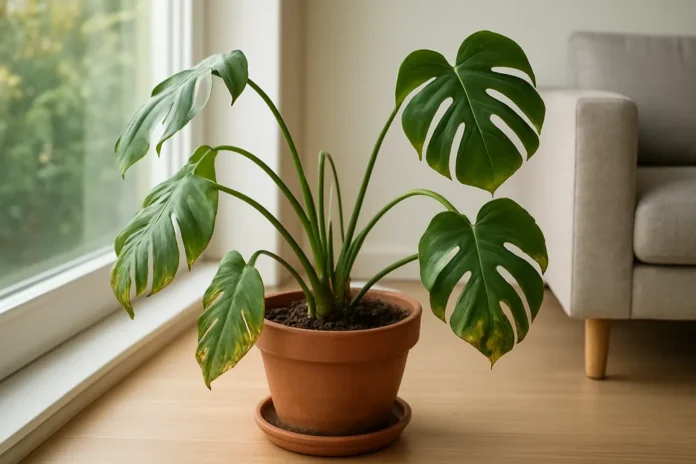
Monstera leaves usually droop because the plant is stressed by watering problems, low light, temperature swings, or root trouble. Drooping can also happen after repotting, from pests, or as older leaves naturally decline.
Seeing Monstera leaves drooping can be alarming, especially when a plant that usually looks bold and upright suddenly appears limp or tired. In most cases, drooping is a stress signal rather than a death sentence, and the cause is often something you can correct at home.
A Monstera uses water pressure inside its stems and leaf tissues to hold its large leaves up. When that pressure drops or the roots cannot support the plant properly, the foliage starts drooping. Problems with watering, light, roots, humidity, temperature, and even recent repotting can all trigger the same symptom.
The key is to look at the whole plant instead of the droop alone. Leaf texture, soil moisture, pot size, light exposure, and how quickly the problem appeared can help you narrow down what is really going on.
What Drooping Usually Means in a Monstera
Drooping is a general stress response. A healthy Monstera keeps its leaves lifted because roots absorb water, stems move that moisture upward, and the plant has enough energy from light to maintain firm growth. When one part of that system is disrupted, the leaves lose some of their structure and begin to sag.
This symptom does not always mean the same thing. A thirsty Monstera can droop, but so can one sitting in soggy soil with damaged roots. A plant moved from a bright room to a dim corner may also droop because it cannot produce enough energy to support large leaves. That is why the best diagnosis comes from pairing the droop with other clues.
- Sudden drooping with dry soil often points to underwatering.
- Drooping with yellowing leaves and wet soil often suggests overwatering or root stress.
- Gradual drooping and stretched growth can indicate low light.
- Drooping after a move or repot often reflects short-term transplant or environmental shock.
- Drooping with spots, sticky residue, or distorted growth may be tied to pests.
Watering Problems Are the Most Common Cause
Underwatering and Loss of Leaf Pressure
When a Monstera gets too dry, the roots cannot deliver enough moisture to keep the leaves firm. The plant responds by letting leaves bend downward to reduce stress. This kind of drooping often happens quickly, especially in warm rooms, bright windows, or during active summer growth.
Underwatered plants often have soil that pulls away from the inside of the pot, lighter containers, and leaves that feel thin or slightly limp. The stems may still be green, but the whole plant can look tired. If dryness continues, leaf edges may crisp and older leaves may yellow.
Overwatering and Suffocated Roots
Overwatering also causes drooping, but for the opposite reason. Roots need oxygen as much as they need moisture. When soil stays wet too long, air spaces fill with water and roots start to suffocate. Once roots are damaged, the plant cannot take up water efficiently, so the leaves droop even though the pot is wet.
This is why a drooping Monstera with damp soil should never be watered automatically. Overwatered plants often show slower growth, yellow leaves, blackened roots, a musty smell, or stems that seem softer near the base. Chronic wetness can eventually lead to root rot.
- Dry soil plus limp leaves usually leans toward underwatering.
- Wet soil plus drooping and yellowing usually leans toward overwatering.
- A heavy pot several days after watering suggests the mix may be staying too wet.
- A very light pot and soil shrinking from the pot edge suggest the plant is too dry.
Light Levels Affect Posture More than Many Gardeners Realize
Monsteras prefer bright, indirect light. In low light, the plant cannot photosynthesize efficiently enough to support large leaves and sturdy stems. Over time, growth becomes weaker, petioles stretch, leaves may turn toward the nearest window, and the whole plant can take on a droopy appearance.
This kind of drooping tends to be more gradual than water stress. The plant does not suddenly collapse overnight. Instead, it looks less upright week by week, especially if it is placed far from a bright window or in a room with short winter days.
Too much direct sun can create a different kind of stress. Harsh afternoon light can overheat leaves and speed up water loss, which may make the plant droop temporarily. If light is the issue, you may also see pale patches, scorched areas, or leaves curling away from intense exposure.
- Low light often causes stretched stems, smaller leaves, and slower growth along with drooping.
- Excess direct sun often causes fading, scorch, or wilting during the hottest part of the day.
- Bright, filtered light usually gives the best leaf size, posture, and color.
Root Problems Can Keep Leaves From Standing Up
Root Rot
If roots stay wet and begin to rot, they lose the ability to absorb water and nutrients. The result often looks confusing because the plant seems thirsty even though the soil is moist. Drooping, yellowing, black or mushy roots, and a sour smell are common warning signs.
Rootbound Plants
A Monstera that has outgrown its pot can also droop. When roots circle densely around the root ball, water may run straight through the container or the plant may dry out too fast between waterings. In severe cases, the roots no longer have enough room to support vigorous top growth.
Compacted or Poorly Draining Soil
Even if the pot size is fine, old soil can break down and become dense. That reduces airflow around the roots and encourages both overwatering problems and weak root growth. Monsteras do best in an airy mix that drains well while still holding moderate moisture.
If drooping keeps returning despite reasonable watering, the root zone deserves close attention. A plant cannot hold its leaves up well if the foundation below the soil line is unhealthy.
Humidity, Temperature, and Drafts Can Trigger Drooping
Monsteras are adaptable houseplants, but they still respond to dry indoor air, cold drafts, hot blasts from heaters, and sharp temperature swings. Environmental stress can make leaves lose moisture faster than the roots can replace it, leading to temporary or ongoing droop.
This is especially common in winter when indoor heating dries the air and windows or doors expose the plant to cold drafts. Air conditioning vents can cause similar issues in summer. If your Monstera droops shortly after weather changes or after being placed near a vent, the environment may be part of the problem.
- Cold stress can make leaves hang, curl, or develop dark damaged patches.
- Very dry air can contribute to limp growth and crispy edges.
- Hot air from vents can dry the soil fast and cause repeated wilting.
- Stable indoor temperatures usually help Monsteras recover and hold leaves more upright.
Repotting Shock and Recent Changes Can Make a Healthy Plant Droop
If your Monstera drooped soon after repotting, moving, pruning, or bringing it home from the store, the plant may simply be adjusting. Root disturbance during repotting can temporarily reduce water uptake. A change in light, humidity, or temperature can also cause the foliage to sag for several days or even a couple of weeks.
This kind of drooping is often mild to moderate rather than catastrophic. The leaves remain mostly green, and the plant does not necessarily show signs of rot or severe dehydration. As long as conditions are otherwise good, the plant often stabilizes on its own once roots and leaves adapt to the new setup.
Repotting into a container that is far too large can worsen drooping because excess soil stays wet longer and increases the risk of root stress. Pot size matters almost as much as fresh soil.
Pests and Disease Sometimes Show Up as Drooping Leaves
Although watering and light are more common causes, pests can also make Monstera leaves droop by draining sap, weakening growth, and stressing the plant. Spider mites, thrips, mealybugs, and scale are the usual suspects indoors.
Pest damage often comes with other clues, such as stippling, silvery streaks, sticky residue, webbing, or distorted new growth. A single drooping leaf is less likely to be a pest issue than widespread droop paired with visible feeding damage.
Disease is less common indoors but can become a factor when plants are chronically overwatered or kept in stale, humid conditions with poor airflow. In those cases, root disease is still more likely than a leaf disease to explain drooping.
How to Tell Which Cause Is Most Likely
The fastest way to narrow down the problem is to combine the drooping pattern with the current growing conditions. Look at the soil first, then the light, then the recent care history. Most Monstera problems become clearer when you put those clues together.
- If the soil is bone dry and the plant perks up after watering, lack of water was likely the cause.
- If the soil is wet for days and the leaves stay limp, root stress or overwatering is more likely.
- If the plant sits in a dark corner and growth is leggy, low light is a strong possibility.
- If drooping began right after repotting or moving, adjustment stress may be the main factor.
- If you see speckling, webbing, or sticky leaves, inspect closely for pests.
- If only one or two old lower leaves droop while the rest look healthy, natural aging may be part of it.
Also consider whether the drooping is isolated or widespread. One damaged leaf does not always mean the whole plant is in trouble. But if multiple leaves and stems are sagging at once, think bigger-picture stress such as roots, water, or environment.
How to Help a Drooping Monstera Recover
Correct Watering Before Anything Else
Water based on soil moisture rather than a rigid schedule. Monsteras generally prefer the top inch or two of soil to dry before the next thorough watering, though this varies with pot size, light, and season. If the soil is very dry, water evenly until excess drains out. If it is already wet, give it time to dry and improve drainage rather than adding more water.
Improve Light Conditions
Move the plant to a spot with bright, indirect light. Near an east window or a few feet back from a bright south or west window often works well in many U.S. homes. If natural light is limited, a quality grow light can help support stronger, less droopy growth.
Check the Pot and Root Zone
Make sure the container has drainage holes. If the plant is rootbound, repot into a container only slightly larger. If the soil is dense or stays wet too long, switch to a chunky, airy houseplant mix with components like bark, perlite, and potting mix that balance moisture retention with airflow.
Reduce Environmental Stress
Keep the plant away from heating vents, AC blasts, and cold drafts. Moderate humidity helps, but consistency matters more than chasing tropical conditions. Try to avoid abrupt changes in placement unless necessary.
Treat Pests Promptly
If pests are present, isolate the plant and begin treatment with methods appropriate for indoor houseplants, such as wiping leaves, insecticidal soap, or horticultural oil, depending on the pest. Repeat treatments are often necessary because many indoor pests return if only treated once.
Recovery time depends on the cause. A thirsty plant may improve within a day, while a plant with root problems or recent transplant shock may take several weeks to look normal again.
When Drooping Is Normal and Not a Major Problem
Not every drooping leaf signals a serious issue. Older leaves near the base may eventually angle downward as the plant matures and redirects energy into newer growth. Large, mature leaves can also hang more naturally than juvenile leaves, especially if the plant does not have support from a stake or moss pole.
A Monstera with heavy leaves may simply need structure. In nature, these plants climb. Indoors, providing a pole or trellis often improves posture and helps the plant hold leaves more attractively. If the leaves look firm, green, and healthy overall, slight downward arching may be normal rather than a distress signal.
How to Prevent Monstera Leaves From Drooping Again
Prevention comes down to consistency. Monsteras are forgiving, but they respond best when light, watering, and environment stay fairly stable. Once you learn how quickly your plant dries in its current location, drooping becomes much easier to avoid.
- Use a pot with drainage and a loose, well-aerated mix.
- Water thoroughly, then wait until the upper soil has dried before watering again.
- Give the plant bright, indirect light for most of the day.
- Rotate the pot occasionally so growth stays balanced.
- Keep it away from harsh drafts and direct blasts of hot or cold air.
- Inspect leaves and stems regularly for early pest activity.
- Repot before the plant becomes severely rootbound, but avoid oversized containers.
- Add a support pole if the plant is mature and top-heavy.
FAQ
Can a Monstera Recover After Drooping Badly?
Yes, many Monsteras recover well once the underlying stress is corrected. Plants that drooped from dryness or temporary shock often rebound fastest, while those with root rot or severe pest pressure may need more time and care.
How Long Does It Take a Drooping Monstera to Perk Up?
A dehydrated Monstera may improve within 12 to 24 hours after a thorough watering. If the cause is overwatering, root damage, low light, or repotting shock, recovery may take several days to a few weeks.
Should I Cut Off Drooping Monstera Leaves?
Do not remove drooping leaves right away if they are still green and functional. Keep them unless they are yellow, brown, badly damaged, or clearly declining, since the plant can still use healthy leaf tissue for energy.
Do Drooping Leaves Always Mean My Monstera Needs Water?
No. Drooping can mean the plant is too dry, but it can also happen when the soil is too wet and the roots are stressed. Always consider soil moisture before watering.
Why Is Only One Monstera Leaf Drooping?
If just one older leaf is drooping, it may be aging naturally or reacting to minor physical damage. If newer leaves begin drooping too, look for broader issues such as watering problems, pests, or environmental stress.
Can Low Humidity Alone Make Monstera Leaves Droop?
Low humidity can contribute, especially in heated or air-conditioned homes, but it is not usually the only cause. It often combines with watering issues, drafts, or heat stress to produce noticeable drooping.
Will a Moss Pole Help with Drooping Leaves?
It can help if the drooping is partly due to a mature, top-heavy plant lacking support. A pole will not fix root rot or poor watering, but it can improve posture and encourage stronger upright growth.
Need the right setup for a stronger, healthier houseplant? Read our guide to the best Monstera soil mixes, pots, and support poles so you can fix drooping faster and prevent it from coming back.
