

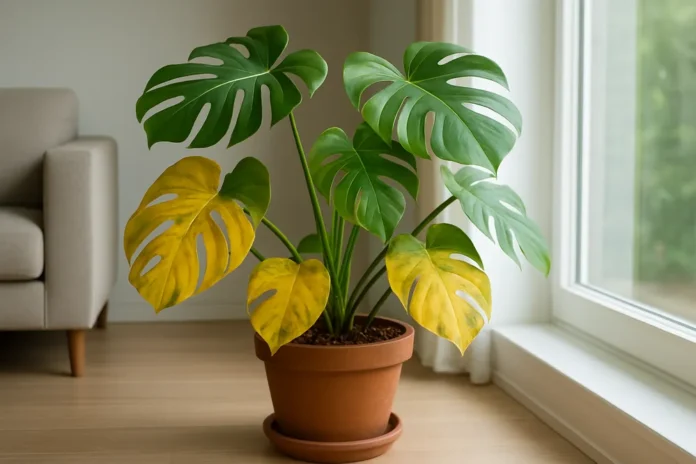
Monstera leaves usually turn yellow because of overwatering, poor drainage, low light, nutrient problems, aging foliage, or stress from pests and temperature swings. In many homes, excess moisture around the roots is the most common cause.
Seeing Monstera leaves turning yellow can be frustrating, especially when the rest of the plant seemed fine just days earlier. Yellow leaves are a stress signal, but they do not always mean your plant is dying. In many cases, the plant is reacting to a fixable issue like too much water, not enough light, or a temporary adjustment to its environment.
The key is to look at how the yellowing appears. A single lower leaf fading evenly can be normal aging, while several leaves yellowing at once often points to root stress, drainage trouble, or care conditions that are off. Once you match the pattern to the cause, it becomes much easier to correct the problem and help your monstera put out healthy green growth again.
This guide covers the most common reasons monstera leaves turn yellow, how to tell them apart, and what to do next so you can stop the problem before more foliage is affected.
What Yellow Leaves Are Telling You
Yellow leaves are not a disease by themselves. They are a symptom that the plant is redirecting resources or struggling with stress. Your monstera may be dealing with wet roots, weak light, nutrient imbalance, pest feeding, or natural leaf replacement.
The pattern matters. If the oldest leaf near the base turns yellow slowly while new growth looks healthy, aging is the likely reason. If multiple leaves are yellowing together, especially after watering changes or a move to a darker room, the issue is usually environmental. If yellowing comes with brown edges, drooping, mushy stems, black spots, or a foul smell from the potting mix, act quickly because root damage may already be developing.
- One old bottom leaf yellowing evenly: often normal aging
- Several leaves yellowing at once: usually watering, light, or root stress
- Yellow leaves with limp stems: overwatering or root trouble
- Yellow leaves with crispy edges: underwatering, dry air, or salt buildup
- Yellow speckling or patchy fading: possible pests such as spider mites or thrips
Overwatering and Poor Drainage Are the Most Common Causes
If your monstera leaves are turning yellow, start by looking at moisture around the roots. Monsteras like evenly moist soil, but they do not want to sit in soggy mix for long periods. When roots stay too wet, they cannot take up oxygen properly. The plant responds with yellowing leaves, drooping, and stalled growth.
Signs Your Monstera Is Getting Too Much Water
- Lower and middle leaves yellowing at the same time
- Soil staying wet for many days after watering
- A heavy pot that never seems to dry out
- Soft or mushy stems near the base
- A sour or swampy smell from the pot
Overwatering is not just about frequency. It can also happen when the pot has no drainage hole, the soil is too dense, the container is oversized, or the plant sits in a saucer full of water. Any of these conditions can keep the root zone wet far longer than a monstera prefers.
How to Fix It
Let the top 2 to 3 inches of potting mix dry before watering again. Empty drainage trays after watering. If the soil stays soggy for a week or more, repot into a chunky aroid mix with ingredients like bark, perlite, and coco coir or peat. Trim any black, mushy roots during repotting and move the plant into a pot with a drainage hole.
Underwatering Can Also Cause Yellow Leaves
Although overwatering is more common, a severely dry monstera can yellow too. When the plant goes too long between waterings, older leaves may fade and drop as the plant conserves moisture. Dry stress is especially common in warm rooms, near vents, or in porous terra-cotta pots that dry very quickly.
How Dry Stress Looks Different
- Leaves feel thin, limp, or curled before they yellow
- Brown crispy edges or tips appear with the yellowing
- Potting mix pulls away from the sides of the pot
- The pot feels unusually light
- New leaves may emerge smaller than normal
If the soil has become bone dry and water runs straight through, it may be hydrophobic. In that case, soak the root ball thoroughly until the mix is evenly rehydrated. Then resume a steadier watering routine instead of alternating between extreme dryness and soaking.
Low Light Slows Growth and Contributes to Yellowing
Monsteras tolerate moderate light, but they do best in bright, indirect light. In a dim room, the plant uses water more slowly, which raises the risk of overwatering. It also struggles to maintain older leaves, so yellowing becomes more likely over time.
A monstera kept too far from a window may look stretched, sparse, or smaller-leaved. If yellowing begins after moving the plant to a darker corner, poor light may be part of the problem even if watering habits have not changed.
When Light Is the Issue
- Growth slows or stops for long periods
- Leaf stems stretch toward the window
- New leaves are smaller and less split
- Soil remains wet much longer than before
- Yellowing happens gradually rather than overnight
Move your monstera closer to an east- or north-facing window, or a few feet back from a bright south- or west-facing window where direct sun is softened by a curtain. Strong direct afternoon sun can scorch leaves, but bright filtered light usually helps the plant recover.
Nutrient Deficiencies and Salt Buildup Can Fade the Foliage
If your monstera has been in the same pot for a long time, yellow leaves may be linked to depleted nutrients. Nitrogen deficiency often causes older leaves to yellow first because the plant moves nutrients to newer growth. Magnesium or iron issues can also affect leaf color, though they tend to show different patterns.
On the other hand, too much fertilizer can burn roots and create salt buildup in the soil. That can lead to yellowing, brown margins, and weak new growth. This is common when houseplants are fed too often or at full strength year-round.
Clues Pointing to Nutrient Problems
- General pale color across the plant
- Older leaves yellowing while newer ones stay greener
- White crust on the soil surface or pot rim
- Little growth during the active season despite good light
- Yellowing after heavy fertilizer use
During spring and summer, feed with a balanced houseplant fertilizer at a mild rate, usually every 4 to 6 weeks unless the product label says otherwise. If you suspect salt buildup, flush the pot thoroughly with water and let it drain well. If the plant is rootbound and the soil is exhausted, repot into fresh mix.
Pests Can Cause Yellow Speckling and Gradual Decline
Spider mites, thrips, scale, and mealybugs can all weaken a monstera and trigger yellowing. These pests feed on plant tissue, reducing the leaf's ability to function normally. The damage may start as pale stippling, silvery patches, or uneven fading before the leaf turns fully yellow.
Common Signs of Pest Activity
- Tiny yellow dots or stippling on leaves
- Fine webbing, especially under leaves or near nodes
- Sticky residue or black sooty mold
- Distorted new growth
- Visible insects on stems, leaf undersides, or leaf joints
Inspect both sides of the leaves and the stems near the nodes. Isolate the plant if pests are present. Wipe leaves clean and treat with insecticidal soap or neem-based products labeled for houseplants. Repeat applications as directed because one treatment rarely solves an active infestation.
Temperature Shock, Drafts, and Low Humidity Add Stress
Monsteras prefer stable indoor conditions. Sudden cold drafts, hot dry air from vents, or abrupt shifts after moving the plant outdoors and back inside can all lead to yellowing. While humidity alone is not usually the only reason for fully yellow leaves, dry air can worsen stress and cause edge browning at the same time.
Trouble often starts when a monstera sits near an air conditioner, radiator, frequently opened exterior door, or drafty winter window. Repeated temperature swings interfere with normal water movement through the plant and can push vulnerable leaves into decline.
- Keep the plant away from AC vents and heating registers
- Avoid exposing it to temperatures below about 55 degrees Fahrenheit
- Do not place leaves directly against cold glass in winter
- Use a humidifier if indoor air is extremely dry
Sometimes Yellow Leaves Are Just Normal Aging
Not every yellow leaf means something is wrong. Mature monsteras regularly shed older leaves, especially the lowest ones that receive the least light. A single leaf turning yellow slowly over time is often just part of the plant's normal cycle.
If the rest of the plant looks healthy, new leaves are emerging, and the yellowing is limited to one older leaf every so often, you usually do not need to worry. Let the leaf yellow fully, then remove it with clean pruners if you want to tidy the plant.
How to Tell Which Cause Is Most Likely
Because several issues can produce similar yellowing, use context to narrow it down. Think about what changed recently. A new watering schedule, a repot, a move to another room, a heat wave, or missed feedings often explain the timing.
- Check the soil moisture 2 to 3 inches down.
- Look at how many leaves are affected and whether they are old or new.
- Inspect the pot for drainage and the roots for rot if the soil stays wet.
- Assess light levels based on distance from the window and growth pattern.
- Examine leaves closely for pests, speckling, webbing, or sticky residue.
- Review your fertilizing history and whether salts may have built up.
In many cases, yellowing has more than one cause. For example, low light and overwatering often happen together, while dry air can make pest damage worse. Correcting the main stress factor usually stops the decline, but badly damaged leaves may not turn green again.
What to Do After You Identify the Problem
Once you know the likely cause, focus on steady care instead of making several drastic changes at once. Houseplants recover best when conditions become consistent. If the roots are healthy, new growth should improve first, even if older yellow leaves remain unattractive.
Best Recovery Practices
- Water only when the top layer of soil has dried appropriately
- Use a pot with drainage and a chunky indoor aroid mix
- Provide bright, indirect light daily
- Feed lightly during active growth, not heavily year-round
- Remove fully yellow leaves to improve appearance and airflow
- Monitor weekly so you catch new stress early
Be patient after making corrections. A monstera may need several weeks to show improvement, especially in lower light seasons. The goal is not to save every yellow leaf. The goal is to restore healthy roots and support strong new foliage.
FAQ
Should I Cut Off Yellow Monstera Leaves?
Yes, you can remove fully yellow leaves because they will not turn green again. Use clean pruners and cut near the base of the leaf stem without damaging the main stem.
Can Yellow Monstera Leaves Turn Green Again?
Usually no. Once a leaf has turned fully yellow, the damaged tissue does not recover. What you are looking for is healthy new growth after correcting the cause.
How Often Should I Water a Monstera to Prevent Yellow Leaves?
There is no fixed schedule that fits every home. Water when the top 2 to 3 inches of soil feel dry, then water thoroughly and let excess drain away.
Why Is Only One Lower Monstera Leaf Turning Yellow?
If it is an older bottom leaf and the rest of the plant looks healthy, that is often normal aging. Monsteras naturally shed older foliage over time.
Do Monsteras Get Yellow Leaves From Too Much Sun?
Yes, strong direct sun can bleach or scorch leaves, which may lead to yellow or pale patches followed by browning. Bright, indirect light is usually best.
Can a Small Pot Cause Monstera Leaves to Turn Yellow?
Yes, a rootbound plant may dry out too quickly or run low on nutrients, both of which can contribute to yellowing. If roots are circling tightly, repotting may help.
Is Tap Water Causing My Monstera Leaves to Yellow?
Sometimes. Hard water or mineral-heavy water can contribute to soil salt buildup over time, especially if combined with frequent fertilizing. Occasional flushing or using filtered water may help sensitive plants.
Need the right fix fast? Explore our monstera care guides and best potting mix picks to choose the products and steps that help yellowing plants recover sooner.
