

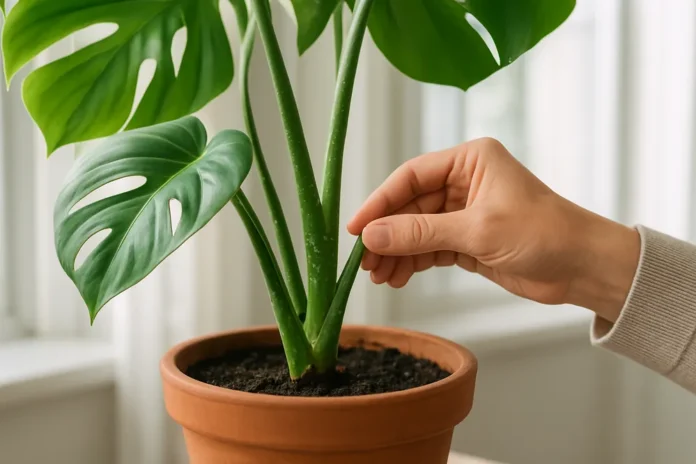
White spots on Monstera stems are often harmless lenticels, dried mineral residue, or old scarring. They can also come from pests like mealybugs or scale, especially if the spots look fuzzy, raised, or sticky.
Seeing white spots on monstera stems can be alarming, especially if your plant looked healthy just a few days ago. In many cases, white specks or patches on stems are not a serious problem at all. Monsteras naturally develop small pale markings, and residue from misting, fertilizer, or hard water can also leave a chalky film behind.
That said, not every white spot is harmless. Cottony clusters may point to mealybugs, raised bumps can signal scale insects, and spreading pale lesions may suggest moisture stress or infection. The key is to look closely at the texture, pattern, and location of the spots so you can tell normal stem features from something that needs treatment.
This guide walks through the most common reasons Monstera stems develop white spots, how to tell them apart, and which fixes are actually worth trying at home.
What White Spots On Monstera Stems Usually Mean
White spots on Monstera stems generally fall into two categories: normal plant features or surface and health problems. Natural spots tend to be small, dry, and evenly scattered. Problem spots are more likely to look fuzzy, sticky, crusty, spreading, or raised.
- Likely harmless: lenticels, minor scarring, dried water residue, old sheath remains
- Possibly harmful: mealybugs, scale, fungal or bacterial lesions, edema-related damage, sun or chemical injury
Before assuming the worst, inspect the stem in bright light. Try gently wiping one spot with a damp cloth or cotton swab. If it disappears easily, you may just be looking at residue. If it stays put, feels part of the stem, or comes with other symptoms like yellowing leaves or sticky sap, dig a little deeper.
Harmless Causes Of White Spots
Natural Lenticels
One of the most common harmless causes is lenticels, tiny pore-like markings that help with gas exchange. On Monstera stems, these can show up as pale dots, short dashes, or slightly corky speckles. They are usually flat or only slightly raised, and they do not spread rapidly.
Lenticels are especially common on thicker, older stems and nodes. If your plant otherwise looks vigorous, and the spots are dry, firm, and evenly distributed, they are probably normal.
Mineral Residue From Water Or Fertilizer
If you mist your Monstera, use hard tap water, or have splashed fertilizer solution onto the stems, dried minerals can leave a dusty white film or scattered crusty spots. This kind of residue often looks chalky rather than alive, and it usually wipes off with a damp cloth.
Residue is common near the base of leaf petioles, along the front of stems, or anywhere droplets tend to dry. It may return if your water has a high mineral content.
Old Sheath Material And Minor Scarring
Monsteras produce protective cataphylls, sometimes called sheaths, around new growth. As these dry and peel away, they can leave pale, papery remains or light scar marks on the stem. Minor bumps, rub marks, or healed scratches can also turn whitish as they age.
These marks stay localized and do not come with softness, rot, or insect movement. If the area feels dry and stable, it is usually cosmetic.
Pests That Cause White Spots On Monstera Stems
Mealybugs
Mealybugs are one of the first things to suspect when white spots look fluffy, cottony, or web-like. They often gather in stem joints, around nodes, where leaves meet stems, and near aerial roots. Rather than appearing like flat plant tissue, they look like small clumps of white fuzz.
You may also notice sticky honeydew, dusty-looking leaves, slowed growth, or yellowing foliage. Mealybugs are sap-sucking insects, so heavy infestations can weaken the plant over time.
- Cottony white masses in crevices
- Sticky residue on stems or nearby surfaces
- New growth that looks stunted or distorted
- Spots that return after you wipe them away
Scale Insects
Scale can sometimes look whitish, tan, or pale gray, especially in early stages or when waxy coverings are present. Unlike mealybugs, scale insects usually appear as firm bumps attached to the stem. They may not move much, which makes them easy to mistake for natural stem texture.
If you scrape one gently with a fingernail and it lifts off like a tiny shell, it is probably scale rather than a natural spot. Like mealybugs, scale can also produce sticky honeydew.
Spider Mites And Their Residue
Spider mites usually target leaves more than stems, but severe infestations can leave fine webbing and pale stippling around petioles and tender stems. The white appearance comes from cast skins, webbing, or the light-speckled damage they cause, not from a single solid white spot.
If your stem spots come with leaf bronzing, webbing, or a dusty look, spider mites are worth checking for, especially in dry indoor air.
Disease And Stress Problems That Can Leave Pale Stem Marks
Fungal Growth Or Mildew
A true fungal issue on Monstera stems is less common than pest or residue problems, but it can happen in humid spaces with poor air circulation. White fungal growth may look powdery, patchy, or slightly fuzzy. It tends to spread rather than stay as neat isolated dots.
If the white area keeps enlarging, appears on nearby leaves too, or comes with soft tissue, black spots, or rot, treat it as a health problem rather than a normal plant feature.
Edema Or Moisture Stress
Edema happens when the plant takes up water faster than it can use or release it. Cells can rupture and heal into corky, pale, or blister-like spots. This is more often noticed on leaves, but stems and petioles can show scarring too, especially after inconsistent watering or low light combined with wet soil.
Edema marks are not contagious, but they tell you the plant's moisture conditions are off. The spots usually do not wipe away, and they often feel like part of the tissue.
Sunscald Or Chemical Burn
Direct harsh sun or a too-strong foliar spray can bleach stem tissue and leave light tan or whitish patches. These marks often show up on the side facing the window or where a product was sprayed most heavily. They do not look fuzzy or insect-like, and they will not brush off.
Damage from sun or sprays is usually limited to exposed areas. Once the tissue is scarred, it stays visible, but it should not keep spreading if the underlying cause has been corrected.
How To Tell Which Cause You Are Seeing
The fastest way to identify white spots is to judge them by texture, removability, pattern, and plant symptoms. A close inspection with a flashlight is often enough.
- Flat, dry, evenly scattered, part of the stem: likely lenticels or natural markings
- Chalky or crusty and wipes off: likely mineral residue
- Cottony or fuzzy in joints and nodes: likely mealybugs or fungal growth
- Raised shell-like bumps that can be scraped off: likely scale
- Bleached patches on exposed sides: likely sun or chemical damage
- Corky blisters or pale scars after watering swings: likely edema or stress injury
Also look beyond the stems. Pests often leave clues on the undersides of leaves, around new growth, and on nearby surfaces. Diseases and watering problems are more likely to show up with yellow leaves, mushy roots, wilting, or expanding lesions.
What To Do For Each Cause
If The Spots Are Natural
If the white spots are lenticels, old scarring, or dried sheath remnants, there is nothing you need to fix. Keep caring for your Monstera normally. Avoid overhandling the stems or applying random treatments that can stress the plant more than the spots themselves.
If The Spots Are Mineral Residue
Wipe the stems with a soft damp cloth. If the buildup is stubborn, use a mild solution of water with a small splash of distilled white vinegar, then wipe again with plain water. Going forward, use filtered or distilled water for misting, or skip misting entirely if it keeps leaving marks.
If You Have Mealybugs Or Scale
Isolate the plant from your other houseplants first. Remove visible pests with a cotton swab dipped in rubbing alcohol, then follow with insecticidal soap or horticultural oil according to label directions. Repeat treatments as needed, since eggs and hidden insects can survive the first round.
- Move the Monstera away from nearby plants.
- Wipe or swab visible pests off stems, nodes, and leaf joints.
- Treat the whole plant, including undersides of leaves.
- Recheck weekly until no new pests appear.
If You Suspect Fungus
Trim badly affected tissue with sterilized pruners if the area is actively rotting or spreading. Improve airflow, reduce leaf and stem wetness, and let the top layer of potting mix dry appropriately between waterings. A houseplant-safe fungicidal product may help if the issue continues, but correcting humidity and airflow problems matters just as much.
If Moisture Stress Is The Problem
Adjust your watering routine so the soil stays evenly moist but not soggy. Monsteras prefer a chunky, airy potting mix and a container with drainage. If the plant sits in low light while staying too wet, move it to brighter indirect light and make sure excess water drains completely.
If The Marks Came From Sun Or Sprays
Move the plant out of harsh direct afternoon sun and avoid spraying concentrated products on warm foliage or stems. Scarred tissue usually will not turn green again, but once conditions improve, new growth should emerge normally.
When White Spots Mean You Should Check The Roots
Sometimes white stem spots are not the main problem. They are just one symptom of broader stress from poor roots, overwatering, or a depleted potting mix. If your Monstera also has yellow leaves, black mushy roots, drooping stems, or a sour smell in the pot, it is worth checking below the soil line.
Root stress weakens the plant and makes it more vulnerable to edema, fungal issues, and pests. In that case, cleaning the stem alone will not solve the real cause.
- Healthy roots are firm and pale.
- Rotten roots are dark, mushy, or slimy.
- Compacted soil that stays wet too long can trigger repeated stress symptoms.
- A chunky aroid mix improves oxygen flow around the roots.
How To Prevent White Spots From Coming Back
Prevention mostly comes down to steady care and regular observation. Most recurring white spot issues start with either excess moisture, pest spread, or residue buildup.
- Water only when the top inch or two of soil begins to dry
- Use a pot with drainage and a coarse, well-aerated mix
- Keep the plant in bright indirect light
- Wipe leaves and stems occasionally to remove dust and residue
- Inspect nodes and leaf joints weekly for mealybugs or scale
- Quarantine new houseplants before placing them near your Monstera
- Avoid heavy misting if it leaves mineral spots or encourages fungal growth
- Feed at the recommended rate so fertilizer salts do not build up
A healthy Monstera can tolerate minor cosmetic blemishes. What matters most is whether the spots are stable and superficial or active and spreading.
When To Worry About White Spots
White spots deserve closer attention when they change fast, spread to multiple stems, or appear along with other decline symptoms. Natural markings stay consistent. Problems tend to expand, multiply, or affect the plant's vigor.
- The spots feel soft, fuzzy, sticky, or wet
- They spread over days or weeks
- Leaves are yellowing, curling, or dropping
- You see insects, webbing, or honeydew
- The stem is turning brown, black, or mushy
- The plant smells sour or looks generally stressed
If you see any of those signs, act sooner rather than later. Pests and rot are easier to manage when caught early.
FAQ
Are White Spots on Monstera Stems Normal?
Sometimes, yes. Small dry pale speckles can be normal lenticels or old scar tissue. If the spots are fuzzy, sticky, raised, or spreading, they are more likely to be pests, residue, or disease.
How Do I Know if the White Spots Are Mealybugs?
Mealybugs usually look cottony and gather in stem joints, nodes, and where leaves attach. They may leave sticky honeydew and often come back after a quick wipe unless you treat the infestation.
Can Hard Water Cause White Spots on Monstera Stems?
Yes. Hard water and fertilizer splash can dry into chalky white residue on stems and petioles. If the spots wipe off easily, residue is a strong possibility.
Should I Cut Off Monstera Stems with White Spots?
Not unless the tissue is actively rotting, badly infected, or heavily infested with pests. Natural lenticels, old scars, and mineral residue do not require pruning.
Do Fungal Problems on Monstera Stems Look White?
They can. Some fungal growth appears powdery or patchy white, especially in humid conditions with poor airflow. Unlike natural spots, fungal patches tend to spread and may be accompanied by soft or damaged tissue.
Will White Scar Marks on Monstera Stems Go Away?
Usually not. Cosmetic scars from physical damage, old sheaths, edema, or sun stress often stay visible. The good news is that stable scar tissue does not usually harm the plant.
Can I Use Rubbing Alcohol on White Spots on My Monstera?
Rubbing alcohol is useful for spot-treating mealybugs and scale when applied carefully with a cotton swab. It is not needed for natural markings or mineral residue, and overuse can irritate plant tissue.
Need the right treatment fast? See our guide to the best houseplant pest sprays, fungicides, and Monstera care essentials so you can fix white spots before they spread.
