

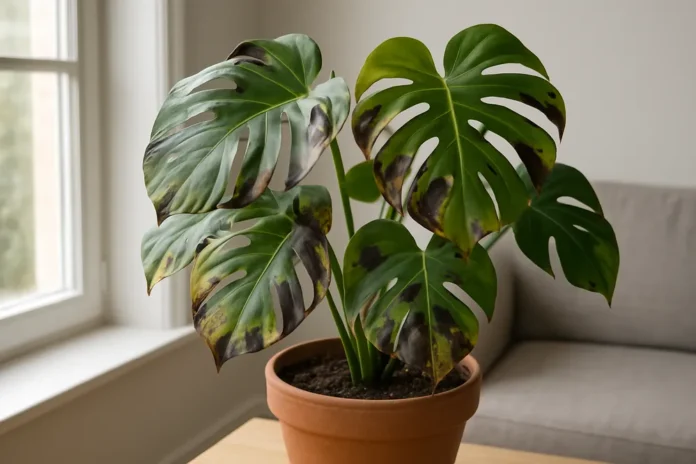
Monstera leaves are usually turning black because of overwatering, cold exposure, root stress, or leaf tissue damage. Black areas can also come from fungal or bacterial problems, sun scorch, or fertilizer salt buildup.
Seeing black patches spread across your Monstera can be alarming, especially when the damage seems to show up fast. When leaves start turning black, the problem is usually tied to moisture stress, temperature shock, root trouble, or damaged tissue that can no longer recover.
The good news is that blackening leaves often leave clues. A leaf that goes soft and dark points to a different issue than one with crispy black edges or isolated black spots. Once you match the symptom pattern to the cause, it becomes much easier to protect new growth and get your plant back on track.
What Black Monstera Leaves Usually Mean
Black leaf tissue means part of the leaf has died. Unlike mild yellowing, blackened tissue does not turn green again. Your goal is to stop the cause so the damage does not spread to more leaves.
On Monstera, the most common reasons are too much water around the roots, cold drafts, sudden temperature drops, physical injury, low-oxygen soil, and infections that move into weakened tissue. The exact look of the black area matters. Soft, wet black patches often suggest rot or cold injury, while dry black edges often point to stress from salts, underwatering, or low humidity combined with inconsistent care.
- Soft black areas often suggest overwatering, rot, or cold damage.
- Crispy black edges often point to drought stress, fertilizer burn, or salt buildup.
- Small black spots with yellow halos can suggest fungal or bacterial leaf spot.
- Blackening on one damaged leaf only may come from bruising or mechanical injury.
- Black patches on sun-exposed areas may be scorch that worsened after stress.
Overwatering and Root Stress Are the Most Common Causes
How Excess Moisture Turns Leaves Black
Monstera likes evenly moist soil, but it does not like sitting in soggy potting mix. When roots stay wet too long, air pockets disappear and roots cannot breathe. Stressed roots stop moving water and nutrients normally, and leaf tissue begins to collapse. That can show up first as yellowing, then brown or black patches, especially on older leaves.
Signs That Point to Overwatering
- Soil stays wet for many days after watering
- Leaves feel limp, soft, or mushy instead of dry and crisp
- Black or dark brown areas start near the edge or center and spread
- Lower leaves yellow before darkening
- The pot feels unusually heavy for long periods
- You notice a sour or swampy smell from the soil
Overwatering does not always mean you water too often on a schedule. It can also happen when the pot is too large, the soil is dense, drainage holes are blocked, light is too low, or winter temperatures slow drying. A Monstera in dim light uses water much more slowly than one near a bright window.
When Root Rot Is Developing
If the roots have started rotting, black leaves may appear along with wilting that does not improve after watering. Roots may look brown, mushy, or stringy instead of firm and pale. In that case, the leaf problem is really a root problem, and recovery depends on restoring healthy roots and faster-draining soil conditions.
Cold Damage Can Blacken Leaves Very Quickly
Monstera is a tropical plant, so cold stress is a frequent cause of sudden black patches. Leaf cells are easily damaged when the plant sits near a drafty window, exterior door, air conditioner vent, or unheated room. Even brief exposure to chilly air can injure tender tissue.
Cold damage often creates dark, water-soaked-looking areas that later turn black. This can happen after a winter move, shipping, or a night spent too close to glass. If blackening appears almost overnight and the plant recently experienced a temperature drop, cold injury is a strong possibility.
- Damage appears shortly after a cold night or draft
- Leaves develop dark translucent patches before turning black
- Newer, thinner leaves are hit harder than thick mature ones
- Only the side facing a cold window or vent is affected
Monstera generally performs best in warm indoor temperatures, roughly 65 to 85 degrees Fahrenheit. Once temperatures dip much below that range, especially with wet soil, the risk of blackened tissue climbs.
Fungal and Bacterial Leaf Problems Can Create Black Spots
What Disease-related Blackening Looks Like
Leaf spot diseases are less common than watering mistakes, but they do happen, especially in crowded, humid conditions with poor airflow. Fungal or bacterial issues often show up as distinct dark spots rather than broad blackened sections. The spots may be circular, irregular, or surrounded by a yellow halo.
If water sits on leaves often, spores and bacteria have a better chance to spread. Damage may start small, then enlarge and merge into bigger black lesions. Severely infected leaves can turn yellow and drop.
- Small dark spots that gradually enlarge
- Yellow rings or halos around black lesions
- Spots showing up on multiple leaves at once
- Problems worsening when humidity is high and airflow is poor
- Leaf surfaces staying wet from misting or overhead watering
When Disease Is More Likely
Disease is more likely when a Monstera is overwatered, packed tightly among other plants, or kept in stagnant air. Damaged, stressed plants are also easier targets. If black spots are clearly patterned and keep appearing on new leaves, a disease issue is more likely than simple bruising.
Sun Scorch, Fertilizer Burn, and Salt Buildup Can Also Be Responsible
Too Much Direct Sun
Monstera likes bright indirect light, but harsh direct afternoon sun can scorch the leaves, especially if the plant was moved suddenly from a dim spot. Scorched areas may first look pale, tan, or brown, then darken further as the tissue dies. In severe cases, the burned patches become crisp and nearly black around the edges.
Fertilizer Burn and Mineral Accumulation
Too much fertilizer or repeated feeding in soil that is not flushed can leave salts around the roots. These salts interfere with water uptake and can burn root tips, which often shows up as blackened or very dark leaf margins. This is especially common when fertilizer is applied to dry soil or when softened tap water contributes extra salts.
- Black or dark brown leaf edges with a dry, crispy texture
- A white crust on the soil surface or pot rim
- Symptoms appearing after recent fertilizing
- Plants in bright light worsening faster because they use more water
Sun scorch and fertilizer burn usually do not create the mushy texture typical of overwatering or cold injury. That texture difference is one of the best ways to separate these problems.
Pests and Physical Damage May Cause Blackened Areas
Pests do not always create black leaves directly, but feeding damage can weaken leaf tissue and open the door to secondary infections. Thrips, spider mites, and scale can leave stippling, scarring, or sticky residue. Damaged tissue may later darken, especially if the plant is already stressed.
Physical injury is another simple cause that is easy to overlook. A bent, bruised, or torn Monstera leaf can develop dark spots where cells were crushed. If the black area is isolated to one injured section and does not spread to nearby leaves, mechanical damage is often the explanation.
- Fine speckling or silvery scarring before dark patches form
- Sticky leaves or visible insects along stems and undersides
- Blackening limited to a crease, tear, or impact point
- Damage on a leaf that was recently unfurled and easy to bruise
How to Tell Which Cause Is Most Likely
The pattern of damage gives the best clue. Think about texture, speed, and recent changes in care. A Monstera that has been watered heavily in low light will point in a different direction than one placed next to a cold window or fed too often.
- Soft, spreading black patches: usually overwatering, root rot, or cold injury.
- Dry black edges or tips: often salts, fertilizer burn, or inconsistent watering.
- Sharp black spots with halos: often fungal or bacterial leaf spot.
- Blackened areas after direct sun: likely scorch.
- Single damaged leaf with localized blackening: likely bruising or physical injury.
Also consider where the problem starts. Older lower leaves are often first to show root stress. Newer leaves may react first to cold shock, low humidity during unfurling, or direct contact damage. If the newest growth looks healthy while only one old leaf darkens, the issue may be minor rather than systemic.
What to Do Right Now
Stabilize the Plant
Move the plant into bright, indirect light and keep it away from cold drafts, heating vents, and harsh afternoon sun. Avoid watering again until you know whether the soil is actually drying at an appropriate rate.
Adjust Watering if Needed
Water only when the top part of the potting mix has dried somewhat, not on a rigid schedule. If the mix stays wet too long, improve drainage with a chunkier indoor aroid mix and make sure the pot has open drainage holes.
Trim Damaged Tissue Carefully
Black tissue will not recover. You can remove heavily damaged leaves with clean pruners, especially if they are mushy or spotted with possible disease. If only a small section is affected, you can leave the leaf in place while the plant continues to photosynthesize.
Pause Fertilizer
Do not fertilize a stressed Monstera until active healthy growth resumes. Feeding a plant with compromised roots can make leaf damage worse.
Inspect the Roots if Symptoms Continue
If blackening spreads despite correcting temperature and watering, gently check the roots. Healthy roots are firm. Rotting roots are dark, mushy, and may shed their outer layer easily. Root inspection is often the fastest way to confirm whether the plant has a drainage problem.
How to Prevent Black Leaves in the Future
Most black leaf issues on Monstera come from a few avoidable stress points. Consistent conditions are far better than dramatic swings between very wet and very dry, hot and cold, or dim and intensely sunny.
- Use a loose, well-draining indoor potting mix designed for aroids or amend regular mix with bark and perlite.
- Water based on soil dryness, pot size, season, and light level rather than by calendar date.
- Keep the plant in bright indirect light and acclimate it slowly before increasing sun exposure.
- Protect it from cold windows, drafts, and sudden winter temperature drops.
- Provide moderate airflow and avoid keeping leaves wet for long periods.
- Fertilize lightly during active growth and flush the pot occasionally to reduce salt buildup.
- Check regularly for pests, especially on the undersides of leaves and along stems.
A healthy Monstera can outgrow a damaged leaf or two. The key is catching the underlying cause early before root problems or disease affect the entire plant.
FAQ
Should I Cut Off Black Monstera Leaves?
Yes, if the leaf is mostly black, mushy, or clearly diseased, removing it is usually best. If only a small section is damaged and the rest of the leaf is healthy, you can leave it for now.
Can Black Monstera Leaves Turn Green Again?
No. Blackened leaf tissue is dead and will not recover. Focus on correcting the cause so new leaves grow normally.
Can Underwatering Make Monstera Leaves Turn Black?
Yes, but it more often causes dry brown or blackened edges and crispy tips rather than soft black patches. Severe dehydration can darken leaf tissue after it dries out completely.
Why Did My Monstera Leaf Turn Black After Unfurling?
New leaves are easily damaged by cold drafts, low humidity during unfurling, bruising, or watering stress. If the leaf was physically stuck or bent while opening, dark sections can develop where the tissue was injured.
Do Black Spots on Monstera Mean Fungus?
Not always. Black spots can come from disease, but they can also result from cold injury, bruising, or root stress. Spots with yellow halos or repeated spotting on multiple leaves make disease more likely.
How Often Should I Water a Monstera to Avoid Black Leaves?
There is no fixed schedule that works in every home. Water when the potting mix has partly dried and the plant actually needs it, which may be more frequent in summer and much less frequent in winter.
Can Too Much Sun Cause Black Patches on Monstera Leaves?
Yes. Strong direct sun can scorch Monstera leaves, especially if the plant was not acclimated. Burned areas may start pale or brown and later darken to very dark brown or black.
Want to stop Monstera problems before they spread? Read our guide to the best indoor plant soils, watering tools, and plant-safe treatments to keep tropical houseplants thriving.
