

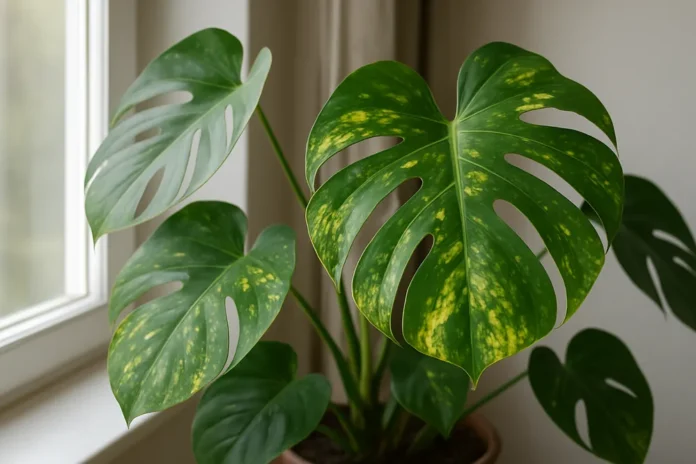
Yellow spots on Monstera leaves are most often caused by watering stress, too much direct sun, pests, nutrient imbalance, or leaf disease. The exact cause usually depends on whether the spots are pale, crispy, spreading, or paired with drooping, browning, or speckling.
Seeing Monstera leaves with yellow spots can be frustrating, especially when the rest of the plant seemed healthy just days earlier. In many cases, this symptom is your plant's way of reacting to stress from watering, light, humidity, pests, or disease.
The good news is that yellow spotting does not always mean your Monstera is dying. The location, size, color, and texture of the spots can tell you a lot about what is happening, whether that means mild sun scorch, roots staying too wet, or a sap-sucking pest feeding on the foliage.
Below, you will learn the most common reasons Monstera leaves develop yellow spots, how to tell similar problems apart, and what to do to help the plant recover and put out healthy new growth.
What Yellow Spots Usually Mean on a Monstera
Yellow spots are a symptom, not a single diagnosis. On Monstera, they usually appear when chlorophyll breaks down in part of the leaf because something is interfering with normal plant function. That disruption might come from root stress, cell damage from sunlight, insect feeding, or infection.
Before you treat the plant, look closely at the pattern. A few round spots with dark edges suggest something very different from a fine yellow stippling across the entire leaf. Spots that stay dry and tan often point to sun or low humidity stress, while soft yellow patches that spread can point to overwatering or disease.
- Small scattered yellow specks often suggest spider mites or thrips.
- Large pale patches on the side facing a bright window often suggest sunburn.
- Yellow areas with soft tissue, drooping, or a musty potting mix often suggest overwatering.
- Round yellow spots with brown centers can suggest leaf spot disease.
- Older leaves yellowing with blotchy spotting may suggest nutrient imbalance or natural aging made worse by stress.
Overwatering and Poor Drainage
Why Excess Moisture Causes Spotting
One of the most common causes of yellow spots on Monstera leaves is soil that stays wet too long. Monsteras like evenly moist soil, but they do not like airless roots. When the potting mix remains soggy, roots struggle to take up oxygen and nutrients. That stress can show up as yellow mottling, soft patches, drooping, and eventually whole-leaf yellowing.
Clues That Point to Overwatering
- The pot feels heavy for days after watering
- The mix smells sour or swampy
- Leaves look limp even though the soil is wet
- Spots are broad and irregular rather than crisp and dry
- Lower or older leaves are affected first
Sometimes the problem is not how often you water, but the potting setup. A container without enough drainage holes, a dense peat-heavy mix, or a decorative cachepot that traps runoff can all keep roots too wet. In those cases, yellow spots may keep appearing even if you are not watering very often.
How to Fix It
Let the top 2 inches of the potting mix dry before watering again. If the soil stays soggy or compacted, repot into a chunky aroid mix with ingredients like bark, perlite, and coco coir. Trim any black, mushy roots if root rot is present, and always empty standing water from saucers or outer pots.
Underwatering and Dry Stress
Although overwatering is common, inconsistent watering can also cause yellow spots. When a Monstera gets too dry, leaf cells lose moisture and can begin to die back in scattered areas. This may start as pale yellow flecks or patches and then turn brown and crispy around the edges.
Dry stress is more likely if your home has low humidity, the plant sits near a heating vent, or the potting mix has become so dry that water runs through it without soaking in. This often affects newer leaves less than older, larger ones because the plant pulls water from existing foliage first.
- Soil pulls away from the sides of the pot
- Leaves curl slightly or feel thin
- Spotting is paired with brown tips or edges
- The plant perks up soon after a deep watering
To correct dry stress, water thoroughly until excess drains out, then let only the upper layer dry before watering again. If the potting mix has become hydrophobic, soak the pot in a basin for 15 to 20 minutes so the root ball can rehydrate evenly.
Too Much Direct Sun
Monstera prefers bright, indirect light. If it is placed in harsh afternoon sun or moved abruptly from low light into strong direct light, the leaves can burn. Sun damage often begins as washed-out yellow patches or spots where the light hits hardest, then those areas may turn tan, papery, or brown.
This is especially common near south- or west-facing windows in summer, or outdoors on a patio where sunlight is much stronger than indoor conditions. Variegated Monsteras are even more sensitive because lighter leaf areas burn faster.
Signs the Spots Are From Sun Scorch
- The spots are on the side facing the window
- Affected tissue looks faded before it turns dry
- New damage appears after a move to brighter light
- Spots are broad patches rather than tiny speckles
Move the plant a few feet back from intense windows or filter light with a sheer curtain. Damaged tissue will not turn green again, but new leaves should emerge healthy once light levels are corrected.
Pests That Leave Yellow Speckles and Spots
Spider Mites
Spider mites are a major cause of fine yellow spotting on Monstera leaves. These tiny pests pierce leaf tissue and suck out plant juices, leaving behind many pale yellow dots called stippling. Heavy infestations can make leaves look dusty, dull, or bronze.
You may also see faint webbing under leaves or around petioles, especially in dry indoor air. The spots from spider mites are usually very small and widespread rather than large and isolated.
Thrips
Thrips also cause yellow or silvery spotting, often with distorted new growth. Their feeding can leave streaks, tiny scars, and black specks of waste on the leaf surface. Because they hide in folds and unfurling leaves, they can be easy to miss until damage spreads.
Scale and Mealybugs
Scale and mealybugs can trigger yellow spotting too, although they more often cause general yellowing and sticky residue. If leaves have yellow patches plus a shiny or tacky surface, inspect stems and leaf undersides for cottony clusters or small brown bumps.
How to Treat Pest Damage
- Isolate the plant from other houseplants.
- Rinse the foliage, especially leaf undersides.
- Wipe leaves with insecticidal soap or neem-based treatment labeled for houseplants.
- Repeat treatment every 5 to 7 days as directed until no new damage appears.
- Increase humidity modestly and keep the plant out of stress conditions that make pests harder to control.
Fungal and Bacterial Leaf Spot Diseases
If yellow spots are round, spreading, or surrounded by dark margins, a leaf spot disease may be involved. Fungal and bacterial pathogens are more likely when leaves stay wet for long periods, air circulation is poor, or the plant has been splashed during watering.
These spots often start small, then enlarge over time. Some develop brown centers with a yellow halo. Others may look water-soaked at first. Unlike sunburn, disease spots can continue to spread even after lighting conditions stay the same.
What Makes Disease More Likely
- Frequent misting or wet foliage that dries slowly
- Crowded plants with poor airflow
- Overwatering and soggy soil
- Contaminated pruning tools
- Damaged leaves that gave pathogens an entry point
Remove badly affected leaves with sterilized pruners and discard them. Avoid overhead watering, improve air circulation, and keep foliage dry. If spots keep spreading rapidly, a houseplant-safe fungicide or bactericide may help, but sanitation and moisture control matter most.
Nutrient Deficiencies and Fertilizer Problems
A Monstera that has been in the same pot for a long time or has not been fed during active growth can develop nutrient-related yellow spotting. Deficiencies usually cause broader discoloration than pests do, but they can still appear as mottled yellow patches, especially on older leaves.
Magnesium or potassium issues may create yellowing between veins or spotting near leaf margins. Iron problems tend to show on newer growth first, though pure iron deficiency is less common indoors than root stress or pH-related nutrient lockout.
When Fertilizer Is the Problem Instead
Too much fertilizer can also create yellow spots. Salt buildup in the potting mix can burn roots, which then leads to patchy chlorosis, browning edges, and stalled growth. If you see crusty residue on the soil surface or pot rim, overfertilizing may be contributing.
- Feed during spring and summer with a balanced houseplant fertilizer at a moderate rate
- Flush the potting mix occasionally to reduce excess salts
- Repot if the mix is exhausted, compacted, or full of mineral buildup
- Do not fertilize a severely stressed or waterlogged plant until it recovers
Humidity, Temperature, and Environmental Stress
Monstera is fairly adaptable, but abrupt environmental swings can leave marks on the foliage. Very dry air, cold drafts, hot air from vents, or a sudden move between rooms can trigger yellow spotting, especially if the plant is already slightly underwatered.
Low humidity alone does not always cause distinct yellow circles, but it can weaken leaf tissue and make other problems worse. Dry air increases the risk of spider mites and can turn mild leaf stress into visible spotting and browning.
- Keep the plant away from heating and cooling vents
- Avoid exposing it to temperatures below about 55 degrees Fahrenheit
- Aim for moderate indoor humidity, especially in winter
- Make lighting and placement changes gradually rather than all at once
How to Tell the Causes Apart
Because several problems can create yellow spots, the best diagnosis comes from the full pattern, not the color alone. Look at the texture of the spot, which leaves are affected, and whether the issue is getting worse quickly.
- Tiny yellow speckles across many leaves: usually spider mites or thrips
- Large bleached patches on the brightest side: usually sunburn
- Soft yellowing with drooping and wet soil: usually overwatering or root stress
- Crispy yellow to brown edges with dry soil: usually underwatering or dry air
- Round yellow spots with dark centers or halos: often leaf spot disease
- General blotchy yellowing on older leaves: often nutrient issues or aging worsened by care stress
A single damaged leaf does not always mean a serious issue. If new leaves look normal and the spots are not spreading, the problem may have been a short-term stress event rather than an active infestation or disease.
What to Do Right Now
If your Monstera already has yellow spots, focus first on stabilizing care instead of throwing multiple treatments at the plant. Too many changes at once can add stress and make the real cause harder to identify.
- Check the soil moisture with your finger 2 inches down.
- Inspect both sides of the leaves for webbing, moving insects, sticky residue, or black specks.
- Note whether the spots are dry, soft, round, or speckled.
- Move the plant out of harsh direct sun if needed.
- Prune heavily damaged leaves only if they are mostly ruined or actively diseased.
- Adjust watering and drainage before adding fertilizer.
Most cosmetic damage will remain on the leaf, so judge recovery by the condition of new growth. If fresh leaves emerge clean and healthy, your correction is working even if old leaves still show spotting.
How to Prevent Yellow Spots From Coming Back
Prevention comes down to consistency. Monsteras do best when watering, light, airflow, and feeding stay within a steady range instead of swinging between extremes.
- Use a pot with drainage holes and a chunky, fast-draining mix
- Water when the top layer has dried instead of on a rigid calendar
- Provide bright, indirect light
- Inspect leaves regularly for early pest signs
- Keep foliage mostly dry and improve airflow around the plant
- Fertilize lightly during the active growing season
- Wipe dust from leaves so you can spot problems sooner
Routine observation matters more than perfection. Yellow spots are often easiest to solve when caught early, before they become leaf drop, root damage, or a full pest outbreak.
FAQ
Will Yellow Spots on Monstera Leaves Turn Green Again?
Usually no. Once leaf tissue has been damaged, the yellow areas typically stay discolored. Recovery shows up as healthy new growth, not by old spots reversing.
Should I Cut Off Monstera Leaves with Yellow Spots?
Only remove leaves that are badly damaged, mostly yellow, or clearly infected. If a leaf still has plenty of green tissue, it can still support the plant.
Can Tap Water Cause Yellow Spots on Monstera Leaves?
It can contribute in some homes, especially where water is very hard or high in salts and minerals. More often, tap water worsens existing stress rather than being the only cause.
Do Yellow Spots Mean Root Rot?
Not always. Root rot is one possible cause, especially if the soil stays wet and the plant droops, but pests, sunburn, and disease can create similar-looking spots.
How Often Should I Water a Monstera with Yellow Spots?
Water based on soil dryness, not on a fixed schedule. In most homes, waiting until the top 2 inches feel dry works better than watering every few days.
Can Low Humidity Cause Yellow Spots by Itself?
Sometimes, but low humidity more often makes the plant vulnerable to other problems like spider mites, crispy edges, and general stress. It is usually part of the issue rather than the whole explanation.
Why Do Only the Older Monstera Leaves Have Yellow Spots?
Older leaves are usually the first to show stress from inconsistent watering, nutrient issues, or natural aging. If only one or two lower leaves are affected, the problem may be minor.
Need help narrowing down the exact cause and choosing the right fix fast? Read our Monstera care and treatment guides to compare the best pest controls, soils, and watering tools for healthier leaves.
