

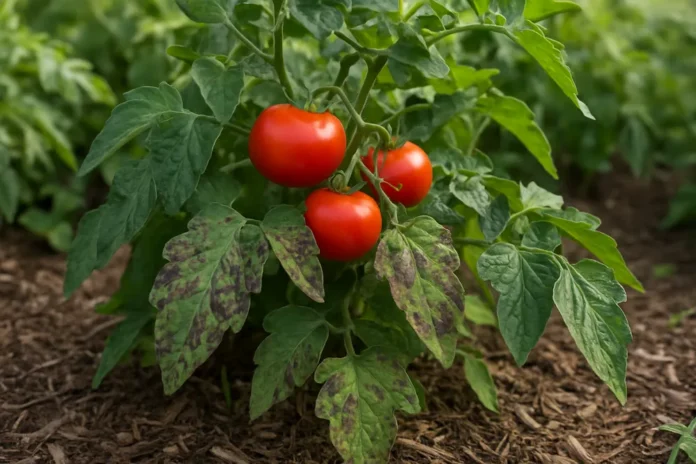
Tomato leaves usually develop purple spots because of cold stress, phosphorus uptake problems, fungal or bacterial leaf diseases, or feeding damage. The exact cause depends on whether the spots stay small, spread, develop yellow halos, or show up with stunted growth.
Seeing purple spots on tomato leaves can be alarming, especially when the rest of the plant seemed healthy just days before. In tomatoes, purple discoloration is often a stress signal rather than one single problem, and it can come from weather, nutrient issues, disease, or sometimes insect feeding.
The good news is that the pattern of the spotting usually gives you strong clues. Tiny dark specks, purplish patches between veins, spots with yellow halos, and purple-black lesions on older leaves do not all mean the same thing, so a close look at the leaves, stems, and recent weather can narrow it down fast.
In many home gardens, purple spots are most often linked to cool soil slowing phosphorus uptake, early leaf disease, or stress after transplanting. Once you know which category fits your plant, you can decide whether it needs feeding, warmer conditions, pruning, or disease management.
What Purple Spots on Tomato Leaves Usually Mean
Purple spotting is not a diagnosis by itself. In tomatoes, it is better to think of it as a symptom that can show up when pigments called anthocyanins build up in stressed tissue or when disease organisms damage the leaf surface. Some causes are mostly cosmetic and temporary, while others can spread quickly through the plant.
Start by looking at where the spots appear. If the problem is strongest on older, lower leaves, disease or phosphorus-related stress are common suspects. If the youngest leaves are distorted too, herbicide drift or severe nutrient imbalance may be involved. If purple spotting appears after a sudden cold spell, cool soil and transplant stress often explain it.
- Small circular purple-brown spots can suggest Septoria leaf spot or early fungal infection.
- Dark lesions with concentric rings often point toward early blight.
- Purpling along veins or undersides can happen with phosphorus uptake problems, especially in cool soil.
- Irregular purple-black flecks with yellow halos may indicate bacterial speck or bacterial spot.
- Bronzed or stippled leaves with odd discoloration can come from pest feeding, especially mites or thrips.
Common Causes of Purple Spots on Tomato Leaves
Cool Weather and Phosphorus Stress
Tomatoes need warm soil to take up phosphorus efficiently. When nights are cool or spring soil stays below about 60 F, the roots may be surrounded by phosphorus but still cannot absorb enough of it. The plant responds by developing purplish tones on leaves, leaf undersides, and sometimes stems. Young transplants are especially prone to this because their root systems are still limited.
This kind of purple spotting is often more diffuse than a true leaf disease. Instead of neat round lesions, you may see broad purpling along veins, margins, or interveinal areas. Plants may also look slow, compact, or temporarily stalled.
Early Blight
Early blight is a common fungal disease on tomatoes, especially once plants are larger and weather turns warm and humid. It usually starts on older leaves near the bottom of the plant. Spots begin small and dark, then enlarge into brown to purple-brown lesions with target-like rings. Surrounding tissue often turns yellow before the leaf dies back.
While many gardeners describe these lesions as purple spots, they often deepen into dark brown or nearly black as the disease advances. If lower leaves are dropping and the plant is losing foliage from the bottom upward, early blight becomes much more likely.
Septoria Leaf Spot
Septoria usually creates many small, circular spots rather than fewer large lesions. The centers often turn tan or grayish as they age, with darker borders that can look purplish at first. It also tends to begin on lower leaves after rain, splashing irrigation, or long stretches of damp weather.
A plant with Septoria may look peppered with spots. If the issue is widespread on lower foliage and the leaves yellow and drop while fruit and upper growth still look decent, Septoria is a strong possibility.
Bacterial Speck and Bacterial Spot
These bacterial diseases can produce tiny dark lesions that sometimes appear purple-black, especially when they are young or wet. Some spots develop yellow halos. Bacterial issues often spread after overhead watering, wind-driven rain, handling wet plants, or transplanting infected seedlings into the garden.
Fruit symptoms help separate these from nutrient stress. If leaves have dark spotting and fruit also shows small raised or scabby marks, bacterial disease deserves serious attention.
Pest Feeding and Sap-sucking Insects
Spider mites, thrips, and other sap-feeding pests can create tiny damaged areas that later turn bronze, reddish-purple, or dark. This is less likely to make classic round purple spots, but it can cause mottled foliage that some gardeners describe that way. Dry weather, dusty conditions, and stressed plants make pest flare-ups more common.
Transplant Shock and Variety Color Traits
Recently transplanted tomatoes sometimes show purpling after root disturbance, chilly nights, or a sudden shift from greenhouse conditions to open garden weather. In addition, some tomato varieties naturally show more purple pigmentation on stems, leaf veins, or leaf undersides than others. If the plant otherwise looks vigorous and the spotting is not spreading into dead tissue, normal pigmentation may be part of the picture.
How to Tell Which Cause Is Most Likely
A close inspection is more useful than guessing from color alone. Look at leaf age, spot shape, location on the plant, nearby weather conditions, and whether stems or fruit are affected.
- Likely phosphorus stress: purple tinting along veins or undersides, cool nights, slow growth, young transplants, no obvious ringed lesions.
- Likely early blight: larger dark spots on lower leaves with target-like rings and yellowing around them.
- Likely Septoria: many small spots clustered on lower leaves, often with tan centers and dark margins.
- Likely bacterial disease: tiny dark spots with possible yellow halos, often after wet weather, splashing water, or handling plants when wet.
- Likely pest damage: fine stippling, bronzing, webbing, silvery scarring, or visible insects on leaf undersides.
Also note whether the problem is moving quickly. Nutrient-related purpling may stabilize as weather warms, but infectious leaf diseases usually continue spreading if warm, wet conditions persist. A smartphone photo taken every few days can help you see whether spots are enlarging, multiplying, or staying unchanged.
What to Do Right Now
If Cool Weather or Phosphorus Uptake Is the Issue
Do not rush to overfertilize. Tomatoes often recover once soil warms and roots become more active. Keep watering even but not excessive, and use mulch only after the soil has warmed in spring. If the plant is in a container, move it to a warmer, sunnier location when possible.
If the plant has been in the ground for a while and overall growth is poor, a balanced tomato fertilizer with available phosphorus may help, but only if your soil is truly low or root uptake is weak. Too much fertilizer can worsen stress and create other nutrient problems.
If Leaf Disease Is the Issue
Remove the worst affected lower leaves first, especially if they are heavily spotted and touching the soil. Prune only when foliage is dry, and disinfect pruners between plants if disease seems likely. Improving air movement around the plant is one of the fastest ways to slow further spread.
Water at the base of the plant rather than overhead. Splashing water moves fungal spores and bacteria from soil and infected leaves onto healthy foliage. A 2 to 3 inch mulch layer can also reduce splash-up.
If disease pressure is significant, home gardeners sometimes use labeled fungicides such as copper or chlorothalonil products, depending on what is permitted in their area and whether the issue appears fungal or bacterial. Always follow the product label exactly, including pre-harvest intervals and crop listings.
If Pests Are Involved
Check leaf undersides carefully. A strong spray of water can knock down some mite and aphid populations. Insecticidal soap or horticultural oil can help with soft-bodied pests when used thoroughly and according to the label. Do not spray in extreme heat, and make sure the product is safe for tomatoes.
- Remove badly damaged lower leaves.
- Keep foliage dry whenever possible.
- Space and prune plants for airflow.
- Avoid high-nitrogen feeding that creates lush, disease-prone growth.
- Monitor every few days so you can tell whether the problem is slowing down.
Mistakes That Can Make Purple Spotting Worse
The wrong fix can push a mild problem into a bigger one. Tomatoes already under stress respond poorly to overwatering, unnecessary fertilizer, or rough pruning.
- Applying a heavy dose of fertilizer without identifying the cause.
- Watering leaves late in the day, which keeps foliage wet overnight.
- Crowding plants so humidity stays trapped around leaves.
- Composting infected tomato leaves if your compost pile does not get hot enough.
- Touching or pruning wet plants, which can spread bacterial disease.
- Ignoring lower leaves where many tomato diseases start first.
Another common mistake is assuming all purple discoloration means phosphorus deficiency. In many home gardens, the nutrient is present but temporary cold or root stress is blocking uptake. Adding more and more phosphorus does not fix cold soil, compacted roots, or soggy conditions.
How to Prevent Purple Spots on Future Tomato Plants
Prevention is mostly about reducing stress early and limiting leaf wetness later. Tomatoes grown in the right conditions are much less likely to show disease or nutrient-related purpling.
- Wait until soil has warmed before transplanting outdoors.
- Harden off seedlings gradually before planting.
- Use drip irrigation or water at the base instead of overhead.
- Mulch after the soil warms to reduce splash and keep moisture even.
- Stake or cage tomatoes early so leaves stay off the ground.
- Prune lower foliage once plants are established and airflow is needed.
- Rotate planting locations when possible, especially if leaf diseases were a problem last year.
- Start with healthy transplants and avoid saving seed from diseased plants.
If you regularly battle leaf spot diseases, choose resistant or more disease-tolerant varieties when available. While resistance is not perfect, it can slow disease enough to make a big difference in a home garden.
When Purple Spots Mean the Plant May Not Bounce Back
Not every spotted tomato plant needs to be removed, but severe disease can make recovery unrealistic. If most lower and middle leaves are infected, spots are rapidly climbing upward, fruit is being affected, and the plant is collapsing despite good care, replacement may be the best option, especially early in the season.
A plant with mild phosphorus-related purpling usually improves. A plant with advanced fungal or bacterial disease may continue producing for a while, but it often becomes a source of inoculum for nearby tomatoes. When in doubt, consider how early it is in the season, how many healthy leaves remain, and whether the problem is spreading to other plants.
FAQ
Are Purple Spots on Tomato Leaves Always a Phosphorus Deficiency?
No. Phosphorus stress is one possible cause, but purple spots can also come from early blight, Septoria, bacterial disease, cold weather, transplant shock, or pest damage.
Can Tomato Plants Recover From Purple Leaves Caused by Cold Weather?
Yes, many do. If cool soil is the main cause, plants often green up and resume normal growth once temperatures warm and roots become more active.
Should I Remove Purple-spotted Tomato Leaves?
Remove badly infected lower leaves if the spots look disease-related and the foliage is dry. If the discoloration seems tied to cold stress or temporary nutrient uptake issues, avoid heavy pruning and let the plant recover.
Do Purple Spots on Leaves Affect the Tomatoes I Can Eat?
Usually the fruit is still fine if the problem is mild and limited to leaves. If fruit develops lesions, rot, or bacterial spotting, harvest only sound fruit and discard damaged portions.
Is Epsom Salt a Good Fix for Purple Spots on Tomato Leaves?
Usually not. Epsom salt supplies magnesium, not phosphorus, and it will not solve most causes of purple spotting unless a true magnesium deficiency is confirmed.
Can Overwatering Cause Purple Spots on Tomato Leaves?
Indirectly, yes. Soggy soil stresses roots, reduces nutrient uptake, and creates conditions that favor fungal and bacterial leaf diseases.
Why Are Only the Lower Tomato Leaves Getting Purple Spots?
Lower leaves are closer to soil splash and stay damp longer, so many tomato diseases start there. Older leaves also show nutrient and stress symptoms sooner than new growth.
Want the fastest way to stop tomato leaf problems before they spread? Read our tomato disease treatment guide and compare the best fungicides, pruning tools, and mulch options for healthier plants.
