

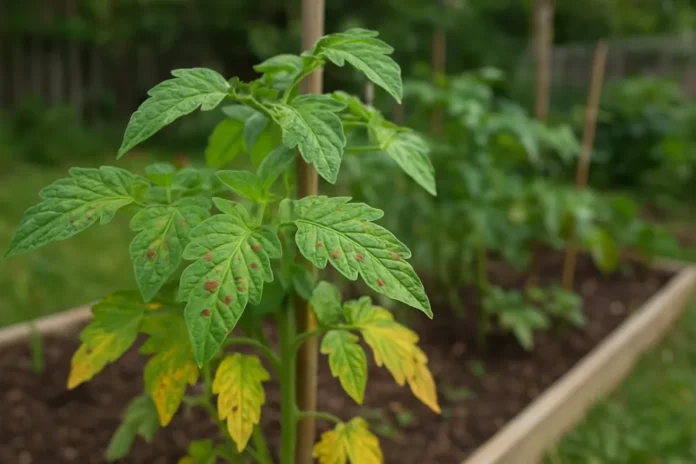
Tomato leaves usually develop red spots because of fungal or bacterial leaf diseases, stress from weather or watering, pest damage, or nutrient imbalances. The exact cause often depends on whether the spots stay small, spread, develop yellow halos, or appear with other symptoms like curling or leaf drop.
Seeing tomato leaves with red spots can be alarming, especially when plants looked healthy just days earlier. In many home gardens, red spotting is an early warning sign that something is stressing the plant, but it does not always mean the crop is doomed.
The most common causes include fungal or bacterial diseases, sun or temperature stress, pest feeding, and a few nutrient problems that trigger reddish or purplish discoloration. The key is to look at the size, color, and placement of the spots, along with what the rest of the plant is doing.
Some spot patterns stay cosmetic and manageable, while others spread quickly in warm, humid weather and can weaken the plant if ignored. Once you match the symptom pattern to the likely cause, it becomes much easier to choose the right fix and protect the rest of your tomatoes.
What Red Spots on Tomato Leaves Usually Mean
Red spots are not one single problem. On tomatoes, the color can range from brick red to rusty brown, maroon, purple-red, or red with yellow halos. That is why the pattern matters more than the color name alone.
In many cases, true spots are caused by leaf diseases that begin as tiny lesions and enlarge over time. In other cases, the leaf tissue is reacting to stress, especially after sudden heat, intense sun, cold nights, uneven watering, or root damage. Some pests also leave pinprick feeding marks that can look reddish before they turn tan or bronze.
- Small round spots with concentric rings often suggest early blight.
- Tiny dark spots with yellow halos can point to bacterial spot or bacterial speck.
- Bronzed or stippled leaves with fine red or rusty flecks can be linked to mites.
- Purplish-red coloration between veins or on older leaves can sometimes reflect phosphorus stress or cool soil conditions.
- Scattered dry patches on exposed leaves may follow sunscald, heat stress, or chemical burn.
Diseases That Commonly Cause Red Spotting
Early Blight
Early blight is one of the most common reasons tomato leaves develop reddish-brown or dark brown spots. Lesions usually begin on older, lower leaves and often show a target-like pattern with faint concentric rings. As the disease progresses, leaves yellow around the spots, dry out, and drop.
This disease thrives in warm weather with frequent leaf wetness. Rain splash, overhead watering, and crowded plants help it move upward through the canopy. It rarely kills a plant overnight, but it can strip foliage and reduce fruit quality if left unchecked.
Septoria Leaf Spot
Septoria usually starts as many small circular spots on lower leaves. The centers often turn gray or tan, but the edges can look reddish-brown or rusty, especially early on. If you see lots of small, uniform spots rather than a few larger lesions, Septoria is a strong possibility.
This disease spreads fast in humid conditions and can lead to severe defoliation. The fruits are usually less affected than the leaves, but weakened plants may sunburn more easily and produce less.
Bacterial Spot and Bacterial Speck
Bacterial leaf diseases often create very small, dark red-brown to blackish spots. Some develop yellow halos, and badly affected leaves may look ragged where damaged tissue drops out. These problems spread during warm, wet weather and are especially common when leaves stay wet for long periods.
Unlike some fungal spots, bacterial lesions may look greasy or water-soaked at first. They are also more likely to show up after storms, splashing irrigation, or handling wet plants.
Other Fungal Leaf Spots
Leaf mold, anthracnose on foliage, and less common fungal infections can also create rusty, purplish, or reddish lesions depending on variety and weather. If the spotting seems to spread in humid conditions and starts on older leaves, a fungal issue is often involved even if the exact disease is hard to confirm at home.
Stress and Environmental Causes
Cool Nights and Phosphorus Stress
Tomatoes can develop purplish-red blotches or spotting when cool soil or cold nights limit phosphorus uptake. The nutrient may be present in the soil, but roots cannot absorb it efficiently when temperatures are low. This is common early in the season after transplants go into chilly ground.
In this case, the discoloration often appears more like a flush or blotchy tint than sharply defined disease spots. Growth may also slow, and lower leaves may take on a dull, dark look.
Sunscald and Heat Stress
Sudden exposure to intense sun can stress leaf tissue, especially after pruning, transplant shock, or a run of cloudy weather followed by bright heat. Damaged areas may begin pale, then turn reddish, bronze, or dry brown as the tissue dies.
This kind of spotting usually shows up on the most exposed leaves rather than starting low in the canopy. It does not spread from leaf to leaf the way infectious diseases do.
Water Stress
Inconsistent watering weakens tomato plants and makes leaves more likely to show discoloration. Drought stress can cause dry reddish margins or patches, while overwatering can damage roots and trigger nutrient uptake issues that show up as purpling or spotting. Water stress also makes plants more vulnerable to disease.
Chemical Injury
Foliar fertilizers, insecticidal soaps, horticultural oils, and herbicide drift can all leave reddish or rusty spotting if applied at the wrong rate or during high heat. Chemical burn often appears quickly after spraying and may be concentrated where droplets sat on the leaf surface.
Pests That Can Leave Red or Rusty Spots
Spider Mites
Spider mites are a major culprit when tomato leaves look stippled, bronzed, or dusted with tiny red or rusty specks. They feed by piercing leaf tissue and sucking out contents, which creates a fine mottled appearance. In severe cases, leaves turn dry, curl, and drop.
Mite damage is most common during hot, dry weather. If you look closely at the undersides of leaves, you may see fine webbing or tiny moving dots.
Thrips and Other Sap-feeding Insects
Thrips, aphids, and similar pests sometimes cause stippling or tiny discolored spots that begin pale and later look reddish or brown. The damage usually appears more speckled than round and distinct. Leaves may also twist or distort if feeding is heavy.
Pest injury by itself can be moderate, but it can also stress the plant enough to make disease problems worse.
How to Tell Which Cause Is Most Likely
You can often narrow the cause down by looking at where the spots begin, how uniform they are, and what happens around them. Lower leaves that develop expanding lesions after rainy weather often point to disease. Upper leaves that suddenly show blotches after a hot spell lean more toward environmental stress.
- Spots start on lower older leaves and move upward: often fungal or bacterial disease.
- Spots appear mostly on sun-exposed upper leaves: often heat, sun, or spray injury.
- Very tiny specks with halos: often bacterial disease.
- Many small uniform spots with tan centers: often Septoria leaf spot.
- Larger target-like spots: often early blight.
- Fine stippling, bronzing, or webbing: often spider mites.
- General purple-red tint without clear lesions, especially in cool weather: often phosphorus stress or poor uptake.
Also watch the stem and fruit. If leaves have spots and fruit show dark lesions too, disease is more likely. If only a few leaves are affected and new growth looks normal, the issue may be temporary stress rather than a spreading infection.
What to Do Right Now
Remove the Worst Affected Foliage
Clip off badly spotted lower leaves, especially if they are yellowing or collapsing. This improves airflow and reduces the amount of infectious material splashing onto healthy foliage. Avoid removing too much at once, especially during hot weather, because sudden defoliation can expose fruit and leaves to sunscald.
Keep Leaves Dry
Switch to watering at the base of the plant if you have been using overhead irrigation. Wet leaves create ideal conditions for many tomato diseases. Water deeply and consistently so the soil stays evenly moist rather than cycling from dry to soggy.
Improve Airflow
Stake or cage sprawling plants, tie up stems, and thin crowded growth just enough to let leaves dry faster after rain or dew. Air movement matters more than many gardeners realize when trying to slow leaf spot diseases.
Mulch the Soil Surface
A layer of straw, shredded leaves, or other clean mulch helps reduce soil splash, which is a common way fungal spores reach lower leaves. Mulch also stabilizes soil moisture and can reduce stress-related symptoms.
Treat Based on the Likely Cause
- For fungal leaf spots, gardeners often use labeled fungicides such as copper, chlorothalonil, or biofungicides where allowed and appropriate.
- For bacterial issues, copper-based products may help slow spread, though they rarely cure heavily infected leaves.
- For mites, a strong water spray on leaf undersides, insecticidal soap, or horticultural oil can help when used correctly and in safe temperatures.
- For nutrient or temperature stress, steady care and warmer soil conditions usually improve new growth more than any leaf spray will.
Always follow the product label exactly for edible crops, pre-harvest intervals, and temperature restrictions.
When Red Spots Are Serious
Not every spot is an emergency, but some situations need quick action. If spotting is spreading fast across multiple plants, lower leaves are dropping in large numbers, or fruit and stems are developing lesions too, you are likely dealing with a disease that can significantly reduce harvest.
A plant is also at higher risk if the weather has been warm and humid, plants are crowded, or tomatoes have been grown in the same spot year after year. Those conditions allow many pathogens to build up and spread easily.
- Rapid spread after rain or overhead watering
- Yellowing and leaf drop moving up from the bottom
- Spots with fuzzy growth or expanding dead patches
- Blackened lesions on stems or fruit
- Several plants showing the same symptom pattern at once
How to Prevent Red Spotting on Future Tomato Crops
Prevention is much easier than trying to stop a leaf spot outbreak once the canopy is full. A few cultural habits make a big difference in whether tomatoes stay healthy through the season.
- Plant tomatoes with enough spacing for airflow rather than packing them tightly.
- Use cages, stakes, or trellises to keep leaves off the ground.
- Water at the base early in the day so soil is moist but foliage stays dry.
- Mulch soon after planting to reduce soil splash.
- Rotate tomatoes and related crops to a different bed when possible.
- Remove diseased plant debris at the end of the season instead of composting heavily infected material.
- Sanitize pruners if you are cutting diseased foliage.
- Choose resistant or tolerant tomato varieties when available.
- Avoid overfertilizing with nitrogen, which can create dense growth that stays wetter longer.
If you regularly garden in a humid area, preventive sprays labeled for tomatoes may be useful during disease-prone stretches, especially after long rainy periods. For many home gardeners, though, the biggest improvements come from spacing, watering habits, and sanitation.
Can the Plant Recover?
Usually, yes. Tomatoes can tolerate a fair amount of leaf damage if the problem is caught early and new growth remains healthy. Existing spots will not disappear, but the goal is to stop new leaves from developing the same symptoms.
Recovery depends on how much foliage remains, whether fruit is already setting, and whether weather continues to favor the problem. Stress-related spotting often improves fastest. Disease-related spotting may continue at a low level, but plants can still produce well if spread is slowed.
If a plant is badly defoliated, covered with lesions, and declining despite improved care, removing it may be the best way to protect nearby tomatoes.
FAQ
Are Red Spots on Tomato Leaves Always a Disease?
No. Red or reddish-brown spots can come from fungal or bacterial disease, but they can also result from sun stress, cool weather, nutrient uptake problems, mites, or spray injury.
Can I Still Eat Tomatoes From a Plant with Red-spotted Leaves?
In many cases, yes, if the fruit itself is healthy and undamaged. Do not use fruit that is rotting, badly sunburned, or covered with lesions, and always wash harvested tomatoes well.
Should I Remove Every Leaf That Has a Red Spot?
No. Remove the worst affected leaves, especially low ones with many lesions, but avoid stripping the plant bare. Tomatoes still need enough foliage to shade fruit and support growth.
Will Red Spots Go Away on Their Own?
The spots already present usually do not heal. What can improve is the condition of new growth if you correct the stress or slow the disease.
Does Overhead Watering Cause Red Spots on Tomato Leaves?
It can contribute strongly. Overhead watering keeps foliage wet and splashes soil-borne pathogens onto leaves, which encourages many common tomato leaf spot diseases.
What Deficiency Causes Red or Purple Spots on Tomato Leaves?
Phosphorus stress is a common reason for purplish-red discoloration, especially in cool soil. Sometimes the nutrient is present, but roots cannot take it up well because temperatures are too low or roots are stressed.
Are Spider Mites Responsible for Red Spots on Tomatoes?
They can be. Spider mites often cause fine stippling, bronzing, and rusty flecks rather than large round spots, and the damage is usually worse during hot, dry weather.
Need a fast fix for spotted tomato plants? Check out our guide to the best tomato fungicides, mite treatments, and disease-resistant varieties so you can protect this season's harvest.
