

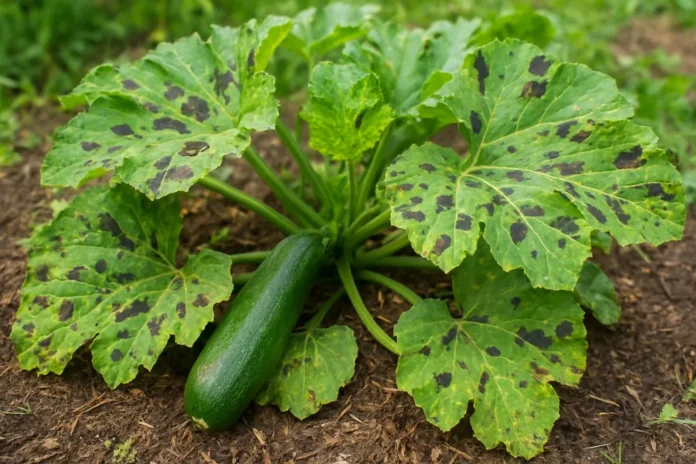
Zucchini leaves usually get black spots from fungal or bacterial leaf diseases, pest damage, or stressed tissue that has died back. The exact cause depends on whether the spots look wet, dry, fuzzy, sunken, or surrounded by yellowing.
Seeing zucchini leaves with black spots can be alarming, especially when a plant looked perfectly healthy a few days earlier. In my garden, this symptom most often turns out to be a disease issue, but not always. Black spotting can also show up after insect feeding, old leaf damage, weather stress, or fruit rot organisms splashing up from the soil.
The good news is that zucchini usually gives you clues if you slow down and look at the pattern. Spots that start pale and turn dark point one way, fuzzy growth points another way, and blackened tissue along torn or chewed leaves suggests something else entirely. Once you know what kind of spotting you are looking at, it becomes much easier to decide whether to prune, improve airflow, change watering habits, or remove a badly infected plant.
What Black Spots on Zucchini Leaves Usually Mean
Black spots are not a single diagnosis. They are a symptom that can come from several different problems. On zucchini, the most common causes are fungal leaf spots, bacterial leaf diseases, old tissue dying after powdery mildew or downy mildew damage, insect feeding that later darkens, and physical injury from splashing soil, hail, wind, or intense sun.
What matters most is how the spots behave. Are they circular or angular? Dry and crisp, or wet and greasy? Are they scattered across older leaves first, or suddenly appearing everywhere after rain? Do they stay on the leaf surface, or do they sink into the tissue? A zucchini plant with a few dry black specks needs a different response than a plant with rapidly spreading, water-soaked lesions.
- Dry black or dark brown spots with tan centers often suggest a fungal leaf spot.
- Angular dark lesions limited by leaf veins often point toward downy mildew or bacterial problems.
- Greasy, wet-looking black spots can signal bacterial infection or rot organisms.
- Blackened edges around holes or tears often come from pest feeding or weather damage rather than a primary leaf disease.
- Black spotting mostly on old lower leaves may simply mean the plant is sacrificing older foliage under stress.
When I diagnose zucchini, I look at three leaves from different parts of the plant before deciding anything. If the oldest outer leaves are much worse than the center, I usually suspect a disease that started low or a stress issue, not a whole-plant nutrient problem.
Common Diseases That Cause Black Spots
Alternaria and Other Fungal Leaf Spots
Several fungal diseases can mark zucchini leaves with dark spots. Alternaria leaf blight is one of the more common culprits in warm, humid weather. It often starts as small brown to black spots that enlarge and may develop rings or a target-like look. Older leaves near the bottom of the plant are usually hit first, especially when leaves stay wet overnight.
As these spots expand, the centers may dry out and crack. If many spots merge together, whole sections of the leaf can die and turn black. Severely affected leaves lose their ability to support fruit production, and the plant may look tired even when the roots are fine.
Downy Mildew
Downy mildew does not always begin black, but it can progress there. Early symptoms are often yellow angular patches on the upper leaf surface, with a grayish or purplish growth underneath in humid conditions. As the tissue dies, those patches can darken to brown or nearly black, especially in hot weather after infection takes hold.
This disease spreads quickly in muggy stretches and can move through zucchini beds fast once nights are damp and leaves remain wet. If the dark spotting follows the veins and the leaf looks patchy rather than dotted, downy mildew becomes more likely.
Anthracnose
Anthracnose can also create dark lesions on zucchini leaves, stems, and even fruit. Leaf spots may start water-soaked, then enlarge into irregular brown or black dead areas. In wet weather, this disease can move aggressively and create a scorched look on susceptible plants.
Bacterial Leaf Spot
Bacterial infections often produce small, angular, dark lesions that may look greasy or translucent at first. Later they dry, darken, and sometimes drop out, leaving a shot-hole effect. Splashing water is a major spreader, so overhead irrigation and heavy rain can make the problem look much worse almost overnight.
Pests and Physical Damage That Can Turn Dark Later
Not every black mark is a disease lesion. Zucchini leaves are large, soft, and easily damaged. When insects scrape or pierce leaf tissue, the injured area can dry up and turn dark. The same thing happens after wind whipping, sandblasting, hail, or sunscald on suddenly exposed leaves.
Insect Feeding
Cucumber beetles, squash bugs, aphids, and even flea beetles can contribute to blackened spotting indirectly. Their feeding creates weak points that later collapse or become infected. Squash bug feeding, in particular, can leave stippled yellow specks that eventually turn brown or black as tissue dies.
If you see black specks alongside ragged holes, bronzing, silvery scarring, or clusters of insects on the undersides of leaves, pests deserve a closer look. A pest problem may also be happening at the same time as a disease issue, which is common on stressed summer squash.
Soil Splash and Rot Organisms
Because zucchini leaves often sprawl low, rain can splash fungal spores and bacteria from the soil onto them. Lower leaves are usually the first to show the damage. If black spots start on leaves touching the ground or crowded mulch, this route of infection is very plausible.
Weather Injury
I sometimes see blackened patches after a stretch of rough weather rather than from a spreading disease. Leaves whipped by wind can develop torn areas that later dry black. Cold nights can also injure tender zucchini foliage, especially on young transplants, leaving darkened tissue that looks dramatic but does not always continue spreading.
If you are unsure whether spotting is active disease or old damage, mark one affected leaf and watch it for 48 hours. Expanding lesions with new spotting on nearby leaves suggest an active problem, while stable spots on otherwise healthy growth often point to past injury.
How to Tell the Main Causes Apart
The easiest way to narrow this down is to look at location, texture, and speed. Black spots caused by disease usually spread in a pattern. Black spots caused by injury usually stop where the damage happened. The center of the plant also tells you a lot. If the newest leaves are still clean and vigorous, the problem may be manageable.
- Mostly lower, older leaves affected: often fungal disease, splash-borne infection, or normal aging under stress.
- Angular spots between veins: commonly downy mildew or bacterial leaf issues.
- Round spots with concentric rings: more suggestive of Alternaria or another fungal leaf spot.
- Wet-looking or greasy lesions: more consistent with bacterial disease or active rot.
- Black areas around holes, tears, or chewed tissue: often pest or weather damage.
- Rapid spread after humid or rainy weather: strongly points toward disease.
Also check the undersides of leaves. Fuzzy or velvety growth underneath can indicate downy mildew. Insects, eggs, shed skins, or sticky residue point toward pest pressure. And if spots are appearing on fruit and stems too, the issue is usually more serious than a cosmetic leaf blemish.
One mistake I see often is assuming every dark spot needs a spray. If the youngest leaves in the crown are coming out clean and the damage is limited to battered outer leaves, I usually focus on pruning and airflow first instead of reaching for treatment immediately.
What to Do Right Now if Your Zucchini Has Black Spots
Start with cleanup and growing conditions. Remove the worst affected leaves if they are heavily spotted, collapsed, or touching the soil. Use clean pruners and avoid stripping the plant bare, since zucchini still needs enough healthy leaf area to feed developing fruit.
Water the soil, not the leaves. Morning watering is best because it gives any splashed foliage time to dry quickly. If your patch is crowded, thin nearby weeds or tie back neighboring plants so air can move through the canopy.
- Prune off severely infected or collapsed leaves and discard them rather than composting if disease is active.
- Keep fruit and foliage from resting directly on wet soil.
- Switch from overhead watering to drip irrigation or hand watering at the base.
- Check undersides of leaves for squash bugs, aphids, and beetles.
- Harvest zucchini promptly so the plant is not further stressed by oversized fruit.
- Sanitize tools after working on infected plants.
If disease is clearly spreading fast, a home garden fungicide labeled for cucurbits may help protect new growth, but it will not heal black tissue that is already dead. Products work best when started early and rotated responsibly according to the label. For bacterial problems, sprays are often less satisfying than gardeners hope, which is why sanitation and dry foliage matter so much.
If an individual plant is badly infected from top to bottom and new leaves are already coming out spotted, removing that plant can sometimes protect the rest of the bed better than trying to save it.
When Black Spots Are Serious and when They Are Mostly Cosmetic
A few isolated black spots on older leaves are not always a crisis. Zucchini grows fast, and a healthy plant can outgrow minor damage. If the center remains vigorous, flowers keep forming, and fruit looks clean, the issue may be mostly cosmetic or limited to leaves nearing the end of their useful life.
The problem becomes serious when spotting is moving into new growth, leaves are yellowing and collapsing quickly, stems are showing lesions, or fruit quality is slipping. Repeated spotting after every rainy spell is another sign that the environment is favoring disease enough to reduce harvest.
- Usually less urgent: a few dry spots on old leaves, stable damage after rough weather, minor black edging around insect-chewed tissue.
- More urgent: rapidly enlarging lesions, widespread angular spots, wet-looking black patches, fuzzy growth under leaves, spotting on stems or fruit, severe wilt with leaf damage.
How to Prevent Black Spots on Future Zucchini Plants
Prevention is mostly about keeping leaves dry, reducing splash, and lowering stress. Zucchini is productive, but it is also a magnet for leaf problems once summer humidity sets in. Small spacing and watering habits make a bigger difference than many gardeners expect.
- Give plants enough room so leaves dry quickly after rain or dew.
- Mulch the soil to reduce splashing that carries spores upward.
- Water at the base early in the day.
- Rotate zucchini and other cucurbits to a different bed each year when possible.
- Remove old crop debris at season's end so diseases have less material to overwinter in.
- Watch for pests early, since feeding injury often opens the door to secondary problems.
- Choose resistant varieties when local mildew and leaf spot problems are common.
I also like to remove the oldest leaves once the season gets dense and jungle-like, especially if they are touching the ground. You do not want to overprune, but opening the canopy a little can noticeably reduce how long moisture lingers.
Should You Eat Zucchini From a Plant with Spotted Leaves?
In many cases, yes. If the fruit itself is firm, normal colored, and free of soft spots, rot, or obvious lesions, it is usually fine to harvest and use. Leaf diseases do not automatically ruin every fruit on the plant.
Be more cautious if the fruit has sunken spots, mold, water-soaked patches, or unusual discoloration. Any zucchini that is soft, leaking, or clearly diseased should be discarded. When in doubt, harvest young and inspect carefully, because younger fruit is less likely to have sat in contact with damaged foliage or wet soil for long.
FAQ
Can Overwatering Cause Black Spots on Zucchini Leaves?
Overwatering by itself usually does not paint black spots onto leaves, but it creates the damp conditions that let fungal and bacterial diseases spread. Wet soil can also stress roots and make the plant less able to resist infection.
Do I Need to Remove Every Leaf with Black Spots?
No. Remove leaves that are badly infected, collapsing, or touching the soil, but keep enough healthy foliage for the plant to keep producing. Lightly spotted leaves can still support the plant if the problem is not spreading aggressively.
Will Black Spots Go Away on Their Own?
Existing black spots will not turn green again because that tissue is already damaged or dead. The goal is to stop new spots from forming and keep fresh growth healthy.
Are Black Spots on Zucchini Leaves Always a Fungus?
No. Fungal diseases are common, but bacterial infections, insect feeding, weather injury, and old tissue dying after stress can all create blackened areas on zucchini leaves.
Can Powdery Mildew Look Black on Zucchini Leaves?
Powdery mildew itself is usually white, but severely damaged leaf tissue can later turn brown or black as it dies. If you saw a white coating earlier and dark patches later, that sequence makes sense.
Should I Spray Neem Oil for Black Spots on Zucchini?
Neem may help with some pests and mild fungal pressure, but it is not a cure-all for every black spot issue. It is much less useful for advanced disease or bacterial problems, and it should be used carefully according to the label to avoid leaf burn.
Can Black Spots Spread to Other Squash Plants Nearby?
Yes, especially if the cause is a fungal or bacterial disease spread by splashing water, humidity, or handling wet plants. Good spacing, pruning, and avoiding overhead watering help limit that spread.
Need help choosing the best fungicides, insect controls, and pruning tools for summer squash problems? Read our zucchini disease treatment guide and compare the most useful fixes before the spotting spreads.
