

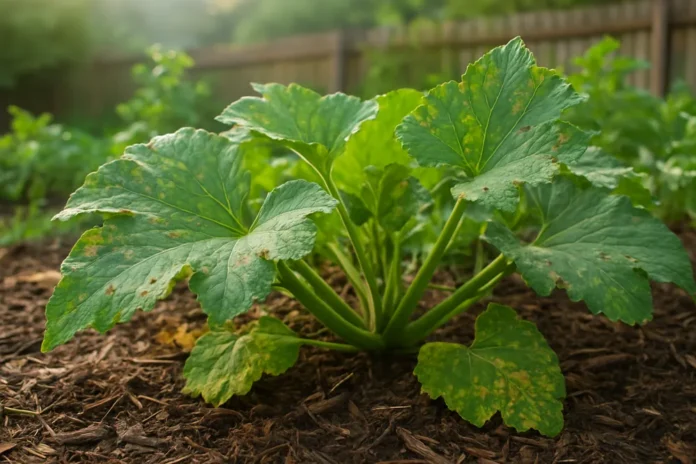
Zucchini leaves usually get brown spots because of fungal disease, bacterial leaf problems, pest feeding, or stress from watering and weather. The exact cause often shows up in the spot pattern, leaf texture, and how fast the damage spreads.
Brown spotting on zucchini leaves can look alarming, especially when a plant was growing hard just a few days earlier and suddenly starts looking tired, speckled, or scorched. In my garden, this symptom is most often tied to moisture-related disease, but I have also seen it come from insect feeding, sun stress after weather swings, and simple splash-up from soil onto wet leaves.
The tricky part is that not all brown spots mean the same thing. Some start as tiny tan flecks with yellow halos. Others begin as pale patches that dry out and turn crisp. A few show up mostly on older leaves while newer growth stays clean. If you read those clues carefully, you can usually narrow the problem down without guessing.
Below, I will walk through the most common reasons zucchini leaves have brown spots, what each one typically looks like, and what to do next so the plant keeps producing.
What the Brown Spots Are Telling You
Before treating anything, look closely at the spots themselves. On zucchini, the pattern matters more than the symptom name. Brown spots that are round and dry often point in a different direction than angular spots that seem trapped between leaf veins. If the tissue starts soft and water-soaked before turning brown, that suggests something different again.
- Small tan or brown flecks with yellow halos often suggest a leaf disease.
- Large bleached patches that turn papery can come from sunscald or weather stress.
- Stippled spotting with tiny holes or ragged damage may point to insects.
- Browning that starts at the edges of older leaves can come from stress, root trouble, or natural aging.
When I am diagnosing squash leaves, I always compare new growth versus old growth first. If the newest leaves still look fairly normal while the older leaves are heavily spotted, I start by suspecting disease pressure or accumulated stress rather than a sudden nutrient issue.
Also pay attention to recent weather. A week of rain, overhead watering, and warm nights creates ideal conditions for fungal and bacterial problems. A sudden hot spell after cloudy weather can leave leaves scorched. The more pieces you connect, the easier it is to choose the right fix.
Fungal Leaf Diseases Are a Common Cause
Alternaria and Other Leaf Spot Diseases
Several fungal diseases can cause brown spotting on zucchini, and they often get lumped together by home gardeners because the treatment approach overlaps. Alternaria leaf blight is one of the most common. It can start as small brown spots that enlarge and may develop a target-like look. In humid weather, spots can merge into larger dead patches and weaken entire leaves.
Another fungal issue is anthracnose, which may create irregular brown or tan lesions on leaves and stems. In severe cases, fruit can also show sunken damage. Fungal spots usually worsen when leaves stay wet for long periods, plants are crowded, and air movement is poor.
Downy Mildew and Advanced Leaf Collapse
Downy mildew often begins as yellow angular patches on the upper leaf surface, but those damaged areas can later turn brown and dry out. On the underside of the leaf, especially in humid mornings, you may see dark gray or purplish growth. Because zucchini leaves are broad and dense, downy mildew can move quickly once weather favors it.
- Remove the worst infected leaves if the plant still has plenty of healthy foliage.
- Water at the base instead of overhead so leaves dry faster.
- Space plants well and thin nearby growth to improve airflow.
- Use a labeled fungicide only if the problem is spreading and you are comfortable following edible-garden directions exactly.
- Clean up infected debris at the end of the season rather than composting heavily diseased leaves.
Fungal diseases rarely disappear overnight. The goal is to slow spread, protect healthy leaves, and keep the plant productive long enough to harvest well.
Bacterial Problems Can Mimic Fungal Spots
Bacterial leaf spot is less common in some home gardens than fungal disease, but it can look very similar at first. The spots often start water-soaked, then turn tan to brown. They may be angular because the veins limit how the damage expands. In wet conditions, lesions can multiply quickly and give leaves a tattered look.
Unlike fungal issues, bacterial problems do not respond to standard fungicides. They spread through splashing water, contaminated tools, infected seed, and repeated handling when plants are wet. If you touch one zucchini plant and then move down the row after rain, you can unintentionally help the problem along.
- Avoid working around zucchini when leaves are wet.
- Cut off badly infected leaves with clean pruners and disinfect between cuts.
- Do not save seed from infected plants.
- Rotate squash-family crops to a different bed next year if bacterial spotting has been severe.
If brown spots appeared suddenly after a stretch of storms and the leaf tissue looked greasy or wet before drying, bacterial disease deserves a close look.
Powdery Mildew Can Lead to Brown Patches Later
Many gardeners think powdery mildew only shows up as white dust on leaves, but it can also lead to brown spotting as the infected tissue ages and dies. Zucchini is especially prone to powdery mildew later in the season. At first you may notice white patches on older leaves. After that, those areas yellow, then turn brown and crispy.
If you are seeing both white coating and brown blotches, powdery mildew is likely part of the story. It usually starts on older leaves near the base, especially when nights are humid and days are warm.
Do not judge treatment success by whether damaged leaves turn green again. With powdery mildew and most leaf spots, I watch the new leaves. If fresh growth stays cleaner after you improve airflow and watering habits, you are moving in the right direction.
- Remove heavily coated older leaves if enough healthy foliage remains.
- Keep the plant watered consistently to reduce added stress.
- Avoid excess nitrogen that pushes soft, crowded new growth.
- Use a garden product labeled for powdery mildew on edible crops if needed.
Pest Feeding Can Leave Brown Stippling and Dead Spots
Spider Mites
Spider mites are tiny, but they can make zucchini leaves look speckled, bronzed, and eventually brown. Their feeding causes fine stippling first, then larger dead patches if the infestation grows. In hot, dry weather, mites multiply fast. You may also notice faint webbing on the underside of leaves.
Squash Bugs and Cucumber Beetles
Squash bugs and cucumber beetles feed differently, but both can contribute to spotting or localized browning. Squash bug feeding can create yellow flecks that later turn brown and crispy. Heavy pressure can make leaves wilt and collapse. Cucumber beetles chew holes and can spread bacterial diseases, which makes them doubly troublesome.
- Check the undersides of leaves for mites, eggs, and adult insects.
- Look for bronze stippling rather than neat circular spots if you suspect mites.
- Hand-pick squash bugs and crush egg clusters when populations are still low.
- Use insecticidal soap or a labeled product only when it matches the pest you actually found.
Pest damage usually looks less uniform than disease. Instead of neat lesions, you often see scattered specks, roughened tissue, chewing, or a mix of spotting and wilting.
Watering Problems and Root Stress Can Trigger Browning
Zucchini grows fast and uses a lot of water, but it does not like wild swings between soggy soil and bone-dry soil. Inconsistent moisture can stress the roots and show up as brown edges, dry patches, or leaves that scorch more easily in the sun. Overwatering can also weaken the root zone, making the plant more vulnerable to disease that later shows up on the leaves.
When roots are stressed, the spotting may not look like clean disease lesions. Leaves can yellow first, droop during the heat of the day, then develop broad brown areas. Container-grown zucchini is especially prone to this because potting mix dries quickly in summer and can also stay too wet if drainage is poor.
- Water deeply and less often rather than giving frequent shallow sprinkles.
- Aim for even moisture, not constant wetness.
- Mulch around plants to reduce splash and stabilize soil moisture.
- Make sure containers and raised beds drain well.
If the plant perks up after a better watering routine and the new leaves emerge healthier, stress was likely a major factor even if a few older leaves never recover.
Sunscald, Weather Swings, and Physical Damage
Not every brown spot is a pathogen. Zucchini leaves can develop papery brown patches after sudden heat, intense midday sun, hail, wind abrasion, or fertilizer splash. The tissue often looks bleached first, then dries out. This kind of damage usually appears more abruptly than disease and does not spread in a clear pattern from leaf to leaf.
I see this most often after young plants are set out too fast without hardening off, or when a stretch of mild weather is followed by blazing sun and wind. A plant that is already slightly dry will show stress faster.
- Protect transplants during sudden heat with temporary shade cloth.
- Water the soil before extreme heat arrives when possible.
- Avoid spraying anything on leaves during the hottest part of the day.
- Do not overreact if only a few exposed leaves are affected and new growth looks normal.
Could It Be a Nutrient Problem?
True nutrient deficiencies are not usually the first reason zucchini leaves get distinct brown spots, but they can contribute to browning. Potassium issues can lead to marginal scorch on older leaves. Magnesium deficiency may begin as yellowing between veins and later develop dead tissue. However, these symptoms are more often broad discoloration or edge burn than isolated round spots.
Because disease and stress are more common, I would only chase nutrients after ruling out watering, pests, and leaf disease. Throwing extra fertilizer at a sick zucchini often makes things worse, especially if excess nitrogen pushes lush foliage that stays wet longer.
When gardeners assume every leaf problem is a fertilizer problem, they often lose time. In my beds, random feeding rarely fixes spotted zucchini leaves unless the plant was clearly undernourished to begin with. The symptom pattern usually tells a fuller story than the fertilizer bag does.
How to Figure Out the Real Cause on Your Plant
If you are still unsure, use a quick elimination process. Look at the youngest leaves, the oldest leaves, the underside of the foliage, and the recent weather. Then inspect whether the spots are dry, soft, haloed, angular, or accompanied by chewing or webbing.
- Check whether the damage is mostly on older leaves or all over the plant.
- Look under leaves for mites, squash bug eggs, and live insects.
- Notice whether the spots have yellow halos, fuzzy growth, or water-soaked edges.
- Think back to recent rain, overhead watering, heat waves, or transplant shock.
- See whether the problem is spreading daily or staying limited to a few damaged leaves.
That short review often narrows the problem enough to act confidently. If the plant is still growing strongly, flowering, and setting fruit, the issue may be manageable even if a few leaves look rough.
What to Do Right Now to Help Zucchini Recover
The best immediate response is usually supportive care plus sanitation. Remove only the worst leaves, especially if they are heavily spotted and shading the center of the plant. Keep water off the foliage. Give the plant room to breathe. Then monitor the new leaves rather than expecting old damage to disappear.
- Prune out severely damaged leaves with clean tools.
- Water at soil level early in the day.
- Mulch to reduce disease splash from bare soil.
- Harvest zucchini regularly so the plant is not carrying oversized fruit while stressed.
- Dispose of diseased leaves in the trash if infection seems active and widespread.
If the spotting keeps moving onto fresh leaves despite better care, a more specific disease or pest treatment may be warranted. But many zucchini plants bounce back enough to keep producing once basic stressors are corrected.
How to Prevent Brown Spots Next Season
Prevention is much easier than rescue with zucchini because the leaves are large, fast-growing, and quick to hold moisture. A few habits make a big difference from the start.
- Plant zucchini where it gets full sun and good airflow.
- Space plants generously so leaves dry quickly after rain.
- Use drip irrigation or water at the base.
- Rotate squash-family crops each year when possible.
- Mulch early to limit soil splash.
- Inspect undersides of leaves weekly for eggs, mites, and early pest activity.
- Choose disease-resistant varieties when available in your region.
Healthy spacing and dry foliage solve more zucchini problems than most gardeners expect. In wet summers, those basics are often the difference between a productive patch and a plant that burns out early.
FAQ
Should I Cut Off Zucchini Leaves with Brown Spots?
Yes, if the leaves are heavily damaged, diseased, or blocking airflow. Leave enough healthy foliage for the plant to keep feeding itself, and always use clean pruners.
Can Zucchini Recover From Brown Spotted Leaves?
Often yes. Damaged leaves usually do not heal, but the plant can keep growing and producing if the cause is controlled and new growth stays healthy.
Are Brown Spots on Zucchini Leaves Contagious to Other Plants?
They can be if the cause is fungal or bacterial disease. Moisture, splashing water, and close spacing help those problems spread to nearby squash-family plants.
Do I Need Fungicide for Brown Spots on Zucchini?
Not always. Better watering, pruning, airflow, and removing infected leaves may be enough for mild cases. Fungicide is more useful when a fungal disease is clearly active and spreading.
Can Overwatering Cause Brown Spots on Zucchini Leaves?
Yes. Overwatering stresses roots and encourages disease, both of which can lead to browning, yellowing, and dead patches on the leaves.
Why Do Only the Lower Zucchini Leaves Have Brown Spots?
Lower leaves are older, more shaded, and closer to soil splash, so they are often the first to show fungal disease, watering stress, or normal age-related decline.
Is It Safe to Eat Zucchini From a Plant with Spotted Leaves?
Usually yes, as long as the fruit itself is healthy and you have not used any product in a way that conflicts with edible-crop label directions. Avoid fruit that is rotting, badly scarred, or clearly diseased.
Want the right fix faster? Read our guide to the best fungicides, insect controls, and watering tools for zucchini so you can stop leaf damage and keep harvests coming.
