

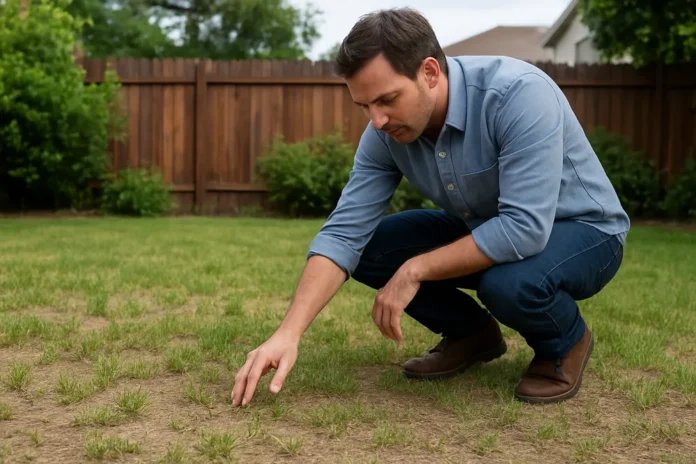
Stunted grass is usually caused by stress that limits root growth or nutrient uptake, such as compacted soil, poor fertility, drought, shade, pests, or disease. In many lawns, more than one problem is slowing growth at the same time.
If grass in your yard looks thin, short, patchy, or simply refuses to grow, the problem is often broader than just slow mowing intervals. Stunted growth usually means the turf is under stress and cannot build healthy roots, produce enough leaf growth, or spread the way it should.
Home lawns across the U.S. can become stunted for several reasons, including compacted soil, poor watering habits, low fertility, heavy shade, insect feeding, disease, and mowing too low. Sometimes the grass stays pale and sparse. Other times it stays dark but never thickens. The pattern, season, and site conditions usually reveal what is holding it back.
The good news is that stunted turf can often recover once the underlying issue is corrected. The key is to look at how the lawn is growing, not just how it looks from a distance, so you can match the right fix to the real cause.
What Stunted Grass Usually Looks Like
Stunted grass does not always mean the lawn is completely dead or badly discolored. In many cases, it simply grows much more slowly than expected and never develops the density or vigor you want. You may notice that some areas need mowing far less often than the rest of the yard, or that the grass blades stay short, narrow, and weak even during the active growing season.
- Thin turf that does not spread or fill in bare spots
- Short, weak blades that stop growing early
- Patchy areas with poor color or uneven texture
- Sections that dry out quickly or stay sparse after rain
- Lawn areas that seem stuck at the same height for weeks
- Grass that pulls up easily because roots are shallow or damaged
Warm-season and cool-season grasses naturally grow at different rates, so timing matters. Bermuda, zoysia, St. Augustine, and centipede should grow actively in warm weather. Kentucky bluegrass, perennial ryegrass, and fescues grow most strongly in spring and fall. If your grass is stunted during its normal growth season, that is a stronger sign that something is wrong.
Compacted Soil Is One of the Most Common Causes
Soil compaction is a major reason lawns become stunted. When soil is packed tightly from foot traffic, mowing, construction, or heavy clay structure, roots cannot easily move through it. Water may run off instead of soaking in, and oxygen levels around the roots drop. Grass under those conditions often survives, but it rarely thrives.
Signs of Compaction
- Hard ground that is difficult to push a screwdriver into
- Water puddling or running off after irrigation or rain
- Thin growth in high-traffic areas
- Shallow roots and weak turf that lifts easily
- Poor response even after fertilizing
Compaction is especially common along walkways, where kids and pets play, near driveways, and in newly built neighborhoods where topsoil was stripped or buried. Core aeration is often the most effective fix because it physically opens the soil and improves root space. Pairing aeration with compost topdressing can help even more over time.
Poor Soil Fertility and Nutrient Imbalance Can Slow Growth
Grass needs adequate nutrients to grow leaves, build roots, and recover from mowing. Nitrogen is the nutrient most closely tied to active top growth, but phosphorus, potassium, iron, and soil pH also affect how well the lawn can use what is available. If fertility is too low, grass may stay short, pale, and sparse.
How Nutrient Problems Show Up
- Slow growth even during the right season
- General yellowing or pale green color
- Weak recovery after mowing or foot traffic
- Thin blades and reduced density
- Better growth in spots that receive accidental extra nutrients, such as near a fertilized garden bed
A soil test is the best way to confirm whether poor fertility or pH is part of the problem. Guessing can waste time and money, especially if the issue is not a lack of fertilizer but a pH imbalance that locks nutrients in the soil. Overfertilizing can also stress grass, burn roots, or create excess top growth without improving long-term health.
If a lawn has not been fed in a long time, a season-appropriate fertilizer program may help restore steady growth. Use products suited to your grass type and region, and avoid applying heavy nitrogen during summer heat on cool-season lawns.
Watering Problems Can Stunt Grass From Both Sides
Many homeowners assume slow-growing grass needs more water, but both underwatering and overwatering can produce stunted turf. Drought stress limits photosynthesis and root function. Constantly soggy soil suffocates roots and encourages disease. In both cases, the plant struggles to support normal growth.
Underwatering Symptoms
- Bluish-gray or dull color
- Footprints that remain visible after walking
- Dry, brittle blades
- Hard soil and shrinking turf coverage
- Growth that nearly stops during hot spells
Overwatering Symptoms
- Soft, spongy soil
- Frequent fungal outbreaks
- Shallow roots
- Thatch buildup and weak anchoring
- Thin or stunted growth despite frequent irrigation
The goal is deep, infrequent watering that matches your grass type, soil, and weather. Lawns that receive light daily sprinkling often look green at first but develop shallow root systems that struggle later. A catch-can test or tuna can test can help show how evenly your sprinklers are watering and whether some zones are being over- or under-watered.
Mowing Too Short Can Hold Turf Back
Scalping is a surprisingly common reason for stunted grass. When too much of the blade is removed at once, the lawn loses photosynthetic area and has to divert energy into basic survival instead of healthy growth. Repeated low mowing weakens the root system and can make the lawn more vulnerable to weeds, drought, and heat.
Each grass type has an ideal mowing height range. Cool-season grasses like tall fescue and Kentucky bluegrass generally perform better when kept taller than many homeowners expect. Warm-season grasses vary more, with Bermuda tolerating a lower cut than St. Augustine or centipede. Using the wrong height for your turf often results in thin, slow-growing grass.
Better Mowing Habits
- Follow the recommended mowing height for your specific grass
- Remove no more than one-third of the blade at a time
- Mow with a sharp blade to avoid ragged cuts
- Raise the deck during heat, drought, or shade stress
- Avoid scalping uneven areas or lawn edges
Shade Can Reduce Vigor Even if the Lawn Stays Green
Grass growing under dense trees, beside fences, or on the north side of buildings often becomes stunted simply because it does not receive enough light. The turf may remain green for a while, but growth is weaker, blades become finer and more stretched, and bare patches appear over time. Shade also increases competition from tree roots and can keep soil either too dry or too damp depending on the site.
Some grasses tolerate shade better than others. Fine fescues and certain tall fescues usually handle lower light better than Bermuda or Kentucky bluegrass. St. Augustine tolerates more shade than many warm-season grasses, but even it has limits. If the site gets only a few hours of weak light, the grass may never grow vigorously no matter how much you water or feed it.
- Prune trees selectively to increase filtered light
- Raise mowing height in shaded areas
- Reduce fertilizer rates slightly in deep shade to prevent weak, leggy growth
- Water carefully because shaded soil dries more slowly
- Consider a more shade-tolerant grass or a non-lawn ground cover if the area is very dim
Insects and Grubs May Be Feeding on Roots or Blades
Lawn pests can stunt grass either by chewing roots below ground or feeding on blades and stems above ground. Damage often starts as slow growth and thinning before the area turns brown. Because pest activity can mimic drought or fertility problems, it is important to look closely before treating.
Common Lawn Pests Linked to Stunted Growth
- White grubs, which feed on roots and cause weak, easily lifted turf
- Chinch bugs, which are common in some warm-season lawns and cause thinning and discoloration
- Sod webworms and armyworms, which chew foliage
- Billbugs, which damage stems and roots in some turf types
If grass lifts like a loose carpet, roots may already be compromised. If you see irregular thinning with insect activity near the soil surface, above-ground feeders may be involved. Treatment depends on the pest, timing, and severity. In some cases, healthy turf can outgrow minor feeding once water and fertility are corrected.
Disease Can Keep Grass From Growing Normally
Fungal diseases do not always create dramatic dead patches right away. Many begin by weakening turf so growth slows, roots decline, and the lawn never develops good density. Root diseases are especially likely to cause stunting because the plant cannot take up water and nutrients efficiently.
Disease Patterns That Often Accompany Stunted Turf
- Circular or irregular patches of slow, weak growth
- Grass that stays thin despite irrigation and fertilizer
- Matted or water-soaked blades in humid weather
- Rotting roots or crowns
- Worsening decline during periods of heat and moisture
Common lawn diseases vary by region and turf type, but brown patch, dollar spot, take-all root rot, summer patch, and pythium can all reduce vigor. Overwatering, poor air flow, excessive nitrogen, dull mower blades, and mowing when the lawn is wet can make disease pressure worse. Fungicides may help in some cases, but cultural corrections are usually just as important.
Thatch, Poor Drainage, and Buried Debris Can All Interfere with Growth
Sometimes a lawn is stunted because the root zone itself is disrupted. A thick thatch layer can block water movement and keep roots too close to the surface. Poor drainage can leave soil saturated and airless. In newer homes, buried construction debris, gravel, or subsoil can create hard, infertile sections where turf struggles year after year.
These issues often show up in distinct zones rather than across the whole lawn. One area may stay soggy and sparse. Another may dry out quickly because there is only a thin layer of topsoil over rubble or compacted fill. Digging a small inspection hole can reveal a lot about what is happening below the surface.
- Check thatch depth if the lawn feels springy or roots are very shallow
- Watch whether water stands after rain
- Inspect problem spots for rocks, buried wood, or construction waste
- Improve drainage before reseeding or fertilizing heavily
- Consider topdressing or soil renovation if the root zone is badly compromised
Soil pH, Salt, Pet Damage, and Chemical Injury Are Less Obvious Causes
Not every stunted lawn has a simple watering or mowing problem. Grass can also struggle when soil pH is too high or too low for efficient nutrient uptake. In some regions, irrigation water or deicing products contribute salts that burn roots or reduce growth. Repeated pet urine in the same area can create both salt stress and nitrogen burn.
Herbicide injury is another possibility, especially if the lawn became stunted after a weed treatment, drift from a nearby spray, or use of a non-labeled product. Symptoms vary, but twisted growth, stalled development, discoloration, and patchy thinning can all occur. Damage may be worse in hot weather or when turf was already stressed.
How to Narrow Down the Real Cause in Your Lawn
The fastest way to solve stunted grass is to match the symptom pattern with site conditions. A lawn that is stunted everywhere usually points to broad issues like fertility, drought, mowing, or widespread compaction. A lawn that is stunted only in certain spots often points to shade, drainage, pests, buried debris, pet traffic, or sprinkler coverage problems.
Useful Clues to Compare
- Whether the problem is widespread or limited to zones
- Whether the grass is pale, dark, dry, soft, or patchy
- How the lawn behaves after rain or irrigation
- Whether roots are deep and firm or shallow and loose
- If the timing matches heat, humidity, shade, pests, or a recent chemical application
- Whether the lawn is in its normal growth season for that grass type
If you can, inspect the root zone, review your watering schedule, and get a soil test before making major changes. Those steps often save a lot of guesswork and help prevent stacking one problem on top of another.
What Helps Stunted Grass Recover
Once you identify the main stressor, recovery usually depends on improving root conditions and reducing ongoing stress. Grass rarely rebounds overnight, especially if roots have been restricted for a long time, but steady improvement is common when the lawn gets the right combination of air, water, nutrients, and mowing height.
- Correct mowing height and sharpen the mower blade.
- Adjust irrigation to soak deeply but not constantly.
- Core aerate compacted areas during the proper season for your grass type.
- Use a soil test to guide fertilizer and lime or sulfur applications.
- Treat confirmed pest or disease problems with targeted products rather than guesswork.
- Reduce shade stress where possible and avoid forcing grass in sites that are too dark.
- Repair drainage or root-zone issues before expecting major improvement.
If the lawn is badly thinned, you may need to overseed, plug, or resod after the underlying issue is corrected. Otherwise, new grass often struggles for the same reason the old grass did. Healthy recovery comes from fixing the cause first and rebuilding the turf second.
FAQ
Can Grass Be Stunted Even if It Is Still Green?
Yes. Grass can remain green but grow very slowly when roots are restricted by compaction, shade, poor fertility, or too much water. Green color alone does not mean the lawn is healthy.
Will Fertilizer Fix Stunted Grass?
Only if low fertility is part of the problem. If the lawn is stunted because of compaction, overwatering, pests, disease, or shade, fertilizer alone will not solve it and may sometimes make the issue worse.
Does Compacted Soil Really Stop Grass From Growing?
Yes. Compacted soil reduces oxygen, limits root expansion, and makes it harder for water and nutrients to move properly. Lawns in high-traffic or clay-heavy areas are especially prone to this.
Why Is Only Part of My Lawn Stunted?
Localized stunting usually points to a site-specific issue such as sprinkler coverage, shade, pet traffic, buried debris, drainage problems, or an insect infestation in that area.
Can Mowing Too Short Permanently Stunt a Lawn?
Repeated scalping can weaken turf for a long time by shrinking the root system and increasing stress. Most lawns can recover if mowing height is corrected and other growing conditions improve.
Should I Aerate if My Grass Is Barely Growing?
If compaction is the cause, aeration is often one of the best treatments. It should be done at the right time for your grass type so the lawn can recover quickly and grow into the opened soil.
How Do I Know if Pests Are Causing the Slow Growth?
Look for thinning that progresses into weak or easily lifted turf, chewed blades, or visible insect activity near the soil surface. Root-feeding pests often make the lawn feel loose and droughty even when watered.
Need help choosing the right lawn treatment fast? See our guide to the best lawn fertilizers, soil amendments, and pest controls so you can restore thicker, stronger grass with less trial and error.
