

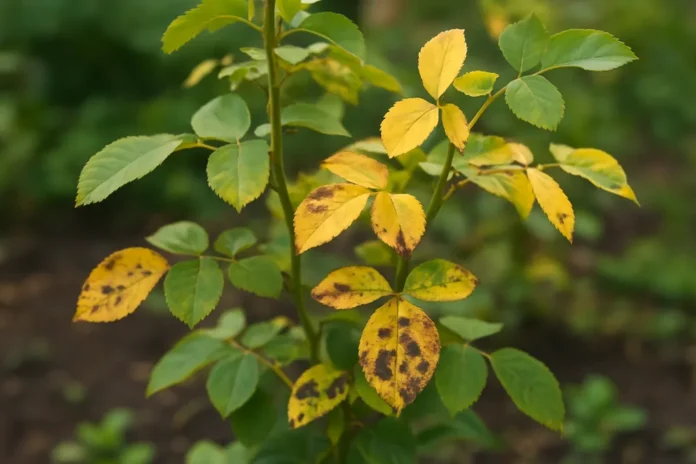
Rose plants usually lose leaves because of stress from watering problems, fungal disease, pests, heat, cold, or transplant shock. Seasonal dormancy can also cause normal leaf drop in some climates.
Seeing a rose drop healthy-looking foliage can be frustrating, especially when you are expecting fresh growth and blooms. Leaves may start yellowing before they fall, dry up and drop suddenly, or disappear after a spell of bad weather, pest activity, or disease pressure.
When falling off becomes noticeable, the cause is usually stress rather than a mystery problem. Roses respond quickly to inconsistent moisture, black spot, insect feeding, temperature swings, and root disturbance. The pattern of leaf loss often gives you useful clues about what is happening.
The good news is that many cases of leaf drop are fixable once you match the symptom to the cause. A close look at the leaves, stems, soil, and recent weather will usually point you in the right direction.
What Normal Rose Leaf Drop Looks Like
Not all leaf loss means your rose is in trouble. Roses naturally shed some older leaves as they grow, especially lower leaves that are shaded or aging out. In colder parts of the U.S., many roses also drop most or all of their leaves in fall as they go dormant.
- A few older yellow leaves near the base dropping over time is often normal.
- Leaf drop in late fall or after the first hard frost is expected for many deciduous roses.
- Newly planted roses may shed some leaves while adjusting to transplanting.
- Heavy, sudden leaf drop in the growing season usually points to stress, pests, or disease.
If your rose is still producing firm green canes and healthy new buds, the plant may recover well once the source of stress is corrected. If canes are blackening, shriveling, or becoming soft, the issue is more serious.
Water Stress Is One Of The Most Common Causes
Underwatering
Dry soil can make rose leaves crisp, dull, yellow, or scorched before they drop. Container roses dry out especially fast in hot, windy weather. In-ground roses may also struggle if the root zone is not being watered deeply enough.
- Leaves may feel dry or papery.
- Flower buds may fail to open.
- The soil may pull away from the edge of the pot or feel dry several inches down.
- Leaf drop is often worse during heat waves.
Overwatering And Poor Drainage
Too much water can cause roots to suffocate, which often leads to yellowing and leaf drop. Roses like steady moisture, but they do not want soggy soil. A rose sitting in a low spot, compacted soil, or a pot without strong drainage can start dropping leaves even when the topsoil appears wet.
- Leaves may turn yellow evenly rather than develop crispy brown edges.
- The plant may wilt even though the soil is wet.
- A sour smell in the potting mix can suggest root trouble.
- Growth often slows noticeably.
Water roses deeply, then allow the upper inch or so of soil to begin drying before watering again. Adjust frequency for rainfall, heat, soil type, and whether the rose is planted in the ground or in a container.
Black Spot And Other Fungal Diseases Often Trigger Defoliation
If your rose loses leaves after they develop spots, fungal disease is a leading suspect. Black spot is especially common on roses in humid weather or where foliage stays wet for long periods.
Black Spot
Black spot causes dark, round to irregular blotches, often with feathery edges. Affected leaves usually turn yellow and fall early, starting on lower foliage and moving upward. Severe infections can leave a rose nearly bare by midsummer.
Powdery Mildew And Rust
Powdery mildew can distort leaves, coat them with a pale powdery film, and stress the plant enough to cause drop. Rose rust creates orange or rust-colored pustules, often on the undersides of leaves, followed by yellowing and leaf loss.
- Water at the base rather than overhead.
- Prune for better airflow through the plant.
- Remove and discard diseased leaves from the plant and ground.
- Avoid crowding roses too closely together.
- Use an appropriate fungicide if disease pressure is severe and repeat applications are needed.
Sanitation matters. Fungal spores often survive on fallen leaves, so leaving infected debris under the plant can lead to repeated outbreaks.
Pests Can Weaken Roses And Cause Leaves To Drop
Several common rose pests feed on foliage or sap, which can trigger yellowing, spotting, curling, and eventual leaf drop. Pest damage is often worse during warm, dry stretches when beneficial insects are less active.
Spider Mites
Spider mites are tiny and easy to miss, but they can do major damage. Leaves may look stippled, bronzed, dusty, or dry before falling off. Fine webbing may appear in severe cases, especially in hot dry weather.
Aphids, Sawflies, And Scale
Aphids tend to cluster on tender growth and flower buds. They do not always cause major leaf drop alone, but heavy infestations can stress the plant. Rose sawfly larvae chew foliage, sometimes skeletonizing leaves. Scale insects attach to stems and weaken the plant over time.
- Look under leaves and along stems for insects, eggs, or webbing.
- Rinse light infestations off with a strong stream of water.
- Prune heavily infested tips if practical.
- Use insecticidal soap or horticultural oil when appropriate and according to label directions.
- Avoid broad-spectrum sprays when possible so beneficial insects can help control outbreaks.
Heat, Sun, Wind, And Weather Swings Can Shock A Rose
Environmental stress can make a rose shed leaves even without disease or pests. Extreme heat, reflected sunlight from pavement or walls, drying winds, and sudden cold snaps all put pressure on the plant.
- Heat stress may cause wilting by afternoon, scorched edges, and yellow leaf drop.
- Hot wind can dry foliage and roots quickly, especially in containers.
- A late spring freeze may blacken tender new leaves and cause them to fall.
- Sudden moves from shade to full sun can scorch leaves and trigger drop.
Roses generally bloom best in full sun, but intense afternoon heat in hotter regions can still stress them. Mulch helps moderate soil temperature and moisture, while proper spacing and site choice reduce long-term stress.
Transplant Shock And Root Problems May Be To Blame
If your rose recently came home from the nursery or was moved to a new bed, transplant shock is a strong possibility. Disturbed roots often cannot support the full top growth right away, so the plant sheds some leaves to reduce stress.
- Leaf drop starts soon after planting or repotting.
- The plant may wilt in midday even when soil moisture is reasonable.
- Blooms and buds may fade quickly or abort.
- Growth pauses for a few weeks while roots reestablish.
Root damage from circling roots, compacted soil, planting too deep, or poor drainage can create similar symptoms. If a potted rose has been in the same container too long, root crowding may also limit water and nutrient uptake.
Give a transplanted rose steady moisture, avoid heavy fertilizing right away, and protect it from extreme heat if possible. Most healthy plants rebound once roots settle in.
Nutrient Imbalances And Soil Issues Can Show Up As Leaf Drop
Roses are fairly heavy feeders, so depleted soil can lead to weak growth and yellow leaves that drop early. At the same time, overfertilizing can burn roots and create a different kind of stress.
Too Little Nutrition
Nitrogen deficiency often causes pale older leaves and reduced vigor. Iron deficiency tends to show as yellow leaves with greener veins, especially on newer growth, and is more common in alkaline soil where iron becomes less available.
Too Much Fertilizer
Excess fertilizer salts can damage roots, leading to browning edges, wilting, and leaf drop. This is more common in containers and when liquid feeds are applied too often or at too strong a rate.
- Feed roses during active growth with a balanced product suited to roses.
- Do not fertilize drought-stressed plants until moisture is corrected.
- Flush container soil with water if salt buildup is suspected.
- Consider a soil test if yellowing keeps returning despite regular care.
How To Tell Which Cause Fits Your Rose
The appearance of the leaves and the timing of the problem often tell you more than the leaf drop itself. Try to match the symptom pattern rather than guessing from one isolated sign.
- Yellow leaves with black blotches usually point to black spot.
- Dry, crispy leaves and fast drop during heat often suggest underwatering or hot wind.
- Soft yellow leaves with wet soil may indicate overwatering or root stress.
- Bronzed or stippled leaves with fine webbing suggest spider mites.
- Leaf loss soon after moving or planting often fits transplant shock.
- Mostly lower leaf drop in fall may simply be seasonal dormancy.
Take a close look at both the upper and lower leaf surfaces, then check the soil moisture several inches down. Also think about what changed recently, such as rain patterns, temperature swings, repotting, feeding, or spraying.
How To Help A Rose Recover
Once you identify the likely cause, focus on steady care rather than trying several treatments at once. Roses can recover surprisingly well if the roots remain healthy and the canes are alive.
- Remove badly diseased or heavily damaged leaves from the plant and the soil surface.
- Correct watering so the root zone stays evenly moist but never waterlogged.
- Improve airflow by pruning crowded interior growth when appropriate.
- Treat active pests or fungal disease with the right product for roses.
- Mulch around the base to conserve moisture and moderate soil temperatures.
- Pause heavy fertilizing until the plant begins putting out fresh, healthy growth.
Do not panic if all the lost leaves do not return immediately. Recovery often shows up first as fresh red or green shoots, followed by new leaves once conditions improve.
When Leaf Loss Means The Problem Is Serious
Some situations need quick attention because the plant may decline fast without it. Severe root rot, major cane damage, advanced disease, or long periods of drought can push a rose past the point of easy recovery.
- Canes are turning black from the tip downward.
- The crown feels soft or looks rotten at the base.
- The plant has lost most of its leaves in a short time during active growth.
- New growth is distorted, weak, or immediately dies back.
- There is no sign of healthy green tissue when you lightly scratch the cane bark.
If those symptoms appear, reassess drainage, disease pressure, and root health right away. In some cases, replacement is more practical than prolonged rescue, especially if the rose has a long history of decline in the same site.
FAQ
Will a Rose Grow Back After Losing All Its Leaves?
Often yes, if the canes and roots are still healthy. A defoliated rose can push new growth after stress, pests, or disease are controlled, but recovery may take several weeks.
Do Roses Lose Leaves in Winter?
Many roses do, especially in colder climates where they go dormant. That kind of leaf drop is normal and usually happens in fall after cold weather arrives.
Can Overwatering Make Rose Leaves Fall Off?
Yes. Soggy soil can damage roots, leading to yellow leaves, wilting, and leaf drop even though the plant appears to have plenty of moisture.
Why Are My Rose Leaves Turning Yellow Before They Drop?
Yellowing before leaf drop is common with black spot, overwatering, nutrient deficiency, seasonal aging, and general stress. The exact pattern of yellowing helps narrow the cause.
Should I Remove Fallen Rose Leaves From the Ground?
Yes, especially if disease is involved. Fallen leaves can harbor fungal spores and pests, so cleaning them up helps reduce reinfection.
Can Transplanting Cause a Rose to Lose Leaves?
Yes. Newly planted or recently moved roses often shed leaves while roots reestablish, particularly in warm weather or if the root ball dries out.
How Often Should I Water a Rose That Is Dropping Leaves?
Water deeply enough to moisten the root zone, then wait until the upper soil begins drying before watering again. The exact schedule depends on heat, rainfall, soil type, and whether the rose is in a pot.
Need the right fix fast? Read our rose care and treatment guides to compare fungicides, insect controls, fertilizers, and pruning tools that help stressed roses recover faster.
