

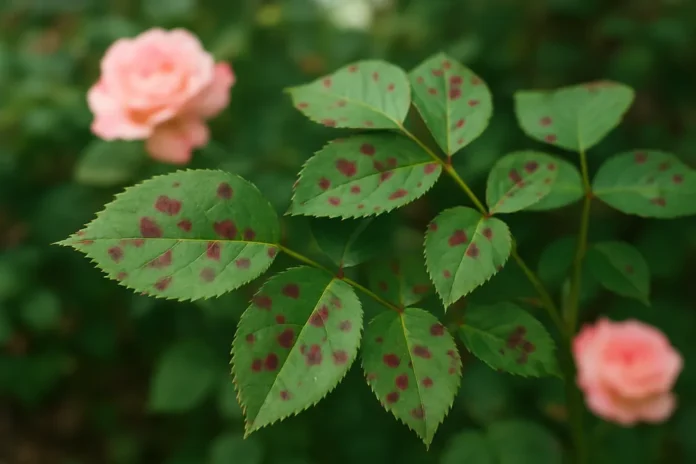
Rose leaves usually develop red spots from fungal disease, pest damage, nutrient stress, or normal new growth pigmentation. In many cases, the exact shade, size, and spread of the spots point to the underlying cause.
Seeing rose leaves develop red spots can be alarming, especially when the rest of the plant looked healthy just days earlier. In roses, red or reddish-purple spotting is often linked to fungal disease, but it can also show up from insect feeding, environmental stress, nutrient issues, or even normal color changes in young foliage.
The key is to look at the full pattern instead of the color alone. Small circular spots, blotchy patches, leaf yellowing, distorted growth, and rapid leaf drop each suggest different problems. Once you know what is causing the spotting, you can treat the plant more effectively and help prevent the issue from spreading through the rest of your roses.
What Red Spots on Rose Leaves Usually Mean
Red spotting is a symptom, not a diagnosis by itself. Roses respond to stress in a few predictable ways, and red pigmentation can appear when leaf tissue is damaged, when disease disrupts normal growth, or when the plant produces protective pigments during stress.
- Fungal disease is one of the most common causes, especially when spots multiply and affected leaves start yellowing or dropping.
- Pest feeding can leave tiny red, bronze, or stippled marks, often along with webbing or distorted leaf surfaces.
- Nutrient imbalance or pH problems may trigger reddish or purplish spotting, especially if growth is weak or pale overall.
- Weather stress from heat, cold snaps, wind, or intense sun can cause red blotches on tender foliage.
- Natural pigmentation in some rose varieties may make new leaves emerge red before turning green.
Because several issues can look similar at first, it helps to pay attention to whether the spots stay isolated or spread, whether older or younger leaves are affected, and whether the plant is also losing leaves, wilting, or showing stem damage.
Common Causes of Red Spots on Rose Leaves
Fungal Leaf Diseases
Fungal problems are high on the list when rose leaves develop red, purple, or dark maroon spots. Early black spot infections can sometimes begin as reddish areas before turning darker. Cercospora leaf spot and anthracnose may also start with small reddish-purple lesions that expand over time.
Disease-related spots often have defined edges, may be circular or irregular, and tend to increase after rainy weather or overhead watering. If leaves begin to yellow around the spots and then drop from the plant, fungal disease becomes even more likely.
Spider Mites and Other Sap-sucking Pests
Tiny pests such as spider mites, aphids, and leafhoppers feed by piercing plant tissue and sucking out sap. This can leave red, bronze, or stippled marks that may look like fine spotting at first. Spider mite damage is especially common during hot, dry weather.
Unlike fungal spots, pest damage often appears as many very small specks rather than larger round lesions. You may also notice a dusty look, faint webbing on the undersides of leaves, or leaves that turn dull, dry, and slightly curled.
Nutrient Stress and pH Problems
Roses need steady nutrition and a soil pH that allows them to absorb it. When phosphorus is limited or roots are stressed by cold, compacted, or waterlogged soil, leaves can develop reddish or purplish tones. Potassium imbalance and general nutrient stress can also contribute to off-color spotting.
This type of discoloration usually does not look like crisp disease lesions. Instead, the red color may appear as blotches, edge discoloration, or an overall reddish cast combined with slow growth and reduced flowering.
Sunscald, Heat, and Weather Swings
Tender rose foliage can react to sudden environmental changes. A sharp cold night followed by bright sun, extreme summer heat, or drying winds can damage leaf cells and produce red or reddish-brown patches. This is more common on container roses and recently planted shrubs that dry out quickly.
Weather-related marks usually appear after a clear event and often affect the most exposed leaves first. The damage may stop progressing once temperatures stabilize and watering becomes more consistent.
Herbicide Drift or Chemical Injury
Roses are sensitive to weed killers and even some strong spray products. If a nearby lawn treatment drifted onto the plant, or if oil, soap, or fertilizer spray was applied during hot weather, leaves may show red blotches, spotting, twisting, or burned edges.
Chemical injury often appears suddenly and may affect one side of the plant more than the other. New growth may emerge distorted, and the spotting can look uneven rather than neatly circular.
Normal Red Color in New Growth
Some roses naturally produce red or bronze young leaves because of anthocyanin pigments. These pigments can protect tender growth from intense light and temperature stress. If the leaves are otherwise smooth, healthy, and spot-free, and the red tone fades as they mature, this is normal.
Natural pigmentation can be confused with disease, especially in spring. The difference is that healthy red new growth tends to be even in color, not patchy or necrotic, and it does not lead to yellowing or leaf drop.
How to Tell Which Problem You Have
A close look at the leaves can narrow the cause quickly. Examine both the top and underside of several affected leaves, then compare older leaves with newer growth.
- If the spots are round, enlarging, and followed by yellowing, suspect fungal leaf spot.
- If the leaf surface shows fine speckling, bronzing, or webbing, suspect spider mites.
- If the color is more blotchy than spot-like and the plant looks weak overall, consider nutrient or root stress.
- If only the most exposed leaves are affected after a hot or cold event, weather injury is likely.
- If the issue appeared suddenly after spraying nearby, chemical drift or spray burn is possible.
- If the red coloring is even on fresh leaves and fades as leaves age, it may be normal new growth.
Also note whether the problem is spreading from leaf to leaf. A progressive pattern that moves through the canopy usually points to disease or pests, while a one-time patch of damage may be tied to weather or chemical exposure.
What to Do Right Now
Remove the Worst Affected Leaves
Clip off heavily spotted or yellowing leaves and pick up any fallen foliage beneath the plant. This is especially important if fungal disease is involved, because infected debris can continue releasing spores.
Improve Air Flow
If the plant is crowded, prune lightly to open the center and reduce leaf wetness. Roses dry faster and stay healthier when air can move freely around the foliage.
Water the Soil, Not the Leaves
Switch to drip irrigation, a soaker hose, or hand watering at the base if possible. Wet leaves encourage fungal spread, especially when they stay damp overnight.
Check for Pests Under the Leaves
Spider mites and other small pests often hide underneath the foliage. A strong spray of water can knock many off, and insecticidal soap or horticultural oil may help if used according to label directions and not during extreme heat.
Treat Disease when the Pattern Fits
If spotting looks fungal and continues to spread, a labeled rose fungicide may be warranted. Products containing chlorothalonil, myclobutanil, copper, or sulfur are commonly used, but the best choice depends on the disease, weather, and your local regulations.
Support the Plant Without Overfeeding
Give the rose consistent moisture and a balanced fertilizer only if the plant is due for feeding. Heavy fertilizer on a stressed rose can push weak growth and make the problem harder to manage.
When Red Spots Are Most Likely to Be Fungal Disease
Fungal disease becomes the leading suspect when the spotting is accompanied by spreading lesions, yellow halos, lower leaf drop, or repeated flare-ups during humid weather. Black spot is famous for dark lesions, but many gardeners notice reddish or purplish spotting early in the infection process before the centers darken.
Cercospora leaf spot can produce small, rounded red-purple spots that later develop tan or gray centers. Anthracnose may create irregular red to purple lesions, sometimes along leaf veins. In each case, poor air circulation, splashy watering, and infected fallen leaves make the problem worse.
- Spots increase after rain or overhead irrigation
- Lower leaves are affected first
- Leaves yellow and drop early
- Several leaves show a similar pattern
- The problem returns season after season
If these clues line up, sanitation and preventive treatment matter more than one-time pruning. Roses often need repeated protection during wet stretches to keep new foliage clean.
How Watering, Soil, and Feeding Affect Leaf Spotting
Even when disease is present, cultural stress often sets the stage. Roses that swing between drought and soggy soil have a harder time resisting infection and pests. Uneven moisture can also intensify red pigmentation in leaves because roots are not taking up nutrients efficiently.
Aim for deep, consistent watering rather than frequent shallow sprinkles. Most in-ground roses do better when the top few inches of soil can dry slightly between waterings but the root zone never stays bone dry for long. Mulch helps moderate temperature swings and reduces soil splash, which can move fungal spores onto leaves.
Soil pH matters too. Roses generally perform best in slightly acidic soil. If pH drifts too high or too low, nutrients may be present but unavailable. A soil test is the fastest way to confirm whether the red spotting is tied to a deeper nutrition issue rather than a contagious leaf disease.
How to Prevent Red Spots From Coming Back
- Plant roses where they get good sun and steady air movement.
- Water early in the day and keep foliage as dry as possible.
- Remove fallen rose leaves and spent diseased foliage promptly.
- Prune for an open canopy instead of dense, tangled growth.
- Inspect the undersides of leaves during hot, dry weather for mites.
- Avoid spraying oils, soaps, or foliar products during high heat.
- Feed on schedule with a balanced rose fertilizer instead of random extra doses.
- Mulch around the base to reduce soil splash and keep moisture more even.
If you grow roses in a region with regular summer humidity, prevention usually works better than waiting until leaves are badly marked. Resistant rose varieties can also make a big difference if leaf spot has been a recurring issue in your yard.
When the Problem Needs Extra Attention
A few scattered spots are not always serious, but some situations call for faster action. If the plant is dropping leaves rapidly, showing stem cankers, producing badly distorted new growth, or declining despite improved care, the issue may be more advanced than simple stress.
- Most of the lower half of the plant is defoliating
- Spots are moving onto many leaves within a week or two
- New growth is twisted after chemical exposure
- You see pests but home treatment is not reducing them
- The plant has repeated disease outbreaks every season
At that point, it may help to bring a sample to a local extension office or independent garden center for a closer diagnosis. Correct identification matters because fungicides do not fix pest injury, and fertilizers do not solve fungal leaf spot.
FAQ
Are Red Spots on Rose Leaves Always a Disease?
No. Red spots can come from fungal disease, pests, weather stress, nutrient issues, chemical injury, or normal red new growth on some rose varieties.
Can I Leave Spotted Rose Leaves on the Plant?
Lightly marked leaves can stay if the problem is minor, but heavily spotted, yellowing, or fallen leaves should be removed, especially when fungal disease is suspected.
Do Red Spots Turn Into Black Spot on Roses?
Sometimes. Early fungal lesions can begin as reddish or purplish spots and darken as the infection develops, though not every red spot becomes classic black spot.
Should I Spray Fungicide as Soon as I See Red Spots?
Only if the pattern strongly suggests fungal disease. If the issue is from mites, nutrient stress, or spray damage, fungicide will not solve the problem.
Why Are Only the New Rose Leaves Red?
Many roses produce naturally red or bronze new growth. If the color is even, the leaves are not distorted, and they turn green as they mature, it is usually normal.
Can Overwatering Cause Red Spots on Rose Leaves?
Overwatering can contribute indirectly by stressing roots, limiting nutrient uptake, and creating conditions that favor fungal disease. It usually works together with other problems rather than causing neat spots by itself.
Do Spider Mites Cause Red Spots on Roses?
Yes. Spider mites can create fine red, bronze, or stippled damage, especially in hot, dry weather, often along with a dull leaf surface and light webbing underneath.
Need a clear next step for treatment? Read our rose disease and pest control guide to compare the best fungicides, miticides, and prevention tools for healthier blooms.
