

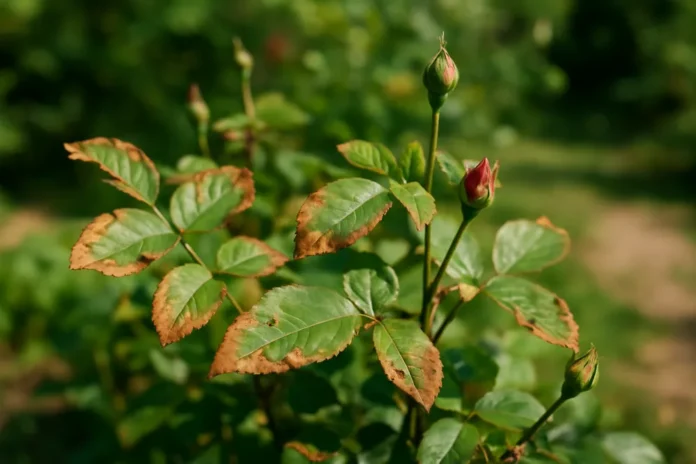
Rose leaves develop brown edges most often from water stress, heat, salt or fertilizer buildup, and leaf disease. The browning happens when leaf tissue dries out, burns, or becomes damaged faster than the plant can support it.
Seeing rose leaves develop brown edges is frustrating because the damage can make an otherwise healthy shrub look stressed almost overnight. In many home gardens, this symptom is not caused by one single problem. It usually happens when the plant is dealing with moisture stress, hot weather, excess fertilizer, salt buildup, chemical injury, or an early disease issue.
The good news is that edge browning gives useful clues. If the margins look crisp and dry, the cause is often related to watering, heat, or salts. If the edges are dark with spotting, yellow halos, or distorted growth, disease or pest pressure may be involved. Looking at the pattern across the whole rose plant helps you tell the difference.
In this guide, you will learn the most common reasons rose leaf edges turn brown, how to tell them apart, and what to do to help the plant recover and produce healthier new growth.
What Brown Leaf Edges Usually Mean On Roses
Brown edges, also called leaf scorch or marginal necrosis, mean the outer tissue of the leaf has been damaged. That tissue is farthest from the plant's main water supply, so it is often the first area to dry out when roots cannot keep up with demand. It can also be the first place to show salt injury or chemical burn.
On roses, the most common causes are inconsistent watering, prolonged heat, reflected sun from nearby surfaces, overfertilizing, and mineral salts from irrigation water or deicing products. In some cases, fungal diseases, root stress, or pest damage weaken the plant enough that the leaf margins start to brown.
- Crisp, dry brown edges usually suggest drought, heat, wind, or salt stress.
- Brown edges with yellowing between veins often point to root or nutrient problems.
- Brown edges combined with black spots, purple lesions, or blotches may indicate disease.
- Browning mostly on newer leaves can suggest fertilizer burn, chemical injury, or severe heat exposure.
- Browning mostly on older leaves often appears first when the plant has chronic watering or root stress.
Water Stress Is The Most Common Cause
Underwatering And Dry Soil
Roses need steady moisture, especially during active growth and flowering. If the soil dries too deeply between waterings, the plant cannot move enough water to the leaf tips and margins. The result is a dry, papery brown edge that may spread inward. During hot spells, this can happen fast, particularly with container roses and recently planted shrubs.
This kind of browning is often worst on exposed leaves and may be paired with drooping in the afternoon, smaller blooms, and buds that fail to open well. The soil may feel dry several inches down, or it may pull away from the sides of a container.
Overwatering And Root Stress
Too much water can create a similar symptom because waterlogged roots cannot take up oxygen properly. When roots sit in soggy soil, they stop functioning efficiently, and the leaves may show brown edges even though the ground seems wet. This is especially common in heavy clay, poorly drained beds, or containers without enough drainage holes.
Overwatered roses may also have yellowing leaves, weak stems, slow growth, and soil that stays damp for days. If root rot starts, the browning can worsen quickly and spread beyond the margins.
- Water deeply rather than lightly and often.
- Aim for evenly moist soil, not constantly wet soil.
- Check moisture 3 to 4 inches deep before watering again.
- Mulch around the base to reduce evaporation and moderate soil temperature.
- Improve drainage if water tends to sit after rain or irrigation.
Heat, Sun, And Wind Can Scorch Leaf Margins
Roses love sun, but extreme heat can still cause stress. In many parts of the U.S., summer temperatures, hot drying winds, and reflected heat from walls, fences, patios, or driveways can make leaf edges burn. The plant loses moisture through the leaves faster than the roots can replace it, and the outer margins dry out first.
Heat scorch usually appears during or after a hot spell. The leaves may look faded, curled, or brittle, and the browning tends to be strongest on the side facing direct afternoon sun. Container roses are especially vulnerable because their roots heat up and dry out more quickly.
- Hot afternoon exposure is harder on roses than gentle morning sun.
- Dark mulch or stone around the plant can raise root-zone temperatures.
- Wind increases water loss and can turn slight stress into obvious scorch.
- Newly planted roses do not regulate water as well as established plants.
If heat is the main issue, the solution is not to remove all sun. Instead, support the plant with better soil moisture, mulch, and protection from the harshest reflected heat where possible.
Fertilizer Burn And Salt Buildup Often Show Up At The Edges
Roses are often fed heavily, and that can backfire. Too much fertilizer, especially fast-release synthetic products, can pull moisture out of root tissue and leave excess salts in the soil. The plant then struggles to absorb water normally, and the leaf edges may turn brown, dry, and crisp.
Salt buildup can also come from hard water, softened water, or repeated use of liquid feeds without enough flushing. In colder areas, deicing salts splashed into nearby beds can damage foliage and roots too. Container roses are at higher risk because salts concentrate faster in potting mix.
Signs That Point To Fertilizer Or Salt Injury
- Browning appears soon after feeding.
- Leaf tips and margins burn first.
- A white crust may form on the soil surface or pot rim.
- New growth looks weak or slightly distorted.
- The plant wilts even when the soil is not dry.
If you suspect this problem, pause feeding and water deeply enough to help move salts below the main root zone if drainage is good. Going forward, feed at label rates, avoid stacking multiple products, and do not fertilize a drought-stressed rose.
Poor Soil Conditions And Root Problems Can Trigger Edge Browning
Healthy roots are what keep rose leaves hydrated and green. When the soil is compacted, poorly drained, extremely sandy, or lacking organic matter, roots have a harder time expanding and supplying moisture evenly. The leaves may then respond with marginal browning, yellowing, and reduced vigor.
Root disturbance is another overlooked cause. Digging near the plant, transplant shock, circling roots in containers, winter injury, and damage from lawn equipment can all reduce water uptake. In these cases, leaf symptoms often appear after a weather shift because the weakened root system cannot adjust quickly.
- Compacted soil limits oxygen and root spread.
- Very sandy soil dries out too fast between waterings.
- Heavy clay can stay wet too long and encourage root decline.
- Planting too deeply may keep the crown too moist.
- Damaged roots lead to top growth stress even if the leaves themselves are not diseased.
Leaf Diseases Can Start With Browning Along The Margins
Not every brown edge is a watering problem. Several rose diseases can cause tissue death that begins near the edge or spreads outward from spots and lesions. Fungal issues are more likely when leaves stay wet for long periods, airflow is poor, and the plant is crowded.
Common Disease Clues
- Black spot often begins as dark round spots, but surrounding tissue may yellow and later brown.
- Cercospora leaf spot can create small lesions that merge and give leaf edges a scorched look.
- Anthracnose may cause irregular brown or dark patches that distort the leaf margin.
- Downy mildew can lead to purplish or dark areas followed by browning and leaf drop.
Disease-related browning is usually less uniform than simple scorch. You may see spotting, halos, blotches, or rapid defoliation. Leaves lower on the plant are often affected first because they stay shaded and damp longer.
Improve sanitation by removing infected fallen leaves, thinning overcrowded growth, and watering at the base instead of overhead. If the problem is severe or repeats each season, a rose-labeled fungicide may be needed, used exactly as directed.
Pests And Sap-Sucking Insects Can Make Leaf Edges Dry Out
Small pests do not always leave holes. Aphids, spider mites, thrips, and leafhoppers feed by piercing plant tissue or sucking sap. When infestations build, leaves can become stippled, curled, bronzed, or scorched along the edges because the tissue is losing moisture and vigor.
Spider mites are especially common in hot, dry weather. Their feeding often causes a dull, dusty, or speckled look before leaves turn crispy at the margins. Thrips can damage new growth and buds, while aphids may cluster on soft stems and young leaves.
- Check leaf undersides for mites, shed skins, or fine webbing.
- Look for sticky residue or distorted new growth from aphids.
- Inspect flower buds if leaves and blooms both look damaged.
- Strong pest pressure often worsens during heat and drought.
A strong spray of water, insecticidal soap, or horticultural oil can help with many soft-bodied pests when used properly. Avoid spraying in the hottest part of the day, since stressed foliage is more prone to burn.
Chemical Injury Can Resemble Disease Or Scorch
Roses are sensitive to chemical drift and spray damage. Herbicides used on nearby lawns or weeds can twist, cup, and burn leaves. Some insecticides, fungicides, foliar feeds, and homemade sprays can also injure foliage if mixed too strongly or applied under high heat.
Chemical injury often appears suddenly and may affect the side of the plant facing the spray source. New growth can look narrow, distorted, or puckered. The brown edges may not follow the usual pattern of a watering problem.
- Do not spray oils or soaps during intense heat.
- Avoid herbicide drift near ornamental beds.
- Always follow label dilution rates.
- Test unfamiliar foliar products on a small area first.
- Never combine multiple spray products unless the label allows it.
How To Tell Which Cause Is Most Likely
The pattern of damage is often more helpful than the brown color itself. Ask when the problem started, which leaves are affected, and what changed recently in weather or care. A rose that browned after a heat wave needs a different response than one that declined after repeated feeding or weeks of wet weather.
- All-over crisp edges after hot weather usually suggest moisture or heat stress.
- Brown tips and edges after fertilizing often point to salt injury.
- Lower leaves with spots, yellowing, and drop often suggest fungal disease.
- Distorted new growth on one side of the plant can indicate chemical drift.
- Fine stippling, bronzing, or webbing often means mites or other sap feeders.
Also consider the growing location. Roses near driveways, south-facing walls, and patios face more reflected heat. Roses in containers dry out faster. Roses in tight, humid beds are more prone to disease. The same symptom can have a different cause depending on site conditions.
How To Help A Rose Recover
Once a leaf edge turns brown, that tissue will not become green again. Recovery is about supporting healthy new growth and preventing more damage. Start with the most likely stress factor and correct it steadily rather than making several drastic changes at once.
- Water deeply so the root zone is moist, then let the top layer dry slightly before watering again.
- Add 2 to 3 inches of mulch, keeping it a few inches away from the canes.
- Pause fertilizer until the plant is actively growing and no longer stressed.
- Remove badly damaged or diseased leaves if they are abundant, but do not strip the plant bare.
- Improve airflow by selective pruning if the center is crowded.
- Flush container soil occasionally with plain water to reduce salt accumulation.
- Treat pests or disease only after identifying the likely issue.
Be patient after correcting the problem. Roses often need a few weeks of stable conditions before new leaves emerge clean and healthy. Judge improvement by the newest growth, not by the old damaged leaves.
How To Prevent Brown Edges In The Future
Prevention comes down to reducing stress swings. Roses handle summer much better when soil moisture, feeding, airflow, and sanitation stay consistent. A healthy plant can tolerate short periods of heat or minor pest pressure without showing obvious leaf damage.
- Water early in the day and target the soil, not the foliage.
- Use mulch to keep roots cooler and moisture more even.
- Feed moderately based on the product label and the plant's growth stage.
- Avoid fertilizing during extreme heat or drought.
- Prune for airflow and remove fallen diseased leaves promptly.
- Monitor for mites and aphids during hot, dry periods.
- Choose rose varieties with good disease resistance for your region.
- Repot container roses when roots become crowded and refresh old potting mix.
If you repeatedly see brown leaf edges every summer, the planting site itself may be the issue. Too much reflected heat, poor drainage, or chronic hard-water salts can keep causing the same symptom until the environment is improved.
FAQ
Should I Cut Off Rose Leaves with Brown Edges?
You can remove badly damaged leaves if they make the plant look messy or if disease is suspected, but lightly browned leaves can stay until the rose replaces them. Focus on fixing the cause so new growth comes in healthy.
Can Too Much Sun Cause Brown Edges on Rose Leaves?
Yes. Roses need sun, but intense afternoon heat, reflected light, and hot wind can scorch leaf margins, especially when soil moisture is inconsistent.
Do Brown Leaf Edges Mean My Rose Is Dying?
Not usually. Brown edges often signal stress rather than fatal decline, and many roses recover well once watering, soil conditions, or pest and disease issues are corrected.
Can Hard Water Cause Brown Edges on Roses?
Yes. Hard water and other mineral-rich water sources can contribute to salt buildup in the soil, especially in containers, which may lead to brown tips and edges over time.
Why Are Only the Lower Rose Leaves Getting Brown Edges?
Lower leaves are more likely to stay damp and develop fungal problems, and they are also older leaves that show stress first. Disease, poor airflow, and uneven watering are common reasons.
Will Epsom Salt Fix Brown Leaf Edges on Roses?
Not in most cases. Brown edges are more often caused by moisture stress, salts, fertilizer burn, pests, or disease, and adding extra salts can sometimes make the problem worse.
Can Container Roses Get Brown Edges More Easily than Roses in the Ground?
Yes. Containers heat up faster, dry out faster, and accumulate fertilizer salts more quickly, so potted roses often show leaf-edge browning sooner than in-ground plants.
Want healthier roses with fewer leaf problems? Read our rose care and treatment guides to choose the best fertilizers, fungicides, and watering tools for stronger growth and cleaner foliage.
