

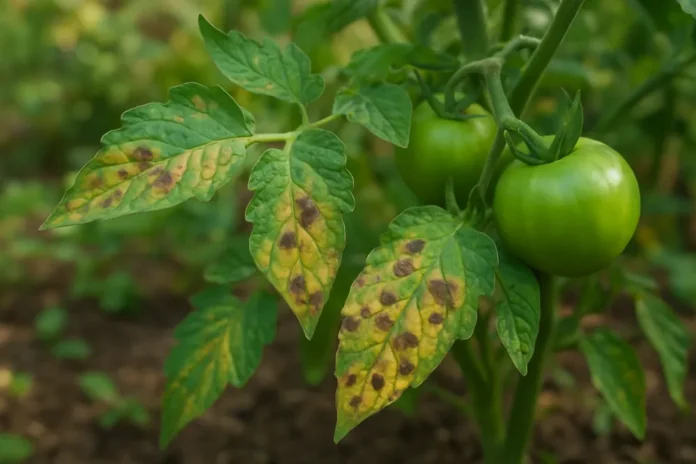
Tomato leaves usually get brown spots from fungal or bacterial leaf diseases, watering stress, nutrient imbalance, sunscald, or chemical injury. The exact cause often shows up in the size, color, and spread of the spots.
Brown spotting on tomato plants can show up suddenly or build over time, and it often starts on the leaves before spreading through the rest of the plant. Sometimes the damage is mostly cosmetic, but in other cases brown spots signal a disease problem that can weaken the plant and reduce your harvest.
The good news is that the spotting pattern usually gives useful clues. Tiny dark specks, large tan blotches, yellow halos, crisp edges, or spots limited to older leaves can each point to a different cause. Once you know what you are looking at, it becomes much easier to decide whether your plant needs pruning, better watering habits, disease control, or a simple adjustment in care.
In most home gardens, the leading causes are fungal diseases like early blight and Septoria leaf spot, followed by inconsistent moisture, nutrient stress, and environmental damage. Below, you will find the most common reasons tomato leaves develop brown spots and what each one typically looks like.
What Brown Spots on Tomato Leaves Usually Mean
Brown spots are not a single problem. They are a symptom. On tomatoes, spotting can come from infectious diseases, cultural stress, weather extremes, pests, or chemical exposure. The easiest way to narrow the cause is to look at where the spots start, how quickly they spread, and whether there are other symptoms such as yellowing, wilting, or leaf drop.
- Spots that begin on lower leaves and move upward often suggest a fungal disease.
- Tiny round spots with yellowing around them commonly point to Septoria leaf spot.
- Larger brown spots with ring-like patterns are often linked to early blight.
- Crisp brown edges or irregular scorch marks may be caused by drought, fertilizer burn, or chemical drift.
- Brown patches after intense heat or sudden sun exposure may be sunscald.
Because several issues can look similar at first, it helps to observe the whole plant rather than one leaf. Check whether the newest growth still looks healthy, whether fruit is affected, and whether recent weather has been hot, wet, or windy.
Fungal Diseases Are the Most Common Cause
Early Blight
Early blight is one of the most common reasons tomato leaves develop brown spots. It usually starts on older, lower leaves as dark brown spots that enlarge into target-like circles with concentric rings. The surrounding leaf tissue often turns yellow, and badly infected leaves eventually dry up and drop.
This disease tends to flare during warm, humid weather, especially when leaves stay wet for long periods. Soil splash, overhead watering, crowded plants, and poor airflow all help it spread.
Septoria Leaf Spot
Septoria leaf spot produces many small, round brown spots, often with tan or grayish centers. Unlike early blight, the spots are usually much smaller and more numerous. Lower leaves are usually hit first, then the disease works upward if conditions stay damp.
Leaves with severe Septoria infection turn yellow, then brown, then drop. Even if fruit is not directly infected, the plant can lose enough foliage that sunscald and reduced production become problems.
Leaf Mold and Other Fungal Leaf Issues
In humid climates or greenhouses, leaf mold can also create discolored patches that later turn brown. Some fungal problems show up first as pale or yellow areas on the upper leaf surface, with darker fungal growth underneath. If your tomatoes are growing in enclosed or poorly ventilated conditions, humidity-related leaf diseases become more likely.
- Remove badly infected lower leaves promptly.
- Water at the base of the plant rather than wetting foliage.
- Mulch to reduce soil splash.
- Space plants well and prune for airflow when appropriate.
- Use a labeled fungicide only if disease pressure is persistent or severe.
Bacterial Spot and Related Infections
Bacterial diseases can also produce brown spotting on tomato foliage. Bacterial spot often begins as small, dark, water-soaked lesions that become brown to black over time. The spots may look greasy at first, then dry out. In some cases, yellow halos form around them.
These diseases spread through splashing water, contaminated tools, infected transplants, and handling wet plants. Warm temperatures and frequent rain make them worse. Unlike some fungal diseases, bacterial infections can move quickly and may also affect stems and fruit.
- Avoid working with plants when leaves are wet.
- Disinfect pruners if you are removing affected foliage.
- Do not compost heavily diseased tomato debris unless your compost pile gets hot enough to kill pathogens.
- Rotate tomatoes and other nightshades to a different bed each year when possible.
Bacterial spotting can be hard for home gardeners to distinguish from fungal leaf spots. If spotting is widespread, weather has been warm and rainy, and fruit also develops scabby lesions, bacterial disease moves higher on the list.
Watering Problems Can Mimic Disease
Inconsistent watering does not always create neat circular spots, but it can cause brown blotches, crispy patches, and dead tissue between leaf veins. Tomatoes that swing between very dry and very wet conditions often show leaf stress, especially during heat waves or in containers.
Underwatering
When tomato plants dry out too much, leaves may curl, wilt during the day, and develop dry brown margins or scorched patches. The oldest leaves usually show stress first because the plant protects new growth.
Overwatering and Poor Drainage
Too much water can damage roots and limit oxygen in the soil. That can lead to yellowing leaves with brown dead spots as tissue collapses. Soggy soil also encourages fungal and bacterial problems, so overwatering can both stress the plant and set the stage for infection.
- Keep soil evenly moist, not constantly soaked or bone dry.
- Water deeply and less often rather than giving frequent shallow sprinkles.
- Use mulch to buffer swings in soil moisture.
- Make sure containers and raised beds drain well.
Nutrient Imbalances and Fertilizer Burn
Tomatoes are heavy feeders, but more fertilizer is not always better. When nutrient levels are off, leaves can develop discoloration and necrotic brown areas. In many cases, nutrient stress appears first on older leaves because the plant moves nutrients to newer growth.
Potassium or Magnesium Deficiency
Potassium deficiency can cause yellowing around leaf edges followed by browning and scorch along the margins. Magnesium deficiency often shows as yellowing between the veins on older leaves, and badly affected tissue may later turn brown.
Fertilizer Burn
Excess fertilizer, especially quick-release synthetic products applied too heavily, can burn roots and foliage. The result may be brown leaf tips, scorched edges, or irregular dead patches. This is more common in containers, where salts build up faster.
If you suspect a nutrient issue, think about timing. Symptoms that appear after a strong feeding, manure application, or repeated liquid fertilizer use may be linked to salt buildup or overfeeding rather than a true deficiency.
Heat, Sun, and Weather Damage
Tomato leaves can also develop brown spots from environmental stress. Sudden hot weather, intense afternoon sun, wind, hail, and even cold snaps can leave damaged tissue that later turns tan or brown.
Sunscald and Heat Scorch
During extreme heat, leaf tissue can bleach, dry out, and become brittle. Brown patches are often irregular rather than circular, and they may appear on leaves exposed directly to strong sun. Plants recently pruned too hard or suddenly moved from shade to full sun are especially vulnerable.
Wind and Physical Injury
Wind can whip leaves against cages or neighboring stems, creating torn or bruised areas that later brown. Hail and heavy rain can also leave spotting that resembles disease at first, though the pattern is usually more random and not progressively spreading.
If the spots appeared right after a weather event and new growth looks normal, environmental injury is more likely than a spreading infection.
Pests and Chemical Injury
Some pests and sprays can leave leaf damage that looks like spotting. Spider mites, for example, can cause fine stippling that later turns bronzed or brown in severe infestations. Thrips and other sap-feeding insects may scar or distort leaves, creating small dead patches.
Herbicide Drift
Nearby lawn weed killers or broadleaf herbicides can injure tomato plants even in tiny amounts. While herbicide damage often causes twisting and cupping, it can also create brown necrotic spots and scorched-looking tissue. Tomatoes are very sensitive, so drift from a neighbor's treatment can be enough.
Spray Burn
Foliar products applied in strong sun or mixed too strongly can burn leaves. Soap sprays, oils, copper products, and some homemade treatments may all cause spotting when used during hot weather or on already stressed plants.
- Check leaf undersides for mites, eggs, or webbing.
- Think back to any recent sprays, fertilizers, or weed control products used nearby.
- Do not apply foliar treatments during the hottest part of the day.
- Always follow label rates and test on a small area first when appropriate.
How to Tell Which Cause Is Most Likely
You can often narrow down the cause by matching the pattern on the plant with recent growing conditions. The key is not to focus only on the color brown, but on the shape, location, and spread of the damage.
- Small, numerous round spots on lower leaves: often Septoria leaf spot.
- Larger spots with ring patterns: often early blight.
- Dark water-soaked lesions, especially in wet weather: possible bacterial disease.
- Brown, crispy edges or margins: often watering stress, salt buildup, or potassium issues.
- Random scorched patches after heat or spraying: likely environmental or chemical injury.
- Spotting plus twisting or distorted new growth: possible herbicide exposure.
If only a few older leaves are affected and the rest of the plant is growing well, the problem may be minor stress. If spotting is moving quickly upward, causing yellowing and defoliation, disease is much more likely.
What to Do About Brown Spots on Tomato Leaves
The best response depends on the cause, but a few core steps help in most cases. The goal is to reduce stress, limit spread, and keep the plant productive for the rest of the season.
- Remove the worst affected leaves, especially those touching the soil or showing heavy spotting.
- Water at soil level in the morning so foliage stays dry.
- Add mulch to reduce soil splash and maintain even moisture.
- Improve airflow by spacing plants properly and staking or caging them.
- Avoid overfertilizing and use a balanced tomato feeding plan.
- Monitor new growth to see whether symptoms are continuing or stabilizing.
- Use an appropriate labeled fungicide or bactericide only when disease pressure justifies it.
If a plant is severely defoliated or clearly diseased beyond recovery, removing it may protect nearby tomatoes. This is especially worth considering when multiple plants are still young and healthy.
How to Prevent Brown Spots Next Season
Prevention is usually easier than treatment. Many leaf spot problems return year after year when tomatoes are grown in the same place and watered from above.
- Rotate tomato planting areas when possible.
- Choose disease-resistant varieties suited to your region.
- Start with healthy transplants and clean tools.
- Space plants generously to improve air movement.
- Use drip irrigation or soaker hoses instead of overhead watering.
- Mulch early to block soil from splashing onto lower leaves.
- Clean up all tomato debris at the end of the season.
Good sanitation and steady care go a long way. Healthy, unstressed tomato plants are better able to tolerate minor spotting and less likely to suffer severe outbreaks.
FAQ
Should I Cut Off Tomato Leaves with Brown Spots?
Yes, if the affected leaves are mostly damaged or clearly diseased, removing them can slow spread and improve airflow. Do not remove so much foliage at once that the plant becomes heavily exposed to sun.
Can Tomatoes Recover From Brown Spots on the Leaves?
Damaged leaf tissue will not turn green again, but the plant can keep growing if the cause is corrected and new growth stays healthy. Recovery depends on how severe the spotting is and whether the stems and fruit are also affected.
Are Brown Spots on Tomato Leaves Always a Fungus?
No. Fungal disease is common, but brown spots can also come from bacterial infections, watering stress, nutrient problems, sunscald, pests, or spray injury.
Will Brown Spots on Leaves Spread to the Tomatoes?
Some diseases that affect leaves can also affect fruit, while others mainly reduce vigor and expose fruit to sun damage. If you see lesions on fruit as well as leaves, a disease problem is more likely.
Can I Still Eat Tomatoes From a Plant with Brown Leaf Spots?
Usually yes, if the fruit itself is healthy and undamaged. Do not use fruit that is rotting, badly diseased, or moldy.
Does Overhead Watering Cause Brown Spots on Tomato Leaves?
It can. Overhead watering keeps leaves wet longer and splashes pathogens from soil onto foliage, which encourages common leaf spot diseases.
Why Are Only the Bottom Leaves Getting Brown Spots?
Many tomato diseases begin on lower leaves because they are closest to the soil and stay damp longer. Older leaves also show stress and nutrient issues before newer growth.
Need the right fix fast? Read our guide to the best tomato fungicides, pruning tools, and watering systems to stop leaf spot problems before they ruin your harvest.
