

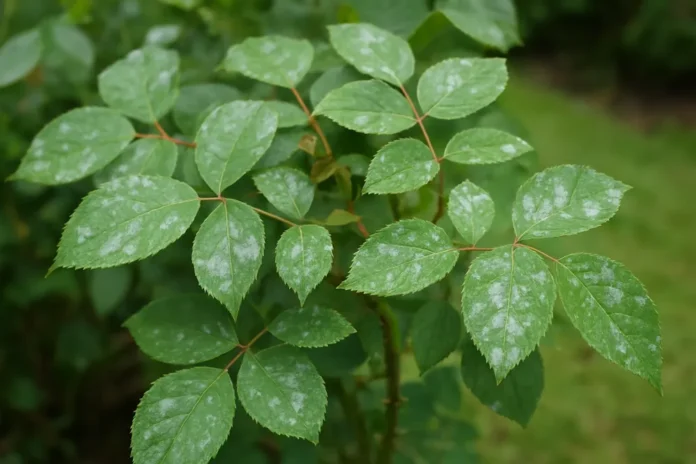
White spots on rose leaves are most often caused by powdery mildew, sap-sucking pests, or mineral and spray residue. In some cases, sun stress, leaf injury, or less common fungal problems can create a similar pale spotting pattern.
Seeing white spots on rose leaves can be alarming, especially when the rest of the plant looked healthy just days earlier. In many home gardens, this symptom is caused by powdery mildew, but pest damage, hard water residue, chemical spray burn, and a few other problems can create a similar look.
The key is to pay attention to what the spots actually look like. A dusty coating, tiny pinprick stippling, circular lesions, or chalky residue each point to a different cause. Once you know which pattern you are dealing with, it becomes much easier to choose the right treatment and prevent the problem from spreading.
What White Spots On Rose Leaves Usually Mean
White spotting is a symptom, not a diagnosis. Roses can react to disease, pests, environmental stress, and even leftover residue from irrigation or foliar sprays. The most common cause is powdery mildew, a fungal disease that creates a white or grayish film on leaves, buds, and stems. However, the wrong treatment can waste time if the true problem is spider mites, thrips, or harmless mineral buildup.
- Powdery mildew causes a soft, dusty, flour-like white coating that may spread across the leaf surface.
- Spider mites often leave fine pale stippling that makes leaves look speckled or washed out.
- Thrips and leafhopper feeding can create silvery-white scars or scattered pale spots.
- Hard water or spray residue sits on the surface and may wipe off with a damp finger.
- Sunscald or chemical injury can bleach patches of leaf tissue, especially after hot weather or spraying.
Powdery Mildew Is The Most Common Culprit
How to Recognize It
Powdery mildew usually starts as small white patches that look like talcum powder on the upper leaf surface. As it spreads, the spots may merge into larger areas and cover new leaves, stems, flower buds, and even sepals. Infected leaves can curl, twist, or become distorted, and flower buds may fail to open normally.
Why Roses Get It
This disease thrives when days are warm, nights are cool, and air circulation is poor. Unlike many fungal diseases, powdery mildew does not need soaked leaves to spread. Crowded plants, dense growth, excess nitrogen fertilizer, and shady conditions all make roses more vulnerable.
What Helps
- Prune out heavily infected shoots and discard the debris instead of composting it.
- Thin crowded growth to improve airflow through the center of the plant.
- Water at the base rather than overhead to reduce general plant stress.
- Avoid pushing soft, lush growth with high-nitrogen fertilizer.
- Use a labeled fungicide for roses if the problem is spreading quickly. Products containing sulfur, potassium bicarbonate, neem, or horticultural oils are commonly used, but always follow the label and avoid spraying during heat.
Mild powdery mildew can often be managed with pruning and better airflow, but repeated infections may require a preventative spray program during the season when the disease usually appears.
Pests Can Make Leaves Look White Or Speckled
Spider Mites
Spider mites are tiny sap-sucking pests that are hard to see without close inspection. Their feeding causes many tiny pale dots, called stippling, that can make leaves appear white, gray-green, or bronzed from a distance. Fine webbing on the undersides of leaves or between stems is a strong clue.
Thrips and Leafhoppers
Thrips scrape leaf tissue and suck out plant juices, leaving silvery or white scars. Leafhoppers create pale stippling and can make foliage look faded. These pests are more likely when weather is warm and dry, especially on stressed plants.
How to Tell Pests From Mildew
- Pest damage looks like spots inside the leaf tissue, not a fuzzy coating on top.
- Mildew often rubs off slightly. Insect stippling does not.
- Pests are commonly found on the undersides of leaves.
- A hand lens may reveal mites, shed skins, black specks, or moving insects.
A strong spray of water can reduce mites and leafhoppers on lightly affected roses. If populations are high, insecticidal soap or horticultural oil may help, but complete coverage is essential and labels must be followed carefully to avoid leaf burn.
Sometimes The Spots Are Just Residue
Not every white mark is a disease. If you use hard water, overhead irrigation, foliar fertilizers, or certain sprays, the leaves may develop chalky spots or dried droplets. This is especially common after water evaporates quickly in hot weather.
- Residue usually sits on the surface rather than changing the leaf tissue underneath.
- The pattern often follows splash marks, droplet edges, or a uniform film on exposed leaves.
- It may wipe away with a damp cloth or dissolve slightly when rinsed.
- The plant otherwise looks healthy, with no curling, distortion, or spreading lesions.
If the marks wipe off and new leaves remain clean after switching to base watering, residue was likely the issue. Hard water deposits are cosmetic, but repeated foliar spraying in heat can lead to real tissue injury over time.
Leaf Burn, Sunscald, And Spray Injury Can Bleach Tissue
Roses can develop pale or white patches when leaf tissue is damaged by intense sun, rapid weather shifts, or improperly timed sprays. This often happens after applying horticultural oil, neem, soap, or fertilizer sprays during hot sunny conditions. The leaf may show irregular bleached spots, tan edges, or crisp patches rather than a powdery coating.
- Damage often appears suddenly after a heat wave or treatment.
- The whitish areas are flat and dry, not fuzzy.
- Spots may be concentrated on the most exposed side of the plant.
- New growth may be unaffected once conditions improve.
If chemical or sun injury is the cause, remove the worst damaged leaves if they are unsightly, keep the rose evenly watered, and avoid future spraying during the hottest part of the day. Early morning applications are usually much safer.
Less Common Diseases That Cause Pale Spots
Although powdery mildew gets most of the attention, a few other diseases can create white, pale tan, or grayish spots on roses. These are less common in many home landscapes but worth considering if the symptom does not match mildew.
- Downy mildew can cause purplish, red, or yellow patches on upper leaf surfaces with fungal growth underneath in cool, damp weather.
- Cercospora and other leaf spots may begin light and later darken with defined margins.
- Botrytis can affect buds and flowers, sometimes producing fuzzy gray growth that gardeners may first notice as pale spotting or blighting nearby tissue.
When a disease does not fit the usual patterns, local cooperative extension offices can often help identify it from clear photos or a plant sample. Correct identification matters because fungicides vary in effectiveness depending on the pathogen.
How To Diagnose The Problem On Your Rose
A quick close inspection can usually narrow the cause. Look at both leaf surfaces, the newest growth, and nearby stems and buds. Also think about recent weather and anything you sprayed or changed in your care routine.
- Rub one spot gently with your finger or a damp cloth. If it smears or lifts, mildew or residue is likely.
- Check the undersides of leaves for mites, webbing, insects, eggs, or black specks.
- Notice whether the spots are fuzzy, powdery, flat, bleached, or sharply outlined.
- Compare old leaves and new leaves. Problems on tender new growth often suggest mildew or spray sensitivity.
- Review recent conditions such as cool nights, poor airflow, heat waves, overhead watering, or foliar applications.
If the plant is still blooming well and the spots are not spreading, the issue may be minor. If leaves are curling, dropping, or the white spotting is advancing onto new growth, respond quickly before the rose loses vigor.
Best Treatments For White Spots On Rose Leaves
For Powdery Mildew
- Prune infected tips and improve air circulation.
- Keep mulch off the crown and reduce crowding around the plant.
- Apply a rose-labeled fungicide if needed and repeat according to the product instructions.
For Mites or Other Sap-sucking Pests
- Rinse foliage with a firm stream of water, especially the undersides.
- Use insecticidal soap or horticultural oil if pests persist.
- Avoid broad-spectrum insecticides that can kill beneficial predators and worsen mite flare-ups.
For Residue or Mineral Spotting
- Rinse foliage occasionally with plain water in the morning.
- Switch to watering at soil level.
- Reduce unnecessary foliar products if the plant does not need them.
For Spray Burn or Sun Injury
- Stop the product that caused the damage.
- Water consistently while the rose pushes new growth.
- Wait to prune until you can clearly see which tissue is truly dead.
How To Prevent White Spots From Coming Back
Healthy roses are much better at resisting disease and recovering from minor damage. Prevention comes down to airflow, sanitation, balanced growth, and avoiding conditions that favor outbreaks.
- Plant roses where they get good sun and steady air movement.
- Prune regularly to open the center and remove weak, congested stems.
- Water deeply at the base instead of wetting the foliage late in the day.
- Clean up fallen leaves and prune out diseased debris promptly.
- Feed roses appropriately, but do not overdo nitrogen.
- Inspect leaves weekly during humid or warm dry periods so you catch disease or pests early.
- Choose disease-resistant rose varieties when adding new plants to the garden.
If your garden has a long history of powdery mildew, a preventative routine may work better than waiting until leaves are already coated. Timing matters more than intensity. Light, consistent prevention is usually more effective than trying to rescue a badly infected plant later.
When White Spots Signal A Bigger Problem
Most cases of white spotting are manageable, but there are times when the symptom points to a larger health issue. If the plant is rapidly defoliating, new shoots are badly distorted, buds are failing, or multiple roses are showing the same symptoms despite treatment, take a broader look at site conditions and plant stress.
- Persistent disease can indicate too much shade or poor air circulation.
- Repeat pest outbreaks may point to drought stress or loss of beneficial insects.
- Widespread bleaching after treatment can mean product misuse or excessive heat during application.
- Weak recovery may reflect root stress, compacted soil, or inconsistent watering.
When symptoms keep returning, the best fix is often cultural rather than chemical. A rose in the right spot with good sun, airflow, and steady care will usually outgrow minor spotting much more easily.
FAQ
Can White Spots on Rose Leaves Go Away on Their Own?
Residue and minor sun injury may stop once conditions change, but fungal disease and pest damage usually will not reverse on existing leaves. The goal is to stop spread and protect healthy new growth.
Is Powdery Mildew on Roses Fatal?
It is rarely fatal by itself, but repeated heavy infections weaken the plant, reduce flowering, and make it more vulnerable to other stresses. Severe cases should be managed early.
Should I Remove Leaves with White Spots?
Remove badly affected leaves if the problem is fungal or the foliage is heavily damaged. Do not strip the entire plant unless infection is severe, because roses still need enough healthy leaves to recover.
Why Do the White Spots Show Up Mostly on New Rose Growth?
Tender new leaves are especially vulnerable to powdery mildew, spray injury, and pest feeding. Soft growth is easier for pathogens and sap-sucking insects to damage.
Can I Use Neem Oil on Roses with White Spots?
Neem can help with some fungal issues and soft-bodied pests, but it can also burn leaves if used in hot sun or on stressed plants. Always follow the label and avoid spraying during heat.
Do White Spots on Rose Leaves Spread to Other Plants?
Powdery mildew can spread to susceptible plants nearby, although strains vary by host. Pests like spider mites can also move from plant to plant, especially in dry conditions.
Are White Spots Caused by Overwatering?
Overwatering does not directly create white spots, but it can stress roses and contribute to disease-prone conditions. Poor airflow and excess lush growth often matter more than water volume alone.
Need the right fix fast? See our rose disease treatment guide and best fungicides for roses to choose a product that actually matches the white spotting on your plant.
